In an era defined by climate consciousness and the urgent need for sustainable development, the tourism industry stands at a critical crossroads. To better understand the pulse of the global sector, The International Ecotourism Society (TIES) recently conducted an expansive survey among its members and professional associates. The results, drawn from nearly 1,000 industry stakeholders across 91 nations, provide a compelling snapshot of how ecotourism is evolving, the obstacles it faces, and the path forward for sustainable travel.
Main Facts: A Global Perspective on Growth
The TIES survey yielded 971 viable responses, representing a remarkably diverse geographical spread. While the United States provided the largest cohort of respondents, the survey’s reach was truly global, capturing voices from regions as varied as Sudan, the Palestinian territories, Bhutan, Montenegro, Nepal, Côte d’Ivoire, and Iran.
The primary takeaway from the data is an overwhelming consensus regarding the industry’s trajectory: ecotourism is growing rapidly. Of the 971 participants, less than 0.5%—a mere four individuals—suggested that the sector was slowing down. This near-unanimous sentiment reinforces recent market trends reported by major travel platforms like Booking.com, which have similarly identified a surge in consumer demand for sustainable and responsible tourism experiences.
Chronology of the Inquiry
The initiative began as an outreach effort in the previous issue of the TIES newsletter, designed to engage professionals on the current state of ecotourism. The data collection phase allowed for a multi-layered analysis of industry segments.
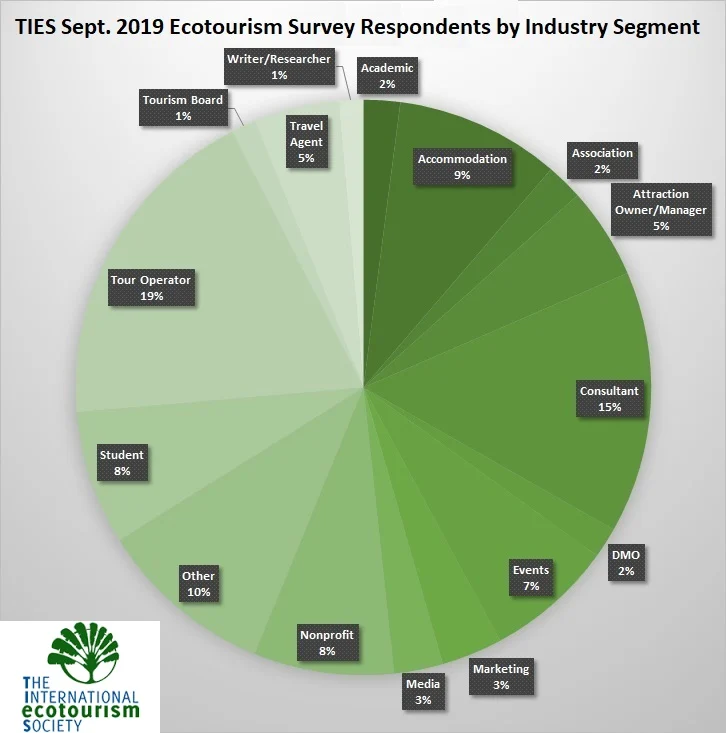
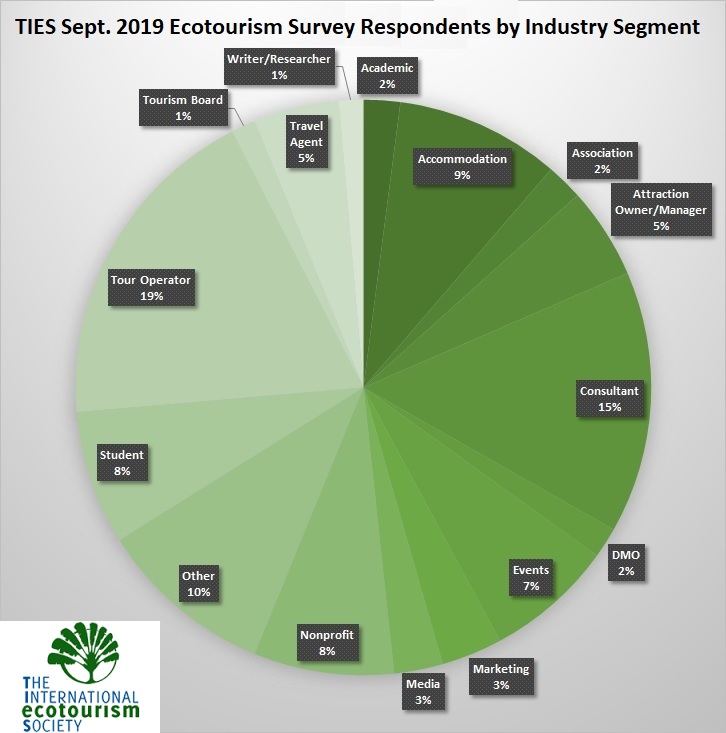
While 90% of respondents were able to categorize themselves within the provided framework—which included roles such as tour operators, consultants, and conservationists—the survey also acted as a feedback loop. Respondents requested more flexibility in classification, noting that many professionals now occupy hybrid roles that span multiple industry sectors. This chronological feedback process has informed TIES’s future administrative strategies, signaling a shift toward more inclusive data collection methodologies.
Supporting Data: Mapping the Industry Landscape
The survey data serves as a diagnostic tool for understanding who is currently driving the ecotourism conversation.
Industry Composition
The respondent pool was dominated by tour operators and industry consultants. Interestingly, the response rate from the academic community was lower than anticipated, given that academics represent a larger share of the TIES membership base. Despite this, the quality of the data remains high, offering a granular look at the professional makeup of those currently shaping ecotourism policies and operations on the ground.

Linguistic Needs and Market Accessibility
One of the most significant findings concerned the accessibility of information. A clear majority of respondents expressed a demand for TIES to expand its support for non-English languages. Spanish was identified as the top priority, with participants highlighting that ecotourism development in Spanish-speaking nations is both robust and vital.
The survey also highlighted a demand for content in French and Mandarin. The inclusion of Mandarin is particularly noteworthy, as it suggests a growing interest in sustainable tourism from the Chinese market, despite a low current response rate from that region. TIES has committed to a phased rollout of multi-language support, starting with Spanish, to ensure that the global ecotourism community can better share best practices and resources.
Official Responses: Addressing the Hurdles
The survey did more than just confirm growth; it provided a candid look at the barriers hindering the sector. Participants identified a series of complex challenges that threaten the integrity of ecotourism:
- Systemic Issues: Greed, overdevelopment, and a lack of regulatory oversight remain primary concerns.
- Knowledge Gaps: Respondents cited a persistent lack of awareness and education regarding what truly constitutes "ecotourism" versus "greenwashing."
- Operational Barriers: Difficulty in securing permits, the complexities of financing sustainable projects, and the persistent problem of overtourism were cited frequently.
- The Booking Dilemma: Perhaps most telling was the identification of a lack of tools for travelers to book ecotourism experiences fairly and transparently.
TIES has acknowledged these findings and has pledged to publish a series of reports detailing the collaborative efforts currently underway to mitigate these risks. By fostering partnerships and highlighting successful regulatory frameworks, the society aims to move from identifying problems to providing actionable solutions.
Implications for the Future: Strategic Pivots
Perhaps the most transformative aspect of the survey was the feedback regarding where TIES should focus its institutional energy. The findings suggest a clear mandate from the membership:
1. The Educational Imperative
41% of respondents identified education as the primary area for TIES to focus its efforts. This marks a significant pivot toward knowledge dissemination, curriculum development, and professional training. In response, TIES has already initiated contact with several academic and educational partners to develop new programs.
2. Conservation and Climate Action
18% of the respondents pushed for a deeper focus on climate change and conservation partnerships. This reflects the reality that ecotourism cannot exist without healthy ecosystems. The industry is signaling that it wants to move beyond mere "tourism" and closer to "active stewardship."
3. Ecodestinations and Digital Presence
14% of participants requested that TIES focus on mapping and describing national ecotourism offerings, effectively creating a "gold standard" for ecodestinations. Meanwhile, 11% suggested focusing on high-quality publications, and 9% pointed toward social media engagement.
4. Shifting Priorities
Interestingly, there was very little appetite for the organization to focus on traditional institutional goals such as policy lobbying or increasing membership numbers. This indicates that the membership base values content and impact over institutional expansion.
Conclusion: A Future Built on Optimism
The overarching sentiment among the survey respondents is one of resilient optimism. Despite the identified threats of climate change and over-commercialization, the professionals on the front lines of ecotourism believe the sector is not only sustainable but essential to the future of global travel.
By prioritizing education, language accessibility, and conservation partnerships, TIES is positioning itself to be a catalyst for this change. The data gathered serves as a clarion call: the industry is ready to professionalize, educate, and evolve. As TIES prepares to roll out its new strategic initiatives in the coming months, it does so with the backing of a global community that is more unified and motivated than ever before.
The path forward is clear: to maintain the momentum of ecotourism, the sector must bridge the gap between consumer desire and available, verifiable options. Through education and global collaboration, the dream of a travel industry that heals rather than harms the planet is moving closer to reality.
For more information on the initiatives discussed or to view the full scope of our upcoming educational partnerships, visit www.ecotourism.org.
The International Ecotourism Society (TIES), 2019.