Introduction: A Global Stage Under Siege
As the sporting world turns its eyes toward the outskirts of New York City for the pinnacle of international soccer—the World Cup final—the anticipation is being tempered by an unlikely and invisible adversary: toxic wildfire smoke. While Argentina and Spain prepare for a high-stakes showdown, the air surrounding the stadium has become a focal point of anxiety. Large swaths of the North American landscape, stretching from the Midwest to the East Coast, have been choked by smoke drifting south from Canadian wildfires.
The looming threat to the World Cup final highlights a growing friction between the world’s most popular sport and an increasingly volatile climate. Despite the clear and present danger posed by particulate matter, FIFA, the sport’s global governing body, appears to be operating without a transparent or robust contingency plan to protect the health of its elite athletes or the tens of thousands of fans in attendance.
The Chronology of an Environmental Crisis
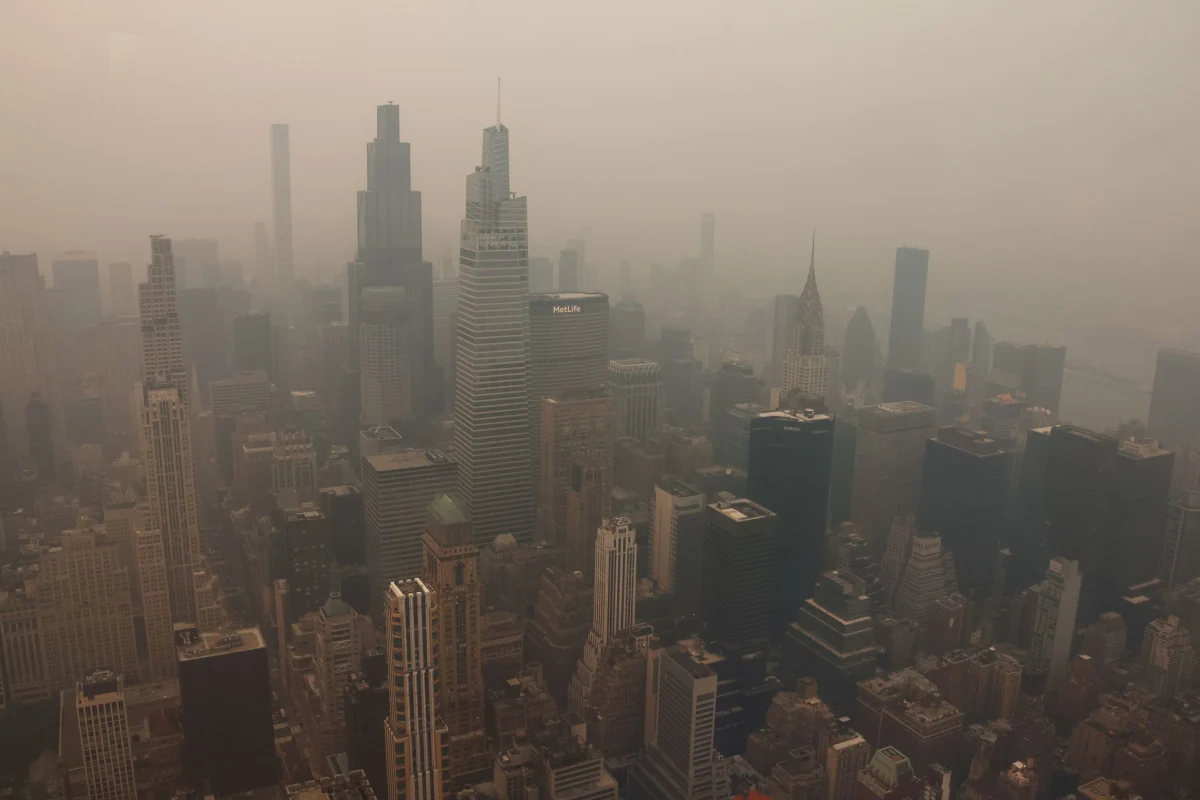
The current atmospheric crisis began as a series of unprecedented wildfires in Canada, sending plumes of smoke across the border and into the United States. By early this week, the effects were undeniable. New York City, usually characterized by its towering skyline, was transformed into a surreal, hazy landscape as the air turned an ominous shade of orange.
- Mid-week: Air Quality Index (AQI) readings across the Northeast began to climb into the “unhealthy” and “very unhealthy” categories. Officials issued urgent advisories, urging residents to stay indoors and limit physical exertion.
- Thursday: The State of New York officially expanded its air quality alerts to cover the entire region. Despite the hazardous conditions, the Spanish national team proceeded with an outdoor training session in New Jersey, raising immediate concerns from medical experts.
- Friday: As of Friday morning, the air quality near the stadium remained in the “unhealthy” range. While meteorologists suggest a shift in wind patterns may bring the air back to “moderate” levels by Sunday’s kickoff, the volatility of wildfire smoke means conditions could deteriorate rapidly with little warning.
- Sunday: The scheduled final. If the air quality dips again, the event faces a logistical nightmare: the stadium is an open-air venue, offering no mechanism to filter the air or protect those within the arena from the respiratory risks of smoke inhalation.
Supporting Data: The Physiology of Exposure
The health risks associated with the current air quality are well-documented. Wildfire smoke contains fine particulate matter (PM2.5), which is small enough to penetrate deep into the lungs and enter the bloodstream. For high-level athletes like Lionel Messi and Lamine Yamal, who are moving massive volumes of air through their lungs over 90 minutes of intense aerobic activity, the exposure is exponentially higher than that of a sedentary spectator.
Courtney Howard, an emergency room physician and representative for the Global Climate and Health Alliance, expressed sharp criticism regarding the lack of caution shown to players. "These are high-level athletes who are moving a lot of air through their lungs," Howard stated. "They shouldn’t be practicing outside if the air quality levels are at hazardous ranges."
The risks are not limited to the players. Sensitive groups—including children, the elderly, and those with pre-existing conditions like asthma—are at high risk for acute respiratory symptoms. These include coughing, wheezing, burning throats, and, in severe cases, reduced lung function. The lack of a clear safety threshold from FIFA leaves these vulnerable attendees in a state of uncertainty as they travel to the host city.
Official Responses and Institutional Silence
Perhaps most concerning to observers is the perceived lack of accountability from FIFA. Requests for comment from both FIFA and the New York City Department of Health regarding specific air quality protocols for the final went unanswered.
When questioned about climate-related risks in the past, FIFA has offered vague assurances. A statement provided by the organization last month noted that "climate-related risks are assessed as part of overall tournament planning and managed in close coordination with host cities, stadium authorities, and national agencies." However, that statement focused heavily on extreme heat, citing mandatory water breaks as a primary intervention. It made no mention of air quality, nor did it define at what level of pollution a match would be suspended or moved.
This silence stands in stark contrast to the proactive measures taken by other professional leagues. The National Women’s Soccer League (NWSL), for example, has established a clear, data-driven protocol:
- AQI 101-200 (Unhealthy for sensitive groups): Implementation of additional hydration breaks.
- AQI 200+ (Very unhealthy): Automatic cancellation or postponement of the event.
Similarly, Major League Baseball (MLB) and Major League Soccer (MLS) have both demonstrated a willingness to reschedule games in Philadelphia and Chicago, respectively, when the smoke became too hazardous for competition.
Implications: The Wake-Up Call for Global Sports
The situation has ignited a broader conversation about the sustainability of major sporting events in an era of climate change. Nicholas Watanabe, a professor of sport and entertainment management at the University of South Carolina, suggests that while FIFA may “dodge a bullet” if the air clears by Sunday, their luck should not be mistaken for strategy.
"FIFA seems unprepared for these wildfires," Watanabe noted. "This should serve as a wake-up call to FIFA and all other sports leagues of the need for regulations and a comprehensive plan to deal with climate risks."
The criticism extends beyond soccer. The cycling world is currently reeling from similar issues, with the Tour de France facing constant disruptions due to heat and smoke. Yellow jersey holder Tadej Pogačar recently went so far as to suggest that the entire sporting calendar requires a fundamental overhaul to avoid the deadliest times of the summer. "I would change the whole calendar," Pogačar remarked. "It’s not something I can do [as an athlete], but it’s a conversation that needs to happen."
The "Hydration Break" Fallacy
The reliance on temporary fixes, such as hydration breaks, has come under fire. Trinity Rodman, who participated in a recent NWSL game held under smoky conditions, captured the frustration of many athletes when she stated, "If we have to have a hydration break every 15 minutes, then we shouldn’t be playing the game."
The implication is clear: the current framework of "the show must go on" is increasingly at odds with the physical reality of the climate crisis. When athletes are forced to choose between their professional obligations and their health, the system has failed.
Conclusion: A New Standard Required
As the world prepares for the World Cup final, the focus remains on the match, but the backdrop of orange skies and air quality alerts serves as a grim reminder of the "new normal." FIFA’s current strategy—or lack thereof—is a relic of a time when the environment was a static variable, not a dynamic threat.
For the governing body to maintain its credibility and protect the well-being of its participants, it must move beyond general statements and implement rigorous, transparent, and enforceable climate protocols. Whether it is extreme heat or toxic wildfire smoke, the sport of soccer must adapt to the planet it occupies. If this weekend’s final passes without incident, it will be a result of favorable wind patterns, not institutional foresight. For the future of international sports, relying on luck is a strategy that will eventually run out of time.