In an era where our digital lives are tethered to high-performance smartphones, laptops, and tablets, the "low battery" notification has become a modern-day anxiety. Whether you are navigating a long-haul flight, trekking through the wilderness, or simply commuting to the office, a reliable power bank is no longer a luxury—it is an essential tool. However, the market is flooded with thousands of options, ranging from ultra-slim magnetic chargers to massive power stations.
After two decades of rigorous testing, I have identified the devices that truly deliver on their promises. This guide strips away the marketing fluff to help you choose the best power bank for your specific needs, while also highlighting the ones you should avoid.
The Evolution of Portable Power: A Chronological Look
The technology behind portable power has undergone a radical transformation. A decade ago, a "portable charger" was often a bulky, plastic brick that offered slow charging speeds and minimal safety features.
- The Early Days (2010–2015): Portable batteries were primarily low-capacity, single-port devices that relied on standard USB-A connections. They were often slow to charge, and "fast charging" was a rare, premium feature.
- The Rise of USB-C (2016–2020): As USB-C became the universal standard for laptops and phones, power banks pivoted. Manufacturers introduced Power Delivery (PD) protocols, allowing for significantly higher wattage output and faster recharging times for the power banks themselves.
- The Wireless Era (2021–Present): With the introduction of MagSafe and Qi2 wireless charging, power banks became more integrated into the user experience. We now see ultra-thin magnetic batteries that snap onto the back of your phone, offering a "tether-free" charging solution that prioritizes convenience.
Essential Data: Understanding Specs Before You Buy
When shopping for a charger, you will encounter a flurry of technical jargon. Here is how to parse the specs that actually matter.
1. Capacity vs. Reality (mAh)
Manufacturers list capacity in milliampere-hours (mAh), but this number is a theoretical maximum. Due to energy loss during voltage conversion and heat dissipation, you will never get 100 percent of that capacity. A good rule of thumb is to expect 60 to 80 percent of the stated capacity. When you see a 10,000-mAh battery, assume it will provide roughly 6,000 to 8,000 mAh of actual charge to your device.
2. The Power Equation (Watts)
Charging speed is measured in watts (W), calculated by multiplying voltage (V) and amperage (A). If your phone supports fast charging, ensure your power bank supports the same protocol—such as USB-PD or PPS (common in Samsung devices). Using a high-wattage power bank on a device that doesn’t require it is perfectly safe, as the device will only draw what it needs.

3. Pass-Through Charging
Pass-through charging allows you to charge your power bank while simultaneously using it to charge another device. While convenient, this puts extra stress on the battery and generates heat. Brands like Sharge and Zendure support this, but others, including many Anker models, have phased it out to extend the lifespan of their cells.
Top Performers: The Best Power Banks I Tested
Small Power Banks (5,000 mAh)
For those who need a light, "just-in-case" boost, these devices are designed for portability.
- Baseus PicoGo Air (AM71): At just 0.27 inches, this is the thinnest power bank I’ve tested. It attaches magnetically to your iPhone or Qi2-enabled Android. While it charges at 7.5 watts wirelessly, using the integrated braided USB-C cable boosts output to 22.5 watts.
- Anker Nano Power Bank: This device is a favorite for its "dinky" size and fun color options. It features a built-in rotating connector that slots directly into the bottom of your phone, eliminating the need for an extra cable.
- BMX SolidSafe Air: A wafer-thin, Qi2-certified powerhouse that clings magnetically to your device. It offers up to 15-watt wireless charging with an emphasis on thermal safety.
Medium Power Banks (10,000–20,000 mAh)
These are the "daily drivers"—perfect for a full day of heavy use or travel.
- Cuktech 15 Air: A standout in the mid-range category. It features a color display that shows real-time stats and can deliver 65 watts across three devices. It recharges remarkably fast (around 90 minutes at 100W) and supports trickle charging for smaller wearables.
- Anker Nano Power Bank with Instacord: The standout feature here is the 2.3-foot retractable cable. It provides a clean, clutter-free charging experience with 45-watt output, perfect for charging tablets on the go.
High-Capacity Power Banks (20,000 mAh and up)
When you need to keep a laptop, phone, and camera running for a full weekend, these "beasts" are essential.
- Ecoflow Rapid Pro Power Bank: This is a professional-grade device capable of delivering 300 watts of total power. It can simultaneously charge two laptops and a phone, pushing the limits of what is permitted on commercial flights (check with your airline regarding the 100Wh limit).
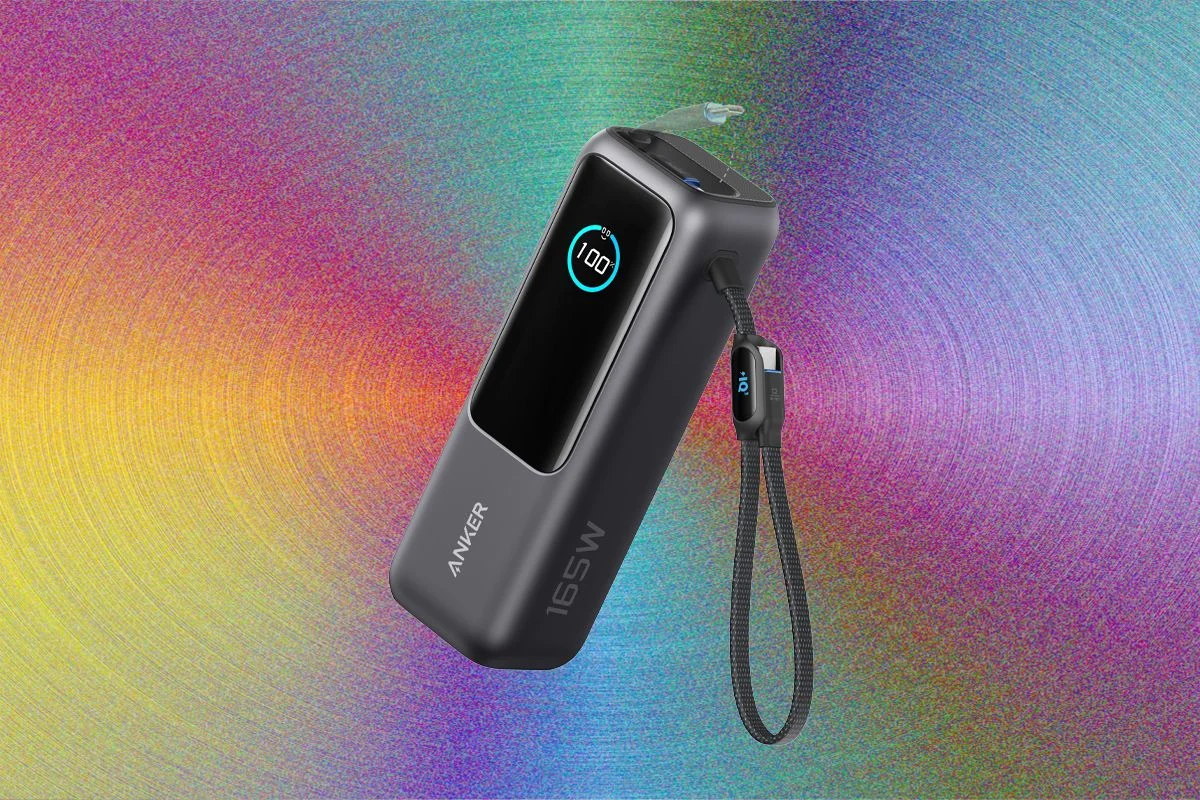
- Anker Prime Power Bank: A feature-packed device with 26,250 mAh of capacity. With a smart display, app connectivity, and 300-watt total output, it is the gold standard for power users.
- Aohi Starship Power Bank: Boasting a sci-fi aesthetic, this unit can output 240 watts, making it ideal for charging two high-performance laptops at once.
Safety First: Why Cheap Chargers Are a Liability
The most important rule in my two decades of testing is simple: avoid bargain-bin chargers.
The lithium-ion batteries inside these devices are complex chemical systems. When manufactured by reputable companies, they include sophisticated power-management circuits to prevent overheating, short-circuiting, and overcharging. When you buy a $15 charger from an unknown brand, the manufacturer has almost certainly cut costs by removing these safety protocols and using substandard insulation.
-Reviewer-Photo-(no-border)-SOURCE-Simon-Hill.jpg)
Red flags to watch for:
- Extreme Heat: If your device becomes hot to the touch during charging, stop using it immediately.
- Bulging/Swelling: A battery that has lost its flat shape is a fire hazard. Dispose of it properly at a recycling center.
- Inconsistent Stats: If the display jumps wildly or fails to show accurate charge levels, the internal management chip is likely failing.
Implications for Travel
If you are planning to fly, keep these three rules in mind:
- Carry-on Only: Portable chargers must never be placed in checked luggage due to fire risk in the cargo hold.
- The 100Wh Limit: Most airlines restrict power banks to 100 watt-hours. A 27,000-mAh battery usually hits this threshold. Always check the label on the back of your device before heading to the airport.
- Accessibility: Some airlines require you to keep your power bank in your hand luggage under the seat in front of you, rather than in the overhead bin.
Final Verdict: How We Select Our Picks
At WIRED, our review process is independent and rigorous. I test every device for a minimum of two weeks, subjecting them to real-world scenarios—charging phones, tablets, and laptops until they are empty. I also consult with colleagues and family members to ensure that the ease of use is consistent across different users.
We do not accept payments in exchange for rankings. While we may earn affiliate revenue if you click a link and make a purchase, that fact has no influence on our testing or the products that end up in this guide. We prioritize longevity, durability, and, above all, the safety of the consumer. If you have a brand you want us to investigate, reach out—we are always looking for the next innovation in portable power.