Living in the dense corridors of a state forest requires a certain degree of self-reliance. When you are tasked with maintaining trails, the changing seasons dictate your workflow: clearing winter storm debris in the spring, managing the aftermath of aggressive summer thunderstorms, and preparing for the inevitable cycle of autumn rot. For those who operate in areas where chainsaws are restricted or simply impractical, the manual labor of trail maintenance becomes a daily ritual.
For years, the standard approach to this labor was to carry a collection of heavy, cumbersome tools. However, Zippo—a brand historically synonymous with fire—has attempted to disrupt this workflow with the AxeSaw. By merging a hatchet, a bow saw, and a mallet into a single 20-inch chassis, the company claims to offer a "Swiss Army knife" approach to forest management. After putting the tool through a rigorous, season-long field test, the results suggest that while it may not replace professional-grade forestry equipment, it is a formidable companion for the casual woodsman, camper, and weekend groundskeeper.
Main Facts: Deconstructing the AxeSaw
At its core, the Zippo AxeSaw is a study in material economy. It utilizes a 420 stainless steel head, measuring 4.5 inches across the bit. Unlike traditional hatchets that rely on a thick, forged wedge of steel, the AxeSaw employs a 1/4-inch plate steel construction. This design choice is the primary reason for the tool’s surprisingly low weight and superior balance.
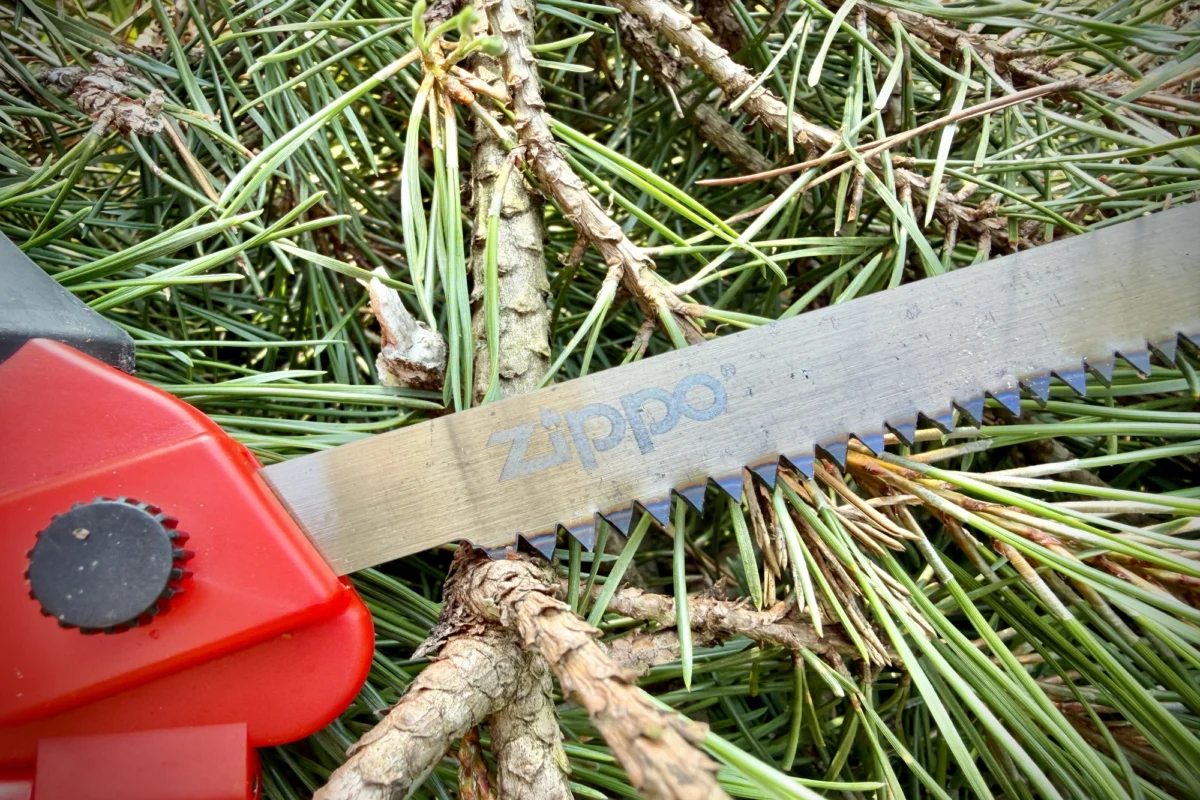
The tool’s brilliance—and its primary point of contention—lies in its integrated storage. The handle is hollow, engineered to house a 15-inch hardened stainless steel saw blade when not in use. The sheath, a hinged, plastic-molded component, serves a dual purpose: it acts as a protective cover for the hatchet bit during transit and transforms into the handle for the bow saw once the blade is deployed.

Technical Specifications:
- Hatchet Head Material: 420 Stainless Steel
- Saw Blade Material: Hardened Stainless Steel with an aggressive tooth pattern
- Total Length: 20 inches
- Primary Functions: Hatchet, Bow Saw, Mallet
- Deployment Method: Tool-free conversion
Chronology: From Concept to Field Testing
The development of the AxeSaw arrived at a time when the outdoor industry was pivoting toward "minimalist utility." The goal was to eliminate the need for three separate tools at the campsite. My personal testing began in early spring, a period characterized by damp, sodden wood and the heavy debris left by late-winter gales.
Upon arrival, the first impression was one of structural integrity. Despite the hollow handle necessitated by the blade storage, the tool felt rigid and reliable. Throughout the summer months, the tool was subjected to varying environments, ranging from dense trail-clearing work in the forest to routine yard maintenance at home.
By mid-summer, the testing moved into "mallet mode." Using the poll of the axe to drive tent stakes and wooden garden markers provided a clear picture of the tool’s durability. The final phase of testing focused on ergonomics, specifically evaluating how the oversized, overmolded sheath-handle performed during prolonged sawing tasks under high-heat conditions.

Supporting Data: Performance Metrics
To evaluate the AxeSaw objectively, one must look at its performance across its three distinct modes.
The Hatchet (The Primary Driver)
The 4.5-inch bit is impressively sharp, arguably comparable to a high-end belt knife. In practice, the tool functions less like a traditional splitting axe and more like a powerful, weighted machete. It excels at clearing light brush and splitting green wood. The weight distribution allows for a clean, controlled swing that results in minimal user fatigue over the course of an hour of work.
The Bow Saw (The Secondary Tool)
The saw component is where the design encounters its most significant hurdle. The blade itself is excellent; the teeth are aggressive and bite deep into both dry and wet timber. However, the ergonomics of the sheath-turned-handle are unconventional. The handle must be large enough to encapsulate the axe head for safety, meaning it is significantly wider than a standard saw grip. While the rubber overmolding provides a necessary tactile advantage, it forces the user into a wider, more open grip. This is not a dealbreaker, but it does impact efficiency when cutting through logs thicker than six inches.
The Mallet (The Utility Component)
The AxeSaw serves as a perfectly adequate mallet for light to medium-duty tasks. The flat surface of the axe head is designed for striking. However, a word of caution for potential users: the plastic coating on the sheath/mallet assembly is susceptible to damage. In my testing, a stray strike against a granite rock left a visible mar on the casing. While the tool remained fully functional, it serves as a reminder that this is a composite tool, not a solid steel hammer.

Official Responses and Industry Context
Zippo’s marketing for the AxeSaw has been clear: this is a tool for the campsite and the backyard, not the logging camp. By positioning the product at the $110 price point, Zippo is targeting the "car camper" and the "weekend warrior."
Industry experts have noted that the AxeSaw addresses a growing trend in outdoor recreation: the desire to reduce the "weight of gear." As more national parks and state forests place restrictions on power tools due to noise pollution and fire risks, the demand for high-efficiency manual tools has surged. The AxeSaw fills a gap where a standard hatchet is too limited and a full-sized bow saw is too cumbersome to carry into the woods.
Implications for the Future of Trail Maintenance
The implications of using a tool like the Zippo AxeSaw are two-fold.
First, it democratizes trail maintenance. By providing a relatively affordable, all-in-one solution, Zippo enables amateur hikers and campers to take an active role in clearing the trails they enjoy. The ability to quickly transition from clearing a downed limb with a saw to splitting firewood for a campsite with a hatchet encourages better land stewardship.

Second, the AxeSaw highlights the limitations of "all-in-one" design. While the tool is undeniably clever, it forces a trade-off between specialization and convenience. For a professional trail builder, a dedicated, high-carbon steel felling axe and a professional-grade folding saw will always outperform a multitool. However, the average consumer rarely requires the industrial-grade durability of professional equipment.
Final Verdict: Is It Worth the Investment?
The Zippo AxeSaw is a triumph of utility over tradition. It is not designed to be the "one true tool" for a professional logger, nor does it claim to be. If you approach it with the expectation that it is a high-quality, mid-sized hatchet that possesses the secondary ability to function as a saw and a mallet, the value proposition is high.
For the car camper, the bushcrafter, or the homeowner who wants to maintain a fire pit without cluttering the shed, the AxeSaw is a logical purchase. It is lighter than carrying three separate tools, more effective than the cheap, box-store hatchets it aims to replace, and offers a level of engineering that justifies its price tag.
If you have particularly large hands, the handle ergonomics might feel slightly unnatural at first, but with a bit of practice, you will likely find that the compromise is worth the space saved in your pack. The AxeSaw is, in essence, a reflection of the modern outdoor ethos: work smarter, pack lighter, and leave the power tools at home.