Inland spill response operations are complex under optimal conditions, but when sub-zero temperatures and frozen waterways enter the equation, the risk profile for emergency responders shifts from difficult to extreme. As industrial activity continues to span across remote, river-rich environments, environmental agencies and private contractors are increasingly forced to manage hazardous material containment in harsh winter climates.
Working on river ice is arguably one of the most unforgiving environments in emergency management. Unlike static lake ice, the presence of moving water beneath a frozen surface creates a dynamic, high-consequence workspace. A responder who breaks through ice into a moving current faces a life-threatening scenario where traditional rescue tactics may be rendered ineffective by the flow of the river. Consequently, rigorous risk management and strictly enforced standard operating procedures (SOPs) are the only defenses against catastrophe.
The Core Dangers of River Ice Operations
The fundamental challenge in winter spill response is the assumption that "ice is ice." Experienced responders recognize that river ice is fundamentally distinct from lake ice. While lake ice may offer a relatively predictable, static platform, river ice is subject to fluctuating water levels, varying flow velocities, and thermal instability.
The danger of a breakthrough is compounded by the "under-ice" effect. Should a responder fall into a river, the current can quickly pull them beneath the ice shelf, making extraction nearly impossible without specialized training and rapid-intervention teams. Furthermore, the presence of anchor ice—ice that forms on submerged objects—can create unpredictable obstructions and jams that alter flow patterns, further weakening the ice sheet from beneath.
Establishing a Safety-First Culture
Responders must adopt a "stay off until proven safe" mentality. No spill containment effort is worth the life of a responder. Before a single boot touches the surface, a comprehensive assessment and a site-specific safety plan must be established, socialized, and signed off by the Incident Commander and the site safety officer.
Chronology of Assessment: From Shoreline to Ice Surface
Effective ice-based operations rely on a methodical, progressive approach. Assessment cannot be based on intuition or visual observation alone. Strength is a composite function of water depth, current speed, ambient temperature, water chemistry, and the weight of the equipment being deployed.
Phase 1: The Initial Size-Up
The initial assessment must be conducted from the safety of the shoreline. The team lead must evaluate four primary variables:
- Current Velocity: Higher speeds equate to greater erosion of the ice underside.
- Water Depth: Shallower water may indicate areas where the ice has frozen to the riverbed, creating a false sense of stability.
- Ice Integrity: Assessing thickness, crystalline structure (quality), and consistency.
- Load Bearing Calculations: Utilizing the industry-standard formula $P = 50 times T^2$ (where $P$ is the load capacity in pounds and $T$ is the thickness in inches).
Phase 2: Drilling and Verification
Once the initial size-up is complete, the team must begin testing. This process should be supervised by an ice-rescue instructor.
- Progressive Advancement: Start at the bank and drill a series of test holes, moving outward in a grid.
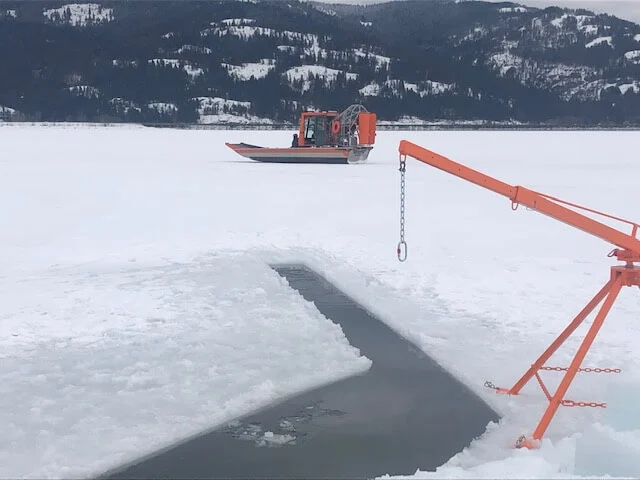
- Weight Distribution: Responders should never walk freely during the testing phase. Utilize 4×8-foot plywood sheets to distribute body weight, or operate from an airboat or tethered platform.
- Continuous Monitoring: Ice strength should be adjusted downward by 15% to account for current flow and up to 50% for "snow ice," which is structurally inferior to clear, transparent ice.
Technical Data: Understanding Ice Classifications
Not all ice is created equal. To manage a site, responders must be fluent in the vocabulary of ice morphology:
- Lake/Clear Ice: The "gold standard" for stability. It is often reflective and forms during rapid temperature drops.
- Frazil Ice: An early-phase, slushy formation of disk-shaped ice crystals. It is notoriously unstable.
- Candled Ice: An indicator of decay. It appears whitish-gray and possesses high thickness but very low structural integrity.
- Snow Ice: Opaque or milky in appearance. This occurs when snow insulates the ice sheet, preventing proper crystallization. It is exceptionally weak.
- Anchor Ice: Submerged ice that can lead to sudden, violent ice jams.
Operational Procedures and Equipment
Once the site is deemed viable, operational discipline becomes the primary safeguard.
Minimizing Footprint
The goal is to keep the minimum number of personnel on the ice at any given time. Access paths should be clearly marked and treated with anti-slip materials. If an area requires repeated foot traffic, plywood staging areas should be installed to prevent concentrated stress on the ice.
The Equipment Arsenal
Responders must be equipped with specialized gear, including:
- PPE: Drysuits, PFDs (Personal Flotation Devices) rated for cold water, helmets, ice awls for self-rescue, and aggressive ice cleats.
- Support: Augers for testing, chainsaws for cutting recovery slots, belay lines for all personnel, and inflatable rescue rafts positioned downstream.
- Warming Infrastructure: A designated "warming tent" is mandatory. This facility must be equipped with hypothermia wraps, AEDs, oxygen, portable heaters, and extra sets of dry clothing for responders.
Official Responses and Incident Mitigation
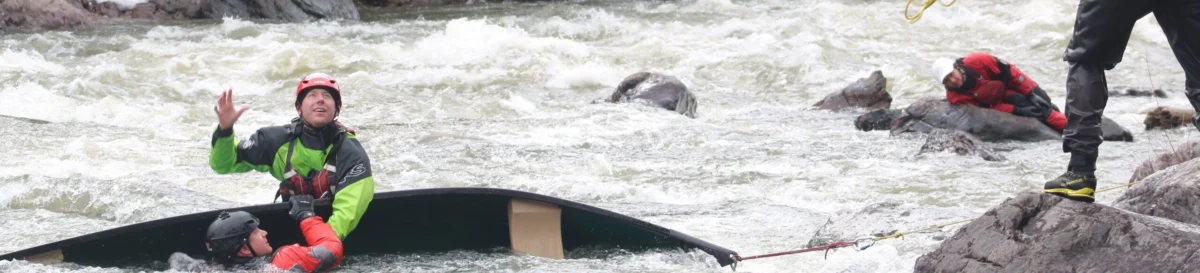
In the event of a breach, time is the enemy. Every responder should be trained in ice self-rescue. The immediate action is to extend the arms to prevent full immersion and use ice awls to haul oneself onto solid ground.
From an organizational standpoint, the "Site Safety Plan" must include a rigorous Communication Plan and an Emergency Evacuation Plan. If the ice becomes unstable, the protocol must mandate an immediate transition to boat-based platforms. Never rely on the ice for longer than the immediate containment mission requires.
The Invisible Threat: Wind Chill and Environmental Stress
Environmental hazards extend beyond the ice itself. The Wind Chill Temperature Index is a critical tool for managing personnel fatigue and medical risk. Wind chill is not merely a "feels like" temperature; it is a measure of the rate of heat loss from exposed skin.
As wind speeds rise, the boundary layer of warm air surrounding the body is stripped away. At temperatures of 15°F with a 30 mph wind, the effective wind chill drops to -5°F, where frostbite can occur in as little as 10 minutes.
Wind Chill Safety Protocols
- Mandatory Rotation: Responders must be rotated off the ice at fixed intervals to prevent hypothermia-induced cognitive decline.
- Monitoring: Incident command must track wind speed and temperature shifts in real-time.
- Hydration and Nutrition: Cold weather operations consume massive amounts of caloric energy. Responders must be encouraged to consume warm, high-calorie fluids.
Implications for Future Spill Response
The reality of climate change and shifting industrial patterns suggests that we will see more, not fewer, winter spill responses in coming years. The industry must move away from ad-hoc winter planning toward a standardized "Cold Weather Response Certification" for all inland responders.
By integrating the physics of ice mechanics with strict, human-centric safety protocols, organizations can protect both the environment and their workforce. The lesson is clear: when working on frozen rivers, the environment is in control. Our only role is to observe, respect, and adapt to the conditions at hand. Through rigorous training, proper equipment, and an unyielding commitment to the safety plan, we can turn a high-risk environment into a manageable, professional operation.