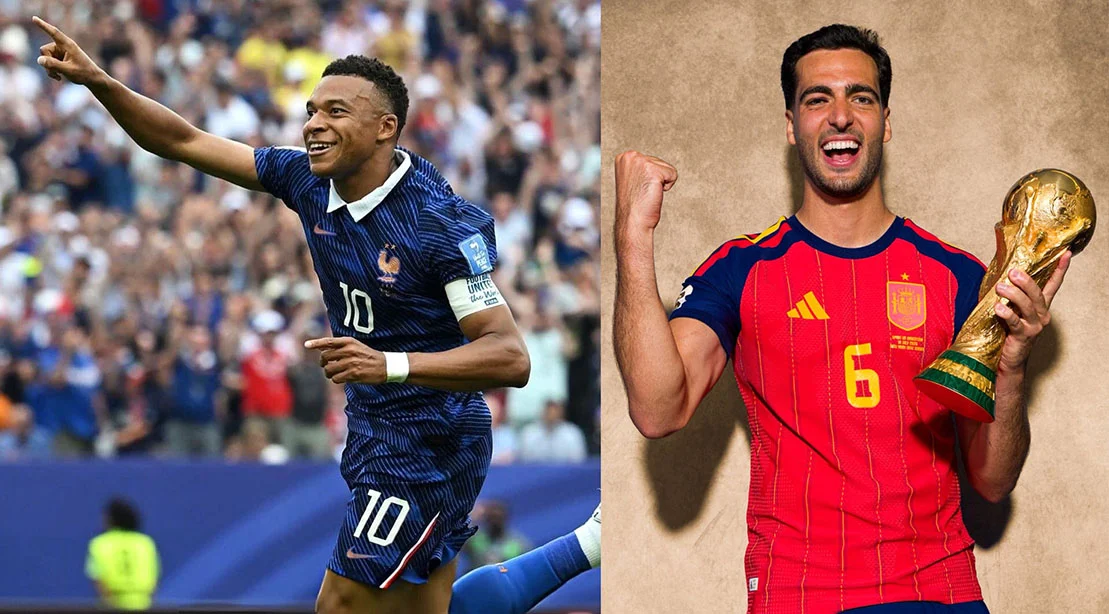
The 2026 FIFA World Cup has officially descended into the annals of sporting history, leaving behind a legacy defined by unprecedented scale, logistical ambition, and a relentless pursuit of perfection. With a record-shattering 6.6 million fans flooding 16 state-of-the-art stadiums across North America, the tournament cemented itself as the most-attended sporting event in history. Spanning 11 cities in the United States, three in Mexico, and two in Canada, the 48-team mega-tournament was a logistical marathon that tested the endurance of players, the patience of travelers, and the mettle of the world’s elite footballing nations.
On July 19, 2026, the dust finally settled on this massive expansion as Spain stood atop the podium, hoisting the trophy after a display of tactical dominance that will be studied for decades. As the global football community catches its breath, Muscle & Fitness takes a deep dive into the numbers, the narratives, and the sheer audacity of a tournament that redefined what is possible on the pitch.
Main Facts: The Numbers Behind the Spectacle
The 2026 edition was not merely a tournament; it was a geopolitical and cultural phenomenon. The expansion to 48 teams introduced a level of variance previously unseen in the modern game.
- Total Attendance: 6.6 million spectators.
- Host Nations: 16 stadiums across the U.S., Mexico, and Canada.
- The Champion: Spain, who extended their historic unbeaten run to 38 matches.
- The Golden Boot: Kylian Mbappé (10 goals), surpassing Lionel Messi (8) and Jude Bellingham (7).
- Player of the Tournament: Rodri (Rodrigo Hernández Cascante), who redefined the role of the midfield anchor with record-breaking passing efficiency.
The tournament faced criticism regarding long-distance travel and fluctuating climate conditions, yet the caliber of football rarely dipped. From the high altitudes of Mexico City to the coastal humidity of Miami, the 2026 World Cup proved that, despite the expansion, the cream of the crop still rises to the top.
Chronology: A Path to Glory
The journey to the July 19 final was a grueling eight-match gauntlet, the longest in the history of the competition.
The Group Stages: The Rise of the Underdogs
The tournament began with a flurry of activity that immediately signaled that the expanded format would provide a platform for smaller nations. Cape Verde’s performance captivated the world; as the smallest nation ever to reach the knockout stage—representing a population of fewer than 600,000—they became the spiritual heart of the tournament. Their defensive masterclass, spearheaded by 40-year-old goalkeeper Vozinha, resulted in a historic 0-0 stalemate against Spain, a match that served as an early warning that the Spanish juggernaut was beatable, if only by the smallest of margins.
The Knockout Rounds
As the field thinned, the tactical quality intensified. France and England emerged as the tournament’s primary offensive engines, each tallying 20 goals. However, the knockout stage was defined by the clinical efficiency of Spain. While other nations relied on explosive individual moments, Spain relied on the metronomic consistency of Rodri and the defensive solidity of Marc Cucurella and Pau Cubarsi.
The Final
On July 19, the tension was palpable. Spain’s victory was not the result of a singular moment of brilliance, but the culmination of a 38-match unbeaten streak that dates back to March 2024. By dismantling their opponents with precision passing and suffocating possession, Spain proved that in the modern game, discipline is the ultimate weapon.
Supporting Data: Statistical Anomalies and Records
The 2026 World Cup was a data analyst’s dream. Below are the key statistical highlights that define this historic iteration.
Goal-Scoring Supremacy
Kylian Mbappé’s Golden Boot campaign was nothing short of legendary. With 10 goals, he didn’t just win the individual accolade; he climbed to the summit of the all-time World Cup goal-scoring list, finishing with 22 career goals to eclipse Lionel Messi’s 21. While teams like England and Argentina showcased high-octane attacks, no team could touch the legendary 1954 Hungarian record of 27 goals in a single edition, though France and England’s 20-goal hauls were a testament to the increased offensive tempo of the modern game.
The Midfield Architect: Rodri’s Masterclass
If the World Cup were a test of endurance and accuracy, Rodri would be the gold standard. The Spanish midfielder recorded 790 successful passes, obliterating his own record of 638 set in Qatar 2022. This statistic highlights the evolution of the defensive midfielder—no longer just a "destroyer," but the primary engine of the team’s offensive rhythm.
Age and Endurance
The 2026 tournament showcased both ends of the age spectrum. Mexico’s Gilberto Mora, at 17 years and 240 days, became a symbol of the future. While he didn’t break Norman Whiteside’s 1982 record as the youngest-ever player, he served as a beacon for the next generation. Conversely, the tournament’s oldest stars, like Cape Verde’s Vozinha, provided the grit, proving that experience remains a vital currency in high-stakes football.
Official Responses and Tactical Implications
Following the final whistle, FIFA officials lauded the tournament for its logistical success. The expanded format, despite initial skepticism regarding the quality of play, was praised for its "democratization" of the sport. By providing more slots to underrepresented confederations, FIFA effectively increased the global reach of the tournament.
The "Travel Factor"
One of the most significant implications of the 2026 World Cup was the impact of travel. Players logged unprecedented minutes—Cucurella, Cubarsi, and Mac Allister all hit the 750-minute mark—making the 2026 tournament the most physically demanding in history. Sports science teams are already analyzing how the 750-minute threshold affects player recovery and long-term health. The consensus among elite clubs is that the current international calendar may be reaching a breaking point, potentially forcing a shift in how players prepare for future tournaments.
A New Tactical Paradigm
Spain’s unbeaten run, now standing at 38 games, has sent a clear message to the world: the "Total Football" philosophy remains the gold standard. By surpassing Italy’s legendary 37-match streak (2018–2021), Spain has established itself as one of the greatest dynasties in international history. The implication for other nations is clear—to compete with the Spanish model, they must invest in high-volume passing systems and defensive transitions that prioritize ball retention over individual flair.
The Road Ahead: 2030 and Beyond
As the lights dim on the 2026 World Cup, the footballing world has already shifted its gaze toward 2030. With the tournament set to be hosted by Morocco, Portugal, and Spain, the landscape is poised for yet another evolution.
The 2026 tournament has set an incredibly high bar. It was a tournament of "firsts": the first 48-team field, the first to utilize such a vast geographic footprint, and the first to truly test the limits of player endurance in the era of high-pressing football.
Whether it was the inspiring rise of Cape Verde, the record-breaking efficiency of Rodri, or the sheer, undeniable dominance of the Spanish national team, the 2026 World Cup offered a snapshot of where the beautiful game is headed. It is faster, more inclusive, and statistically more complex than ever before.
For the fans who spent countless sleepless nights following every match, and for the athletes who pushed their bodies to the brink, this tournament was more than just a competition—it was a testament to the enduring power of the sport to unite, challenge, and define the human experience. As we look toward the future, one thing is certain: the records set in North America will serve as the benchmark for every generation of footballers to come. The era of the 48-team World Cup has officially arrived, and it has done so with a bang that will echo until the first whistle blows in 2030.