By Samuli Haapasalo
In the quiet, untouched corners of Suomussalmi, where the border forests of Martinselkonen stretch toward the horizon, the month of July brings a rare, ethereal quality to the wilderness. As the sun dips low, painting the sky in shades of amber and rose, the russet coats of bear cubs ignite in the evening light. This is a story of patience, the intrinsic value of wild spaces, and the growing significance of wildlife tourism in rural Finland.
Main Facts: The Bear and the Lens
The experience of observing brown bears (Ursus arctos) in their natural habitat is one of profound silence. On July 10, 2026, I found myself tucked away in a small, concealed hide—a wooden structure designed to bridge the gap between human curiosity and animal instinct.
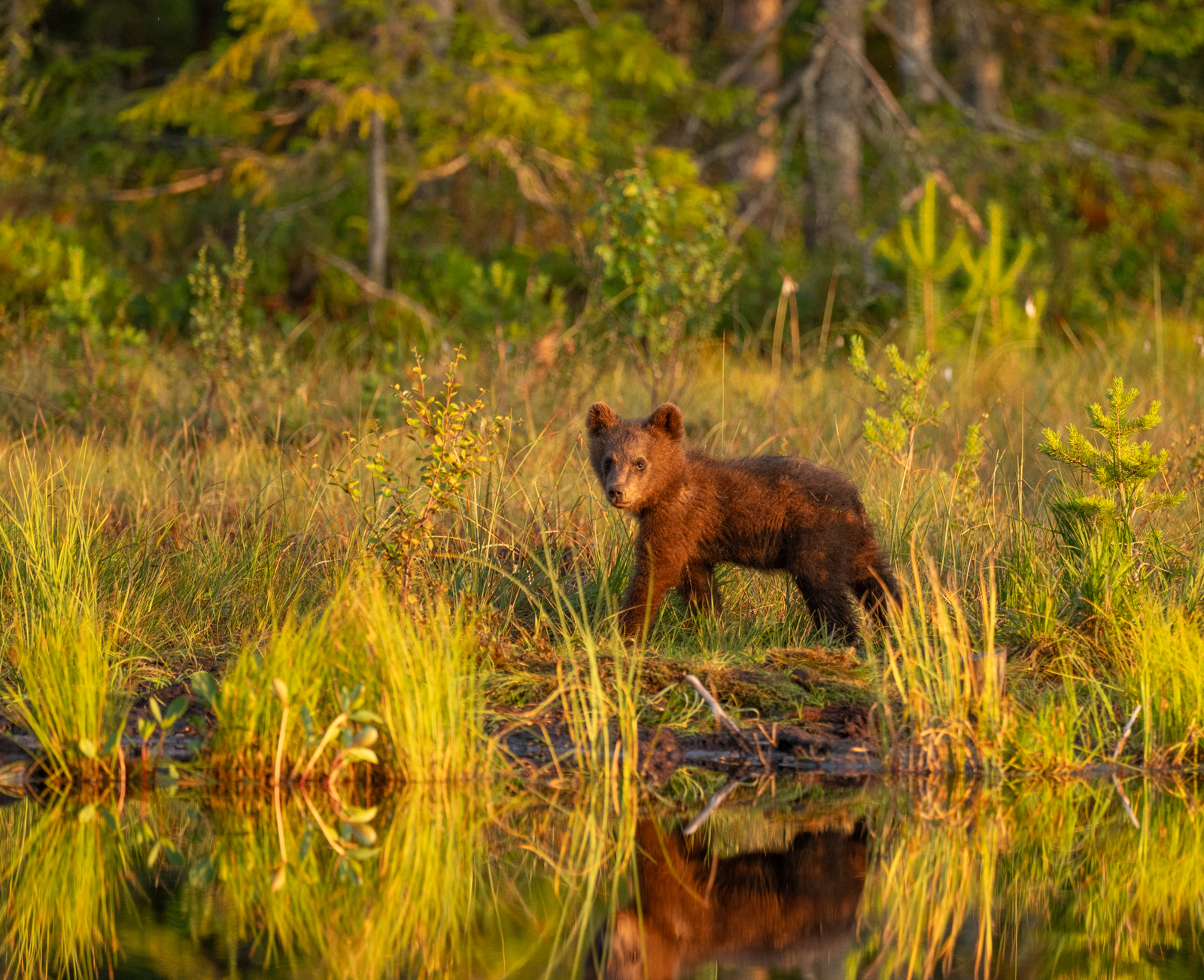
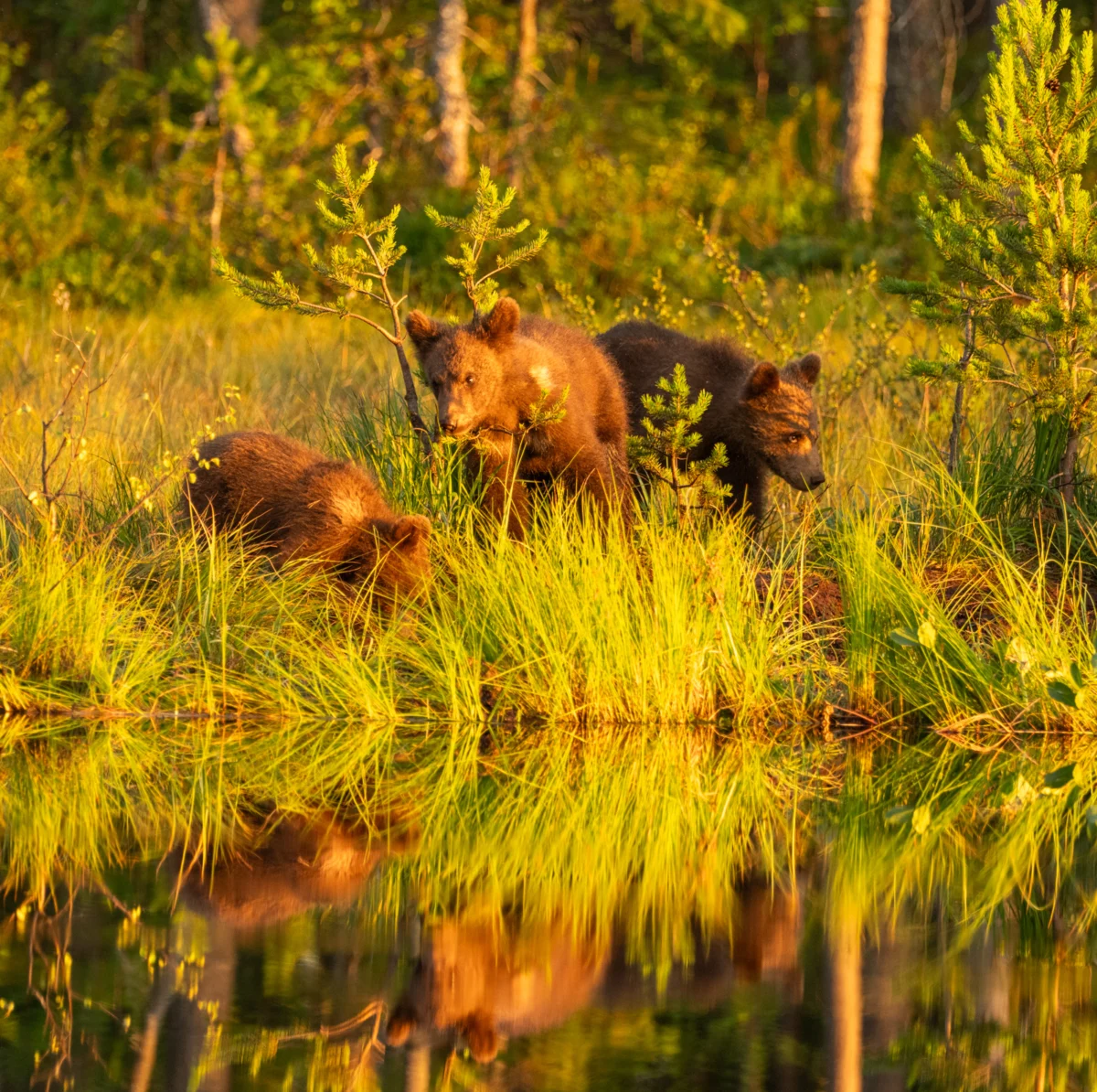
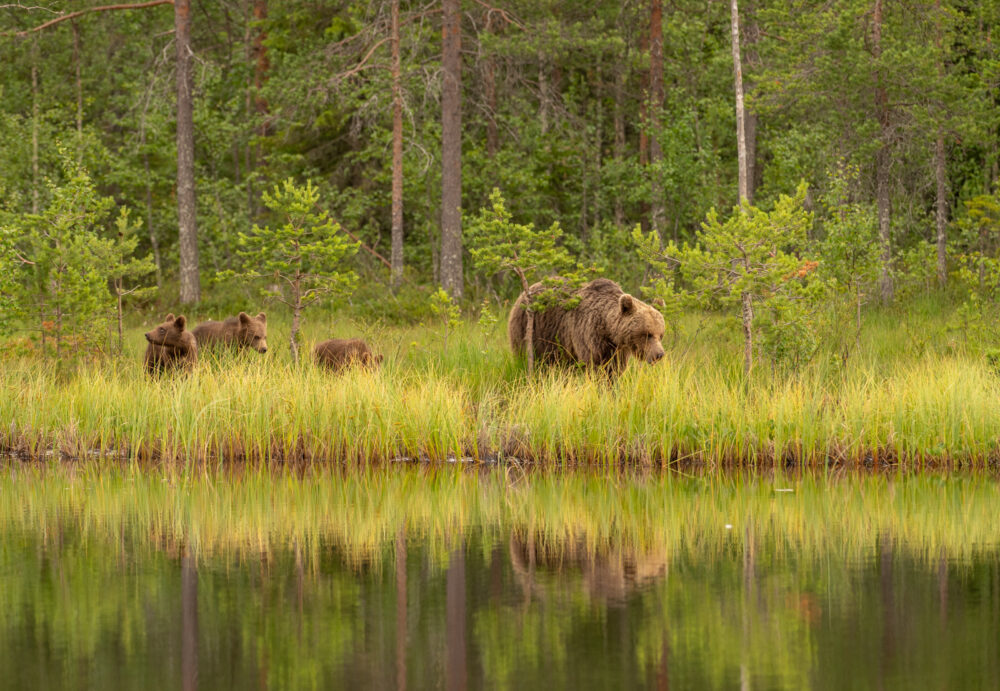
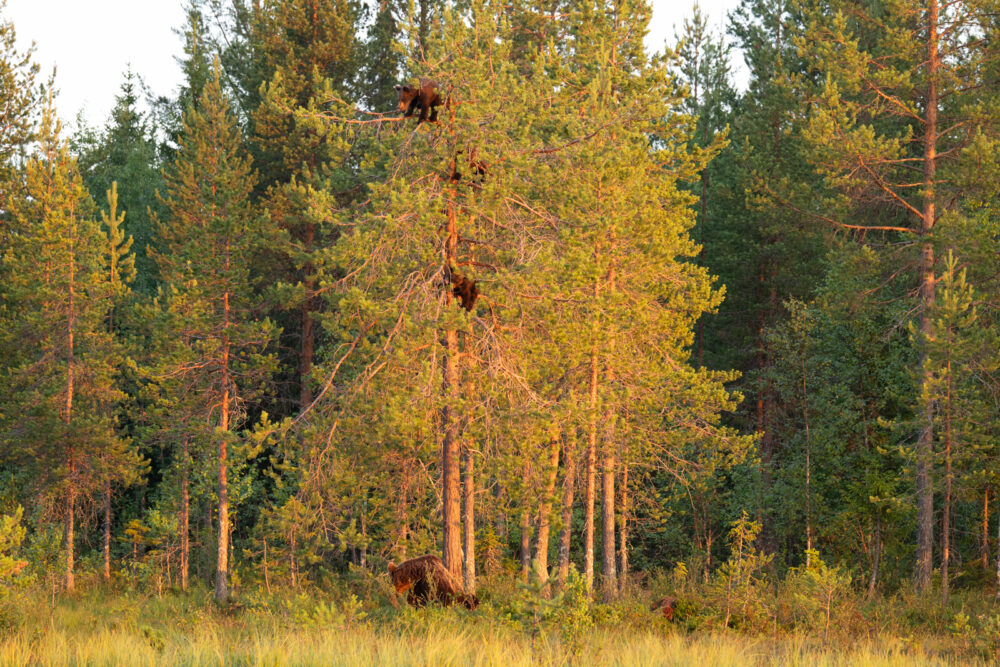
The primary objective of such observation is minimal intrusion. The bears, focused on their immediate environment and the rhythms of the forest, remain largely oblivious to the human presence. These encounters are not merely photographic opportunities; they are deep-dives into the behavior, social structures, and daily survival strategies of Finland’s most iconic predator. The images captured—a sow with her three playful, four-month-old cubs—offer a window into the delicate balance of maternal care and juvenile exploration.
Chronology: A Day in the Life of the Forest
To witness the forest, one must learn to move at its pace. My observations from the July excursion reveal a distinct timeline of activity:
- The Pre-Sunset Lull: As the day wanes, the forest enters a state of heightened anticipation. The silence is not empty; it is pregnant with the sounds of insects, the rustle of foliage, and the distant call of birds.
- The Emergence: Shortly before sunset, the forest edge begins to stir. The appearance of an adult sow emerging from the dense thicket, followed by her three cubs, is a moment of pure, unadulterated awe.
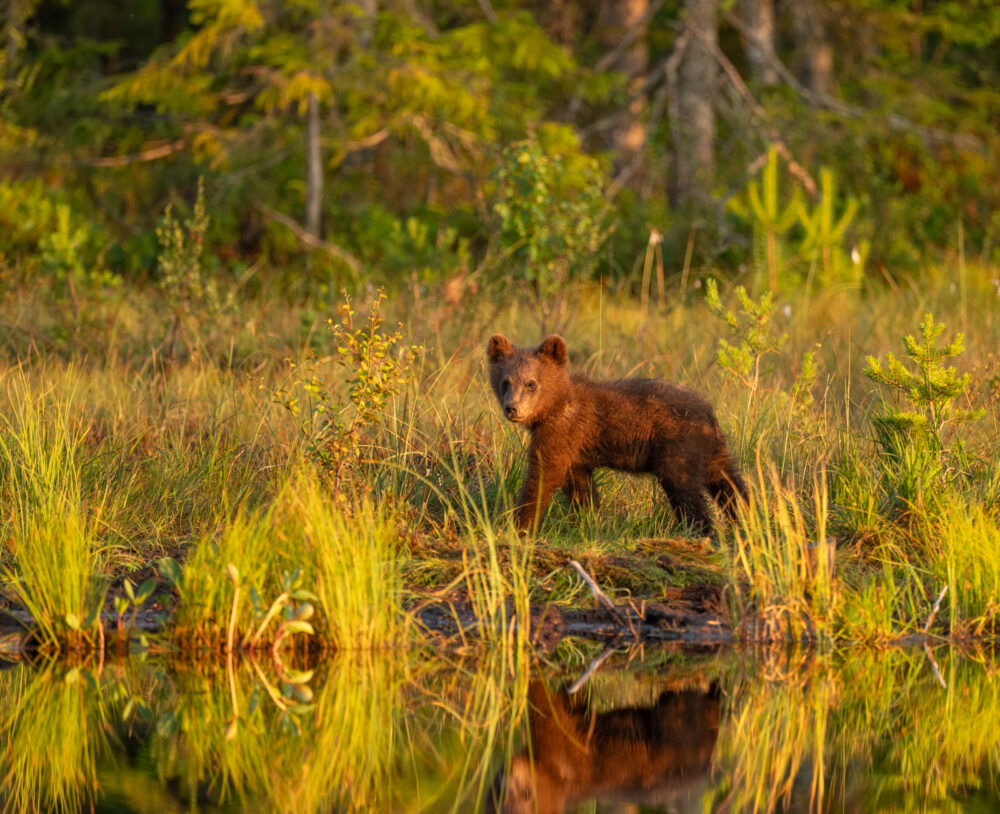
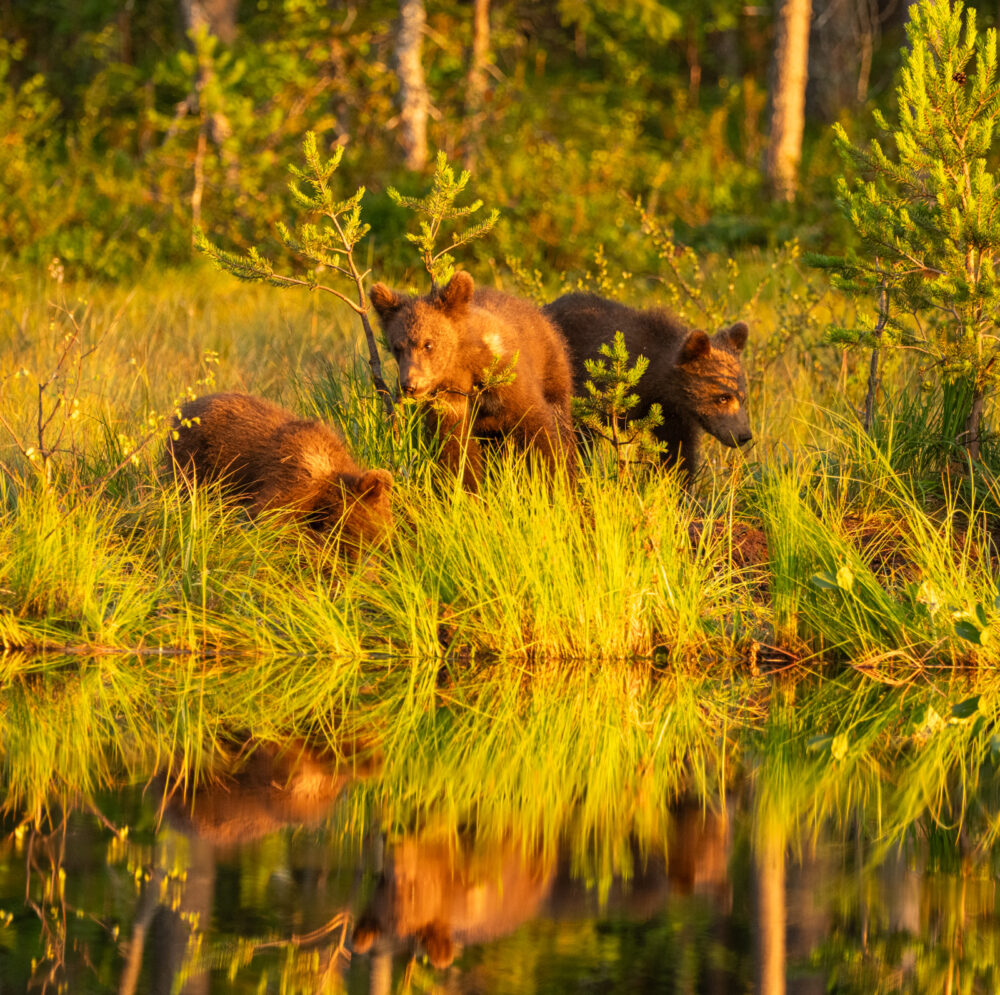
- The Golden Hour: The light, now at its most intense, transforms the environment. The fur of the cubs, previously a standard brown, takes on a near-mythical, reddish-gold hue, reflecting in the tranquil surface of the pond.
- Social Dynamics and Play: The cubs exhibit boundless energy. Whether they are wrestling, batting at pine needles, or standing on their hind legs to survey the perimeter, their behavior is a masterclass in learning survival skills.
- The Safety Maneuver: At the slightest hint of uncertainty, the mother’s discipline is absolute. Whether it is a command to climb a tree or a swift change in direction, the bond between the sow and her cubs is the primary pillar of their survival.
Supporting Data: The Socio-Economic Impact of Wildlife Tourism
While the aesthetic beauty of the bear is the primary draw for enthusiasts, the implications of this activity extend far beyond the lens. In eastern Finland—specifically regions like Lieksa, Kuhmo, Suomussalmi, and Kuusamo—wildlife tourism has emerged as a cornerstone of the regional economy.
The Economic Engine
The infrastructure supporting this industry is complex and essential. It includes:
- Professional Guiding Services: Expert trackers who ensure safety and ethical observation.
- Specialized Accommodation: Lodging designed to host nature enthusiasts without disrupting local habitats.
- Local Supply Chains: Food, fuel, and equipment support provided by local businesses.
Data suggests that approximately 50% of the clientele for these hides are international visitors. These travelers are drawn to Finland for its "authenticity"—the promise of witnessing wild animals like the brown bear, the elusive wolf, the energetic wolverine, and the ghost-like lynx in their natural, unmanaged state. For many remote areas, this industry provides the economic justification for habitat preservation.
The Ethics of Observation
The companies specializing in these experiences operate under strict codes of conduct. Responsible tourism in the wild is not about "taming" animals, but about providing a controlled, non-intrusive venue for observation.
When food is used to lure bears—such as fish remains or dry feed—it is done with the goal of minimizing human-bear conflict in other areas and ensuring the animals remain within the designated observation zones. However, the true beauty of the forest is that it remains a wilderness; there are days when the forest provides no sightings at all. Even then, the act of waiting—of listening to the silence and detaching from the frantic pace of modern life—serves as a form of therapy for the observer.
Implications: A Future for the Wild
The integration of wildlife tourism into the Finnish economy serves as a powerful argument for the "Intrinsic Value" approach to nature conservation. When a living bear is worth more to a local community than a hunted one, the economic incentives align with the environmental ones.
The Challenges Ahead
Despite the success, the industry faces hurdles:
- Climate Sensitivity: Changes in berry yields—the primary food source for bears preparing for hibernation—can alter migration patterns and health outcomes for the cubs.
- Infrastructure Maintenance: Maintaining high-quality hides in remote areas requires significant capital and constant environmental monitoring.
- International Competition: As other countries develop their own wildlife tourism sectors, Finland must ensure its offering remains defined by its unique, rugged, and pristine character.
A Call for Preservation
The sight of three bear cubs scaling a pine tree while their mother waits at the base is more than just a picture; it is a symbol of a functional, thriving ecosystem. If Finland is to maintain its status as a premier destination for nature-based tourism, it must continue to prioritize the health of these forests.
The preservation of these habitats is not just for the sake of the bears, but for the sake of the communities that rely on the forest’s vitality. As we move further into the decade, the collaboration between conservationists, tourism operators, and the state becomes paramount.
Conclusion: Lessons from the Hide
As I sat in the darkness of the hide, waiting for the shadows to fully take over the pond, I was reminded of why we do this. The world outside is loud, digital, and often disconnected from the fundamental truths of life and death. In the Martinselkonen forest, those truths are laid bare.
The bear, in all its power and tenderness, reminds us that we are guests in this landscape. Our role is to observe, to document, and to protect. When we choose to prioritize the wild, we aren’t just saving animals; we are saving a part of ourselves—the part that still finds wonder in the golden light of an evening, the splash of a cub in a pond, and the absolute, perfect peace of a silent, northern wilderness.
For those who wish to support this vital work, continuing to engage with and value nature-focused journalism—like that found in Suomen Luonto—is a step toward ensuring these stories continue to be told for generations to come. The future of our forests depends on the choices we make today; may we choose to keep them wild, quiet, and full of life.