In the high-stakes world of ultralight backpacking, the "integrated stove system" has reigned supreme for the better part of a decade. From the iconic Jetboil to various proprietary heat-exchange systems, the trend has been toward all-in-one units that prioritize speed and fuel efficiency above all else. Yet, as a seasoned backpacker who has spent countless nights on the trail, I have often found myself skeptical of these complex, high-priced contraptions. Why spend over $130 on a specialized system when the primary goal is simply to boil water?
After testing the redesigned GSI Outdoors Glacier Canister-Top Stove for several months—ranging from brisk spring weekenders to a grueling, wind-swept week along the Oregon coast—my skepticism has been vindicated. This device serves as a powerful reminder that sometimes, the most effective tool is the simplest one: a fuel canister, a burner, and a pot.
Main Facts: The Return to Simplicity
The GSI Outdoors Glacier Canister-Top is a masterclass in "no-frills" engineering. Retailing at an accessible $65, it positions itself as an antithesis to the current market trend of premium-priced, tech-heavy cooking systems.
Key Specifications:
- Weight: 3.1 ounces (approx. 88g)
- Boil Time (1L): 4:00 minutes
- Burn Time: 60 minutes per 8 oz. fuel canister
- Design: Three-arm pivoting pot support system
- Ignition: Integrated Piezo ignitor
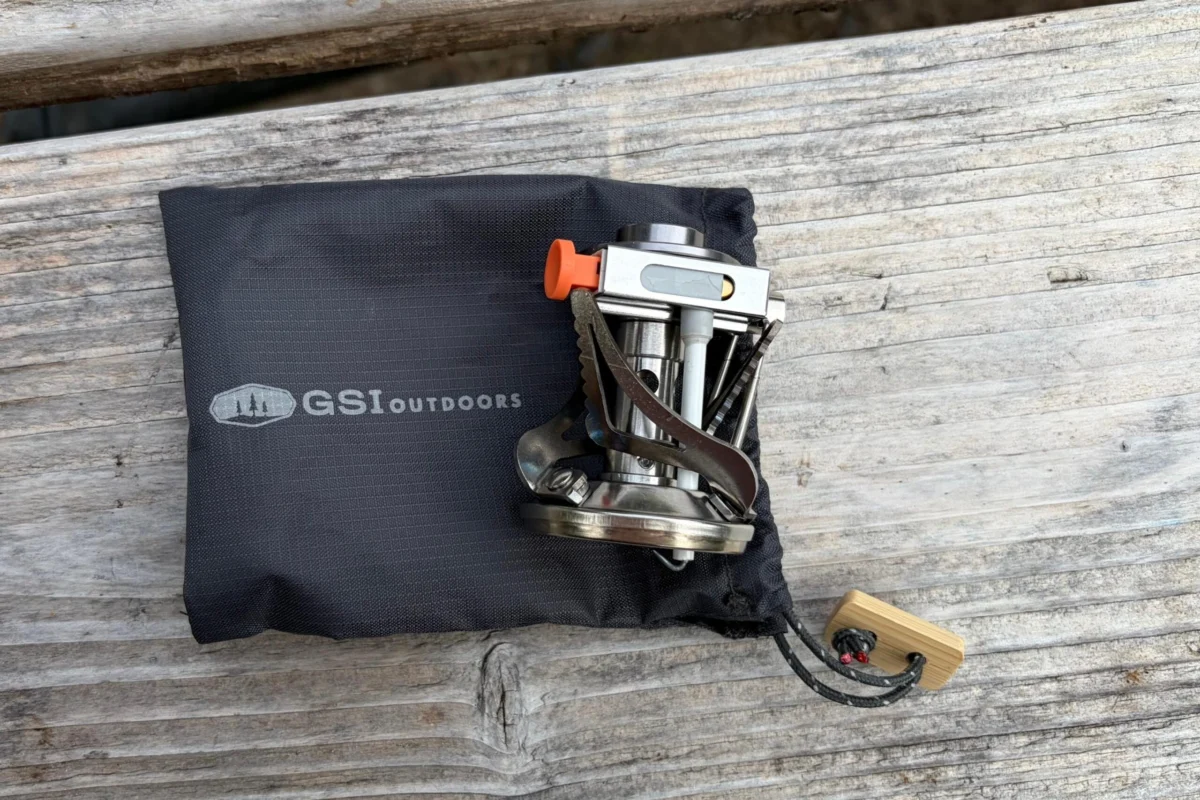
The stove’s design is stripped down to the essentials. It features three robust legs that rotate and pivot inward, allowing the unit to collapse into an incredibly small footprint. When paired with a standard 750 mL titanium pot, the entire cooking system weighs in at a featherlight 7.7 ounces—nearly half the weight of many integrated systems, which often tip the scales at 13 to 14 ounces.

Chronology of the Field Test
My testing began in the early spring, where the stove was subjected to the variable, chilly temperatures of high-desert camping. However, the true test of the Glacier’s mettle came during a week-long trek along the Oregon coastline.
The Pacific Northwest coast is a notorious proving ground for gear. Constant, gusting winds and high humidity put any stove’s flame stability to the test. Throughout the week, I utilized a TOAKS 750 mL titanium pot to boil water for dehydrated meals and morning coffee.
During the first three days, the stove performed flawlessly. The connection to the isobutane canister was secure, and unlike several other stoves I have tested—including the popular MSR PocketRocket and various budget alternatives—the GSI Glacier exhibited zero fuel leakage during the attachment or detachment process. I never heard the dreaded "hiss" of wasted gas, a common annoyance that often plagues cheaper valve assemblies.
However, the field test was not without its lessons. By the end of the week, I noticed a decline in the functionality of the integrated piezo ignitor. While it performed admirably during the first several days, it eventually failed to spark during a follow-up test on my back porch. This highlights a universal truth in backpacking gear: piezo ignitors are notoriously sensitive to the grit, moisture, and temperature fluctuations of the backcountry. By the end of the month, I had reverted to a standard mini-lighter, a common practice among veteran thru-hikers who prioritize reliability over convenience.
Supporting Data and Comparative Performance
To provide an objective baseline, I conducted a series of timed boil tests using room-temperature water at sea level.

- 240 mL (1 cup): 2:10
- 350 mL (1.5 cups): 3:25
- 1 Liter: 4:00
When compared to the broader market, the GSI Glacier is undeniably slower. For context, the Jetboil Stash, a high-performance integrated system, can bring 1 liter of water to a boil in approximately 2:25. Meanwhile, the MSR XGK EX, a liquid-fuel expedition workhorse, clocks in around 3:30.
While the GSI is slower, it is important to contextualize this "deficiency." For the solo backpacker, who is typically only boiling enough water for a single dehydrated meal or a morning cup of coffee, the difference of 90 seconds is negligible. However, for groups of three or more who need to boil large volumes of water for multiple meals, the slower boil time could lead to increased fuel consumption and longer wait times at the end of a taxing day.
Official Manufacturer Perspectives and Design Intent
GSI Outdoors has long focused on the intersection of utility and value. Their redesign of the Glacier Canister-Top aimed specifically at weight reduction and portability. By utilizing a three-leg configuration, they have managed to create a stable platform that is surprisingly resistant to wind, provided the pot is properly centered.
One specific design choice worth noting is the stowage method. To achieve its minimal packed size, the user must leave the gas control valve slightly open. While this allows the legs to fold inward perfectly, it requires the user to develop a specific habit: ensuring the valve is fully closed immediately upon setup. It is a minor design quirk, but one that warrants attention for those who prefer "foolproof" gear.
Furthermore, the leg joint—the pivot point where the supports rotate—is a potential point of long-term wear. While I did not experience a failure, the mechanical complexity of a rotating joint is arguably more prone to fatigue than the simpler sliding arms found on the MSR PocketRocket.

Implications for the Backpacker
The choice of a cooking system is ultimately a calculation of trade-offs.
1. The Economic Implication:
At $65, the GSI Glacier is a significant entry-level winner. Even when adding a $30-$50 titanium pot, the total "all-in" price of ~$100 remains substantially cheaper than the $150+ price point of integrated cooking systems. For students, budget-conscious hikers, or those just starting their journey into backpacking, the GSI provides a professional-grade experience without the "gear tax" associated with premium brands.
2. The Weight-to-Volume Implication:
Because the stove is compact enough to nest inside a 750 mL cup, it occupies almost zero usable space in a pack. For ultralight hikers who count every gram, the weight savings—nearly half a pound compared to integrated systems—is significant. That half-pound is equivalent to an extra day’s worth of trail snacks or a lighter pair of camp shoes.
3. The Lifestyle Implication:
We must distinguish between "cooking" and "boiling." If your backcountry menu consists of gourmet meals that require simmering or sautéing, a canister-top stove will likely frustrate you due to its narrow heat distribution and lack of a simmer control. However, if your backcountry reality is limited to rehydrating freeze-dried pouches and making instant oatmeal, the GSI Glacier is more than sufficient.
Final Assessment: Who is this for?
The GSI Outdoors Glacier Canister-Top Stove is a specialized tool for the minimalist. It is not designed for the base-camp chef, nor is it the most technologically advanced piece of equipment on the market. It is, however, a reliable, lightweight, and exceptionally affordable companion for the solo hiker.

Pros:
- Exceptional Value: A budget-friendly price that leaves room in the gear budget for other essentials.
- Minimalist Footprint: Packs into almost any standard titanium mug, saving valuable space.
- Fuel Efficiency: No leakage at the canister connection ensures every drop of fuel is used for heating, not lost to the air.
- Weight: At 3.1 ounces, it is competitive with the lightest stoves in its class.
Cons:
- Piezo Longevity: Expect the ignitor to fail eventually; carry a backup lighter.
- Boil Times: Slower than integrated heat-exchange systems, which may be a drawback for group trips.
- Mechanical Complexity: The rotating leg design, while compact, introduces a potential failure point compared to simpler designs.
In conclusion, the GSI Glacier serves as a testament to the fact that you don’t need a high-tech "system" to thrive in the wilderness. If you want a no-muss, no-fuss stove that does the job without breaking the bank, this is a top-tier contender. It won’t win any races to the boil, but it will get your water hot, your meal rehydrated, and your body fueled for the next day’s climb—and at the end of a long trail, that is all that truly matters.