Jotunheimen, Norway’s crown jewel of wilderness, is a landscape defined by scale and myth. Its name, translating to "Home of the Giants," is not merely poetic hyperbole; it is a geographic reality. Encompassing 1,151 square kilometers of rugged terrain, the national park hosts the twenty-three highest peaks in Scandinavia, an expansive network of ancient glaciers, and a thriving ecosystem home to reindeer, moose, wolverines, and lynx. For those who seek the sublime, the Jotunheimen Loop offers a quintessential Norwegian trekking experience—a three-day, 80-kilometer odyssey that demands physical resilience in exchange for some of the most dramatic alpine vistas on the planet.

Main Facts and Overview
The Jotunheimen Loop is a moderate to challenging trek that serves as a microcosm of Norway’s diverse high-altitude environments. Starting and finishing at the historic Gjendesheim Mountain Hut, the trail traverses a series of glacial valleys, high-altitude plateaus, and knife-edge ridges.

Key Statistics:

- Total Distance: 80 km (49.7 miles)
- Duration: 3 Days
- Difficulty: Moderate (demanding stamina and sure-footedness)
- Total Elevation Gain: 3,941 m (12,930 ft)
- Access Point: Gjendesheim Mountain Hut
The route is marked by the signature red "T" symbols maintained by the Norwegian Trekking Association (DNT). It is a journey defined by shifting landscapes: from the lush, birch-forested valleys to the barren, snow-dusted rock of the Skautflye Plateau.

The Chronology of the Journey
A successful traverse of the loop requires careful logistics, primarily involving the iconic ferry across Lake Gjende.

Day One: The Gateway to the Giants
The trek begins with a 45-minute ferry ride from Gjendesheim to Gjendebu. This boat ride is more than just transportation; it is a transformative transition from civilization into the heart of the park. Upon disembarking at Gjendebu, the trail winds northwest into the Storådalen Valley. Hikers are immediately immersed in the wilderness, climbing past the 60-meter Hellerfossen waterfall and navigating a string of alpine lakes, most notably the elongated Langvatnet. The day concludes at Leirvassbu Hut, a haven for weary travelers offering traditional Norwegian cuisine—reindeer, elk, and wild berries—that provides the necessary caloric replenishment for the days ahead.

Day Two: The High-Altitude Traverse
The second stage, spanning 16 kilometers, leads from Leirvassbu to Spiterstulen. This section is characterized by the majestic silhouette of the pyramid-shaped Kyrkja Peak. The path descends into the U-shaped Visdalen Valley, a corridor of wildflowers surrounded by massive peaks exceeding 2,000 meters in elevation. Arriving at Spiterstulen, a site with a heritage dating back to 1881, one feels the weight of history. This hut serves as the primary base camp for those attempting to summit Galdhøpiggen, the highest peak in Scandinavia at 2,469 meters.

Day Three: The Ridge and the Return
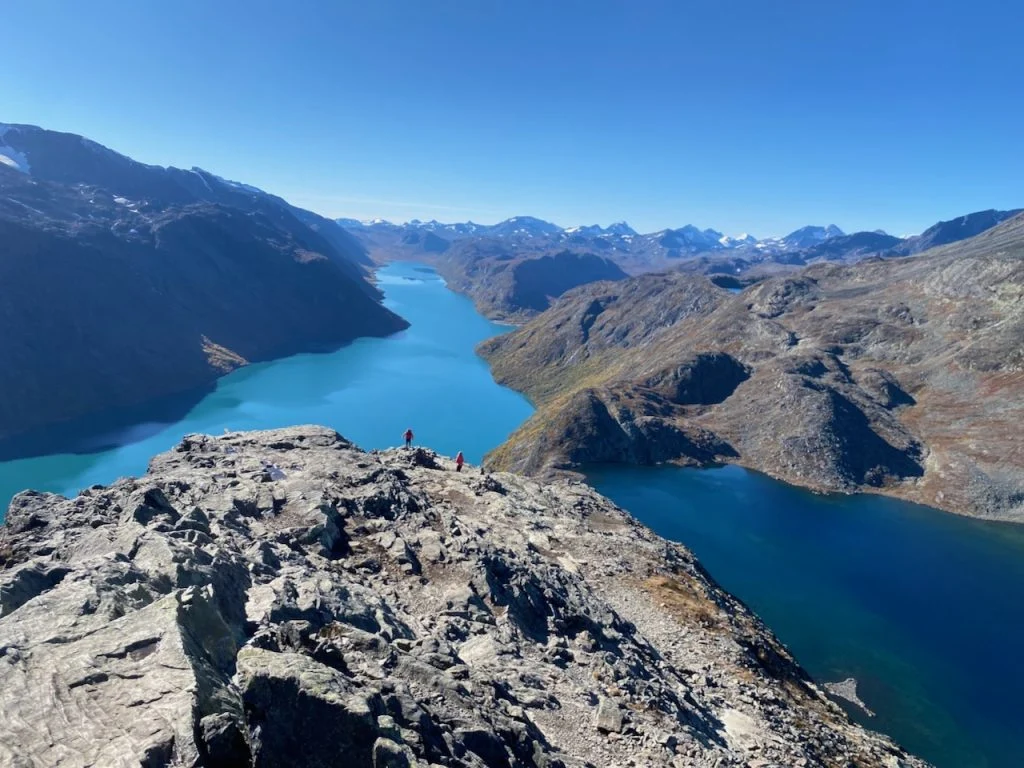
The final leg is perhaps the most exhilarating. Leaving Spiterstulen, the route climbs to the Skautflye Plateau, where the views open up to reveal the massive Veobrean glacier. Crossing the boulder-strewn pass of Velsglupen, the trail descends into the Veodalen Valley, often inhabited by wandering reindeer herds. The journey reaches its climax on the Besseggen Ridge. This narrow, precipitous spine offers a dual view: the turquoise, glacial-fed waters of Lake Gjende on one side, and the deep sapphire of Bessvatnet on the other. This section is a masterclass in alpine geology and a heart-pounding finale to the loop before the final descent to Gjendesheim.

Supporting Data and Logistics
For the modern hiker, the Jotunheimen Loop is an exercise in preparation. While the huts offer full-service amenities and warm beds, many experienced trekkers choose to utilize the tent-friendly landscape of the park.

The Gear Requirement
As with any arctic-influenced environment, the weather in Jotunheimen can shift from calm to tempestuous in minutes. A robust gear list is non-negotiable. Essential equipment includes:

- Shelter: A lightweight, wind-resistant tent capable of handling high-mountain gusts (e.g., MLD Duomid).
- Layering: A technical system featuring merino wool base layers, a synthetic or down mid-layer, and a reliable waterproof outer shell.
- Footwear: Sturdy, waterproof hiking boots with excellent ankle support for the rocky, uneven terrain.
- Navigation: While the trails are well-marked, GPS devices (such as GaiaGPS) are recommended for white-out conditions or off-trail exploration.
Nutritional Logistics
The Norwegian hut system is a world-class network. The lodges at Leirvassbu, Spiterstulen, and Gjendebu provide not only shelter but also a deep dive into Nordic culinary traditions. Hikers should anticipate menus that emphasize local, sustainable sourcing—a philosophy that aligns with the preservation of the park’s fragile ecosystem.

Cultural and Literary Implications
Jotunheimen is not just a destination for outdoor enthusiasts; it is a cultural monument. The Besseggen Ridge, in particular, is inextricably linked to Henrik Ibsen’s 1867 masterpiece, Peer Gynt. The protagonist’s harrowing account of riding a reindeer across the "Gendin-Edge" has solidified the ridge’s place in the global literary consciousness.

“Have you ever chanced to see the Gendin-Edge? Nigh on four miles long it stretches sharp before you like a scythe,” Ibsen wrote. This legacy draws thousands of visitors annually, transforming a simple hike into a pilgrimage of sorts. The interplay between the physical challenge of the terrain and the intellectual weight of Norwegian folklore adds a layer of depth to the experience that is rare in modern trekking.

The Alpine Congregation: Social Dynamics of the Trail
Perhaps the most enduring implication of the Jotunheimen Loop is the sense of community it fosters. While the wilderness is solitary, the mountain huts act as social hubs. Within the walls of the emergency shelters or the dining rooms of the lodges, the barriers of nationality, age, and experience dissolve.

During the 2022 season, the trail hosted a diverse international cohort: British climbers targeting Galdhøpiggen, German novices embarking on their first multi-day trek, and seasoned Chilean hikers sharing insights on global trails. This "alpine congregation" is a vital aspect of the trekking experience. In an increasingly digital world, the act of sharing a meal, a story, or a piece of advice with a stranger in a remote mountain hut remains a powerful humanizing force. It underscores the idea that while we come to the mountains to find nature, we often leave having found a deeper connection with our fellow travelers.

Conclusion: A Must-Experience Wilderness
The Jotunheimen Loop stands as one of the most rewarding multi-day treks in the world. It provides the perfect balance of accessibility and raw, unfiltered wilderness. Whether one is drawn by the prospect of standing on the roof of Scandinavia, the thrill of the Besseggen scramble, or the quiet, meditative experience of walking through the birch forests of the valleys, the "Land of the Giants" offers an unforgettable encounter with the majesty of the natural world.

For those planning to visit, the key is respect—respect for the volatile weather, respect for the delicate alpine flora, and respect for the rich cultural history that permeates every ridge and valley. As documented in the guide Wanderlust Nordics, the Jotunheimen Loop is not merely a trail; it is an invitation to witness the earth in its most powerful, ancient form. Whether you are an experienced mountaineer or an aspiring adventurer, the Giants are waiting.