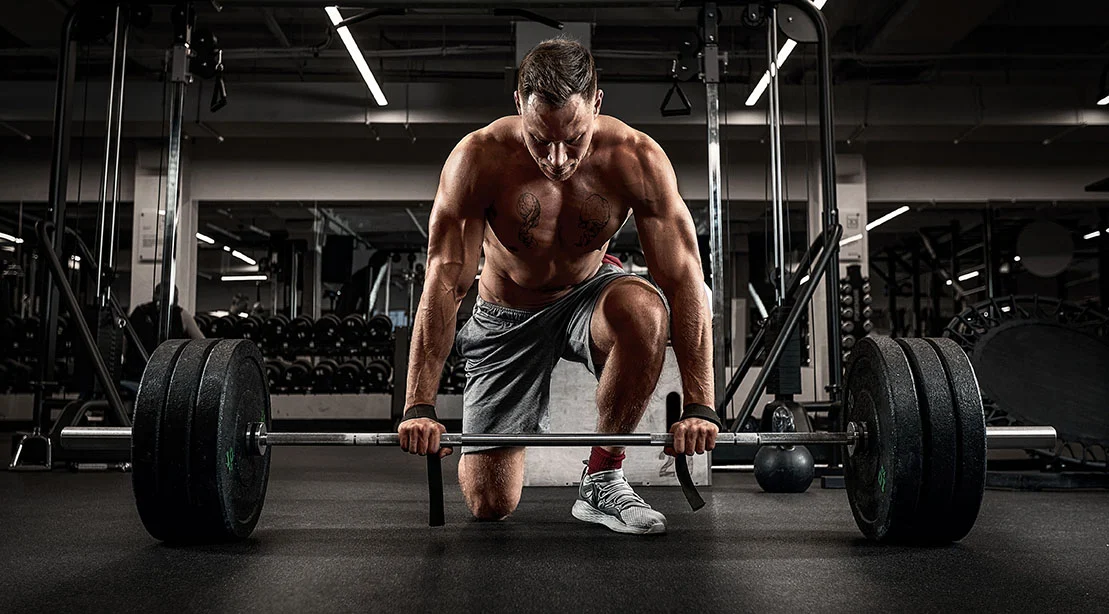
The deadlift is widely considered the king of strength exercises. It is a primal, full-body movement that builds a foundation of power, posture, and raw capacity. However, even the most seasoned lifters eventually hit a plateau. This is where the "deficit deadlift"—a variation that requires pulling the barbell from a position slightly lower than the standard floor level—enters the conversation.
But is it a necessary tool for the advanced athlete, or an unnecessary complication that invites injury? By forcing a greater range of motion (ROM), the deficit deadlift intensifies the demands on the kinetic chain. For some, it is the secret to a massive PR; for others, it is a fast track to a lower-back injury. To understand its true utility, we must move past the internet debates and examine the biomechanical, physiological, and programming realities of this challenging lift.
The Anatomy of the Deficit Deadlift: Main Facts
The deficit deadlift is, in essence, a standard deadlift performed while the lifter stands on a raised platform, typically a rubber mat, a weight plate, or a specialized block ranging from one to four inches in height.
By increasing the distance the bar must travel, the lifter is forced into a deeper starting position. This shift alters the biomechanical leverage of the movement, requiring significantly more knee flexion and hip mobility to reach the bar while maintaining a neutral spine. The primary goal of this exercise is to emphasize the "first pull"—the critical phase where the bar leaves the floor. If a lifter struggles to break the bar off the ground or loses their back position during the initial inches of the lift, the deficit deadlift is frequently prescribed as a corrective tool.
A Chronology of Controversy: Why the Lift is Polarizing
The history of the deficit deadlift is one of trial and error in the strength community. In the mid-to-late 20th century, legendary powerlifters began experimenting with elevated platforms to improve their starting strength.
However, as the "fitness influencer" era took hold, the exercise became a victim of its own aesthetic. Videos of lifters standing on massive, unstable deficits, rounding their backs under heavy loads, flooded social media. These "ego lifts" led to a wave of criticism from coaches and physical therapists, who correctly identified that for the average gym-goer, the risk-to-reward ratio was heavily skewed toward injury.
The criticism, however, often conflates misuse with uselessness. As the discourse has matured, top-tier coaches have moved toward a more nuanced view: the deficit deadlift is a scalpel, not a sledgehammer. It is a precision tool intended to address specific weaknesses, not a standard variation to be performed by everyone in every training block.
Supporting Data: Why It Works (When Done Right)
The utility of the deficit deadlift is rooted in the principles of "Time Under Tension" (TUT) and "Positional Strength."
1. Increased Range of Motion (ROM)
A standard deadlift relies heavily on the posterior chain (hamstrings, glutes, and erectors). By adding a 2-inch deficit, the lifter increases the ROM by roughly 5% to 8%. While that sounds small, in the context of a 500-pound pull, the additional work required to move the weight through those extra inches significantly increases the metabolic demand on the quads and the core.
2. Enhanced Force Production
Research into force-velocity curves suggests that training in a lengthened state—at the very bottom of the pull—improves neural drive. By forcing the body to initiate the movement from a more disadvantaged, deeper position, the lifter trains the central nervous system to recruit more motor units at the start of the rep. When the lifter returns to a standard floor-level deadlift, the weight feels lighter because they have developed "over-speed" and excess strength in the weakest portion of the lift.
3. The "Sneaky" Quad Stimulus
Conventional deadlifts are often categorized as posterior-chain dominant. However, the deficit forces a deeper knee bend, effectively turning the first portion of the lift into something closer to a leg press or a deep squat. This increases quad recruitment, which is often the missing link for lifters who struggle to get the bar moving initially.
Expert Perspectives: Official Responses
To gain clarity, we turned to leading voices in the strength and conditioning industry.
Matt Wenning of Wenning Strength emphasizes the importance of objective assessment. "The criticism comes from coaches who see them prescribed universally," Wenning explains. "Like any special exercise, they’re only as good as the reason they were selected. There’s no good or bad exercise; it either solves a specific weakness or it doesn’t."
Tasha “Iron Wolf” Whelan of Ideal Strength echoes this sentiment, focusing on the intent behind the training. "They’re controversial because they’re often prescribed without a clear purpose. The question shouldn’t be ‘Do deficits work?’ It should be: ‘What adaptation am I trying to create? Am I trying to improve positional strength?’"
Both experts agree that the deficit deadlift should never be treated as a "max effort" lift. Instead, it is an accessory movement designed to build the foundation that supports the main lift.
Implications: The Risks and Potential Downsides
Despite the benefits, the deficit deadlift is not for everyone. The dangers are physical and technical.
The Lower Back Conundrum
The most significant risk is spinal flexion. As the body descends to reach the lower bar, the risk of "cat-backing" (rounding the lumbar spine) increases exponentially. If a lifter does not have the ankle, hip, or thoracic mobility to reach the bar with a flat back, the deficit will only highlight that deficiency. For those with a history of disc herniations or lower-back pain, the deficit deadlift is often contraindicated.
The Fatigue Factor
Because the movement is mechanically more demanding, it creates systemic fatigue that is higher than a standard pull. If a coach layers heavy deficit pulls on top of an already high-volume program, the result is often a decrease in performance and an increase in the risk of overtraining or injury.
Complexity and Over-Complication
There are simpler ways to achieve the same results. Paused deadlifts, where the lifter holds the bar one inch off the floor for two seconds, can build starting strength without the added risk of a deeper range of motion. For many, the deficit deadlift is simply an unnecessary variable.
Programming for Success
If you decide to incorporate the deficit deadlift into your routine, do so with a strategic approach.
1. Keep the Deficit Modest
Start with a 1-to-2-inch elevation. Anything beyond 3 inches becomes increasingly difficult to manage and often moves away from "strength training" into the realm of "acrobatics."
2. Manage the Load
Do not try to hit your 1RM on a deficit. Work with 60% to 80% of your conventional 1RM. If the bar speed slows down significantly, you have gone too heavy.
3. Cycle the Movement
Do not perform deficit deadlifts year-round. Use them in four-to-six-week "accumulation blocks." Once the goal (e.g., faster off the floor) is achieved, rotate the exercise out for a different variation or return to standard deadlifts to reap the benefits of your new strength.
4. Rest and Recovery
Due to the increased time under tension, allow for 2-3 minutes of rest between sets to ensure that your form does not break down. If your back rounds on the third rep, stop the set. The goal is perfection, not survival.
Conclusion: Is It Worth the Risk?
The deficit deadlift is a high-reward tool, provided the lifter possesses the prerequisite mobility and technical discipline. It is not an ego-building exercise, and it should never be used to compensate for poor form.
If you are an advanced lifter struggling to break the bar off the floor, or if you feel your positioning is inconsistent in the bottom half of your pull, the deficit deadlift may be exactly what you need. However, if you are a beginner, or if your form is already prone to breakdown, steer clear. In the world of strength, the most effective tool is the one you can perform with perfect technique, consistently, over time. Choose your tools wisely, and ensure every movement in your program has a clear, evidence-based purpose.