By Samuli Haapasalo | Field Report: June 16, 2026
The wilderness of North Karelia, Finland, is rarely truly silent. Even in the deepest hours of a mid-May night, the forest hums with the pulse of life. However, at the Erä-Eero hide in Lieksa, the darkness was punctuated by a sound that instantly severed the threads of sleep: a series of powerful, guttural growls, rhythmic and insistent.
As a wildlife photographer, one learns to transition from deep slumber to total alertness in a heartbeat. I stood up silently on the sleeping platform, heart racing. Outside, in the dim, ethereal light of a northern spring night, a high-stakes standoff was unfolding. Two wolves were engaged in a fierce, silent dance with a wolverine—an encounter that would last for over thirty minutes and serve as a testament to the raw, unyielding nature of the Finnish taiga.
Main Facts: A Duel of Apex Predators
The encounter involved two wolves—predators known for their coordination and stamina—and a solitary wolverine, a creature legendary for its ferocity and strength. While wolves often hunt in packs and operate with strategic efficiency, the wolverine is a solitary wanderer, possessing a tenacity that allows it to hold its own against much larger adversaries.
The incident occurred in the pre-dawn darkness of late May. The setting was a clearing where the natural hierarchy of the forest was put to the test. The dynamics were clear: the wolves were the aggressors, using swift, silent bursts of movement to probe the wolverine’s defenses, while the wolverine held its ground with guttural warnings and defensive posturing. The primary objective for the wolverine appeared to be the protection of a food resource, likely a carcass nearby, which the wolves were intent on claiming.
Chronology of the Encounter
The standoff was not a quick skirmish, but a prolonged tactical engagement.
00:00 – Initial Contact: The conflict began with the wolverine vocalizing—a series of deep, growling "rumbles" that signaled its refusal to retreat. The wolves, initially more cautious, began to close the distance. They moved with an uncanny, silent speed, testing the wolverine’s resolve.
00:15 – The Defensive Perimeter: The wolves adopted a "hit-and-run" strategy, launching aggressive, silent sprints toward the wolverine, only to pull back when the wolverine stood its ground. At times, the animals were within inches of each other, staring down their opponent in a display of primal intimidation.
00:25 – The Retreat to Safety: Recognizing the wolves’ advantage in numbers, the wolverine executed a tactical retreat, climbing a short, dead pine snag—a kelo—to gain the high ground. The wolves, seemingly satisfied or perhaps wary of the wolverine’s defensive capabilities, settled into the tall grass, effectively keeping the wolverine pinned.
00:35 – The Stalemate: The situation devolved into a tense standoff. During lulls in the activity, the wolverine would make quick, desperate dashes to secure scraps of food, devouring them in seconds before returning to its defensive stance.
00:45 – Disengagement: Without a clear winner and with the risk of injury becoming too high for either party, the wolves eventually lost interest. The two predators slowly retreated into the forest, leaving the clearing to the wolverine once more.
Photographic Challenges and Technical Realities
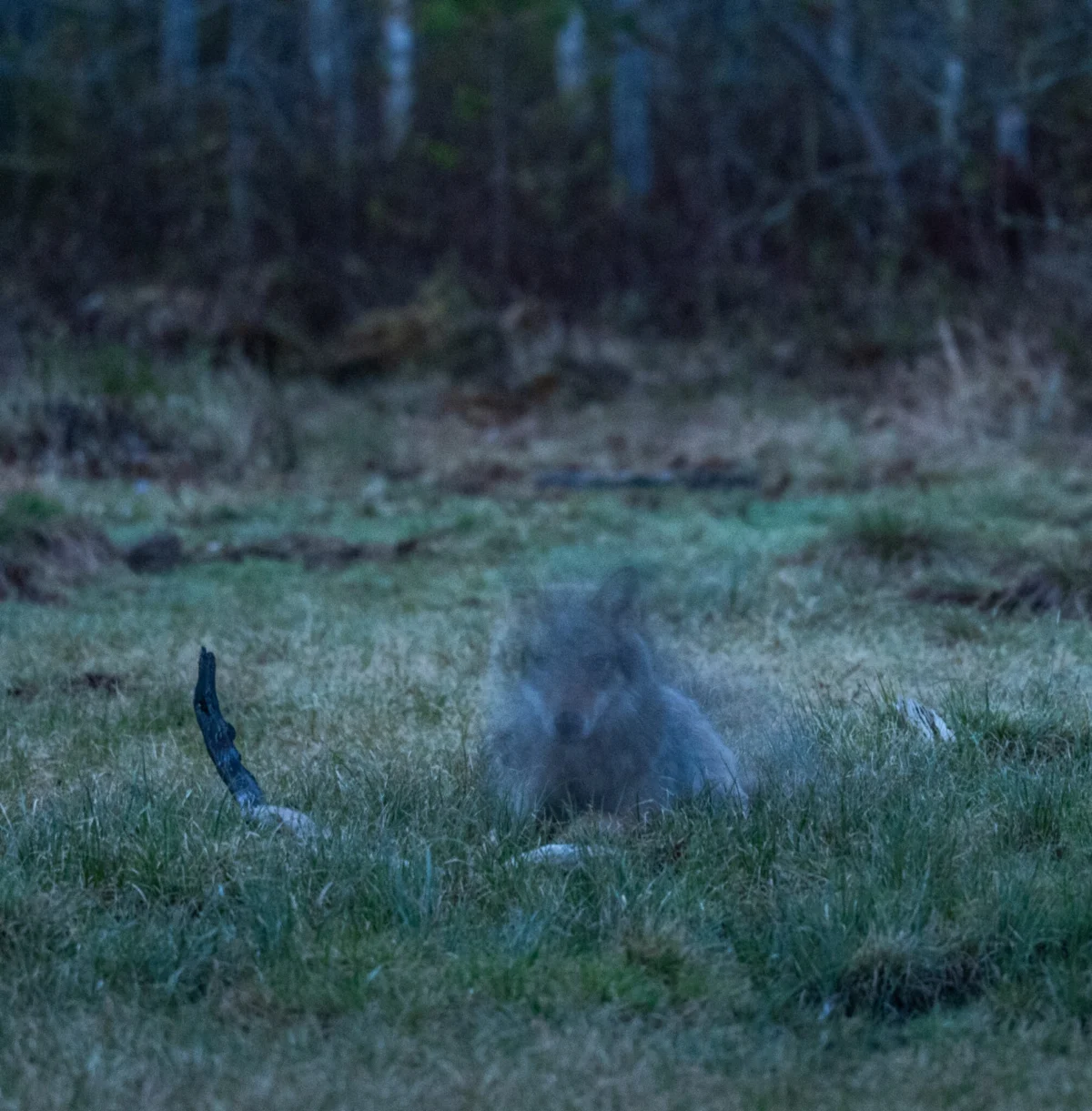
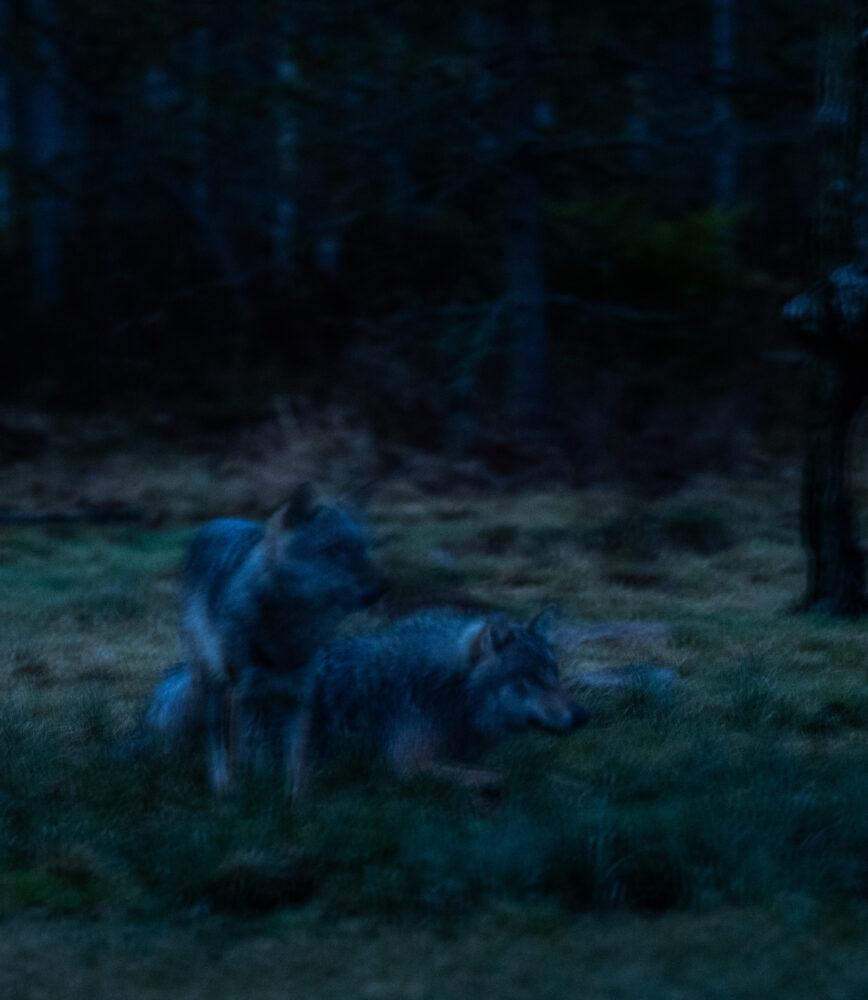
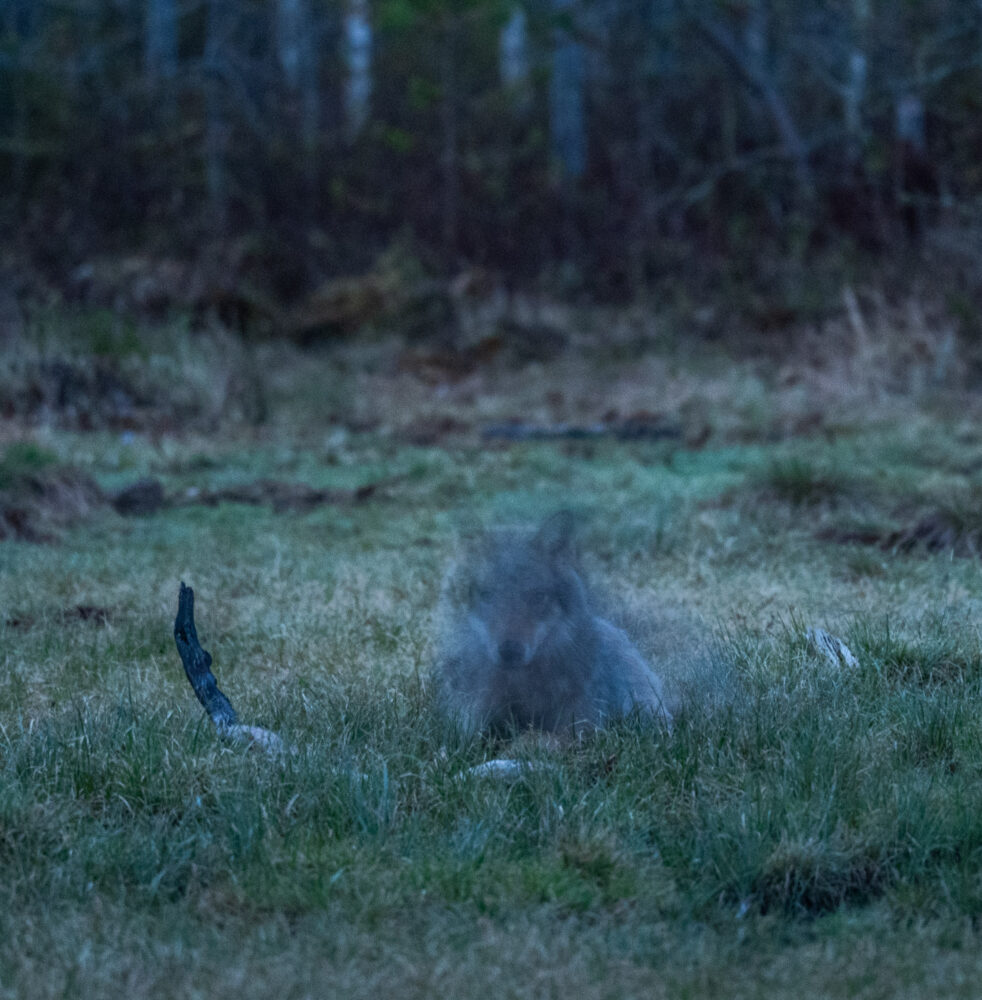
Capturing this event was a photographer’s nightmare and a dream simultaneously. Using a 70–200mm telephoto lens, I was forced to push my equipment to its physical limits. With the low light, my shutter speeds hovered between 1.5 and 2 seconds.
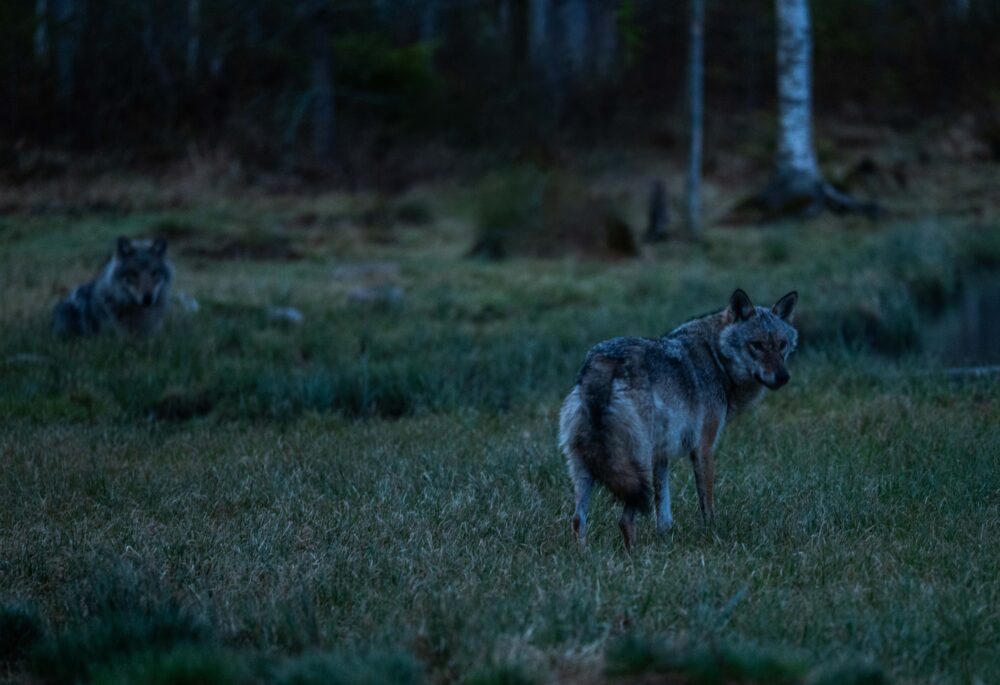
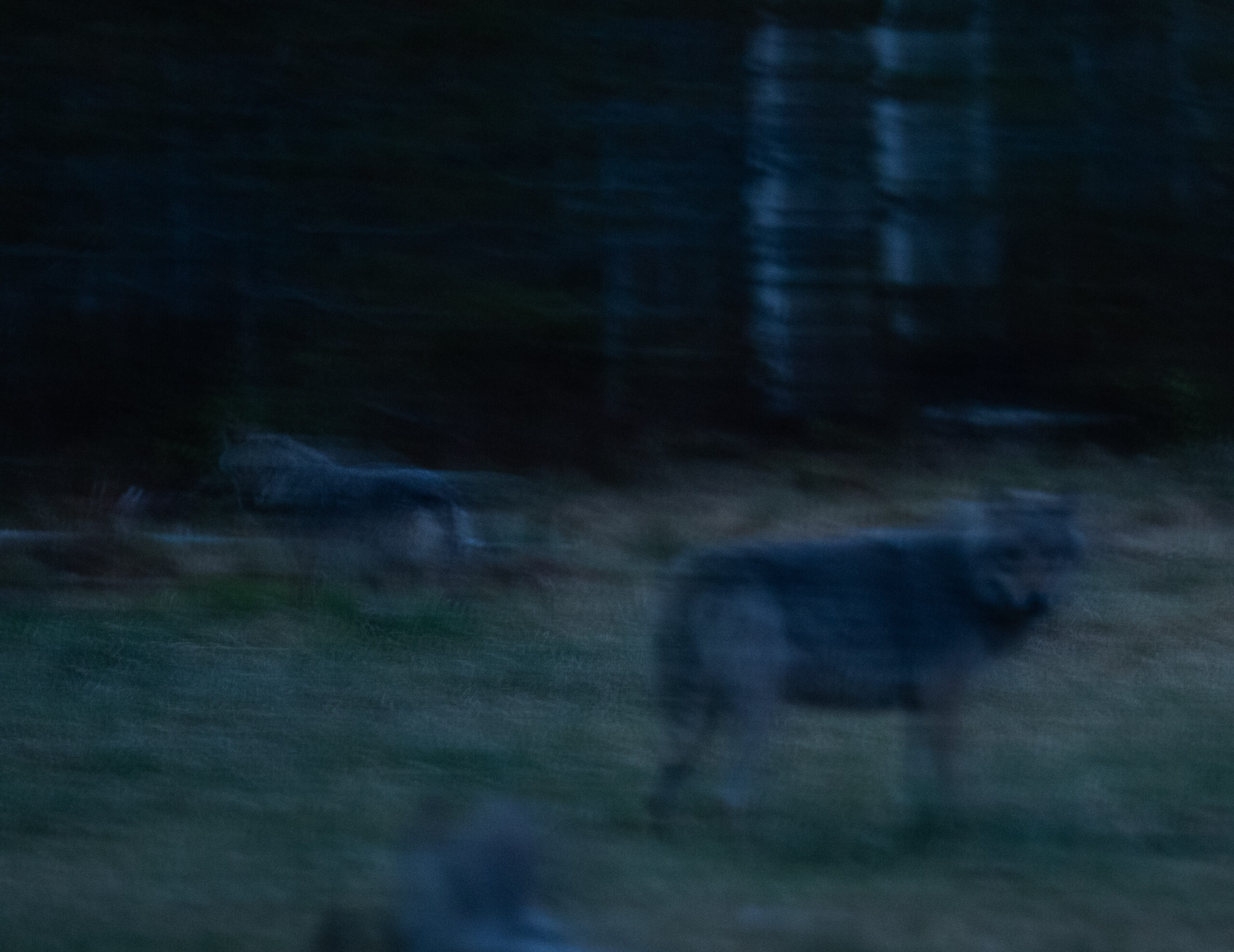
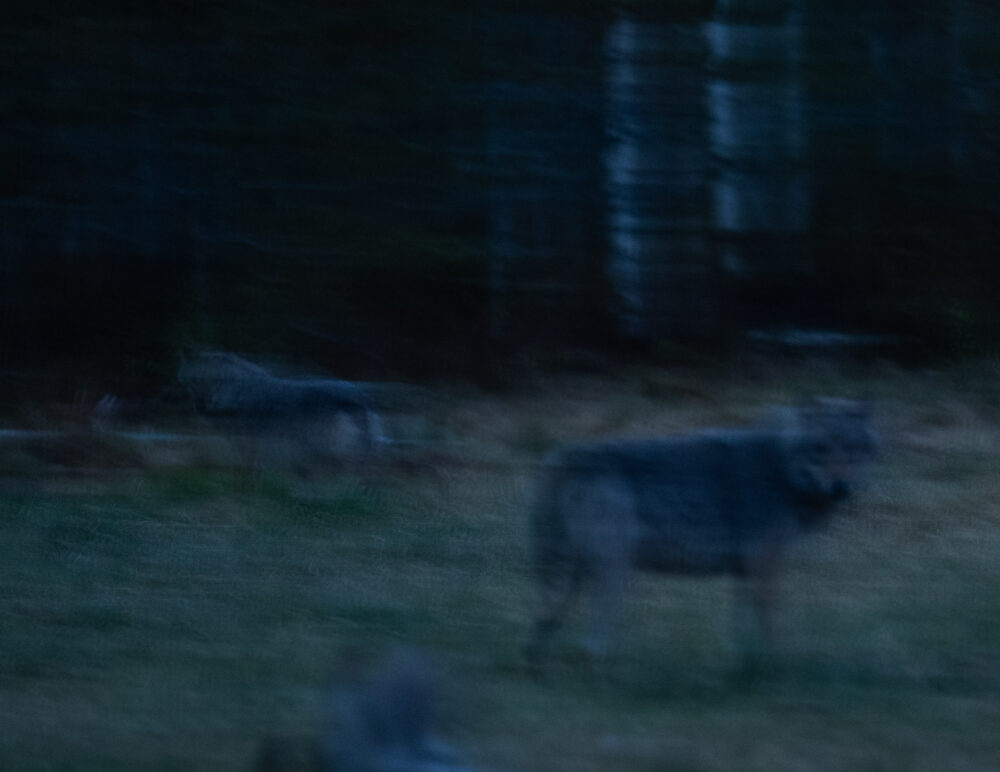
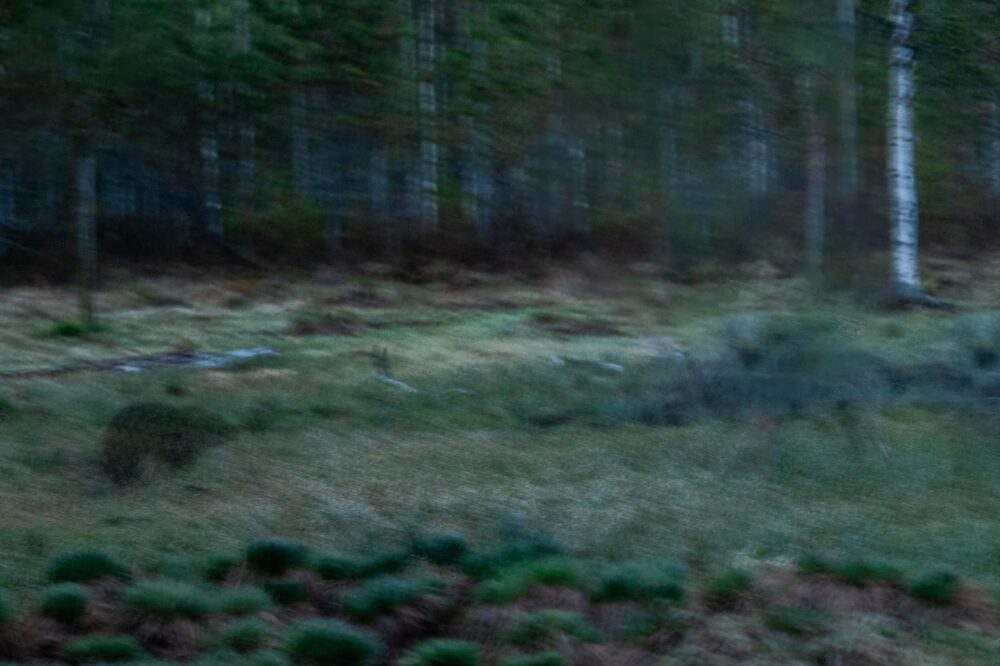
The resulting images are, in many ways, more haunting than a crisp, high-shutter-speed photograph. Because the animals were constantly in motion, the images are filled with motion blur—ghostly, grey and dark-brown shapes that seem to shimmer through the landscape. In some frames, the animal’s form is so translucent that the background forest is visible through its body. These "awe-inspiring" failures, as I consider them, capture the ethereal, ghostly nature of these creatures as they move through the northern twilight.
Implications of Interspecies Conflict
The interaction between wolves and wolverines is a well-documented but rarely observed phenomenon in the wild. While the wolf is significantly larger, the wolverine is essentially a "honey badger on steroids," possessing a bite force capable of shattering a wolf’s leg bone with a single snap.
Why No Fatalities?
The central question arising from this event is why, despite the clear potential for lethal violence, both parties opted for posturing over bloodshed. The answer lies in the "cost of conflict."
- Risk Mitigation: A wolf with a broken leg is a dead wolf. A wolverine with a shredded flank may not survive the subsequent week. Both predators are finely tuned survival machines that understand the calculus of risk.
- Energy Expenditure: Engaging in a full-scale fight is metabolically expensive. Unless the reward—a significant carcass or territorial dominance—is worth the risk of life-altering injury, both predators prefer intimidation.
- Previous Observations: I recall a similar encounter several years ago in Kuhmo, where a pack of six wolves faced a single wolverine. Even with superior numbers, the wolves did not risk a direct assault. The wolverine, in that instance, stayed in a tree for an entire night until the wolves moved on.
This night in Lieksa followed that same script: a dance of shadows where the primary goal was not to kill, but to dominate the space through presence and threat.
The Broader Ecosystem: A Photographer’s Perspective
The Erä-Eero hide in Kontiovaara is a unique gateway into the life of the Finnish wilderness. My experience here serves as a reminder that nature is not always the idyllic, peaceful scene depicted in wildlife documentaries. It is often raw, brutal, and deeply competitive.
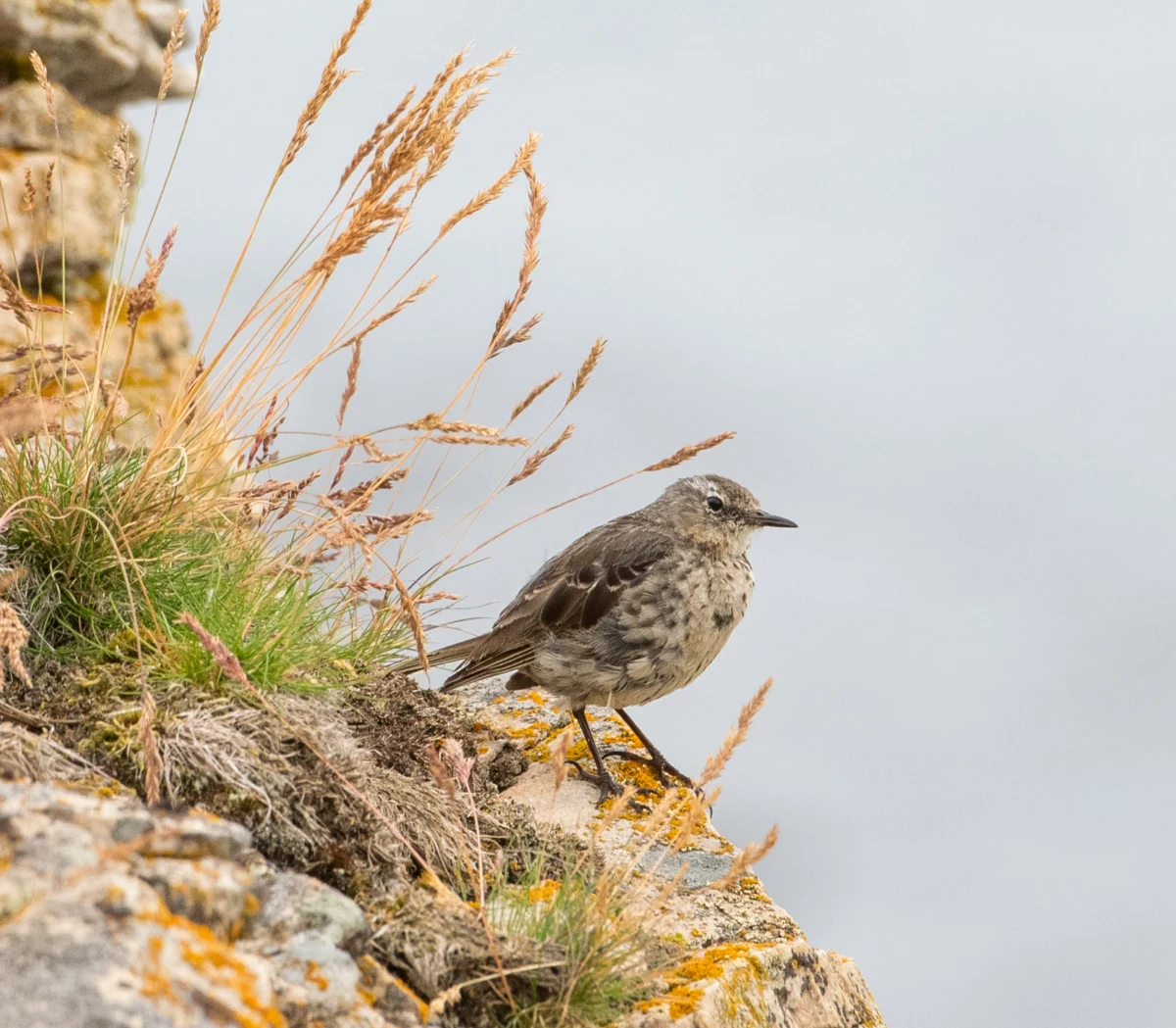
Beyond the major predators, the area is a bustling hub of activity. Just hours after the wolves and wolverine departed, the same landscape hosted a different cast of characters: common redshanks, green sandpipers, and common sandpipers, all wading through the morning mist. This juxtaposition—the violent, nighttime power struggle followed by the delicate, peaceful morning routines of shorebirds—is the essence of the northern ecosystem.
Journalistic Reflection
As a contributor to Suomen Luonto, my goal is to share these rare glimpses into the lives of our apex predators. While I sometimes regret that the lighting conditions weren’t perfect for a National Geographic-style portrait, I find that the blurred, ghostly images I captured are more accurate to the reality of the encounter. They reflect the confusion, the speed, and the unsettling, quiet power of the Finnish night.
For those who follow my blog, Vuosi luonnossa (A Year in Nature), this event remains one of the most compelling of the 2026 season. It serves as a reminder that the wild is always watching, always struggling, and always evolving. Whether through the lens of a camera or the curiosity of a birdwatcher, these moments are what keep us tethered to the natural world.
Supporting Data & Context
- Location: Lieksa, Kontiovaara, North Karelia.
- Date: June 16, 2026 (Reported post-event).
- Species Involved: Grey Wolf (Canis lupus) and Wolverine (Gulo gulo).
- Equipment Used: Camera with 70–200mm f/2.8 lens; ISO pushed to high settings; exposure times 1.5–2.0 seconds.
- Ecological Significance: The interaction highlights the competition for food resources in the Finnish forests, where large carnivore populations are currently stable and frequently overlap in their hunting ranges.
As I look back on these images, I am reminded of the words of many naturalists: "Nature does not hurry, yet everything is accomplished." Even in the chaotic flurry of a nocturnal standoff, there is a rhythm—a balance that has been perfected over millennia of evolution. The wolves and the wolverine survived to hunt another day, and I was fortunate enough to bear witness to their ancient, silent war.