Introduction: The Foothills Frontier
It is barely 6:00 AM in the Alberta foothills. The temperature is hovering near freezing, and the rugged terrain of the Blackstone River valley has done little to provide a soft landing for a night spent on a gravel bar. Yet, the discomfort is secondary to the anticipation. For the dedicated angler, the Blackstone River represents a rare intersection of accessibility and wilderness challenge. Located just off the Forestry Trunk Road and north of Highway 11, this modest waterway—winding its way from the front ranges of the Canadian Rockies toward the Brazeau River—is a hidden gem of the Canadian angling circuit.
Despite its manageable size—averaging 20 meters in width—the Blackstone carries a reputation that far outweighs its physical footprint. It is here that the intersection of technical skill and sheer luck often dictates the success of a trip. This report explores the nuances of fishing this unique ecosystem, the specific challenges of targeting Bull Trout with dry flies, and the realities of backcountry angling in Alberta.
Chronology of the Expedition
The journey began under the cover of darkness. Arriving at the riverbanks at 10:00 PM, the camp was established with the frantic, clumsy energy typical of late-night arrivals. By dawn, the primary objective was clear: capitalize on the early morning feeding window before the sun hit the water and the fish became wary.
The Morning Routine
To avoid the lethargy that often accompanies backcountry camping, the morning started with a deliberate, albeit boisterous, routine. For those traveling with companions—particularly those prone to oversleeping—creating a sense of urgency is essential. By 7:00 AM, the gear was assembled, and the transition from the gravel bar to the river’s edge was complete.
The Search for the "Fishiest" Pool
The first hour of trekking downstream proved difficult, yielding little activity. It was not until the party rounded a sharp bend in the river that they encountered a quintessential pool. The water held a glassy, tranquil quality, yet the surface was punctuated by the rhythmic rise of feeding trout.
- Phase One: Prospecting. The initial approach involved using "prospector" patterns—the Red Humpy and the Stimulator—to test the surface activity.
- Phase Two: The Adjustment. When the prospectors failed to produce, the strategy shifted to a Pale Morning Dun.
- Phase Three: The Strike. Almost immediately, the shift paid dividends. A massive, 20-inch Cutthroat trout was hooked, though the lack of a landing net turned the recovery into a test of dexterity and patience.
Technical Analysis: Gear and Fly Selection
Success on the Blackstone is rarely the result of high-end, expensive equipment; rather, it is a function of reliability and minimalist preparation.
The Hardware
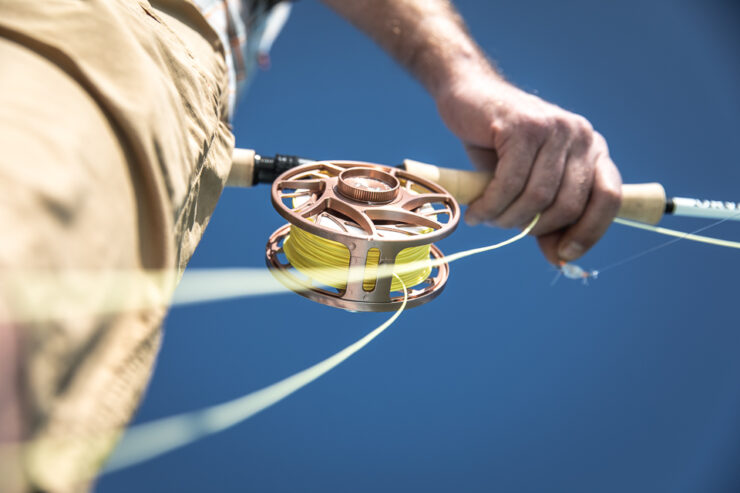
For this expedition, the primary setup consisted of:
- Rod: A 9-foot, 5-weight Echo Carbon XL.
- Reel: A Redington Crosswater, chosen for its consistent drag system.
- Backup: A Cabela’s 5-weight store-brand rod paired with a vintage Okuma reel.
While industry trends push anglers toward increasingly expensive "bespoke" gear, the Blackstone environment rewards the durable. The ability to cast accurately into tight pockets of water near overhanging brush is far more valuable than the price tag on the rod.
The Fly Box: A Minimalist Approach
Over-packing is the enemy of the mobile angler. The selection for the Blackstone was curated to cover three specific needs:
- Standard Dries: Essential for the varied insect life of the Alberta foothills.
- Bead-head Nymphs: Necessary for probing the deeper, cooler sections of the river during the midday lull.
- Terrestrials: Large patterns designed to mimic ants, grasshoppers, or beetles, which often trigger aggressive responses from larger predators like Bull Trout.
The Bull Trout Paradox: Dry Fly Exclusivity
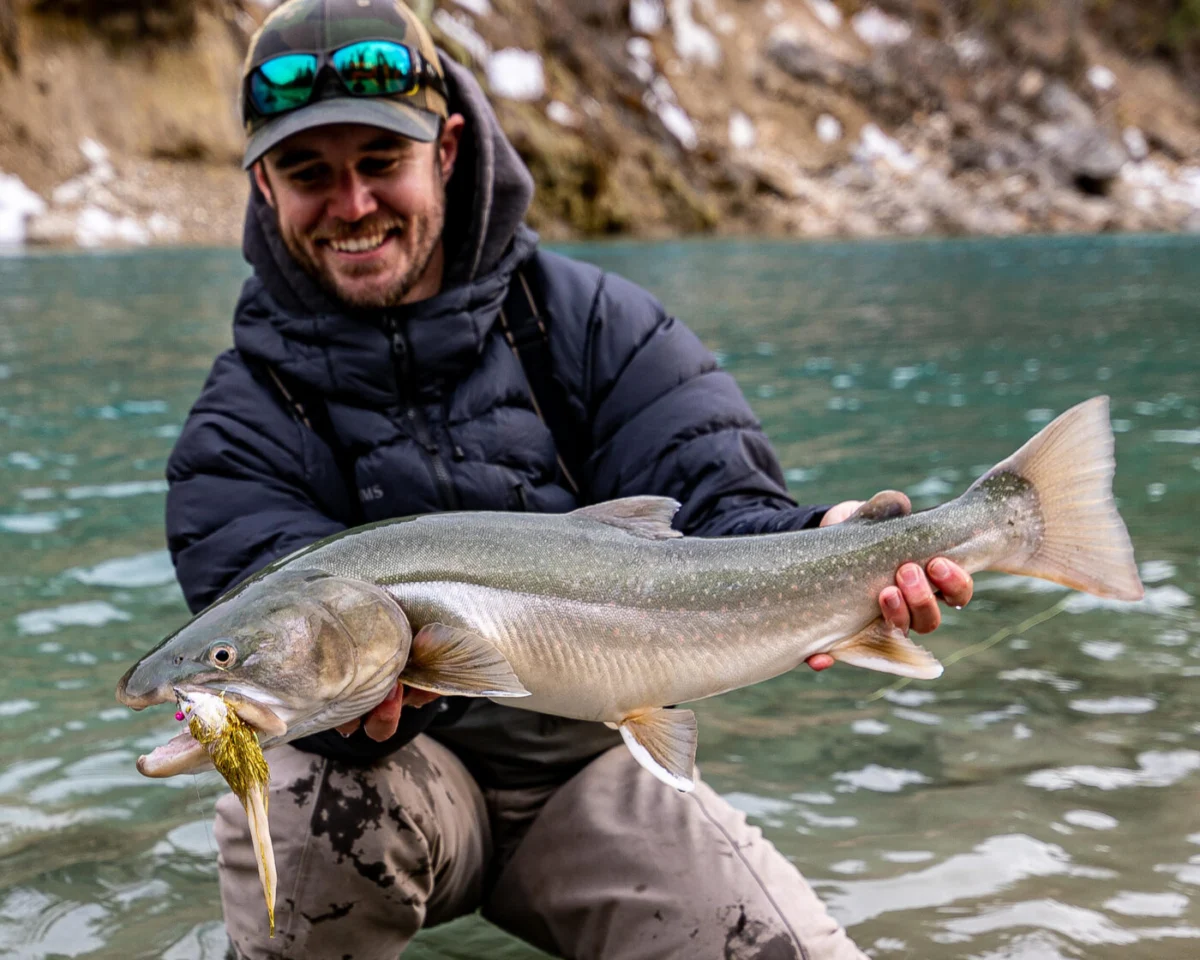
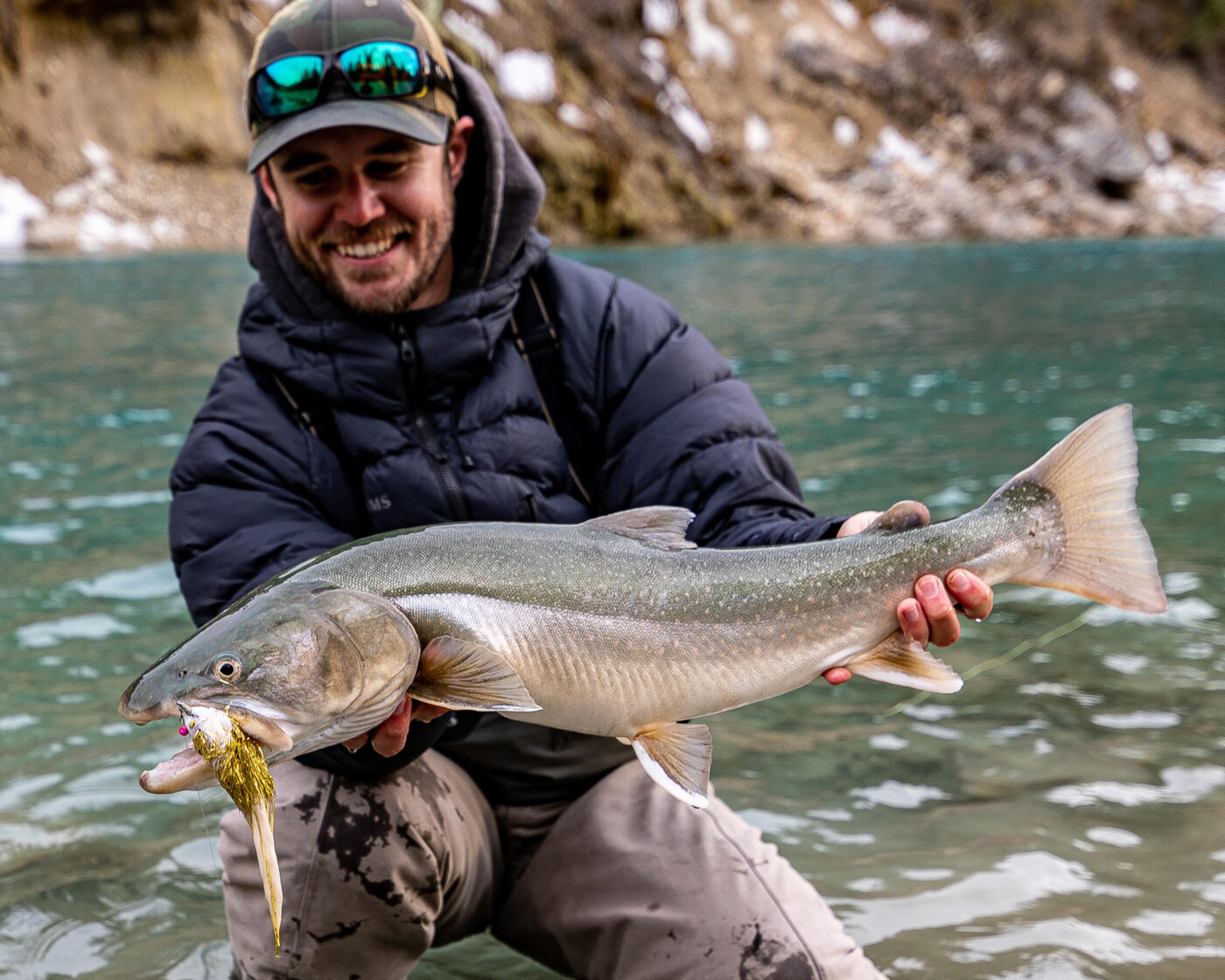
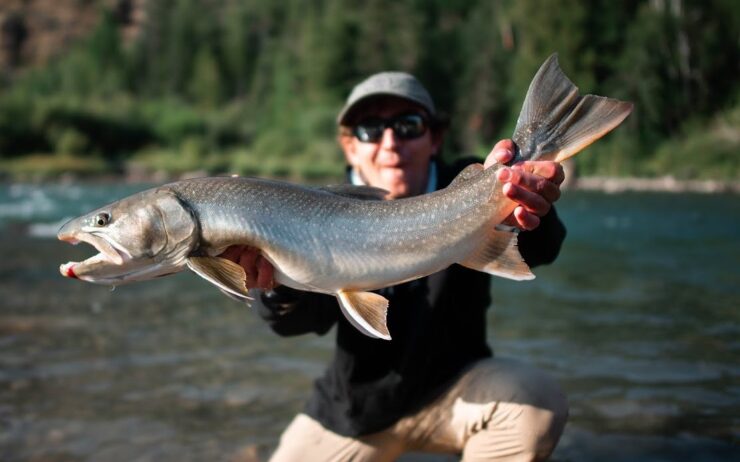
The Bull Trout (Salvelinus confluentus) is a prized catch in Alberta, known for its predatory nature and territorial aggression. Traditionally, anglers target these fish using massive streamers designed to mimic small fish or sculpins.
Barry Mitchell’s Legacy
The legendary guidebook author Barry Mitchell long maintained that the Blackstone is one of only two rivers in the province where Bull Trout consistently rise to dry flies. While modern anglers might argue that this claim is outdated or overly restrictive, the experience on the Blackstone confirms the fundamental truth of the observation.
The Strategy
By utilizing a "Fat Albert"—a large, buoyant foam fly—the angler mimics the behavior of a terrestrial insect trapped on the surface. When a Bull Trout hits this pattern, the experience is vastly different from the subtle sip of a Cutthroat. It is a violent, fast, and aggressive take that tests the angler’s reflexes. The hook-up on this trip resulted in a moderate-sized Bull Trout that fought with the characteristic intensity of its species, providing a high-adrenaline conclusion to the morning.
Implications for Conservation and Management
The Blackstone River is a fragile ecosystem. The presence of Bull Trout—a species that is listed as "threatened" in many parts of its range—necessitates a strict adherence to catch-and-release ethics.
The "Net" Lesson
The recurring issue of forgotten equipment—specifically the landing net—serves as a cautionary tale. In the heat of the moment, the safety of the fish must remain the priority. Handling a 20-inch Cutthroat or a spirited Bull Trout with bare hands on a rocky bank causes undue stress and potential damage to the fish’s protective slime coat.
Regulatory Considerations
Anglers visiting the Blackstone must be aware that provincial regulations regarding bait, hooks, and catch limits are subject to change based on seasonal fish counts and water levels. Before heading into the backcountry, one must verify the current status of the Blackstone via the Alberta Environment and Protected Areas website. Sustainable angling is not just about the rules; it is about ensuring that the next generation of anglers can experience the same rise to a dry fly in the shadow of the Rockies.
Conclusion
The allure of the Blackstone River lies in its ability to humble the experienced and reward the persistent. From the freezing, early-morning start on a gravel bar to the tactical shift in fly selection at a remote pool, the trip served as a microcosm of the Alberta fly-fishing experience.
Whether one is chasing the legendary Bull Trout or simply enjoying the serene beauty of the foothills, the keys to success remain constant: keep the gear simple, respect the water, and—above all—never forget your net. As the sun climbs higher and the river settles into the afternoon calm, the memories of a successful strike on a dry fly remain the true measure of the journey.
Adelaide Gentry is an expert in wilderness navigation and fly fishing with over a decade of experience in the Canadian Rockies. Her work focuses on sustainable, minimalist approaches to outdoor adventure.