By Samuli Haapasalo
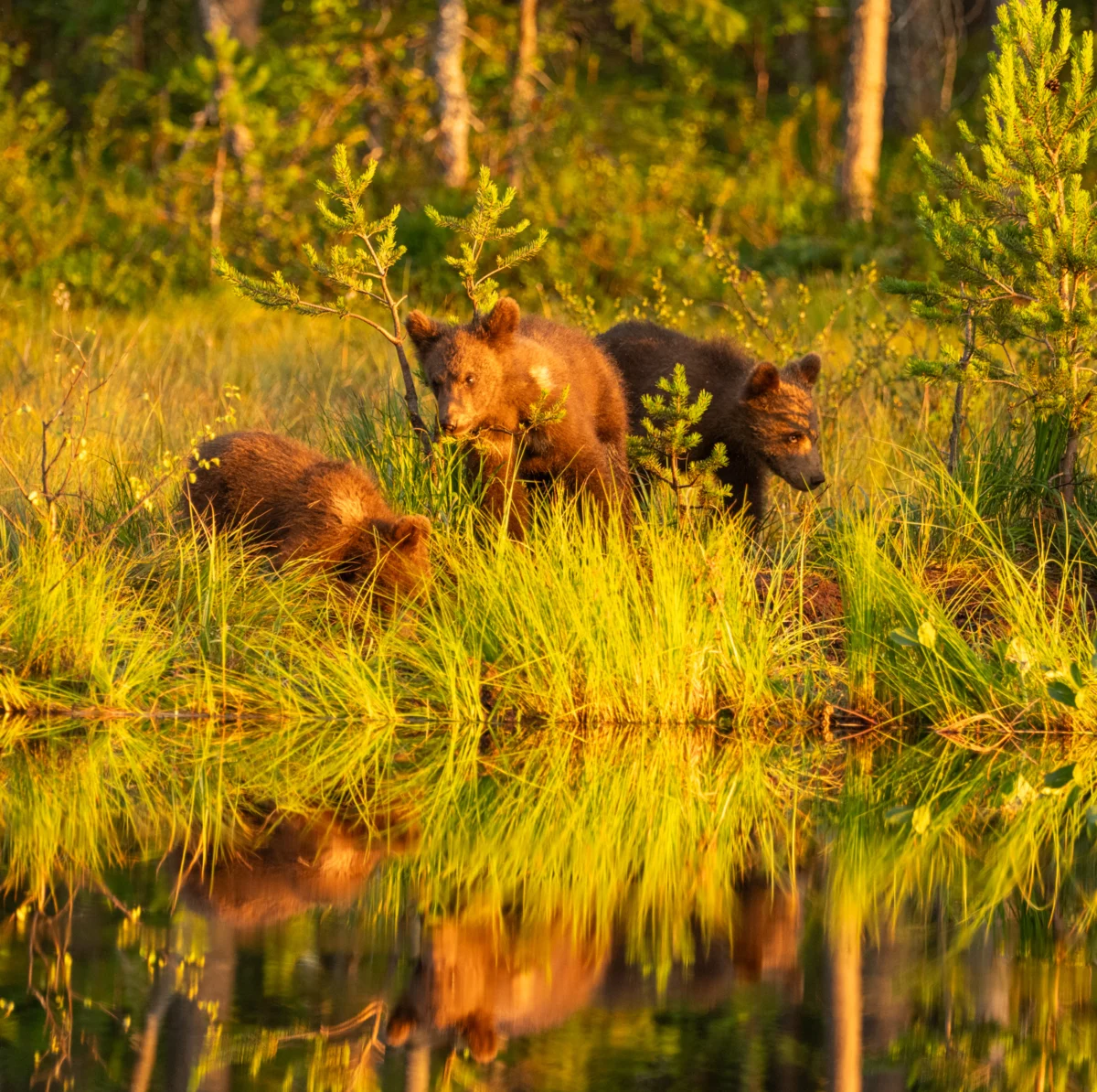
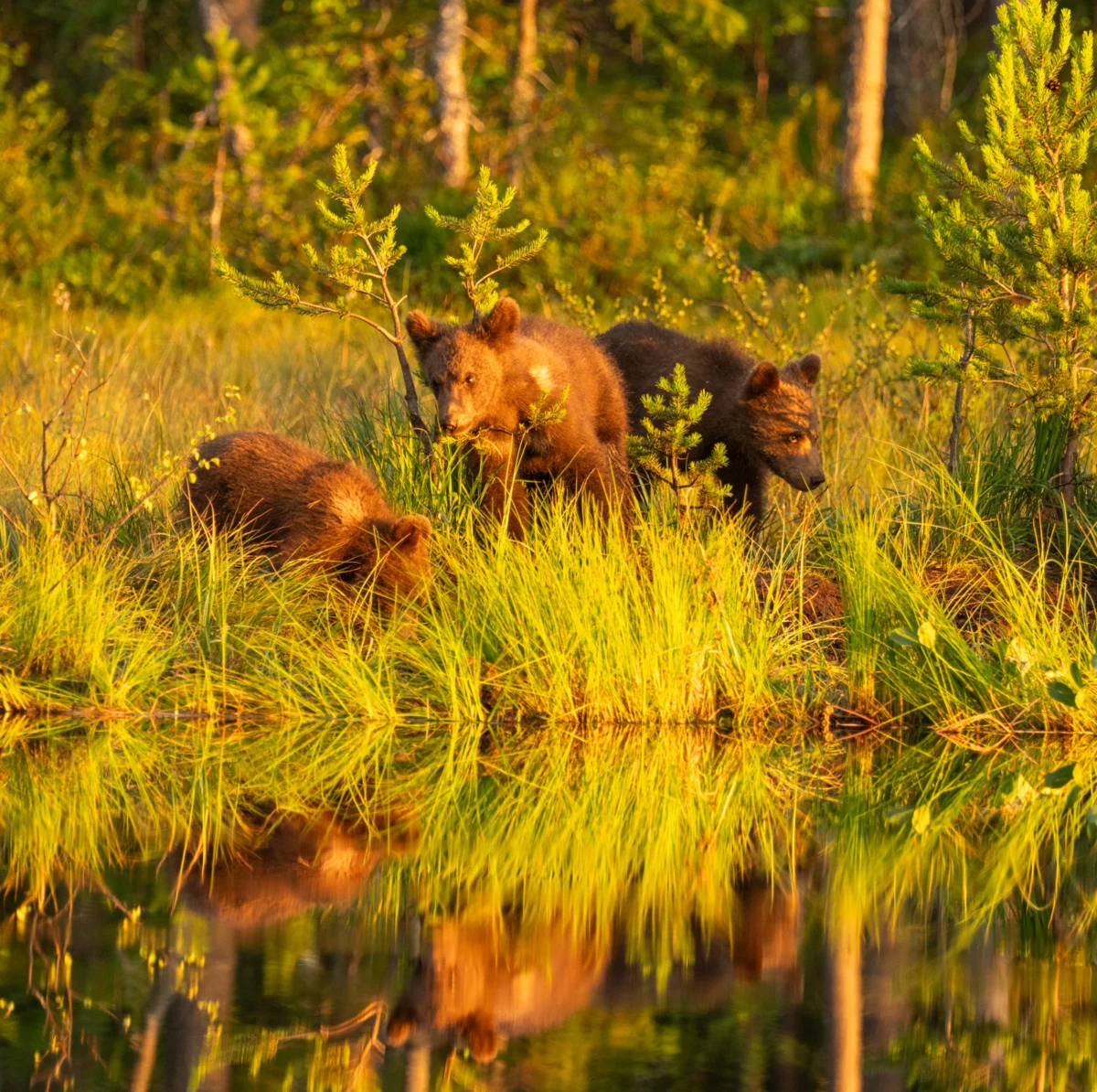
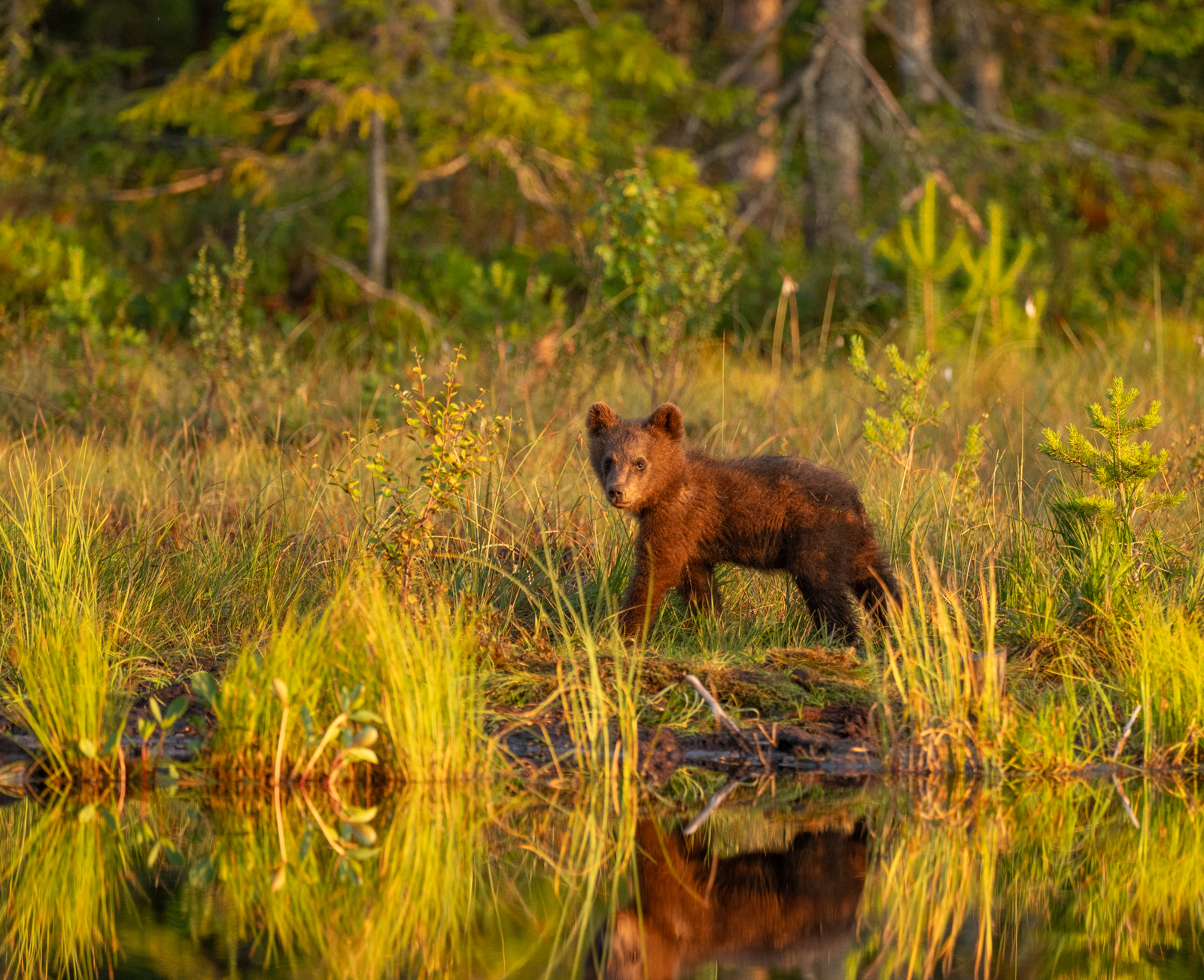
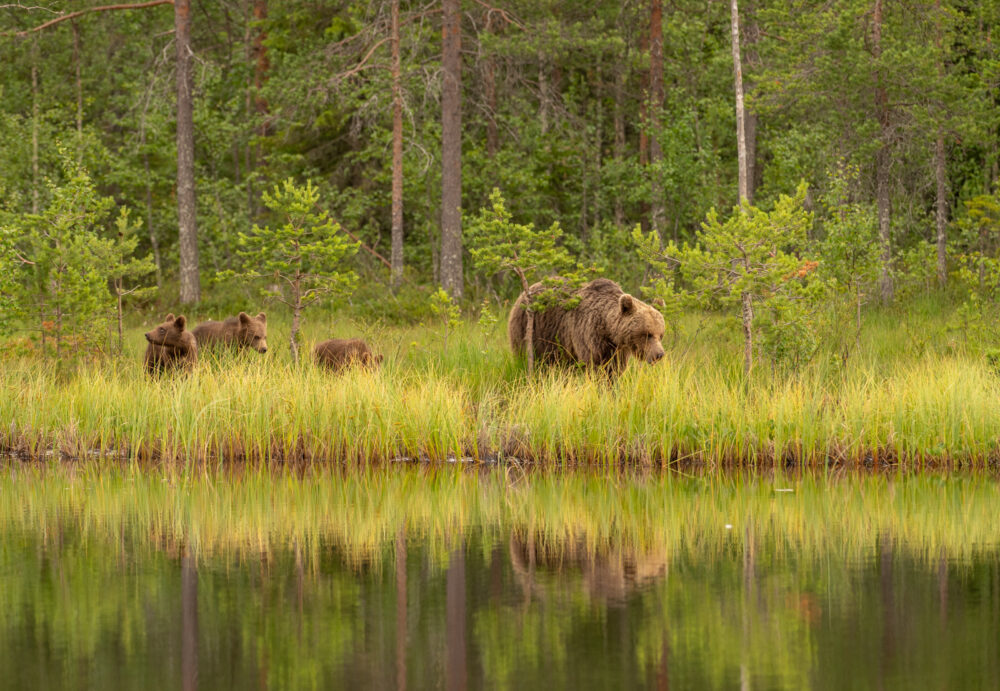
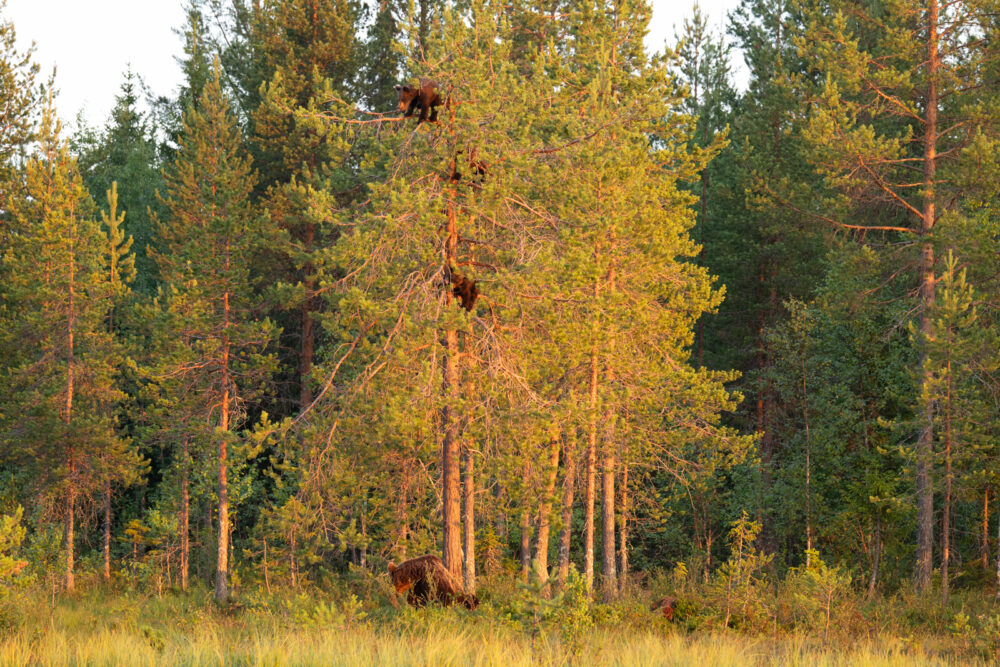
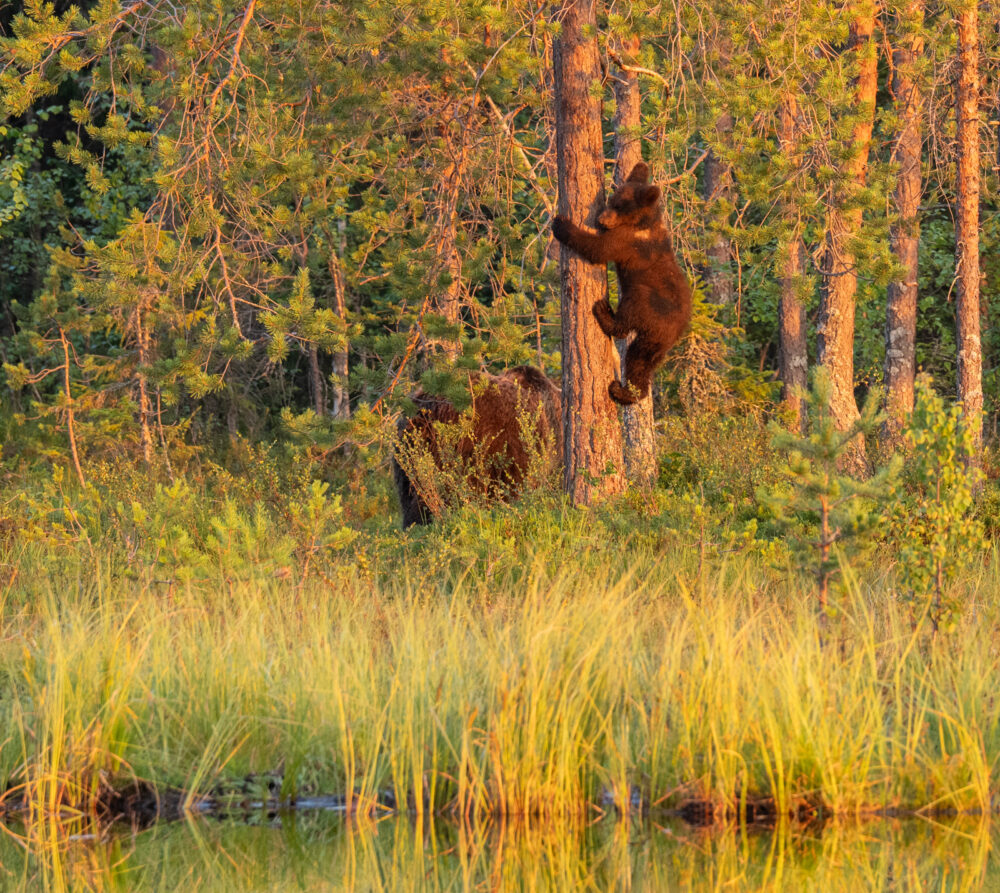
In the quiet, untouched reaches of Martinselkonen, Suomussalmi, the rhythm of the forest is dictated not by clocks, but by the fading light of the northern summer. As July evening shadows lengthen, the russet-brown coats of bear cubs seem to catch fire in the golden glow of the setting sun. Below, the calm surface of a forest pond acts as a mirror, capturing the fleeting, graceful movements of a mother bear and her three cubs—a scene of wild tranquility that feels worlds away from the frantic pace of modern civilization.
This report explores the intimate world of Finland’s apex predators and the flourishing, responsible wildlife tourism industry that allows us to witness these majestic creatures in their natural habitat.
Main Facts: The Life of the Eurasian Brown Bear
The Eurasian brown bear (Ursus arctos arctos) is a keystone species of the Finnish wilderness. In the eastern regions, particularly near the Russian border in areas like Lieksa, Kuhmo, Suomussalmi, and Kuusamo, these animals thrive.
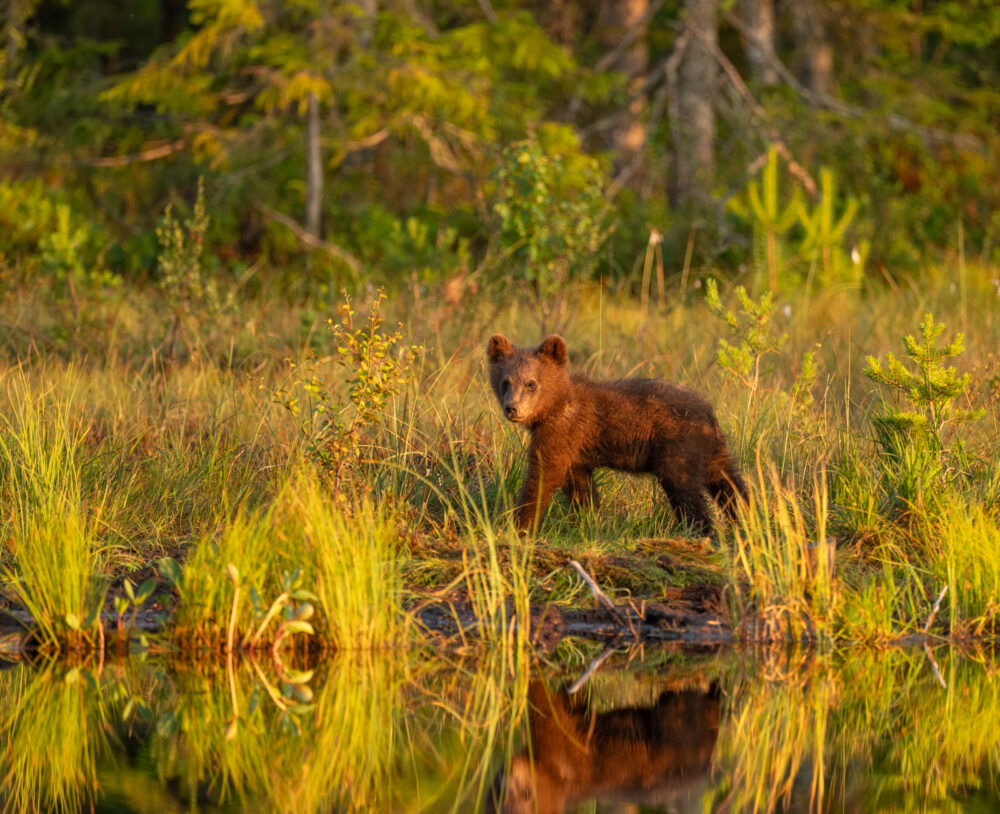
The images captured on July 10, 2026, offer a rare glimpse into the life of a family unit. The cubs, estimated to be roughly four months old, display a mix of playful curiosity and cautious instinct. Their behavior is a constant, shifting dance of exploration: wrestling with one another, climbing pine trees with startling agility, and standing on their hind legs to scan the horizon. These moments are not merely endearing; they are critical developmental stages for survival.
During the midsummer period, these bears are driven by the biological imperative to feed. While they may forage for fish or supplemental food provided by managed sites, their primary focus as autumn approaches is the abundant blueberry crop. These berries are essential for the bears to accumulate the body mass required to survive the long, harsh winter during hibernation.
Chronology: A Night in the Hide
The experience of observing bears from a small, camouflaged hide is an exercise in patience and sensory recalibration.
18:00 – The Wait: Entering the hide requires total silence. The objective is to become a part of the landscape, shedding the human presence that usually disturbs the forest. This period of stillness is not passive; it is a time for the observer to quiet the mind, listen to the profound silence of the taiga, and prepare for the appearance of the animals.
20:30 – The Arrival: The transition from silence to spectacle is abrupt yet graceful. An emobear (mother bear) emerges from the dense undergrowth, followed by her three offspring. The tension in the air is palpable. One must remain motionless; even the sound of a falling object or the clicking of a camera shutter can be a disruption.
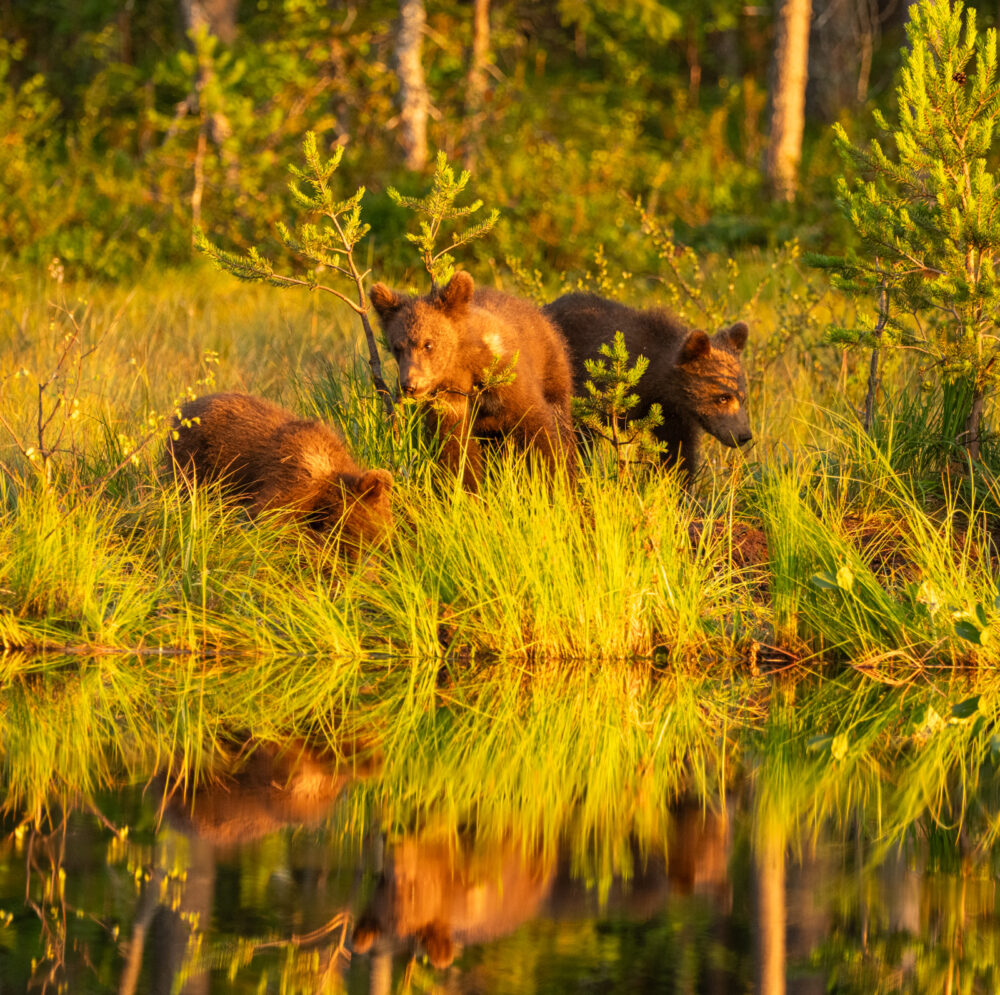
21:15 – Golden Hour Dynamics: The light, just before and after sunset, provides the optimal conditions for observation. The low-angle sunlight transforms the fur of the cubs into a brilliant, almost supernatural copper. During this window, the cubs engage in social play, a vital aspect of their upbringing, while the mother keeps a vigilant eye on the periphery, occasionally directing them to climb trees if she senses an unfamiliar scent or potential threat.
23:00 – The Withdrawal: As the light fails, the family fades back into the shadows of the forest, leaving behind the stillness of the pond.
Supporting Data: The Economics of Wildlife Tourism
The observation of large predators is not just a pursuit for photographers and biologists; it is a significant economic engine for Finland’s rural regions.
In the sparsely populated areas of eastern Finland, wildlife tourism has evolved into a sophisticated industry. It integrates various services, including professional wilderness guiding, accommodation, and local catering. Data suggests that approximately 50% of the clients utilizing professional bear-watching hides are international visitors. These travelers are drawn to Finland specifically for the "authentic" and ethical wildlife experience that is increasingly rare in other parts of Europe.
Economic Impact Breakdown:
- Regional Growth: Towns like Suomussalmi and Kuhmo serve as hubs for this industry, creating jobs in sectors that would otherwise struggle with depopulation.
- Sustainability: Responsible tourism operators ensure that wildlife is not habituated or disturbed. By providing a structured, ethical way to view animals, the industry discourages illegal poaching and promotes the intrinsic value of these species.
- The "Big Four": While the brown bear is the primary draw, tourism companies are increasingly marketing the "Big Four" of the Finnish wilderness: the brown bear, the wolf, the wolverine, and the elusive lynx.
Official Perspectives and Ethical Standards
The wildlife tourism sector in Finland operates under strict ethical guidelines. Operators emphasize that the goal is not to "tame" the animals but to provide a secure vantage point where the natural behaviors of these apex predators can be documented without interference.
According to industry leaders, the success of this model relies on three pillars:
- Safety: Ensuring both the safety of the animals and the human observers through specialized, secure hides.
- Conservation: Using tourism revenue to fund research and habitat protection.
- Respect: Maintaining a non-intrusive distance. The "worst sound" in a hide is the sudden, human-made clang of a dropped object, which can alert the bear and disrupt the natural flow of the encounter.
There is a growing recognition that protecting these animals is not just an environmental imperative but a long-term economic necessity for the region. As international demand for "wild" experiences grows, Finland’s commitment to responsible management will be the deciding factor in maintaining its competitive edge in the global nature-tourism market.
Implications: The Future of the Wild
The sight of a bear cub questioning its surroundings at the edge of a Martinselkonen pond serves as a potent reminder of what is at stake. The preservation of these vast, quiet spaces is essential for the survival of the species, but it also serves as a vital psychological refuge for humans.
For the modern, city-dwelling individual, the act of waiting in a hide is a form of therapy. It forces a deceleration of pace, an appreciation of the environment, and a reconnection with the natural world. Whether or not one encounters a bear, the experience of being in the Finnish wilderness—of observing the landscape and listening to the silence—is inherently restorative.
However, the future of this industry depends on the continued health of the ecosystem. Climate change, habitat fragmentation, and debates over predator management policies in Finland could all impact the viability of wildlife tourism. To sustain the industry, it is imperative that policymakers, tourism operators, and environmentalists continue to work in tandem to prioritize the welfare of the bears above all else.
As we look toward the future, the "golden hour" in the forest remains a symbol of hope. If we can maintain the delicate balance between human observation and animal autonomy, the forests of eastern Finland will continue to offer their timeless, wild, and awe-inspiring displays to generations to come.
By supporting professional, ethical wildlife journalism and conservation efforts, we ensure that these creatures remain an integral, vibrant part of the Finnish identity. As the cubs grow, learn, and eventually strike out on their own, they carry with them the legacy of a wilderness that we are privileged enough to witness, but are also duty-bound to protect.