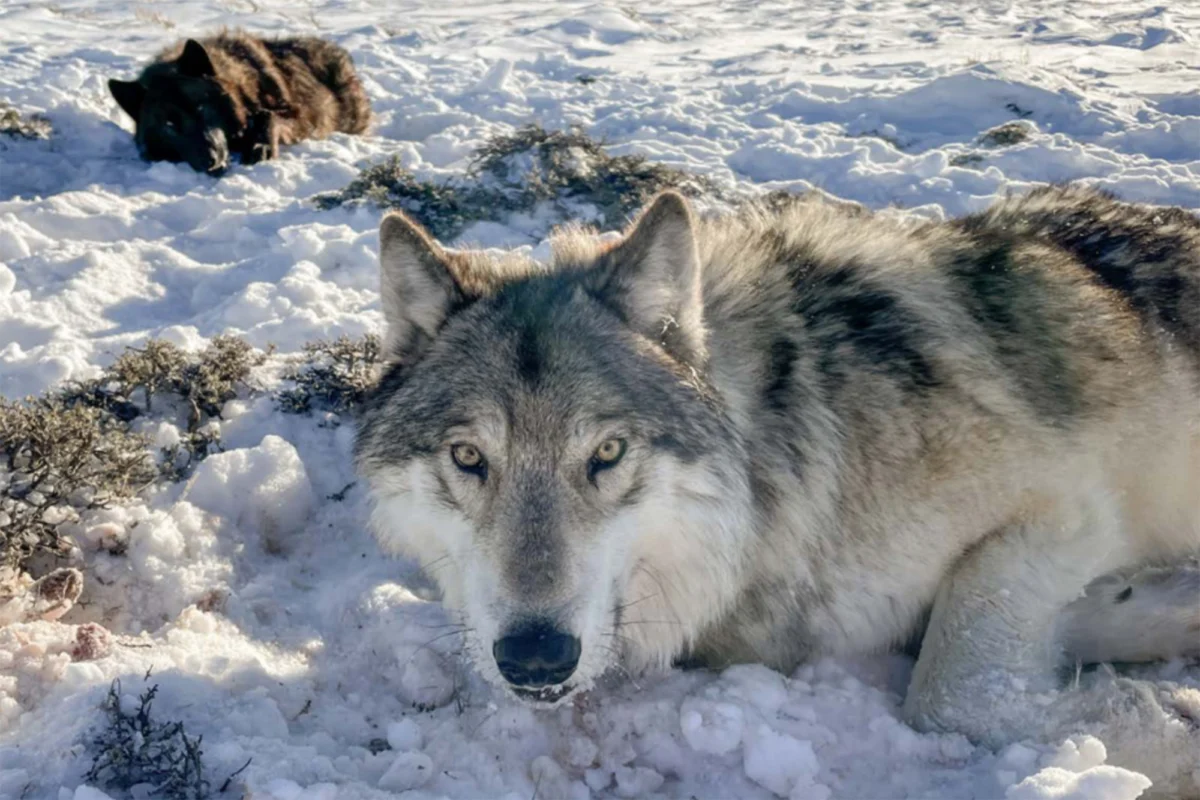
In the high-stakes theater of American wildlife management, the line between advocacy and provocation is often razor-thin. Recently, Jonas Black, a prominent animal-rights influencer, made headlines by announcing a $10,000 bounty for information leading to the identification of any hunter who legally kills 12-year-old wolf 1090F—a matriarch of Yellowstone’s famous Mollie’s Pack—or any of her kin during Wyoming’s upcoming wolf hunting season.
While Black framed the initiative as a deterrent designed to protect the pack, the move has ignited a firestorm of criticism from conservationists and outdoorsmen alike. Critics argue that instead of providing a shield for the wolves, Black has effectively placed a target on their backs, creating a perverse incentive structure that may tempt those seeking notoriety or financial gain.
A Chronology of Conflict: The Escalation of Advocacy
The tension surrounding Yellowstone’s wolf population is not new, but the introduction of a private "bounty" for the identification of legal hunters represents a significant escalation in tactics.
The controversy began when Black leveraged his social media presence to announce the $10,000 reward. The threat was clear: identify the hunter, and the individual will be subjected to the same level of public scrutiny and vitriol that followed the infamous 2015 killing of Cecil the lion in Zimbabwe.
However, the efficacy of this strategy relies on a flawed premise—that hunters are universally intimidated by the prospect of internet outrage. In the digital age, where "clout" is a currency as valuable as any other, the threat of being "made famous" by an activist can act as a siren song for those who derive satisfaction from sparking political and social division. By turning the potential killing of a famous wolf into a national media event, Black has arguably transformed these animals from wildlife management subjects into trophies of ideological warfare.

The Mechanics of the Bounty: Why It Fails to Protect
The logic behind the reward is fundamentally broken, both legally and practically. The $10,000 is intended for whistleblowers who come forward after a legal harvest occurs. Because the harvest is, by definition, legal under Wyoming state law, the act itself remains a legitimate exercise of a state-issued hunting tag.
If a wolf is killed, the damage to the pack is already done. The bounty does not prevent the death; it merely provides a post-mortem incentive for someone—perhaps a hunting partner, a disgruntled acquaintance, or even the hunter themselves—to collect a payout. This creates a moral hazard where the "reward" for information could theoretically be claimed by someone associated with the act, effectively monetizing the death of a protected species.
Furthermore, because Black is acting as a private individual, there is no standardized, transparent legal process for how he verifies claims or prevents collusion. This "bounty" exists outside the framework of official law enforcement, making it an unreliable and potentially manipulative tool that serves the influencer’s brand more than the wolves’ survival.
Supporting Data: The Reality of Wildlife Management
To understand why this approach is counterproductive, one must look at how Wyoming manages its wolf population. The Wyoming Game and Fish Commission is the body responsible for setting mortality limits, delineating hunt boundaries, and defining the duration of wolf seasons.
The management of gray wolves is a complex, data-driven process. The state’s "Chapter 47" regulations are reviewed annually, relying on a rigorous cycle of:

- Population Monitoring: Using radio collars, aerial surveys, and field observations to estimate pack numbers.
- Public Comment Periods: Allowing for discourse from stakeholders, including hunters, ranchers, conservationists, and the general public.
- Commission Review: A public hearing process where draft proposals are debated and finalized by appointed officials.
The 2026 hunting season, for instance, underwent a public comment period that concluded on June 10, followed by a formal review in mid-July. This system is designed to balance the biological needs of the species with the socio-economic realities of the region. By ignoring this established administrative path, Black is bypassing the only mechanism that has the legal authority to actually lower mortality limits or create protected zones.
Official Responses and the Administrative Process
State agencies have consistently maintained that hunting is a necessary tool for managing wolf populations, particularly regarding livestock predation and the balance of ungulate populations. While animal-rights activists argue that the wolves are a national treasure that should be protected regardless of state borders, the legal reality is that wildlife management falls under the jurisdiction of the state.
The Wyoming Game and Fish Commission operates under a mandate to ensure the long-term viability of the species while addressing the concerns of local residents. When individuals like Black attempt to interfere with these established processes through social media stunts, it often hardens the resolve of the commission and the hunting community, making productive dialogue even more difficult.
True conservationists argue that if there is a genuine concern regarding the status of a specific pack like Mollie’s, the energy should be directed toward:
- Legal Representation: Hiring experts to challenge the current harvest quotas through administrative law.
- Scientific Advocacy: Partnering with biologists to present data that might warrant a change in status for specific packs or zones.
- Political Engagement: Organizing mass participation in public hearings and lobbying state representatives to amend the legislative language governing predatory species.
The Broader Implications: Outrage vs. Outcomes
The core of the issue is the distinction between performative activism and effective policy change. Jonas Black’s move is a hallmark of the "outrage economy." By creating a viral moment, he gains engagement, followers, and the perception of being a champion for the cause. But the cost is the safety of the animals he claims to protect.

If a hunter were to target a member of Mollie’s Pack specifically to gain the notoriety promised by the reward, the blame would not rest solely on the hunter. The architect of the incentive—the person who turned a routine, regulated hunt into a high-stakes, headline-grabbing contest—must share the moral burden.
Furthermore, such stunts erode the middle ground. Many hunters, including those who may not have a personal desire to hunt wolves, often find themselves forced to defend the practice of hunting itself when faced with external, aggressive pressure. This polarization pushes potential allies away and cements the "us vs. them" mentality that has plagued the American West for decades.
Conclusion: A Call for Meaningful Stewardship
If Jonas Black truly wishes to ensure the survival of Mollie’s Pack, he has the resources and the platform to effect real change. He could fund legitimate scientific studies on the pack’s genetic health, sponsor public awareness campaigns that focus on non-lethal deterrents for ranchers, or organize a legal team to advocate for policy reform within the state capitol.
Instead, he has chosen the path of least resistance: a provocative, inflammatory, and ultimately hollow gesture that does nothing to change the regulations governing the 2026 season. As it stands, the wolves remain as vulnerable as they were before the announcement, and the environment in which they live has become only more toxic.
Wildlife conservation is a marathon, not a sprint. It requires patience, deep-seated knowledge of bureaucratic systems, and a willingness to work with—rather than solely against—the communities that coexist with these apex predators. By choosing to offer a bounty, Black has traded the possibility of meaningful, long-term impact for the fleeting, dangerous rush of a viral controversy.

In the end, when the dust settles and the hunting season concludes, the metrics of success will not be measured in social media impressions or the collection of a $10,000 check. They will be measured in the number of wolves left in the valley. For the sake of the pack, one can only hope that this misguided initiative does not become the catalyst for the very tragedy it claims to prevent.