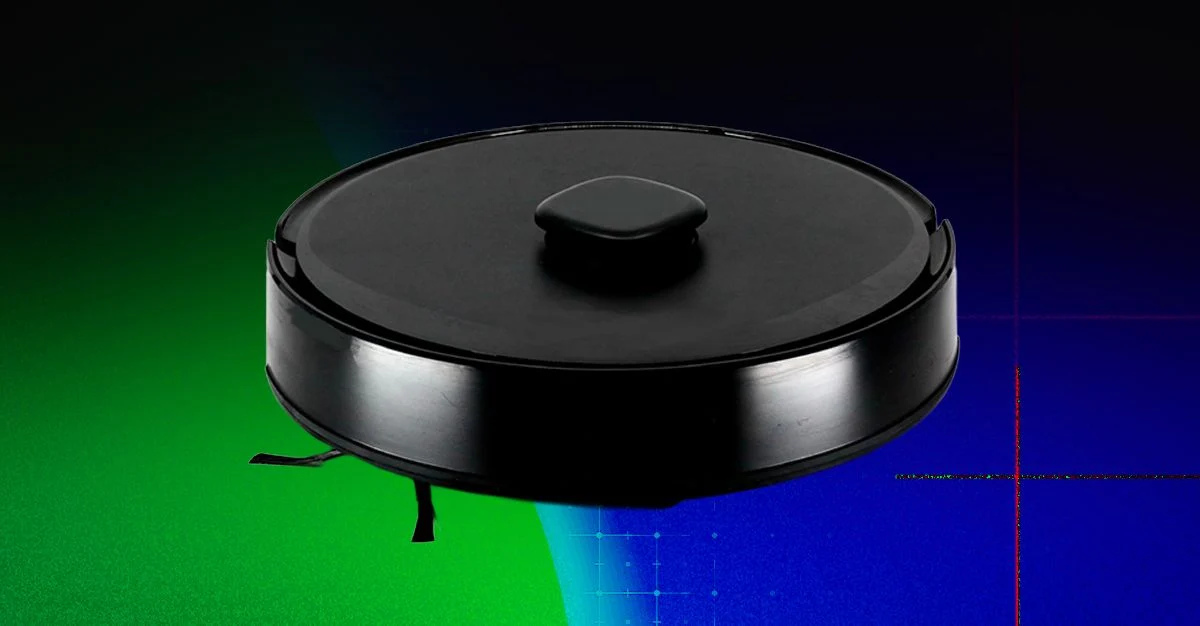
In a move that signals a significant shift in how the United States government approaches the intersection of consumer technology and national security, the Federal Communications Commission (FCC) has effectively halted the future import of foreign-made "advanced mobile robots." While the terminology evokes images of humanoid machines and quadrupedal walkers straight out of a science fiction film, the reach of this regulatory action is far more domestic—and potentially disruptive—than many realize. Tucked into this broad classification are the ubiquitous automated household appliances that have become a staple of modern living: robot vacuums, robotic pool cleaners, and automated lawn mowers.
This decision, effective immediately, marks a pivotal moment in the ongoing geopolitical tug-of-war over data privacy and digital infrastructure. As the FCC expands its "Covered List," consumers, manufacturers, and industry analysts are scrambling to decipher the long-term implications for a market dominated by international players.
The Core Facts: What Does the Ban Actually Mean?
It is crucial for consumers to understand that the FCC’s latest order is not a recall. If you currently own a robot vacuum, your device will not stop functioning, nor will the government be seizing hardware from private homes. The order is focused exclusively on the pipeline of innovation and commerce entering the United States.
Immediate and Future Impacts
- Existing Inventory: Products currently on store shelves or in warehouses that have already received FCC equipment authorization are unaffected. They remain legal to sell, purchase, and use.
- Future Approvals: The core of the ban is the "equipment authorization" process. Moving forward, new models of foreign-made advanced mobile robots will likely be denied the necessary FCC certification required to be marketed or sold within the United States.
- The "Covered List" Expansion: The FCC’s action is rooted in the Secure and Trusted Communications Networks Act of 2019. By updating the "Covered List," the commission has officially designated these categories of robots as posing an "unacceptable risk to the national security of the United States."
Chronology of the Regulatory Shift
The road to this ban did not happen overnight; it is the culmination of years of escalating concern regarding the "Internet of Things" (IoT) and the vulnerability of private data.
- 2019: The passage of the Secure and Trusted Communications Networks Act laid the legislative groundwork, empowering the FCC to bar equipment that poses security threats.
- 2022–2023: The FCC began a series of high-profile actions against foreign telecommunications and surveillance equipment, most notably banning the authorization of new equipment from companies deemed to be national security threats, such as Huawei and ZTE.
- May 2024: The FCC expanded its scope to include foreign-made routers, signaling that the commission was moving beyond core telecommunications hardware and into the realm of general household connectivity.
- September 2024: The FCC updated its Covered List to explicitly include "advanced mobile robots." This update followed an interagency review process involving the National Security Determination (NSD), which argued that the networked capabilities of these devices create "extensive vulnerabilities and vectors for attacks."
Supporting Data: Why Robots?
The primary concern cited by the National Security Determination is not that a vacuum cleaner will suddenly become a kinetic weapon. Rather, it is the sophisticated sensor arrays—cameras, LiDAR, microphones, and high-precision mapping software—that give regulators pause.
The Vulnerability Vectors
According to federal findings, these devices are essentially mobile sensors. They possess:
- Always-On Connectivity: Most modern robot vacuums maintain a constant connection to the cloud, sending map data to servers for navigation and optimization.
- Sensor Suites: These devices map the interior layout of private homes, identifying floor plans, furniture placement, and potential entry points.
- Audio and Visual Capabilities: Many high-end models now feature cameras for obstacle avoidance and microphones for voice-activated command integration.
The concern is that if these devices are manufactured by companies beholden to foreign governments with adversarial interests, that data could be exfiltrated or the devices themselves could be remotely compromised to act as listening or observation posts. The FCC explicitly notes that while the threat might seem "overkill" for a vacuum, the potential for these devices to be used as a "Trojan Horse" inside secure environments—including government offices or the homes of high-ranking officials—is a risk they are no longer willing to mitigate through oversight alone.
Official Responses and Industry Reaction
As the news broke, the silence from major industry players was telling, though a few offered clarity to their customer bases.
The Eufy Statement
Eufy, a major player in the robotic home-cleaning market, issued a reassuring response to its users:

"We are aware of the FCC’s recent update. Based on our current understanding, the new rule does not affect the continued availability, use, or support of products we currently sell in the United States. Those products remain available and will continue to receive updates and customer support."
The "Silent" Giants
Other industry leaders, including Shark, Dreame, and Roborock, remained largely quiet or declined to comment. This hesitation reflects the uncertainty of the current regulatory environment. Companies are currently weighing whether to shift their manufacturing hubs to the United States—a costly and complex logistical undertaking—or to concede that certain product lines may be phased out of the American market entirely.
Implications: A Shrinking Market for Consumers
The broader impact of this ban suggests a long-term shift in the consumer electronics landscape that could have several unintended consequences.
1. Reduced Innovation and Choice
With the upcoming IFA Berlin trade show—the global stage for consumer tech—it is highly probable that many of the new, cutting-edge robotic products announced will never reach American shores. This effectively creates a "walled garden" where US consumers may eventually find themselves choosing from a much smaller pool of products.
2. Economic Pressures
Basic supply and demand principles suggest that if the supply of "advanced mobile robots" is artificially constrained, prices for the remaining legal stock—or for domestically manufactured alternatives—may rise. Consumers who rely on affordable, feature-rich vacuums from international brands may find themselves paying a premium for domestic or Western-allied alternatives.
3. The "Smart Home" Paradox
The irony of the situation is not lost on tech analysts. While the FCC has targeted robot vacuums, other devices—such as smart speakers, doorbell cameras, and baby monitors—often possess similar or more invasive sensing capabilities. The fact that the ban currently stops at "advanced mobile robots" suggests this may be only the first wave of a broader regulatory crackdown on IoT devices.
4. Domestic Manufacturing Hurdles
While companies like Shark or the startup Matic are US-based, the manufacturing of the complex circuit boards and sensor modules used in these robots is almost exclusively concentrated in Asia. Even "American" companies may struggle to comply with the new rules if their supply chains remain heavily reliant on restricted foreign components.
Conclusion
The FCC’s decision to ban the import of foreign-made advanced mobile robots is a stark reminder that in the 21st century, every "smart" device is also a data-collection device. While the immediate impact on the average household is negligible, the long-term trend points toward a more fragmented global tech market. For consumers, the message is clear: the era of unrestricted access to global smart home innovation is closing, and national security is becoming a primary factor in the design and distribution of the appliances that keep our homes clean. As we move through the rest of the year, all eyes will be on whether this ban triggers a "domino effect" across other sectors of the household technology industry.