Date: June 15, 2026
Source: Backpacking Light Podcast, Episode 148
In the evolving landscape of backcountry travel, "minimalism" has shifted from a fringe ideology to the standard operating procedure for many mountain athletes. Yet, as weights plummet and materials advance, a critical safety question has emerged: at what point does "ultralight" become "under-prepared"?
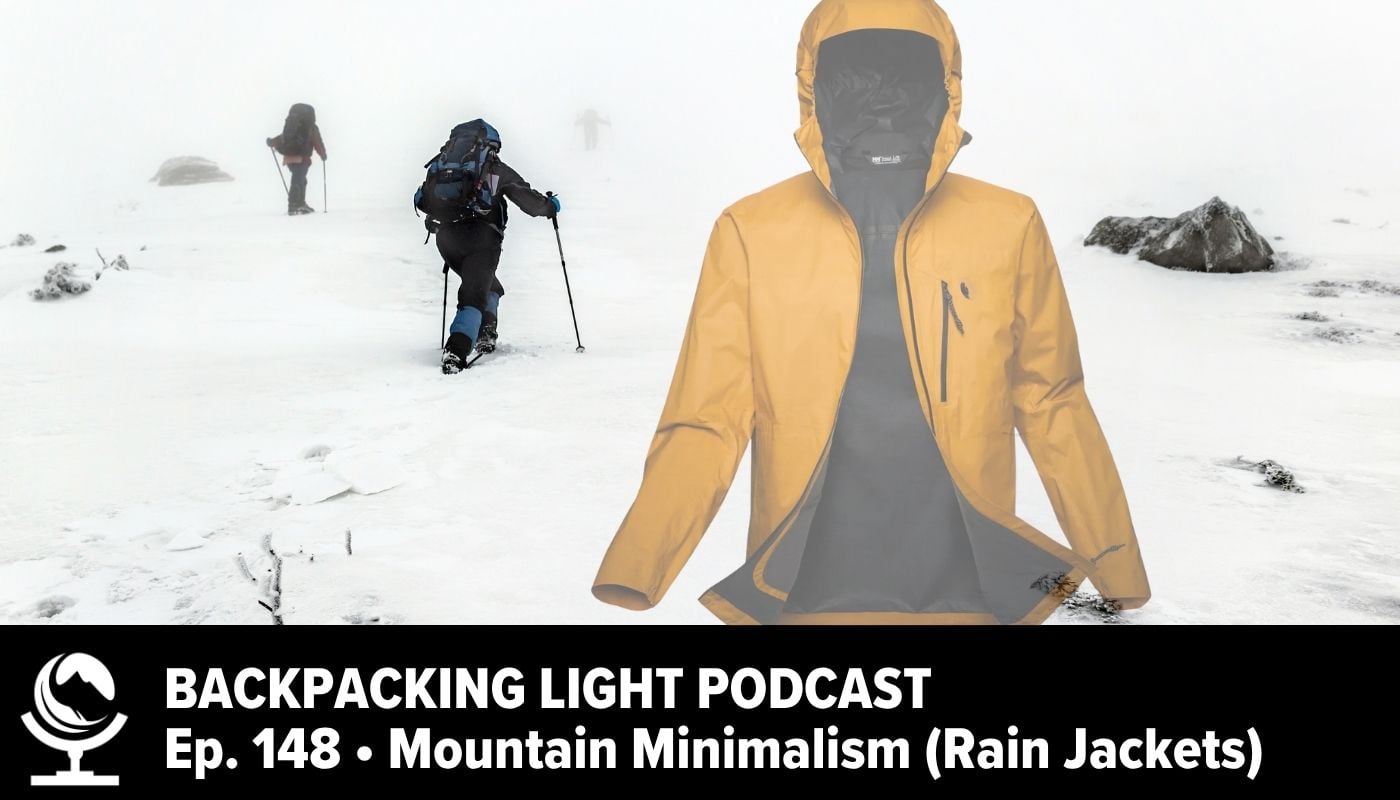
In the latest episode of the Backpacking Light podcast, industry experts dissect the fragile balance between the weight-conscious pursuit of efficiency and the non-negotiable requirements of survival in extreme, exposed terrain. The discussion centers on the “Mountain Minimalist” rain shell—a category of gear that promises to keep weight in the sub-300g range while maintaining the integrity needed to withstand alpine storms.
The Core Philosophy: When Less Isn’t Enough
The episode begins by addressing a fundamental disconnect in modern gear culture. Many hikers treat rain shells as "just-in-case" items, suitable for mild trail conditions or short, predictable weather windows. However, when the environment transitions from a protected valley to an exposed ridgeline, the requirements for a shell change exponentially.
"The ultralight rain shell is a masterpiece of engineering for the right context," the hosts note. "But when you step into the high mountains, you aren’t just looking for water resistance; you are looking for a thermal barrier that can withstand sustained wind-driven precipitation and physical abrasion against rock."
To navigate this, the podcast introduces a Decision Framework for Shell Selection. This framework moves away from brand marketing and toward a situational assessment based on six key variables:
- Exposure Duration: How long will you be trapped in the elements?
- Retreat Options: How quickly can you drop below the tree line or reach a safe haven?
- Terrain Complexity: Does the route involve scrambling where the jacket will be subjected to high-friction contact?
- Abrasion Factors: Is the fabric robust enough to handle repeated contact with stone or dense brush?
- Wind Speed: Can the shell maintain its structural integrity in high-velocity gusts?
- Thermal Margin: How much body heat does the shell need to trap or protect in a worst-case scenario?
A Technical Review: The New Guard of Mountain Shells
The episode highlights three specific products that currently define the "Mountain Minimalist" category. These garments represent a departure from flimsy emergency ponchos, offering advanced membranes and high-tenacity face fabrics.
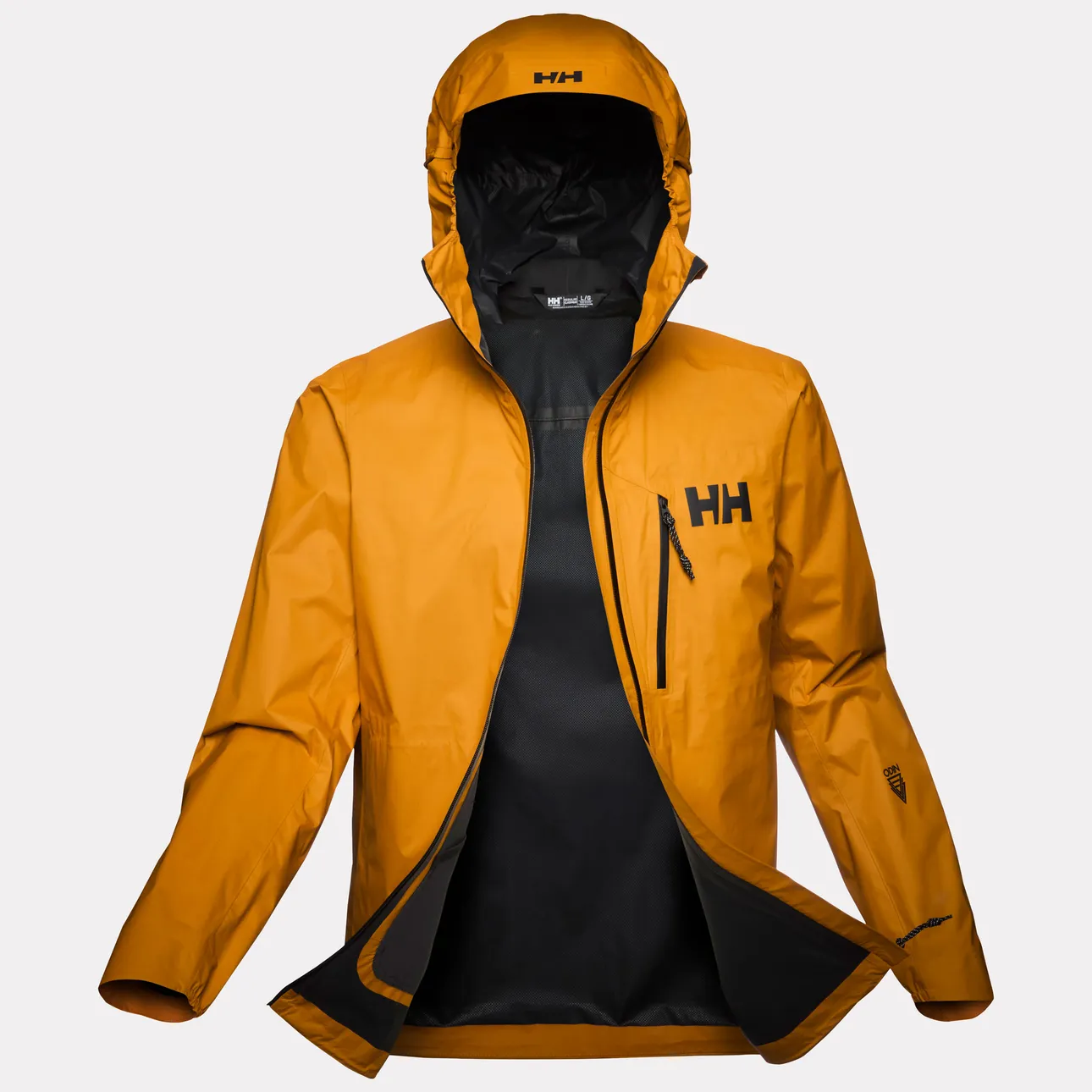
1. Helly Hansen Odin Infinity Minimalist Jacket (250g)
This 3.5-layer shell utilizes HELLY TECH PROFESSIONAL and LIFA INFINITY construction. It is a benchmark for the balance between mobility and protection, featuring a 2-way stretch fabric that is critical for climbers who need full range of motion without the "crinkle" or restriction of traditional hardshells. With a RECCO reflector and a helmet-compatible hood, it serves as a robust choice for those who value technical features without the penalty of heavy, traditional 3-layer construction.
2. Arc’teryx Alpha SL Jacket (232g)
The Alpha SL is the epitome of high-performance minimalism. Built with GORE-TEX PRO ePE and the proprietary 20D Hadron face fabric, it boasts an incredible weight-to-durability ratio. The use of PFAS-free membranes reflects a broader industry shift toward environmental sustainability without sacrificing the "stormproof" reputation that the Alpha series has held for years. At just 8.2 ounces, it challenges the notion that weight-saving must come at the cost of durability.
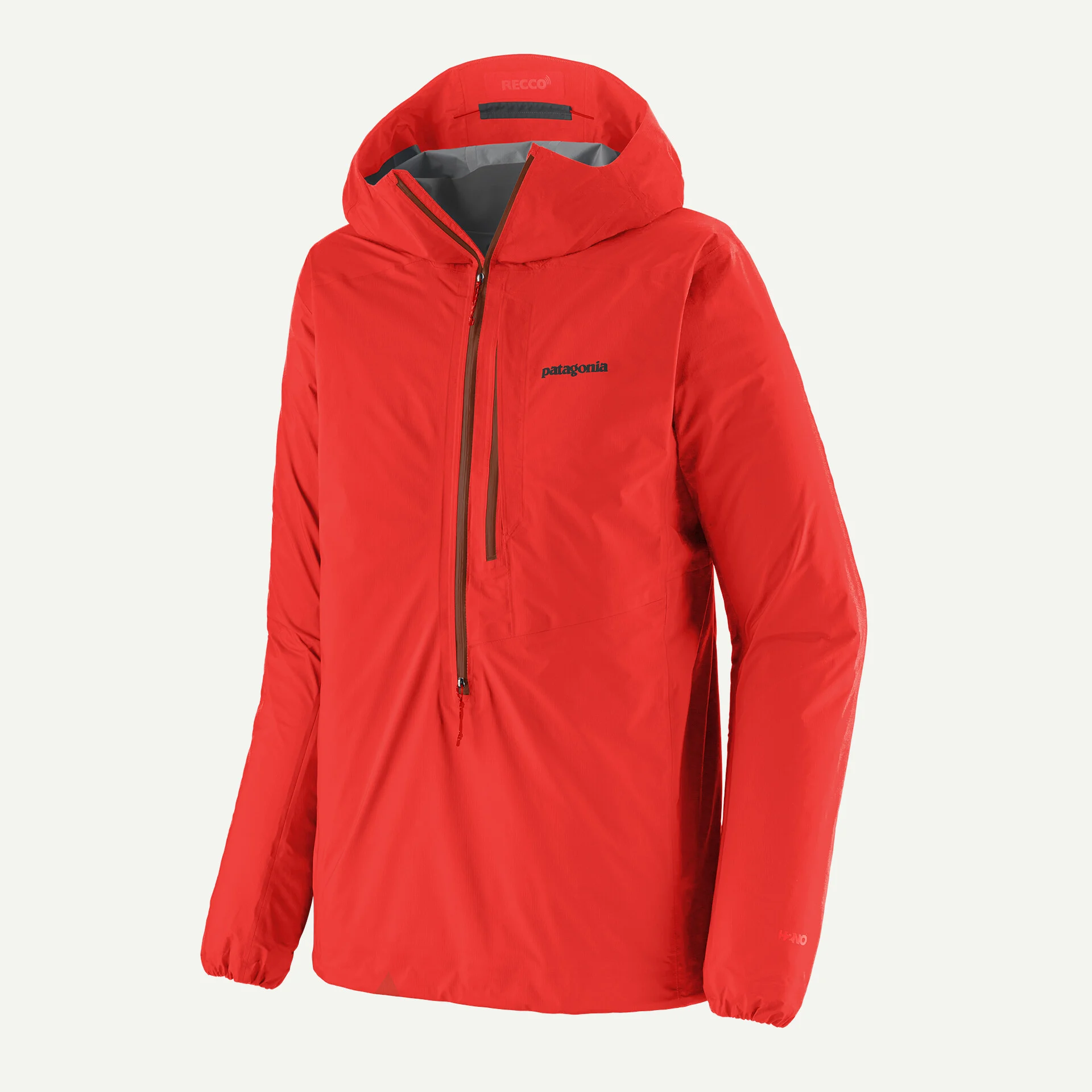
3. Patagonia M10 Anorak (300g)
Moving into the 3-layer alpine category, the M10 Anorak uses Xpore nanoporous membrane technology. Its design focuses on simplicity: a minimalist anorak style that reduces potential failure points like long, heavy zippers. The 20-denier recycled nylon ripstop face fabric is designed to handle the rigors of the mountain environment while maintaining a slim, aerodynamic fit that minimizes flapping in high winds.
The Chronology of Gear Evolution
To understand where we are, one must look at how we arrived here. The "Ultralight Revolution" of the early 2000s focused almost exclusively on the scale. For a decade, the industry saw a race to the bottom, where rain shells were essentially glorified windbreakers.
By 2015, the "fast and light" alpine movement began to demand more. Professionals who were climbing and running through the night required gear that could withstand more than a light drizzle. The 2020s saw the introduction of high-tenacity face fabrics—like the 20D Hadron mentioned in the Alpha SL—which allowed for ultra-thin construction that didn’t shred upon contact with granite.
As of June 2026, we have entered the "Integration Era." Modern shells are no longer isolated items; they are designed to be part of an integrated system of clothing that works with base layers and mid-layers to manage moisture vapor transmission (MVTR) under high exertion.
Supporting Data: Why "Waterproof" Isn’t Enough
The podcast highlights that while many jackets meet the technical definition of "waterproof," they fail the "field test." Water entry is rarely about fabric saturation; it is about mechanical failure under pressure.
- Pressure Points: Water is forced through zippers and seams when a backpack strap compresses the jacket against the body.
- Wind-Driven Rain: High-altitude storms often carry moisture at velocities that push water through the pores of lower-quality membranes.
- The Breathability Trap: If a jacket is truly waterproof but lacks sufficient breathability, the wearer will become soaked from the inside out due to sweat accumulation—a condition that leads to hypothermia just as quickly as external water ingress.
The featured jackets (Odin, Alpha SL, and M10) were chosen specifically because they address these points through high-end membrane technology and strategic seam sealing, ensuring that the "minimalist" label does not equate to "disposable."
Industry and Professional Responses
The shift toward mountain minimalism has not been without its critics. Traditional mountaineers often argue that weight-shedding is a vanity project that compromises safety margins.
In response, the manufacturers of these shells—Helly Hansen, Arc’teryx, and Patagonia—have adopted a philosophy of "purpose-built engineering." They argue that by reducing the weight of the shell, the athlete moves faster and stays warmer because they are less exhausted at the end of the day. A lighter jacket allows for greater mobility, which, in the context of technical climbing, is a safety feature.
However, the consensus among the Backpacking Light editorial team is clear: The burden of responsibility lies with the user. A minimalist shell is a tool, not a crutch. If a user enters a high-exposure zone with a shell that is insufficient for the conditions, the fault is not in the gear—it is in the decision-making process.

Implications for the Future of Backpacking
As we look toward the remainder of the 2026 season, the implications of this podcast are twofold:
- Skills Over Gear: The most significant takeaway is that gear selection must be preceded by a rigorous assessment of one’s own skills. A professional alpinist can survive a storm in an M10 Anorak that might leave an inexperienced hiker in a state of distress. Skills—such as route finding, weather forecasting, and knowing when to retreat—are the true "heavy" gear that every backpacker needs to carry.
- The End of the "One-Size-Fits-All" Shell: The industry is moving away from the idea that one jacket can serve both a casual day-hiker and a high-alpine climber. The "Mountain Minimalist" category is a specialized niche for those who have mastered their environment.
For those looking to transition into more technical terrain, the advice is simple: Start with the framework. Before you purchase your next shell, ask yourself not just how much it weighs, but how it will perform when the wind is howling, the temperature is dropping, and your only option is to keep moving toward safety.
The "Mountain Minimalist" isn’t about carrying less because you’re lazy; it’s about carrying exactly what you need—and nothing more—so that you can navigate the mountains with the precision and grace they demand.
For more in-depth journalism, gear reviews, and the technical breakdown of the gear mentioned above, visit the Backpacking Light member portal for full access to our database of 2,300+ articles and educational modules.