In an era defined by an urgent global shift toward sustainability, the travel industry finds itself at a critical crossroads. As travelers increasingly seek experiences that harmonize with nature rather than exploit it, the definition and implementation of "ecotourism" have evolved from a niche movement into a mainstream imperative. To capture this momentum, The International Ecotourism Society (TIES) recently conducted an expansive global survey, soliciting feedback from professionals across the tourism spectrum. The findings provide a comprehensive "state of the union" for the sector, revealing a landscape defined by rapid growth, linguistic diversity, and a profound mandate for educational reform.
Main Facts: A Truly Global Consultation
The survey, which garnered 971 viable responses, serves as a testament to the international reach of the ecotourism movement. Participants hailed from 91 countries, spanning every continent on the globe. While the United States provided the largest single cohort of respondents, the breadth of participation was arguably more significant than the volume. From the rugged landscapes of Montenegro and Bosnia and Herzegovina to the diverse ecosystems of Bhutan, Nepal, and Côte d’Ivoire, the survey successfully bridged cultural and geographical divides.
The survey was designed to gauge how professionals perceive the current health and trajectory of ecotourism. The results confirm a near-unanimous consensus: the sector is not merely surviving; it is thriving. When asked about the growth trajectory of ecotourism, a staggering 99.5% of respondents indicated they view the industry as growing, with the vast majority characterizing this expansion as "rapid." Only four individuals out of nearly 1,000 expressed concern that the sector might be slowing down. This sentiment aligns with broader market trends observed by industry giants like Booking.com, which have similarly identified a dramatic surge in consumer demand for sustainable and carbon-conscious travel options.
Chronology: The Journey to Understanding
The process of gathering this data was methodical and inclusive, designed to capture the nuanced perspectives of those on the ground.
- Phase I: Data Collection. TIES initiated the survey through its member newsletter, targeting practitioners, consultants, and academics. By casting a wide net, the society aimed to avoid echo chambers and capture the diverse realities of tourism professionals in developing and developed nations alike.
- Phase II: Categorization. The survey required respondents to self-classify into industry segments. While 90% found the provided categories sufficient, the remaining 10% offered valuable feedback regarding the need for multi-segment classification, reflecting the increasingly hybrid nature of modern tourism businesses.
- Phase III: Linguistic Analysis. A critical turning point in the survey was the discovery of a profound desire for multilingual resources. Respondents strongly advocated for the expansion of TIES’s digital footprint into Spanish, French, and Mandarin.
- Phase IV: Strategic Pivot. Following the collection and analysis of the data, TIES has entered a phase of implementation, where the focus has shifted toward education, climate-conscious partnerships, and the development of regional ecodestination profiles.
Supporting Data: Mapping the Industry
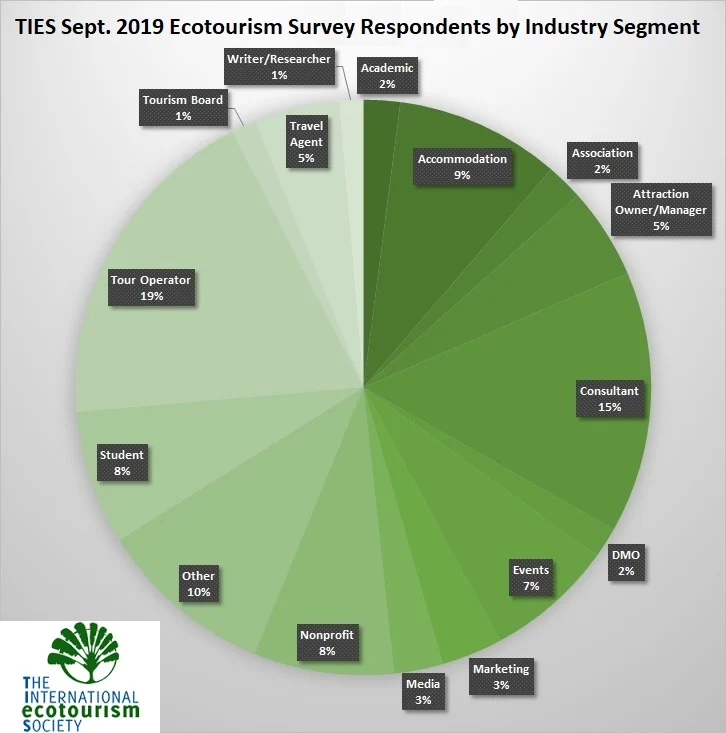
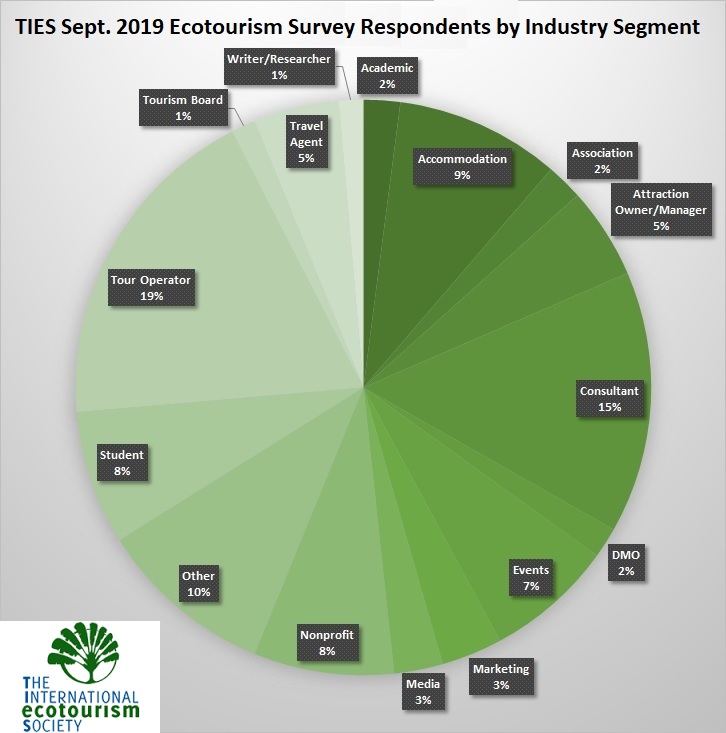
The diversity of the respondent base was matched by the diversity of their professional roles. The industry segmentation data revealed that while tour operators and consultants formed the backbone of the response set, there was a notable, albeit smaller, representation from the academic community.
Understanding the Demographic Gap
TIES noted that while academics represent a significant portion of their membership base, they were underrepresented in this specific response set. This discovery has prompted a re-evaluation of how the society engages with its scholarly members. The data is not seen as a failure of reach, but rather an opportunity to refine outreach strategies to ensure that the bridge between theoretical ecotourism research and practical field application remains robust.
The Linguistic Mandate
Perhaps the most surprising—and actionable—data point was the call for linguistic inclusivity. While English remains the lingua franca of international business, the respondents made it clear that the future of ecotourism lies in localized knowledge. The high demand for Spanish, French, and Mandarin reflects the reality that ecotourism is a localized, community-driven endeavor. The fact that TIES received only four responses from China, yet saw a high volume of requests for Mandarin support, highlights an untapped potential for global growth and outreach that the society is now prioritizing.
Official Responses and Strategic Implications
The survey served as a diagnostic tool for TIES, identifying both the systemic threats to the industry and the specific areas where members believe the society should focus its influence.
Confronting the Challenges
When asked about the hurdles facing ecotourism, respondents were candid and critical. The list of challenges reads like a manifesto for reform:
- Systemic Greed and Overdevelopment: Respondents cited the commodification of nature as a primary threat to the integrity of ecotourism.
- Overtourism: The paradox of successful ecotourism leading to the degradation of the very sites being promoted was a recurring theme.
- The "Booking" Problem: Perhaps most pointedly, professionals noted that the average traveler currently lacks the tools to distinguish between "greenwashing" and legitimate, ethical ecotourism offerings.
- Macro-Challenges: Climate change, regulatory bottlenecks, and the difficulty of securing financing for small-scale, sustainable projects were identified as major inhibitors to progress.
A New Strategic Vision
When asked to rank where TIES should direct its resources, the results signaled a clear departure from traditional lobbying. The respondents’ priorities were as follows:
- Education (41%): The overwhelming consensus is that the industry must be taught—not just marketed.
- Conservation and Climate Change Partnerships (18%): A mandate for TIES to act as a bridge between travel and environmental science.
- Ecodestinations (14%): A request for better, more detailed information on country-specific ecotourism offerings.
- Publications and Social Media (20%): A focus on knowledge dissemination.
Notably, only a small fraction of respondents prioritized traditional areas such as UN partnerships or internal membership growth. This suggests that the TIES membership is less interested in institutional prestige and more interested in tangible, educational outcomes that empower stakeholders on the ground.
Implications for the Future
The implications of this survey are far-reaching. By shifting its focus toward education and linguistic accessibility, TIES is effectively democratizing the ecotourism movement. The move to roll out Spanish-language support is the first step in a larger plan to ensure that the benefits of ecotourism are not restricted to English-speaking markets.
Furthermore, the emphasis on "ecodestinations" suggests a move toward a more curated approach to tourism, where the society helps travelers identify locations that meet rigorous, evidence-based standards. By tackling the challenge of "fair booking"—ensuring that travelers can verify the sustainability credentials of a provider—TIES aims to solve one of the most pressing issues in the modern travel economy: the prevalence of deceptive marketing.
Optimism in the Face of Complexity
Despite the daunting list of challenges, the overarching tone of the survey was one of guarded optimism. There is a palpable belief among the respondents that ecotourism is the most viable path forward for the travel industry. By providing a better way to experience the world, ecotourism is positioned not just as a business model, but as a conservation strategy.
As TIES prepares to launch its new educational initiatives and expand its linguistic offerings in the coming months, it does so with the backing of a diverse, global, and highly engaged community. The 2019 survey was more than just a data-gathering exercise; it was a clear signal from the front lines that the time for systemic, educational, and inclusive action is now. The future of travel is not just about moving from one place to another; it is about the impact we leave behind and the communities we empower along the way. With this roadmap, the International Ecotourism Society is well-positioned to guide the industry through the complexities of the 21st century.