By [Your Name/Journalistic Staff]
In an era defined by rapid urbanization, digital saturation, and the relentless demands of a consumer-driven global economy, humanity is facing a profound existential crisis: a systemic disconnection from the natural world. As society retreats into climate-controlled environments and virtual realities, the visceral, sensory-based understanding of the wilderness that once anchored human existence is eroding.
William E. Simpson II, a noted naturalist, author, and conservationist, posits that this "growing abyss" between modern civilization and the environment is not merely a cultural loss, but an ecological threat. While media, documentaries, and digital educational tools play a vital role in awareness, they offer a passive experience that fails to foster the deep-rooted stewardship necessary for the 21st century. The solution, Simpson argues, lies in the deliberate expansion of ecotourism—a practice that moves beyond observation to provide genuine immersion into the wild.
The Sensory Imperative: Why Immersion Matters
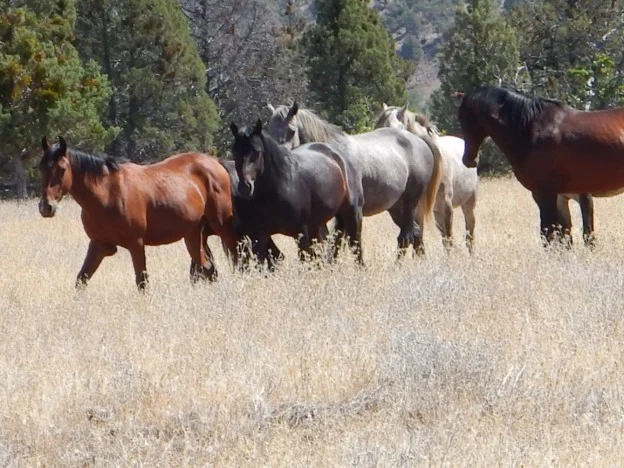
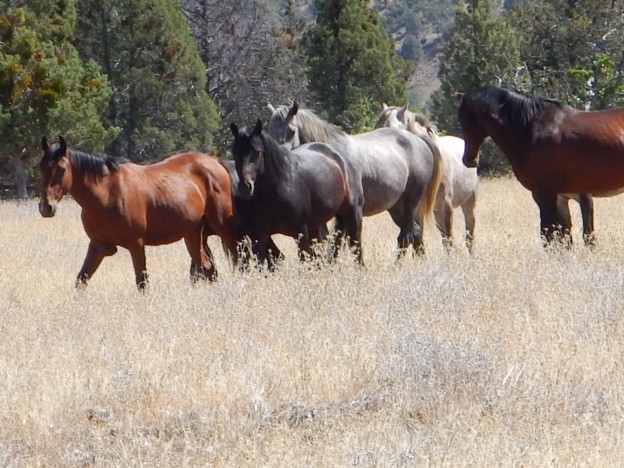
The human psyche evolved within the complex, chaotic, and beautiful rhythms of the natural world. The sensory input of a pine-scented forest, the sharp call of an eagle against an alpine backdrop, the rhythmic flow of a mountain stream, or the sight of a wild stallion standing vigil over his band—these are not merely aesthetic experiences. They are biological reminders of our place in the ecosystem.
Ecotourism serves as a bridge, allowing individuals to step out of their manufactured lives and into the "living classroom." This immersion creates a cognitive shift; it moves the participant from a consumer of nature to a protector of it. When individuals witness the interconnectedness of wildlife and habitat firsthand, the abstract concept of "environmental conservation" becomes a personal commitment.
Rewilding as a Catalyst for Economic and Ecological Health
One of the most compelling arguments for integrating ecotourism into land management is the strategic rewilding of American wild horses. Historically, the management of these animals has been fraught with tension, often characterized by conflict between federal agencies and livestock interests. However, advocates like Simpson suggest a paradigm shift: viewing wild horses not as a nuisance, but as a biological and economic asset.
The Economic Case
Current management practices for wild horses in the United States, overseen primarily by the Bureau of Land Management (BLM), are prohibitively expensive. Taxpayers spend nearly $100 million annually to capture, transport, and maintain horses in holding facilities. By relocating these herds to ecologically appropriate wilderness areas where they can thrive, the BLM could drastically reduce these expenditures.
Economic studies, such as those conducted in Moffat County, Colorado, have demonstrated that wild horse populations act as significant draws for regional tourism. Travelers seeking authentic wildlife experiences inject capital into local economies—supporting hotels, restaurants, and guide services—thereby creating a self-sustaining financial model that incentivizes the protection of the landscape rather than its exploitation.
The Ecological Case: Fire Mitigation
Beyond the economic benefits, horses play a functional role in grassland ecosystems. Through natural grazing patterns, horses perform a service often overlooked: the reduction of fine fuel loads. In an age of catastrophic wildfires, where dense brush and overgrown grasses act as tinder for massive conflagrations, the presence of wild equids can help manage vegetation in sensitive areas. By consuming dry biomass, they act as natural landscape managers, potentially mitigating the intensity of wildfires and protecting biodiversity.
A Chronology of the Human-Nature Relationship
- Pre-Industrial Era: Humanity existed in a state of direct dependency and integration with nature. Traditional knowledge systems were built upon daily observation of wildlife and seasonal cycles.
- 19th Century (The Industrial Shift): As urbanization accelerated, nature began to be viewed as a "resource" to be extracted rather than a living system to be inhabited.
- Late 20th Century (The Rise of Environmentalism): The recognition of environmental degradation led to the birth of modern conservation. However, much of this conservation remained "top-down," leaving the general public as mere spectators.
- 2000–2010 (The Digital Age): Educational documentaries flourished, providing high-definition windows into nature. While awareness grew, physical activity in nature began to decline.
- 2020–Present (The Ecotourism Pivot): A growing movement, supported by organizations like The International Ecotourism Society, emphasizes that conservation success depends on direct engagement. Policymakers are beginning to see the intersection of wildlife rewilding, wildfire mitigation, and sustainable tourism as a viable path forward.
Supporting Data: The Value of Sustainable Tourism
Data from various ecological and economic impact reports suggest that ecotourism is a growing sector that provides higher long-term value than extractive industries.
- Direct Economic Contribution: Regions that protect iconic species (like wild horses or elk) report sustained revenue streams that do not deplete the capital—the nature itself—on which they rely.
- Public Support: Surveys consistently indicate that the American public values the presence of wild horses on public lands. This cultural mandate provides a strong political incentive for lawmakers to move toward "rewilding" rather than "clearing."
- Cost-Benefit Analysis: The shift from federal holding facilities (high cost, zero revenue) to wilderness management (lower cost, high tourist revenue) represents a potential multi-million-dollar shift in federal budget efficiency.
Official Responses and Stakeholder Dynamics
The challenge, however, remains the friction between entrenched agricultural interests and the conservation community.
Federal agencies like the BLM are often caught in the crosshairs. Livestock producers argue that wild horses compete for grazing space and water. Conversely, conservationists argue that the current over-reliance on livestock grazing contributes to land degradation, and that horses, as part of the North American fauna, possess a right to the land that is being denied.
The International Ecotourism Society advocates for "inclusive management." This approach involves local communities in the planning process, ensuring that the economic gains of ecotourism are distributed locally. When a rancher sees that a herd of horses brings more sustainable, long-term profit through photography tourism and guided educational tours than a small increase in cattle head-count, the conflict begins to dissipate.
The Path Forward: Implications for Policy and Society
To successfully bridge the abyss between humanity and nature, we must move toward a model of "intelligent resource management." This involves:
- Policy Reform: Legislators must prioritize the allocation of public lands for wild horse habitats where they provide wildfire mitigation and tourism benefits.
- Infrastructure Investment: Instead of funding large-scale holding pens, government funds should be redirected toward ecotourism infrastructure—trails, visitor centers, and educational kiosks that facilitate respectful, non-intrusive wildlife viewing.
- Educational Outreach: The narrative of "nature as a commodity" must be replaced with "nature as a community." This begins with schools and continues through adult immersion programs.
Conclusion: Reclaiming Our Roots
The disconnect from nature is not an irreversible state, but it requires an active, conscious effort to rectify. As William E. Simpson II emphasizes, there is simply no substitute for the experience of the wild. By fostering ecotourism, we do more than just generate revenue; we cultivate a generation of citizens who have looked into the eyes of a wild stallion, felt the breeze of a mountain forest, and realized that their own health is inextricably linked to the health of the wild.
The future of our planet depends on our ability to value the natural world not just for what it can give us, but for what it teaches us. Through intelligent rewilding and a robust commitment to ecotourism, we can restore the balance, ensuring that the wonders of the natural world endure for generations to come.
For further information on the intersection of wild horse management, wildfire mitigation, and conservation, visit www.WHFB.us or www.ecotourism.org.