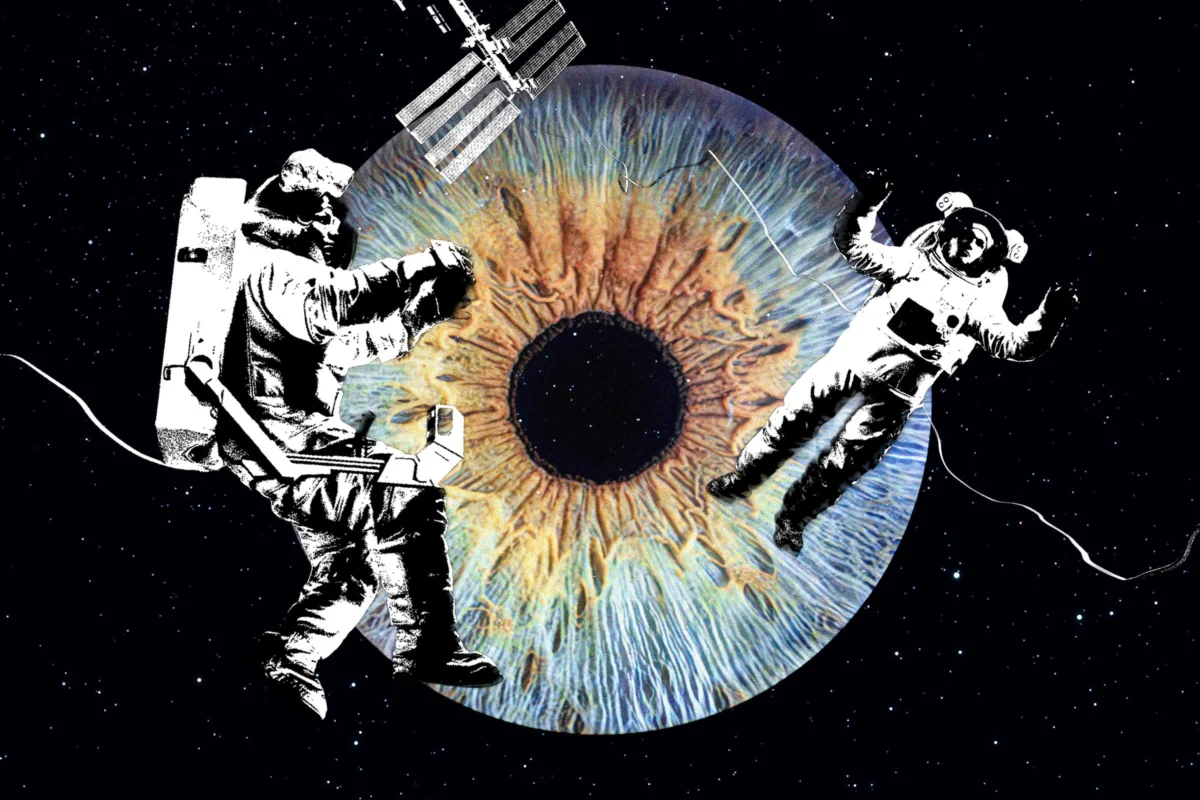
As humanity prepares to return to the moon and cast its gaze toward the red sands of Mars, a silent, physiological crisis threatens the future of deep-space exploration. Astronauts, the pinnacle of human health and physical fitness, are returning from low-Earth orbit with a perplexing and potentially debilitating condition: permanent vision degradation.
To combat this, the European Space Agency (ESA) has turned to the cutting edge of British innovation, commissioning the startup Siloton to develop a miniature, high-precision eye-scanning solution. By shrinking the bulky diagnostic tools found in a typical optometrist’s office onto a photonic chip smaller than a coin, researchers hope to demystify "Spaceflight-Associated Neuro-ocular Syndrome" (SANS) and safeguard the eyesight of those charting the future of our species.
The Silent Threat: Understanding SANS
Spaceflight-Associated Neuro-ocular Syndrome (SANS) is not merely a side effect of aging or fatigue; it is a profound biological reaction to the absence of gravity. When humans spend extended periods in space, the body’s fluids—which are naturally pulled toward the lower extremities on Earth—begin to migrate upward. In the microgravity environment of the International Space Station (ISS), these fluids accumulate in the head, causing subtle but dangerous pressure changes.
This internal pressure manifests physically: the eyeballs become slightly flattened, the optic nerves begin to swell, and the retinas are pushed forward. The result is a constellation of ocular changes that can permanently alter an astronaut’s visual acuity.
The case of NASA astronaut John Phillips, who served on the ISS in 2005, serves as a sobering touchstone for the medical community. Phillips launched into orbit with perfect 20/20 vision. Upon his return to Earth just six months later, his vision had deteriorated to 20/100—a level of impairment that would make daily tasks on Earth difficult without corrective lenses. For an astronaut tasked with navigating complex spacecraft systems or performing delicate extravehicular activities, such a change is not just a health issue; it is a critical mission risk.
Chronology: From Clinical Offices to Deep Space
The discovery of vision changes in astronauts was a slow-burn realization. Early space missions were short enough that physiological changes remained largely unnoticed. However, as the duration of ISS missions extended into months, reports of visual disturbances became increasingly common.

- 2005: The case of John Phillips highlights the severity of the ocular shifts during long-duration spaceflight.
- 2010s: NASA officially categorizes the phenomenon as SANS, initiating longitudinal studies to track the vision of every astronaut returning from the ISS.
- 2020: Siloton is founded by a team of physicists with the goal of revolutionizing optical coherence tomography (OCT). Their mission is to democratize eye care by moving it from specialized clinics into the homes of patients with retinal conditions.
- 2023–2024: The ESA identifies the urgent need for a portable, autonomous diagnostic tool. Recognizing the overlap between home-care requirements and space-grade technology, they commission Siloton to adapt their quantum-based photonic chip technology for the Artemis lunar program.
The Tech: Shrinking the Future
The device currently used on the ISS to monitor eye health is a modified version of the OCT scanner found in high-end optometry clinics. While effective, it is a behemoth—bulky, heavy, and reliant on real-time remote guidance from medical experts back on Earth.
Siloton’s solution leverages quantum technology to condense the complex light-interference engines of these machines onto a single photonic chip. By using light to create cross-sectional images of the retina, the chip can measure the thickness of the layers at the back of the eye with micrometer-level precision.
Engineering Challenges in the Void
Developing technology for space is not as simple as shrinking a prototype. The team at Siloton faces three primary hurdles:
- Fire Safety: Traditional lithium-ion batteries are a major fire hazard in the confined, oxygen-rich environment of a spacecraft. The team must find alternative power solutions that meet stringent safety protocols.
- Ergonomics in Microgravity: On Earth, an OCT scan requires a patient to rest their chin on a stable support. In space, the lack of a "down" makes it difficult to stabilize the head. Designers must rethink how to keep the patient—and the scanner—perfectly aligned.
- Autonomy: As missions venture toward the moon and beyond, communication delays with Earth will grow from seconds to minutes. Astronauts will no longer have the luxury of an expert guiding them through the scan. The device must be intelligent enough to assist the user in capturing clinical-grade data without outside intervention.
Official Responses and Strategic Vision
Rebecca Evernden, director of the UK Space Agency, has underscored the importance of this development, noting that SANS is a fundamental barrier to long-duration human exploration. "The eye condition SANS is a serious health risk facing astronauts on long missions," Evernden stated. "Medical engineers want to develop their understanding of the condition and the factors causing it so that they can manage any ocular damage."
Euan Allen, co-founder and CTO of Siloton, sees the ESA partnership as a symbiotic relationship. He argues that the requirements for treating an elderly patient with macular degeneration on Earth are surprisingly similar to those of a healthy astronaut in deep space.
"The ESA pretty much has the same requirements," Allen explains. "It’s just in a totally different environment."

He believes the project will prove that space tech is not just for the stars—it has immediate terrestrial utility. "I think lots of the stuff that we’re doing for space will bleed through and make our home device better, and vice versa. All this research and development work, in principle, is making our products that are going to go into the NHS much better."
Implications: The Path to Mars
The implications of Siloton’s work extend far beyond the immediate goal of protecting the vision of astronauts. If the technology succeeds, it will represent a paradigm shift in how we handle medical diagnostics in remote environments.
Why Early Detection Matters
The goal is not merely to track the damage, but to prevent it. By generating high-frequency, autonomous data, the ESA hopes to identify early "biomarkers"—the subtle, microscopic changes that occur before an astronaut experiences a shift in vision. If these markers can be identified early, space agencies could implement countermeasures, such as changing exercise routines, adjusting dietary intake, or utilizing specialized pressure-cuffs to manage fluid distribution in the head.
A Dual-Use Future
The "dual-use" nature of this technology—serving both the high-stakes world of space exploration and the aging population on Earth—is a hallmark of modern innovation. As the global population ages, the burden on ophthalmology clinics is increasing. A device that allows for self-scanning at home could prevent the progression of blindness in millions of people, while simultaneously ensuring that the first human to step foot on Mars can see the landscape they have traveled millions of miles to explore.
Conclusion
As we look toward the Artemis flights and the eventual colonization of our solar system, the hurdles are as much biological as they are mechanical. We have conquered the propulsion needed to leave Earth, but we are only just beginning to master the physiological demands of staying away.
Siloton’s mission to pack the power of an optometry suite onto a chip smaller than a coin is a testament to the power of human ingenuity. By solving the mystery of astronaut eyesight, we are not only protecting our explorers; we are refining the very tools that will one day preserve the vision of those left behind on Earth. In the silent, zero-gravity void, a small piece of photonic silicon may prove to be the most important piece of equipment on the ship.