In the high-stakes world of ultralight backpacking and alpine mountaineering, gear performance is often dictated by the technical specifications of textiles. Brands frequently market their products based on the hydrostatic head of a fabric, its denier rating, or its proprietary DWR (Durable Water Repellent) coating. Yet, there is a fundamental disconnect between the laboratory performance of a yard of fabric and the real-world performance of a finished, stitched-together backpack.
A pack is only as waterproof as its weakest seam, its most exposed zipper, or its least protected hydration port. Recognizing this, a new methodology for evaluating pack integrity—the "Controlled Shower Test"—has emerged as a vital tool for hikers and gear reviewers alike. By shifting the focus from fabric specs to holistic construction, this test offers a sobering, practical look at how much water actually reaches your gear when the clouds open up.
The Illusion of Fabric Specs
The modern backpacking industry relies heavily on "spec-sheet marketing." A consumer might purchase a pack made of ultra-high-molecular-weight polyethylene (UHMWPE) or laminated waterproof fabrics, assuming that the material’s inherent resistance to moisture equates to an impenetrable barrier.
However, a backpack is a complex assembly of disparate parts. Even if the primary body fabric is rated for 20,000mm of hydrostatic head, the packbag itself remains a sieve. Water ingress is rarely a failure of the fabric itself; it is a failure of architecture. Stitch holes, where needles pierce the fabric to secure webbing or shoulder straps, act as capillary wicks. Zippers, even those marketed as "water-resistant," often allow moisture to bypass their seals under sustained pressure. Furthermore, roll-top closures, drawcord collars, and hydration ports provide clear ingress points that are rarely sealed to the same standard as the pack’s main panels.
Chronology of a Methodology: The Shower Test
The development of a standardized "Shower Test" was born from a desire to move away from anecdotal field reports and toward a repeatable, controlled environment. The method was refined over several cycles of testing to ensure it provided useful, comparative data.
Phase 1: Preparation (Hours 0–2)
The test begins with the selection of a "witness material." A large, dry cotton pillowcase is weighed on a precision digital scale. This serves as the internal indicator of moisture. The backpack is then packed with non-absorbent, bulky materials to simulate the volume of a loaded pack, ensuring the fabric is under a degree of tension—a state that can open up stitch holes and stress seams.
Phase 2: The Exposure (0–30 Minutes)
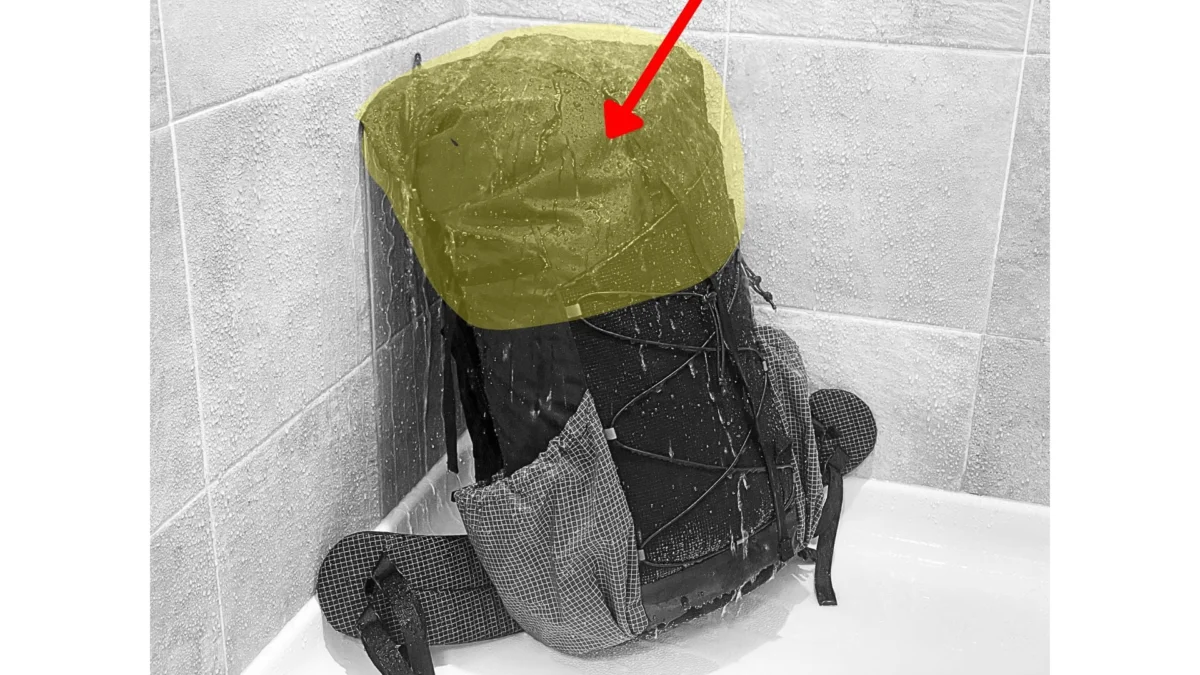
The packed bag is placed inside a standard household shower stall. The showerhead is positioned to provide a consistent, overhead spray, simulating a moderate to heavy rainfall. The pack is exposed for exactly 30 minutes. This duration is long enough to identify construction flaws but short enough to prevent the pack from becoming completely saturated, which would skew the data.
Phase 3: Post-Test Analysis (30–60 Minutes)
Immediately following the shower exposure, the exterior of the pack is wiped down to prevent surface water from entering the bag during the unpacking process. The cotton pillowcase is carefully removed and weighed again. The difference in weight between the dry pillowcase and the post-exposure pillowcase provides a quantitative value of water ingress.
Supporting Data: Why "Water-Resistant" Isn’t "Waterproof"
The results gathered from these tests often defy consumer expectations. Packs that feature "waterproof" fabrics frequently show higher ingress rates than expected due to seam-sealing failures.
Common Ingress Vectors:
- Stitch Holes: In most conventional packs, the interface between the shoulder strap attachment and the back panel is the primary failure point. Without internal seam tape or specialized bonding, water tracks down the webbing and enters through the needle holes.
- Hydration Ports: The small, reinforced hole meant for a hydration tube is notoriously difficult to seal. Even in high-end packs, this is often an open conduit for rain.
- Zipper Tracks: Coil zippers, even those with protective flaps, are prone to "winking" under the weight of a heavy pack, creating small gaps for water to enter.
- Compression Straps: Points where compression straps are bar-tacked into the body fabric are high-stress areas. Over time, the tension can enlarge these holes, allowing water to permeate the bag.
The data suggests a hierarchy of water resistance: fully welded, roll-top dry bags perform at the top of the spectrum, while traditionally stitched packs—even those with high-tech fabrics—occupy the bottom.
Official Perspectives and Industry Standards
Leading manufacturers, when pressed on these results, often clarify that their products are designed to be "weather-resistant" rather than "submersible." The industry consensus is that a backpack should be treated as a storage system, not a dry bag.
Many high-end brands argue that the inclusion of internal pack liners (such as dry bags or heavy-duty trash compactor bags) is a superior solution to attempting to make a complex, multi-panel backpack 100% waterproof. From a manufacturing standpoint, fully sealing every seam—not just the primary ones—would significantly increase the price and weight of the product, potentially hindering the pack’s breathability and structural integrity.
However, advocates for rigorous testing argue that brands should be more transparent. If a pack is marketed as "waterproof," it should meet a baseline standard of water ingress that protects the contents during a sustained storm.
Implications: How to Protect Your Gear
The implications of this testing are twofold: for the manufacturer, it highlights the need for better construction techniques; for the consumer, it dictates a change in packing strategy.
Implications for Manufacturers
The "Shower Test" serves as a brutal diagnostic tool. Designers can use it to pinpoint exactly where a prototype fails. If a pack fails consistently at the shoulder strap anchor, it indicates a need for better reinforcement, such as heat-sealed seam patches or moved anchor points. The test forces a shift from "marketing-led design" to "performance-led design."
Implications for the Consumer
For the hiker, the takeaway is clear: never trust the fabric alone. Even the most advanced laminate fabrics cannot protect your down sleeping bag or electronics from a driving rain if the seams are not sealed or if the closure system is compromised.
- Adopt a Layered Approach: The most effective defense remains a "system" approach. Pack your sensitive gear in dedicated dry bags inside your backpack.
- Pack Liner Utilization: Use a heavy-duty, waterproof pack liner. This creates a secondary, redundant barrier that renders the specific water-resistance rating of your pack’s exterior fabric largely irrelevant.
- Strategic Packing: Place moisture-sensitive items in the center of the pack, away from the back panel and the top closure, which are the most likely points of entry.
- Maintenance: Regularly inspect your pack for worn seams. Applying a seam-sealer to high-stress areas can extend the life and water resistance of your gear significantly.
Conclusion: The Path Forward
The backpack is an essential tool, yet its performance in inclement weather is frequently misunderstood. By utilizing a controlled shower test, we can strip away the veneer of marketing and understand the reality of our equipment. While no backpack—unless specifically engineered as a submersible dry bag—is ever truly waterproof, acknowledging the limitations of our gear is the first step toward better preparation.
As technology advances, we may see more brands adopting internal seam-welding or high-frequency bonding to minimize the use of needle-and-thread construction. Until then, the smart hiker will continue to respect the limitations of the fabric, prepare for the inevitability of moisture, and keep their gear dry through redundancy rather than relying solely on the specs printed on the hang-tag. The shower test proves that while the fabric may be the face of the pack, it is the construction that determines whether you end your day with a dry sleeping bag or a soggy, heavy mess.