The foldable smartphone market has officially entered its "refinement phase." For years, the narrative surrounding devices like the Samsung Galaxy Z Fold series centered on the novelty of the form factor—the sheer magic of turning a phone into a tablet. Today, that novelty has worn off, replaced by a demand for polish, usability, and hardware parity. With the launch of the Galaxy Z Fold8 and the premium Z Fold8 Ultra, Samsung is attempting to bridge the gap between experimental tech and daily-driver reliability.
The Physical Refinement: Creases and Camera Bumps
The most immediate improvement users will notice upon unboxing either device is the display architecture. For years, the "crease"—the visible and tactile indentation at the center of the folding screen—has been the Achilles’ heel of the category. On both the Fold8 and the Fold8 Ultra, this hinge-point has been significantly engineered down. It is not just less visually intrusive; it is smoother to the touch. When swiping across the center of the display, the familiar "bump" that has plagued previous generations is now barely perceptible.
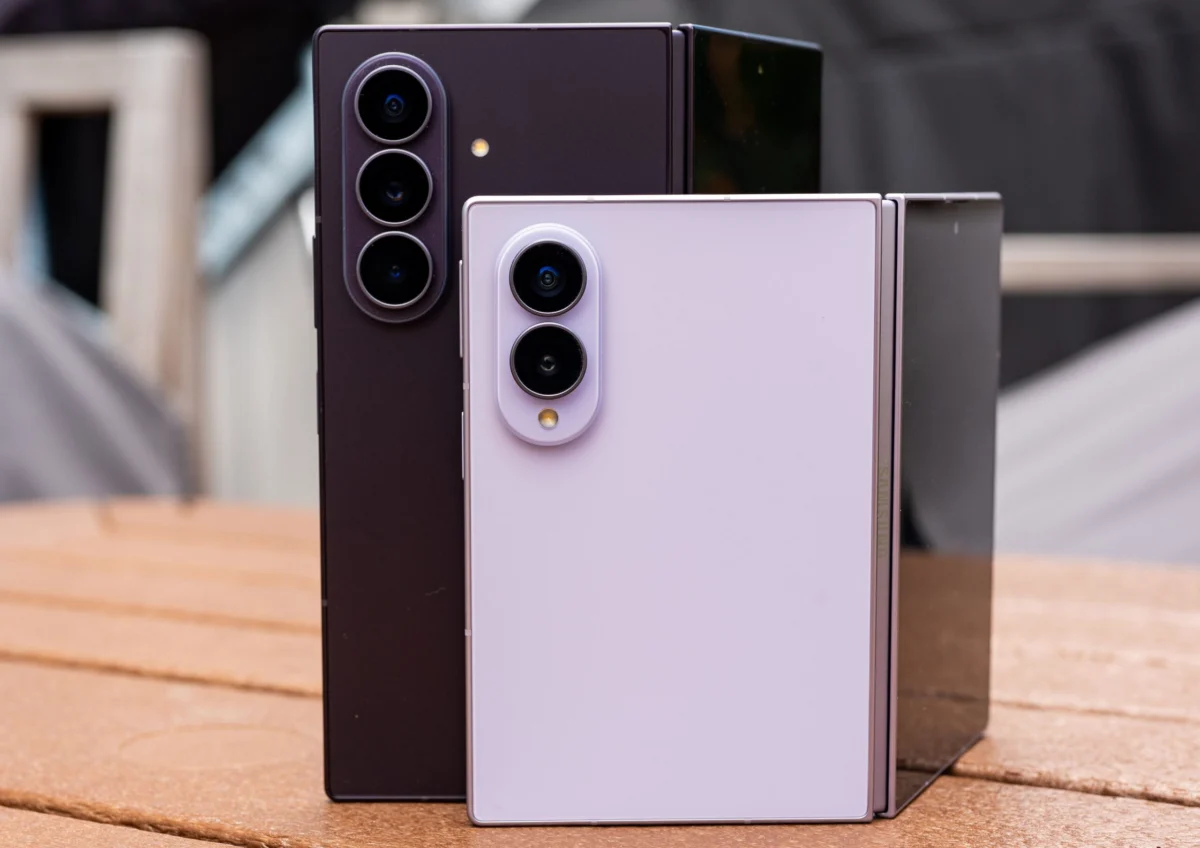
However, design progress is not universal. Samsung’s lingering Achilles’ heel remains the rear camera module. Both devices feature a substantial protrusion that prevents the phones from laying flat on a desk. The resulting "wobble" is more than a minor inconvenience; it is a design oversight that makes interacting with the phone while it rests on a surface an exercise in frustration.
Even with a protective case, the camera bump remains a point of instability. In an era where Google’s Pixel line has popularized the "camera bar"—a horizontal design that distributes weight evenly across the back of the device—and Apple has similarly adopted stabilization-focused design philosophies, Samsung’s vertical, jutting island feels increasingly dated.
The Ergonomic Advantage: Why the Fold8 Shines
While the "Ultra" moniker typically implies the definitive version of a device, the standard Fold8 offers a compelling case for itself in terms of ergonomics. The device feels more natural in the hand, and Samsung’s handling of the split-screen multitasking interface feels refined for this specific aspect ratio.
-and-Z-Fold8-(right)-SOURCE-Julian-Chokkattu.jpg)
On the Fold8, multitasking feels "breathed in." Applications do not feel unnecessarily squashed, and the software allows for a seamless three-app side-by-side layout that feels genuinely productive rather than claustrophobic. By comparison, the Ultra, while expansive, occasionally suffers from the feeling of "too much screen," where the UI hasn’t quite caught up to the massive real estate provided by the larger panel.
Chronology of the Fold Series: A Path to Maturity
To understand the weight of these updates, one must look at the trajectory of the series.
- 2019: The Genesis: The original Galaxy Fold was an experimental proof-of-concept, riddled with display fragility issues that forced a complete redesign.
- 2021-2022: The Refinement Years: The Fold3 and Fold4 introduced water resistance and S-Pen support, moving the device from "fragile toy" to "professional tool."
- 2024: The Silicon Shift: The introduction of the Snapdragon 8 Elite Gen 5 chip marked a departure from the thermal throttling issues that plagued the Fold series in the early 2020s.
- 2026: The Ultra Era: The Fold8 and Fold8 Ultra represent the first time Samsung has bifurcated its flagship foldable line, acknowledging that power users and casual users have different requirements for screen size and camera performance.
Supporting Data: Performance and Power
When looking at a $200 price delta, one might expect a discrepancy in raw processing power. Thankfully, Samsung has maintained parity where it matters most: under the hood. Both the Fold8 and the Fold8 Ultra are powered by the Qualcomm Snapdragon 8 Elite Gen 5 chip.
In testing, this chipset delivers a buttery-smooth experience that handles high-fidelity mobile gaming and intensive multitasking without a stutter. Whether you are running a complex Excel spreadsheet alongside a video call or playing a graphically demanding title, the performance remains identical across both models.
Battery Longevity and Silicon-Carbon Technology
The divergence appears in the power cells. The Fold8 Ultra utilizes a 5,000-mAh battery, while the standard Fold8 packs 4,800-mAh. Both utilize Samsung’s new silicon-carbon battery technology, which allows for higher energy density without increasing the physical volume of the cell.

- Fold8 Ultra: Consistently achieves over 6 hours of screen-on time, though this figure fluctuates based on the usage of the expansive inner display.
- Fold8: Ranges between 5 to 6 hours of screen-on time.
It is worth noting that the "Ultra" advantage is conditional. If a user spends the majority of their time utilizing the inner, larger display of the Ultra, the battery drain is significantly higher than that of the standard Fold8, effectively nullifying the capacity gains.
The Camera Gap: The True Differentiator
If the processors are the same, why pay more for the Ultra? The answer lies entirely in the camera system. The Fold8 is equipped with a 50-megapixel primary sensor and a 50-megapixel ultrawide, supplemented by 10-megapixel selfie cameras on both the outer and inner screens. It is a capable setup, but it feels distinctly "mid-range" in the context of a device costing nearly two thousand dollars.
The Fold8 Ultra, by contrast, elevates the experience with a 200-megapixel main sensor. The difference in low-light performance and detail retention is noticeable to even the casual observer. More importantly, the Ultra includes a 10-megapixel 3X optical zoom lens.
For many power users, the lack of a robust zoom on the standard Fold8 is a dealbreaker. In a landscape where the Pixel 11 Pro Fold offers a 5X optical zoom, Samsung’s decision to limit the Fold8 to a 3X zoom feels like a strategic omission—a way to force consumers toward the more expensive model. As a photographer, the absence of a longer reach on a premium device is a source of genuine frustration that we hope to see rectified in the forthcoming Fold9.
Official Responses and Industry Implications
Samsung’s marketing for the Fold8 line has shifted from "the future of phones" to "the standard for productivity." In recent press briefings, Samsung representatives highlighted the "ecosystem integration" of the Fold8, emphasizing that these devices are meant to function as the centerpiece of a workflow that includes tablets, laptops, and wearables.
.jpg)
The industry implications of this release are profound. By launching an "Ultra" version, Samsung is validating the foldable market as a premium tier that requires its own hierarchy. This mirrors the trajectory of the standard Galaxy S series, which eventually saw the S-Ultra dominate the high-end market.
However, the competition is tightening. Google’s commitment to the horizontal camera bar and the superior 5X zoom on the Pixel 11 Pro Fold suggests that Samsung can no longer rely on the "folding screen" gimmick to maintain its market share. They must compete on camera hardware, industrial design (specifically the wobble-inducing camera bump), and battery efficiency.
Conclusion: A Choice of Philosophy
The decision between the Galaxy Z Fold8 and the Fold8 Ultra boils down to a choice of philosophy. If you prioritize portability, a balanced form factor, and a more comfortable grip, the standard Fold8 is an exceptional machine that makes very few compromises on performance. If, however, you view your phone as your primary camera and require the absolute ceiling of imaging capability—and don’t mind the added bulk—the Ultra is the clear, albeit more expensive, choice.
Samsung has successfully moved past the growing pains of the folding screen. The hinges are tighter, the screens are more durable, and the chips are more efficient. The next frontier for the Fold series is not the screen itself, but the surrounding hardware: refining the camera housing, expanding optical zoom capabilities, and continuing to optimize the battery-to-screen-real-estate ratio. The Fold8 is a triumph of engineering, but it serves as a reminder that even in the world of cutting-edge technology, the smallest details—like a rocking phone on a desk—still matter.