Responding to oil and chemical spills is a complex operation under ideal conditions. When those spills occur along inland waterways during the heart of winter, the difficulty increases exponentially. For emergency responders, the intersection of moving water, sub-zero temperatures, and ice instability creates one of the most unforgiving environments on the planet. As regional authorities and private response contractors face an increasing number of winter-season incidents, the industry is recalibrating its approach to safety, emphasizing that in the cold, the environment is just as much an adversary as the spill itself.
The Anatomy of a Frozen Crisis: Main Facts and Hazards
Inland spill response in cold weather is defined by the constant management of two distinct threats: the chemical or oil contamination itself and the catastrophic risk of structural failure of the ice surface. Unlike static lake ice, river ice is subject to constant, varying forces. The current beneath the surface acts as a relentless erosive agent, creating pockets of thin ice that are often invisible to the naked eye.
For a responder, falling through the ice into a moving river is a life-threatening emergency. The kinetic energy of the current can drag a person beneath the ice sheet, making self-rescue nearly impossible. Because of this, the foundational rule of winter response is simple: Stay off the ice until a comprehensive, documented safety plan is authorized.
This is not merely a suggestion; it is a prerequisite for entry. Before any equipment touches the surface, a multi-layered site assessment must be completed to determine the viability of the ice, the velocity of the water, and the structural integrity of the banks.
A Chronology of Assessment: The Pre-Entry Protocol
Standard operating procedures for winter response dictate a rigid, step-by-step chronology for site entry. Before any boots hit the ice, the Incident Command must establish a staging area that remains safe regardless of the operation’s outcome.
Phase 1: Initial Size-Up
The initial assessment begins from the safety of the riverbank. Responders must quantify:
- Current Speed: High-velocity water significantly reduces the load-bearing capacity of ice.
- Hydrology: Understanding the river depth and bottom contours helps predict where ice might be thinnest due to eddies or submerged obstructions.
- Ice Quality: Using augers, teams must drill a series of test holes starting from the shore and working outward. This creates a "safe path" profile.
- The Math of Survival: Responders utilize the formula $P = 50 times T^2$ (where $P$ is the load-bearing capacity in pounds and $T$ is the thickness in inches). However, this is only a starting point. Experts mandate a 15% reduction in strength for current-affected river ice and up to a 50% reduction if the surface consists of "snow ice," which is notoriously porous and weak.
Phase 2: Structural Evaluation
One cannot judge ice by its appearance. Temperature, water chemistry, and internal stress fractures render visual inspection insufficient. During the assessment, responders must be belayed at all times. The use of platforms—such as 4×8 sheets of plywood—is highly recommended to distribute the weight of the assessment team. An inflatable rescue craft should be stationed at the edge of the deployment zone, manned and ready, to provide immediate extraction if a team member breaks through.
Supporting Data: Understanding Ice Types
To manage risk effectively, responders must classify the ice they are working on. Each type presents a unique failure profile:
- Lake Ice: Generally clear and reflective. It is the most predictable and strongest form of ice.
- Frazil Ice: A slushy, disk-shaped accumulation. It is often the first phase of ice formation and provides zero load-bearing support.
- Candled Ice: A dangerous, deteriorated state where the ice has turned grayish-white. Even if it appears thick, the structural bonds have failed, and it can crumble under minimal weight.
- Snow Ice: Opaque and milky. It forms when snow falls onto the ice sheet and freezes. It is significantly weaker than clear ice and should be treated with extreme caution.
- Anchor Ice: This forms on submerged rocks and debris. In rivers, it is a major hazard because it can create ice jams, leading to sudden water level surges that can destabilize the ice sheet from underneath.
The Operational Shield: PPE and Site Logistics
Once the site is deemed viable, operations must minimize the number of personnel on the ice. The "buddy system" is mandatory; no responder should ever be out of reach of a partner.
Essential PPE
Every responder on the ice must be equipped with a full suite of specialized gear:
- Thermal Protection: Drysuits are mandatory to combat the immediate onset of cold-water shock.
- Rescue Gear: Ice awls must be carried for self-rescue.
- Mobility: Specialized ice cleats are required to maintain traction on slippery, uneven surfaces.
- Redundancy: Because wet gear in sub-zero temperatures becomes a liability, every team must have secondary sets of boots and gloves readily available in a heated environment.
The Warming Tent: A Critical Component
Operations should not begin without a fully established warming station. This is not just a comfort measure; it is a life-saving medical necessity. A warming tent must include:
- Hypothermia Wraps and AEDs: Standard EMS protocols for cold-water immersion.
- Portable Heaters: To maintain an ambient temperature high enough to stabilize individuals who may have been exposed.
- Oxygen and Medical Kits: To address potential respiratory or trauma-related issues resulting from the spill or the environment.
Official Responses and Strategic Implications
Industry leaders in spill response have moved toward a more integrated approach, blending traditional hazmat training with advanced swift-water rescue techniques. The consensus among professionals is that "the ice is a platform, not a floor."
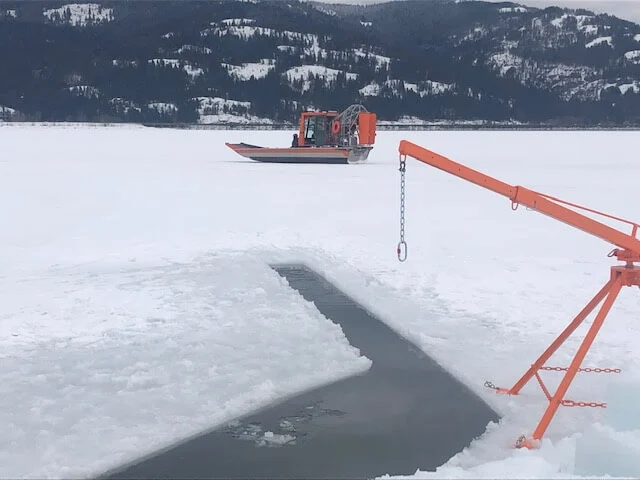
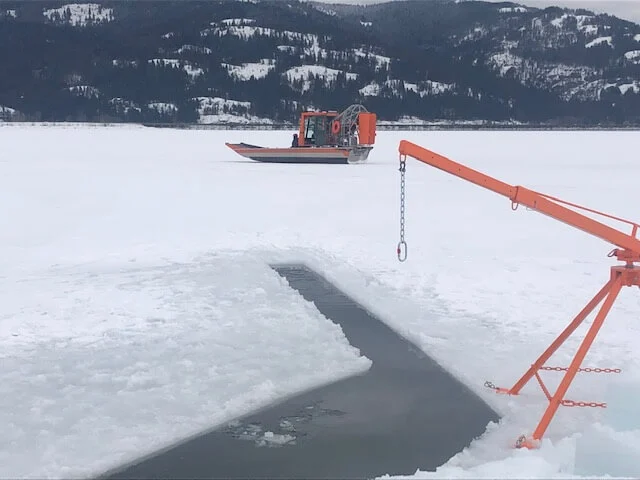
When working on river ice, the strategy often shifts toward "platform-based" operations. If the ice is deemed too unstable for foot traffic, responders are encouraged to use airboats or specialized raft platforms. These vessels provide a mobile, stable base that eliminates the risk of a person falling through the ice while simultaneously offering a rapid extraction method.
Furthermore, the integration of technology—such as thermal imaging to locate potential spill plumes under the ice and real-time weather monitoring—has become the gold standard. Incident commanders must now re-evaluate the safety plan every few hours, as a shift in wind speed or a sudden temperature drop can alter the ice’s integrity in minutes.
The Silent Killer: Wind Chill and Human Performance
The danger of cold-weather response is not limited to the ice itself. Wind chill creates a biological hazard that can lead to rapid cognitive decline, frostbite, and hypothermia.
The Wind Chill Temperature Index is a critical operational metric. When the wind speed increases, the body loses heat at an accelerated rate. In northern climates, temperatures that seem manageable can become lethal within minutes when combined with high wind.
Wind Chill Safety Guidelines:
- Monitor Exposure: Responders should follow strict rotation schedules. Once an individual reaches a certain threshold of exposure, they must be pulled from the field to the warming tent.
- Skin Protection: Exposed flesh can freeze in under a minute in extreme conditions. Full-face protection is mandatory.
- Awareness: The "feel" of the temperature is the reality the body experiences. Incident commanders must adjust operational timelines based on the wind chill chart rather than the ambient thermometer reading.
Conclusion: The Path Forward
Inland spill response in winter remains one of the most hazardous tasks in emergency management. The lessons learned over the past two years underscore a vital shift in philosophy: there is no such thing as "safe" ice on a river. There is only "assessed" ice, "monitored" ice, and "managed" risk.
By adhering to rigorous size-up procedures, utilizing proper belaying techniques, and prioritizing the health of the responders through heated staging and constant medical monitoring, agencies can mitigate the dangers. However, the ultimate success of any winter response relies on the discipline of the individuals on the ground. When the environment is unforgiving, the only defense is a commitment to standard operating procedures that prioritize human life over the speed of the cleanup. As climates shift and extreme weather events become more frequent, these winter response protocols will serve as the backbone for protecting our inland waterways during their most vulnerable season.