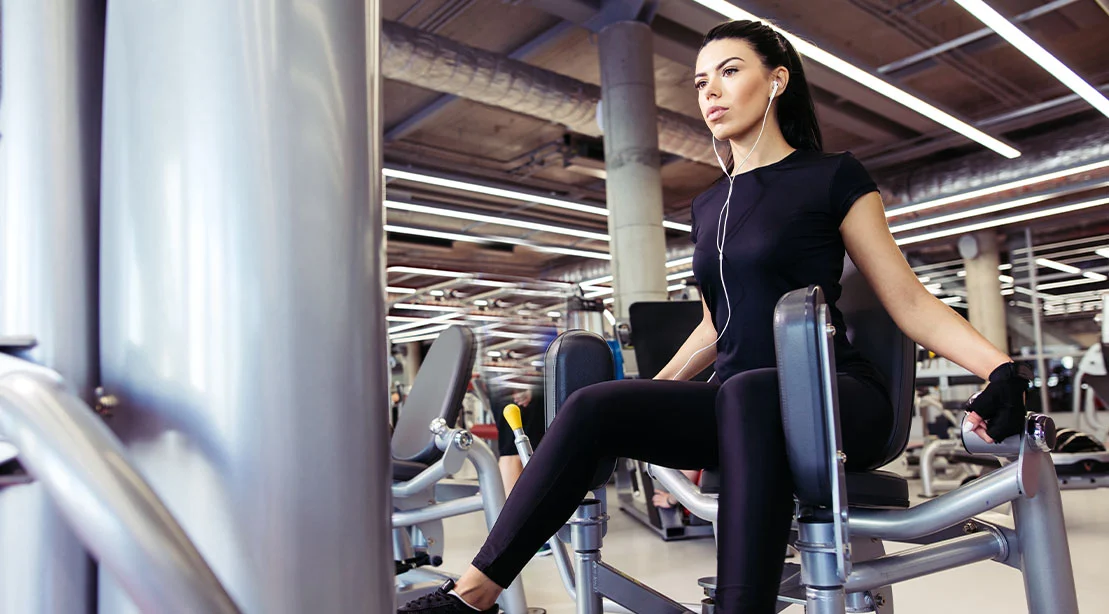
It is the quintessential "gym wallflower." It involves sitting down, pressing your knees against padded levers, and pushing your legs outward. It is often labeled the ultimate "don’t you dare maintain eye contact" exercise. In a world of barbell-bending deadlifts and the rhythmic clatter of heavy plates, the seated hip abductor machine is frequently dismissed as a "fluff" movement—a relic of outdated fitness trends that serves more as a placeholder than a performance enhancer.
However, a growing body of biomechanical research and the nuanced perspectives of top-tier physical therapists suggest that we have been looking at this machine through the wrong lens. Muscles do not care about aesthetics, "cool" factors, or athletic vanity; they respond to stimulus, tension, and metabolic demand. When we peel back the layers of gym-floor prejudice, we find that the hip abductor machine is not just a sedentary afterthought—it is a specialized tool for structural integrity and hypertrophy.
The Evolution of the "Functional" Debate
To understand the disdain for the hip abductor machine, one must understand the "functional fitness" movement. Critics argue that because the machine places the user in a seated, fixed position, it lacks "carryover" to real-world movement. In sports or daily life, we are rarely seated while pushing our legs apart.
Physical therapist Dan Swinscoe notes that this is the crux of the skepticism. "The machine trains the leg with the foot off the ground," Swinscoe explains. "In daily activities, the foot is almost always on the ground. Pressure through the foot is a key trigger for coordinated muscle activation, which this machine inherently lacks."
Bo Babenko, another leading physical therapist, agrees that the seated position is a limitation. "My main problem with this machine is that it is a completely unnatural way to use these muscles in a seated position," he says.
For the performance-obsessed athlete who defines progress by heavy back squats and dynamic lunges, this lack of functional replication is enough to banish the machine to the "junk volume" list. But this critique relies on a narrow definition of training. If every exercise were required to perfectly mimic a sporting movement, we would have no place for the bicep curl, the tricep extension, or the leg extension.
Supporting Data: What the Science Says
While critics focus on the machine’s lack of "sport-specificity," researchers are measuring something entirely different: muscle recruitment.
A pivotal review of hip-strengthening protocols highlighted that the seated hip abduction machine produces remarkably high levels of gluteus medius activation. In one specific study, subjects achieved approximately 80% of their maximal voluntary isometric contraction (MVIC). For those seeking to fill the gaps in glute development—particularly the upper fibers of the gluteus maximus and the gluteus medius—this level of localized recruitment is difficult to replicate with compound movements alone.
Furthermore, a 2022 study published in the Journal of Strength and Conditioning Research provided a critical defense of the machine. The researchers compared several single-joint hip abduction exercises and found that the seated machine produced superior gluteus medius activity while simultaneously minimizing the involvement of the tensor fasciae latae (TFL).
This is a critical nuance. Many athletes suffer from "TFL dominance," where the smaller, synergist muscles take over the work of the larger, primary glute muscles during squats or step-ups. By isolating the hip abductors in a seated position, lifters can bypass the TFL’s tendency to compensate, allowing the glute medius to work in relative isolation.
The Case for Targeted Hypertrophy
Beyond rehabilitation and stability, the hip abductor machine offers a unique benefit for bodybuilding and general hypertrophy: targeted volume without systemic fatigue.
Compound lifts like the barbell squat or the Bulgarian split squat are undeniably the kings of leg development. However, they are also incredibly taxing on the central nervous system (CNS). As a lifter progresses, adding more sets of heavy squats to increase glute growth often leads to overtraining and burnout.
The hip abductor machine allows for a high-intensity, high-volume stimulus that does not require the heavy spinal loading or knee-joint stress associated with massive compound lifts. It is a "low-fatigue" accessory. You can exhaust the target musculature—the gluteus medius and minimus—without leaving your CNS shattered for the next day’s training session.
Expert Perspectives: Risk vs. Reward
When asked to evaluate the risk-reward ratio, both Babenko and Swinscoe emphasize that the machine is not a "magic bullet," but a precision instrument.
"It is a good way to recruit the gluteus minimus and medius," Babenko explains. "It has benefits for someone who needs to manage tendinopathy or is improving walking patterns post-op. It is not a complete hip solution, but it can be a useful part of improving hip stability."
The risks are largely user-error-based. Because the machine is so easy to use, lifters often treat it with carelessness. Bouncing through repetitions, using excessive weight that causes the pelvis to shift, or forcing a range of motion that exceeds hip mobility can lead to hip irritation. However, when treated with the same discipline as a heavy bench press—controlled eccentric phases, steady tempo, and proper bracing—the injury risk is exceptionally low.
Implications for Your Programming
If you decide to incorporate the hip abductor machine, it should not be the centerpiece of your workout. It is an accessory, intended to provide the "finishing touch" after the structural heavy lifting is done.
How to Integrate It
- Placement: Place the machine at the end of your lower-body workout. Use it as a burnout tool after your squats, deadlifts, or lunges have already addressed your foundational strength.
- Volume: Aim for 2 to 4 sets of 12 to 20 repetitions. This rep range is ideal for hypertrophy and metabolic stress, as it keeps the muscle under tension for a longer duration.
- Rest Intervals: Keep rest short—between 45 to 90 seconds. The goal is to accumulate metabolic stress in the glutes, not to test your maximal strength.
- Progression: Focus on progressive overload. Increase the weight only once you can complete the top end of the rep range with perfect, controlled form.
Who Should Use It, and Who Should Avoid It?
The Ideal Candidates:
- Hypertrophy Seekers: Those looking to maximize glute size and ensure complete development of the hip musculature.
- TFL-Dominant Lifters: Individuals who struggle to "feel" their glutes during compound movements and need to isolate the glute medius.
- Rehab/Prehab Clients: Those focusing on pelvic stability or recovery from lower-body injuries, under the guidance of a professional.
- High-Volume Trainers: Lifters who want to increase weekly glute volume without adding more heavy, CNS-draining compound sets.
Those Who Should Approach with Caution:
- The "Purist": If your training schedule is extremely limited and you only have 30 minutes to train, prioritize compound movements.
- The "Heavy-Weight" Addict: If you are using the machine as a way to avoid learning complex, high-reward movements like squats, you are prioritizing the wrong things.
- Those with Acute Hip Impingement: Always consult with a physical therapist before adding abduction work if you have a history of labral tears or femoroacetabular impingement.
The Verdict
The hip abductor machine is neither a miracle worker nor a waste of time. Its reputation suffers because of a misplaced desire for "functional" validation. In the fitness industry, we often conflate "simple" with "worthless." However, the ability to isolate specific muscles and drive hypertrophy without systemic fatigue is a hallmark of intelligent programming.
The machine does exactly what it is designed to do: it strengthens the muscles responsible for hip abduction. Whether you are an athlete looking to improve pelvic stability during high-speed movement, or a lifter seeking the aesthetic "glute shelf," this machine provides a low-risk, high-reward pathway to your goals.
Stop worrying about what you look like while you’re using it. Focus on the contraction, control the weight, and stop treating simplicity as a vice. In the right training program, the hip abductor machine earns its place.