The strength of the United States Armed Forces is not measured solely in hardware, tactical maneuvers, or strategic brilliance; it is forged in the resilience of its people. Behind every service member, there exists a vast, often unseen ecosystem of support—professionals dedicated to ensuring that those who stand on the front lines are equipped, conditioned, and capable of recovery. Among these unsung champions is Ashlee Henson, a dedicated health educator whose career has bridged the gap between military readiness and civilian wellness.
For Henson, the mission of health is personal. Her professional trajectory, from the specialized environment of Army Wellness Centers (AFWC) to the legendary halls of Cooper Aerobics in Dallas, Texas, serves as a masterclass in how evidence-based primary prevention can fundamentally alter the quality of human life.
The Foundation of a Mission: Understanding the AFWC
To grasp the magnitude of Henson’s work, one must first understand the purpose of the Armed Forces Wellness Center (AFWC). These facilities are not merely gyms; they are hubs of scientific, data-driven health optimization. Designed to serve active-duty service members, military retirees, their families, and Department of War (DoW) civilians, the AFWC focuses on primary prevention. By utilizing metabolic testing, stress management, and nutrition coaching, these centers provide the building blocks necessary for long-term health.
Henson, who served as the Director and Senior Health Educator at the AFWC in Fort Bragg, North Carolina, viewed her role as a privilege rather than a job. "It was the most wonderful, eye-opening environment that I had been exposed to, and I’m so grateful for it," Henson reflects. "I felt closer to the inner workings of our country, hearing and learning about the experiences they had."
For Henson, the AFWC was a place where the concept of "service" took on a deeper meaning. She was not just teaching fitness; she was participating in the recovery and preparation of the nation’s heroes. This period in her life cemented her belief that health is a collaborative endeavor—a philosophy she continues to champion today.
Chronology: A Lifelong Pursuit of Performance
Henson’s path to becoming a leader in health education began long before she donned the uniform of a government contractor. Growing up in a small town outside of Charleston, South Carolina, she was an energetic youth, finding her footing in gymnastics and soccer. However, it was not the competition that drew her in; it was the mechanics of the body in motion.
"Funny enough, I realized that in soccer, my favorite part was the conditioning, the running," Henson recalls. Her affinity for endurance did not go unnoticed. Her high school cross-country coach, seeing her prowess on the track, encouraged her to join the team. This was the first time Henson experienced the power of a collective, goal-oriented community. "That was amazing. I really enjoyed the community aspect of it."
During her graduate studies, Henson took her passion to the next level by becoming a certified trainer. While the supplemental income was welcome, the true reward was the ability to demystify health for others. Following graduation, she entered the public health sector, eventually landing in the AFWC system.
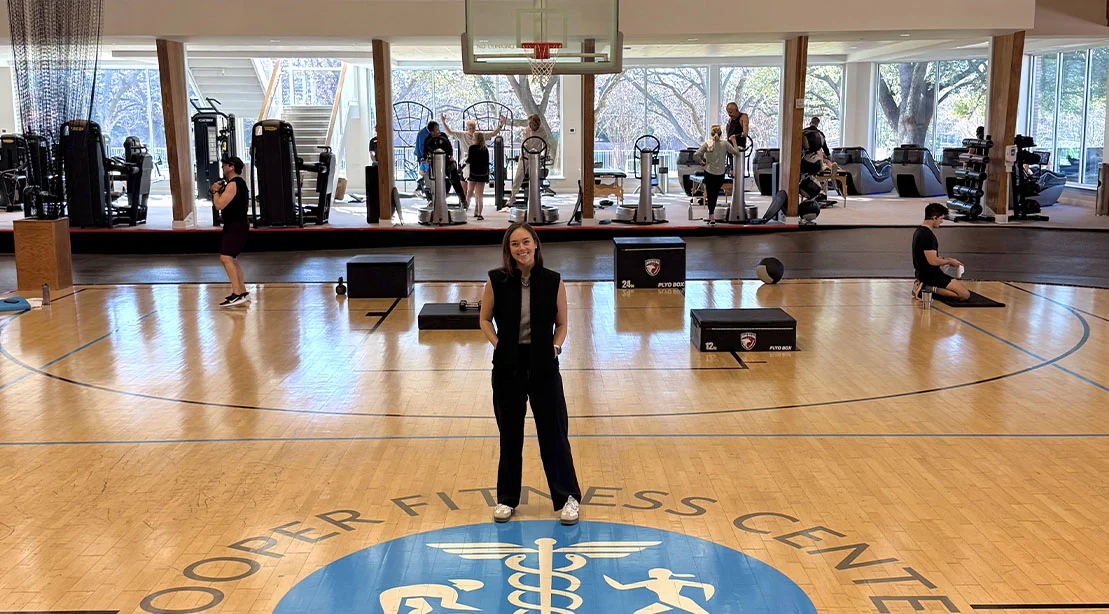
The transition from the AFWC to her current role at Cooper Aerobics in 2026 was marked by a moment of professional redirection. After a government hiring freeze stalled a new opportunity, and a family move to Texas shifted her geography, Henson discovered an opening at the legendary Cooper Aerobics center—a place synonymous with the "Father of Aerobics," Dr. Kenneth H. Cooper.
Supporting Data: The Science of "Cooperization"
The "Cooper" name is not merely a brand in the fitness world; it is a foundation of modern preventative medicine. Dr. Kenneth Cooper’s pioneering work in the 1960s popularized the concept of aerobics, shifting the medical paradigm from treating illness to preventing it through cardiovascular health.
Henson’s current role as Wellness Program Director puts her at the center of this legacy. The facility relies on the "Cooperized" methodology—a rigorous, science-backed approach to life extension. For Henson, the transition from military wellness to the private sector has been seamless because the core values remain identical:
- Evidence-Based Programming: Utilizing biometric data to tailor health interventions.
- Behavioral Change: Focusing on the psychological aspects of consistency.
- Primary Prevention: Treating the individual before they become a patient.
Data from the Cooper Institute suggests that those who participate in structured wellness programs see significant reductions in chronic disease markers. Henson utilizes this data to mentor members, ensuring they understand that "quantity of life" is directly linked to the quality of their daily habits.
Official Perspectives: The Philosophy of Wellness
The synergy between military support and private wellness is a frequent topic of discussion among health policy experts. Leaders within the Department of Defense (DoD) have long emphasized that readiness is a holistic metric. When a service member is mentally and physically resilient, the entire unit benefits.
Henson’s perspective on this is clear: "There was a big dynamic of gratitude that I will always take with me [from the AFWC]." That gratitude is a two-way street. The military members were grateful for the resources provided by the AFWC, but Henson was equally grateful for the opportunity to serve those who protect the nation.
This sentiment of "service to others" is a pillar of the Cooper Aerobics culture. When asked about her approach to leadership, Henson emphasizes the importance of walking the walk. "I lift when I can, I run when I can, and I just make sure to treat my body with respect and stay active," she says. By modeling these behaviors, she builds trust with her clients, a crucial component in any wellness program.
The Implications: Why Community Matters
Henson’s story carries significant implications for the future of public health. We live in an era of increasing isolation, where digital connection often replaces physical community. Henson’s career trajectory proves that whether one is on a cross-country team, in a military facility, or a member of a private fitness club, the common denominator for success is the presence of a supportive community.
Building Resilience
Henson argues that resilience is not an individual trait but a social one. "You really do need a community in order to thrive," she asserts. This has profound implications for health initiatives:
- Peer Support: In the military, the "battle buddy" system saves lives. In civilian health, group training and wellness programs serve a similar function.
- Accountability: When individuals are part of a mission-driven community, they are more likely to adhere to health protocols.
- Knowledge Transfer: By operating in environments like the AFWC and Cooper Aerobics, Henson has been able to bridge the gap between complex health research and practical application.
The Future of Wellness
As Henson looks to the future, her focus remains on the intersection of human performance and health longevity. By fostering environments where people can "get better together," she is helping to redefine what it means to be a healthy citizen.
The move from the AFWC to Cooper Aerobics represents a evolution in her career, yet the mission remains unchanged: empowering individuals to take control of their health. Whether she is working with a veteran recovering from service-related stress or a civilian aiming to improve their metabolic health, Henson’s approach is rooted in the belief that human potential is limitless when supported by the right community and the right information.
Conclusion: A Legacy in the Making
Ashlee Henson’s journey is a testament to the fact that passion, when aligned with service, can create a lasting impact. From the dusty trails of her youth in South Carolina to the highly specialized facilities at Fort Bragg, and now to the prestigious campus of Cooper Aerobics, Henson has remained committed to the idea that everyone deserves the tools to live a high-quality life.
As we look at the broader landscape of American wellness, individuals like Henson are the architects of a healthier, more resilient society. By championing the importance of evidence-based health and the power of community, she is not just teaching people how to exercise—she is teaching them how to live with purpose.
For those looking to follow in her footsteps or simply improve their own health journey, the lesson is clear: find your community, commit to the science of your own well-being, and never underestimate the power of showing up for others. As Henson says, the most important part of the journey is the people you meet along the way, and the positive influence you leave in your wake.