In the high-stakes world of emergency management, the difference between a minor environmental incident and a catastrophic ecological disaster often comes down to minutes. For the professional responders at Whitewater Rescue Institute (WRI), the challenge of containing spills in fast-moving, unpredictable river environments has long been a labor-intensive, physically grueling race against the clock.
Traditional containment methods, while reliable, rely on heavy, cumbersome boom systems that require significant manpower and time to transport over rugged terrain. However, a recent series of field trials on the Clark Fork River suggests that a technological shift is underway. By integrating innovative, lightweight solutions into their standard operating procedures, responders are beginning to bridge the gap between initial notification and effective containment.
The Challenge of Fastwater Containment
The Physical Toll of Traditional Response
For years, the standard for inland spill response has been the heavy-duty containment boom. While these systems are rugged and proven, they present significant logistical hurdles. A typical deployment involves moving 50- to 100-foot sections of industrial-grade boom from response trailers to the water’s edge. In an inland setting—often characterized by steep embankments, dense vegetation, and uneven ground—this process is arguably the most strenuous phase of the response.
“Carrying heavy containment boom to spills or training sites takes immense time and coordination,” notes a senior lead at WRI. “When you are working against the current, every minute lost to the logistics of transport is a minute where the contaminant spreads further downstream.”
The Dynamics of Moving Water
Beyond the physical labor, the fluid dynamics of rivers add a layer of complexity that static-water spill management does not face. Deploying boom in fast water is an exercise in risk management. If a boom is not perfectly angled or anchored, the force of the current can lead to "entrainment," where the spilled substance is swept underneath the curtain, rendering the entire containment effort useless. Consequently, WRI maintains a constant training cycle, treating every deployment as a controlled experiment to refine their tactical approach.
Chronology of the Clark Fork Field Trials
To assess the next generation of response equipment, the WRI team recently conducted a comprehensive two-day drill on the Clark Fork River. The objective was to test emerging technologies against the harsh realities of Montana’s fast-moving currents.
Day One: Stress-Testing the Boom Vane
The first phase of the drill focused on "boom vane" collection. In high-velocity environments, a boom vane acts as a hydrodynamic wing, pulling the containment boom out into the current to intercept the spill at an optimal angle. The team focused on the upper Clark Fork, where the current is notoriously aggressive. This phase served as a baseline, allowing the team to recalibrate their understanding of current force and structural integrity requirements for the equipment currently in use.
Day Two: The Introduction of HARBO Technology
The second phase of the drill introduced a novel, lightweight containment solution developed by Harbo Technologies. From the outset, the WRI team approached the gear with professional skepticism. The boom’s design—which relies on internal, inflation-ready components rather than heavy external floatation—seemed too lightweight to withstand the pressures of a river system.
“We were skeptical,” the team reported. “We assumed its lightweight design would not be strong enough to hold up in a fastwater deployment. We were looking for failure points.”
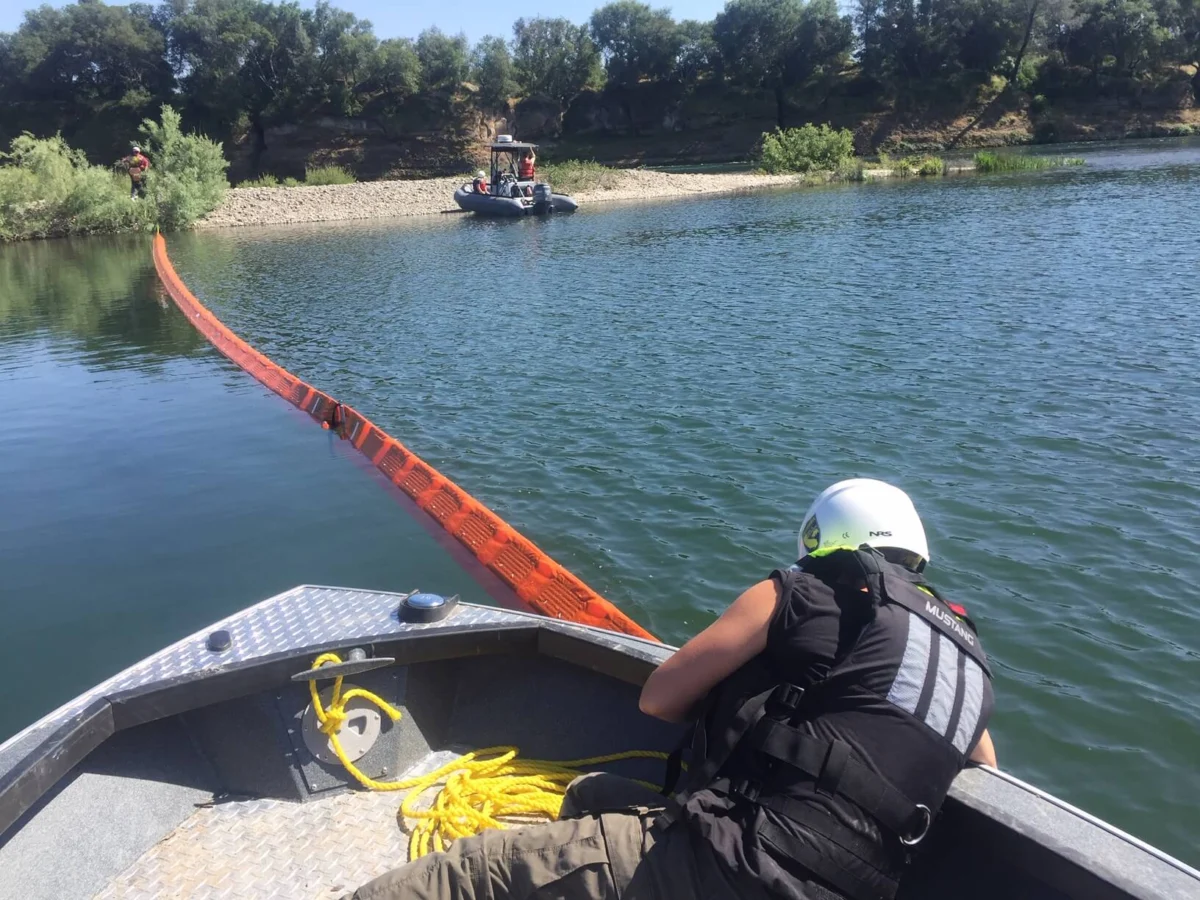
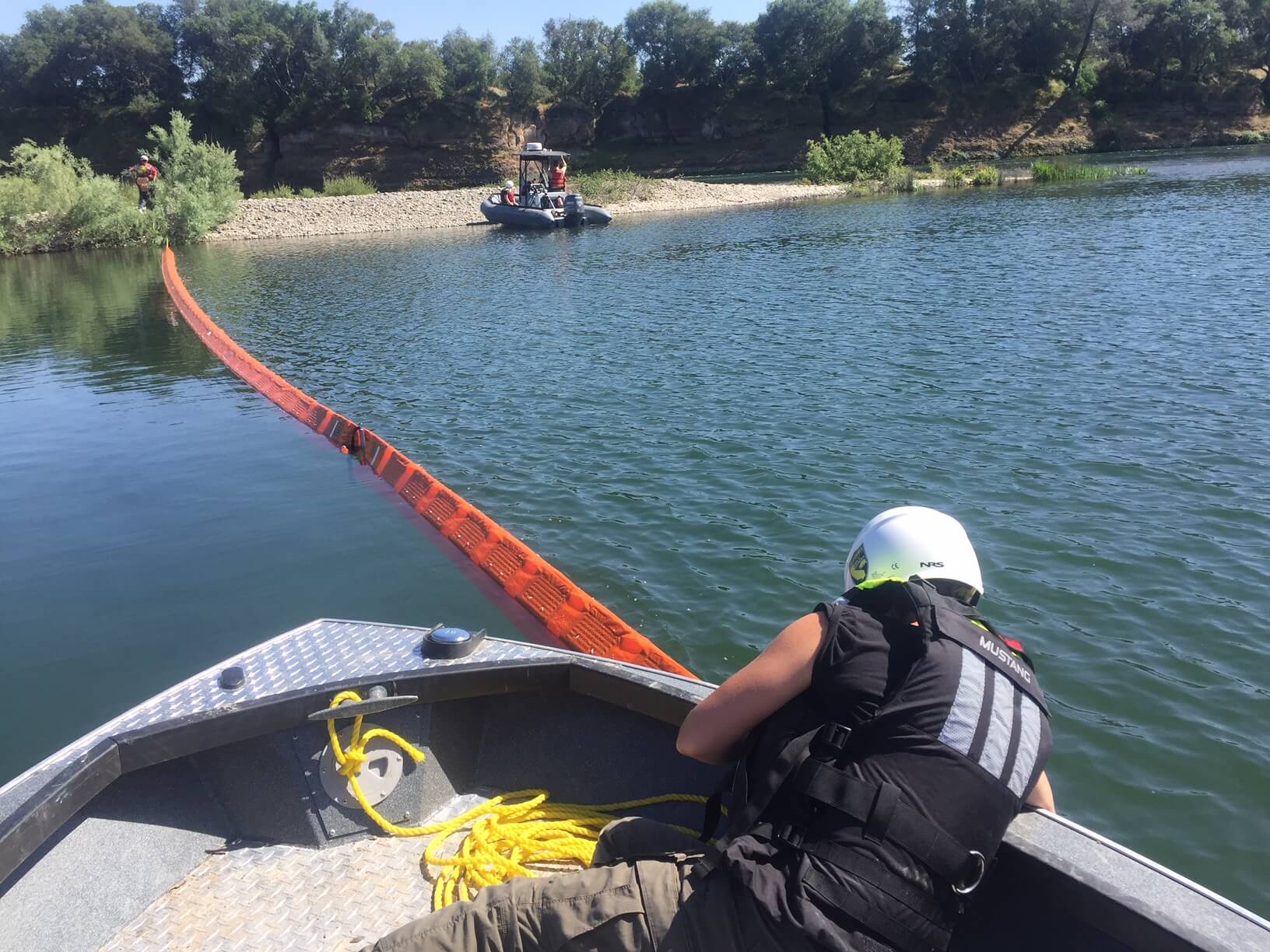
However, under the guidance of HARBO representatives, the team executed a series of deployments. They utilized the boom for shoreline protection and as part of a collection strategy integrated with a Highline and a Boom Vane. By the end of the day, the consensus among the veteran responders had shifted from skepticism to professional admiration.
Technical Specifications and Performance Data
The HARBO system represents a paradigm shift in storage and deployment logistics. Unlike traditional booms that require dedicated flatbed trailers or large storage spools, the HARBO boom is housed in a compact, portable dry box measuring roughly 20 by 36 inches.
The Mechanics of Inflation
The boom’s effectiveness is derived from its unique structural design:
- Rapid Deployment: One individual can easily manage and line out between 82 and 164 feet of boom along a shoreline, a task that would traditionally require a multi-person crew.
- Hydro-Dynamic Inflation: Upon immersion, internal sponges absorb water and expand, automatically inflating the boom into a square structure. This creates a functional float and curtain system without the need for air pumps or external compressors.
- Structural Integrity: Despite its light weight, the boom utilizes a series of nylon webbings running its entire length to distribute the tension of the current. Once inflated, the hollow structure allows water to pass through in a way that provides added stability rather than resistance, effectively preventing the boom from being forced downward by the current.
- Ease of Connection: The system employs a simple, universal connector with a single-pin locking mechanism, allowing for rapid joining of multiple sections in the field.
Official Perspectives and Operational Implications
The WRI team’s post-drill assessment highlighted several key takeaways that could redefine how industrial and environmental facilities approach spill mitigation.
Implications for High-Risk Facilities
The implications for sectors such as rail transport, refineries, and harbor management are profound. In these environments, rapid response is the primary defense against large-scale environmental damage.
- Staging Efficiency: Because the equipment is compact, facilities can store multiple units at strategic points throughout their property rather than relying on a single, centralized response trailer.
- Personnel Efficiency: The reduced weight means that even in scenarios with limited staffing, a single operator can begin containment, potentially cutting response times by more than 50% in the critical "golden hour" following a spill.
Limitations and Future Development
Despite the positive results, the WRI report is careful to note the current limitations of the technology:
- Single-Use Nature: Currently, the HARBO boom is designed as a single-use product. Once the internal sponges are expanded and subsequently dried, they do not retain the structural support necessary for a second deployment. This makes it an expensive training tool in its current iteration.
- Shelf Life: The product has a five-year shelf life, after which the materials require replacement, a standard consideration for chemical-resistant polymers but a factor that must be calculated into long-term procurement budgets.
In response to these findings, HARBO has indicated that they are currently in the R&D phase for a dedicated "training version" of the boom that would allow for repeated use, which would likely increase the adoption rate among professional response organizations.
The Future of Inland Response
The integration of lightweight, rapid-deployment technology does not spell the end for traditional, heavy-duty boom systems. Rather, it offers a sophisticated, tiered approach to spill management. In a modern response toolkit, heavy booms will continue to serve as the "anchor" for major, long-term containment, while systems like the HARBO boom provide the "first strike" capability necessary to minimize initial impact.
As the industry looks forward, the focus is clearly shifting toward modularity and speed. For organizations like WRI, the ability to deploy effective, professional-grade containment without the traditional physical toll is not just an efficiency gain—it is a significant upgrade to the safety and capability of the entire response team.
As the team concludes, “We are excited about having a new tool that is lightweight and will increase our response speed. We plan to utilize it for our future spill responses and are eager to see how it shapes the broader landscape of the spill response industry.”
With climate change and aging infrastructure posing ongoing risks to inland waterways, the development of smarter, more portable containment technologies is no longer just a technical luxury; it is an environmental imperative. The successful trials on the Clark Fork River prove that when innovation meets experience, the result is a more resilient and responsive world.