Introduction: The Myth of "Moisture Management"
During high-exertion activities—climbing a steep ascent, cross-country skiing, or fast-packing through a mountain pass—the human body acts as a biological furnace. To maintain core temperature, the body triggers sweat glands, often producing liquid faster than the environment can facilitate evaporation. In this scenario, the burden of moisture management falls entirely on our clothing systems.
For years, the outdoor industry has marketed base layers under the vague umbrella of "moisture management." Yet, any seasoned hiker can attest to the discrepancy between marketing claims and the reality of a clammy, heavy, or saturated shirt clinging to their skin. The fundamental question remains: when skin is wet, where does the water actually go?
To resolve this, we initiated a controlled study, moving beyond anecdotal experience to develop a specialized "Liquid Transfer Test." By measuring precisely how much water remains on the "skin," how much is sequestered within the base layer, and how much successfully migrates to the outer layer, we have uncovered a complex mechanical tug-of-war that dictates comfort in the backcountry.
Chronology of the Study: From Three Fabrics to Eight
Our initial evaluation began months ago with three common base-layer garments. The results were inconsistent enough to warrant a more rigorous, standardized approach. We expanded our scope to eight distinct fabrics, representing a broad spectrum of modern textile engineering—from traditional synthetic hydrophobic knits to hydrophilic, moisture-wicking weaves.
The study followed a strict protocol:
- Calibration: Establishing a baseline for "skin" moisture levels.
- Controlled Saturation: Applying a consistent volume of liquid to simulate sweat under high-output conditions.
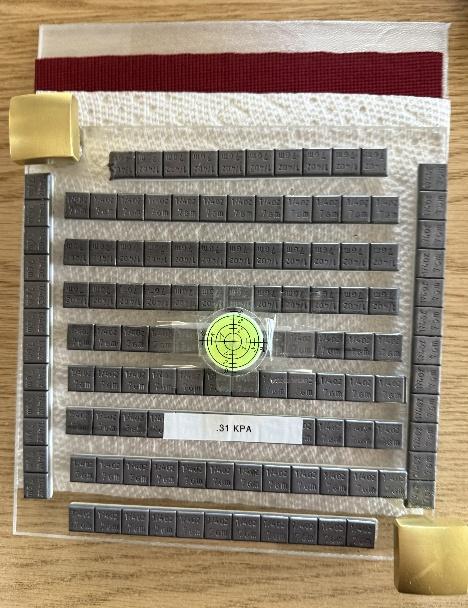
- Pressure Variable Testing: Introducing mechanical pressure—simulating pack straps and body movement—to observe how water migrates through the textile structure.
- Data Aggregation: Calculating the breakthrough pressure and retention capacity of each fabric.
What emerged was not a simple binary of "good" or "bad" fabric, but a nuanced understanding of how specific fiber chemistries interact with fluid dynamics.
Supporting Data: The Physics of Breakthrough Pressure
The study rests on the foundational physical principles established by Young and Laplace (1805) and formalized for fluid dynamics by Washburn (1921). These principles describe capillary flow—the process by which liquids move through fibrous materials.
The Hydrophobic Paradox
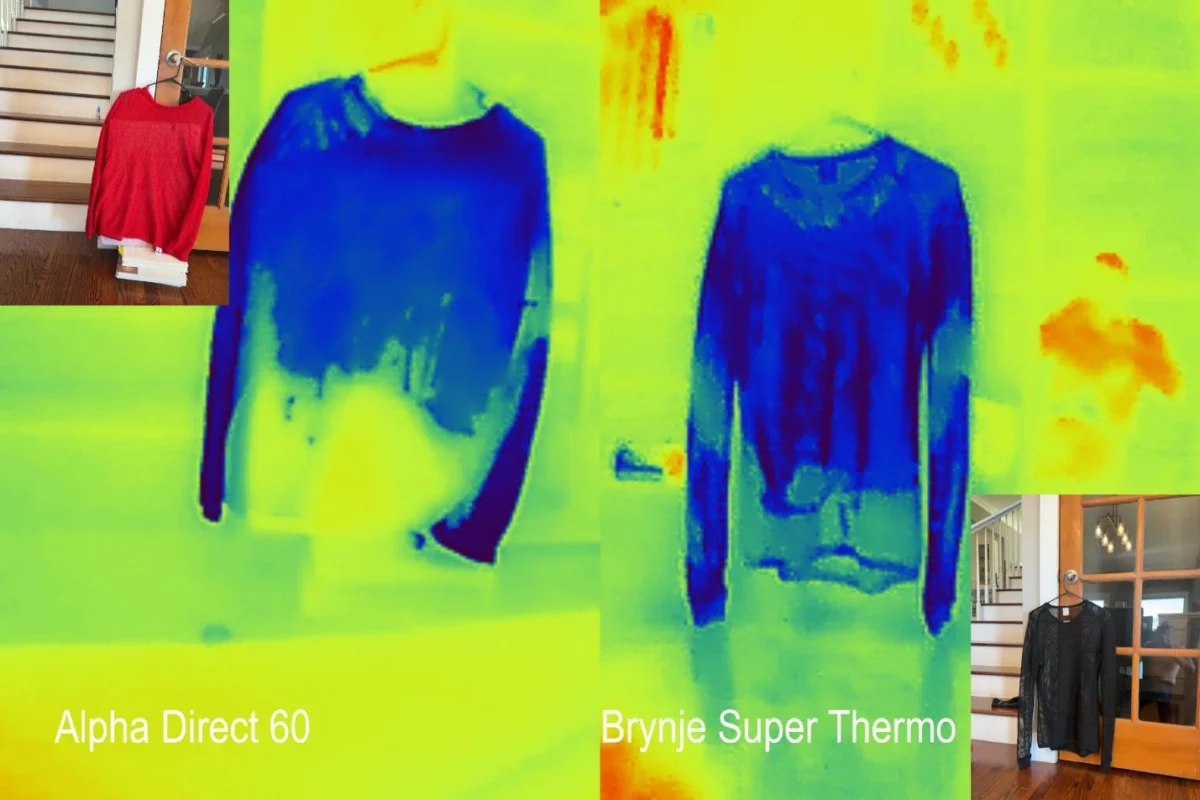
Hydrophobic fabrics are often lauded for their ability to "stay dry." Technically, this is accurate: the fibers themselves do not absorb water. However, our infrared imaging revealed a critical failure point. Fabrics are largely composed of empty space—the interstitial gaps between fibers.
Even if the fibers repel water, these gaps can become reservoirs for liquid sweat. In our testing, garments like the Brynje mesh shirt retained 87 grams of liquid (65% of its dry weight), while Alpha Direct trapped 62 grams (55% of its dry weight). The "staying dry" marketing promise collapses when liquid sweat fills these pore spaces faster than it can be transferred to the next layer.
Crucially, hydrophobic fabrics require breakthrough pressure to function. Until external forces—such as the compression of a backpack strap or the tension of body movement—force the liquid through the pores, the water remains trapped against the skin.
The Hydrophilic Limit
Conversely, hydrophilic fabrics—the traditional "wicking" materials—absorb moisture readily. By pulling water into the fibers, they effectively remove liquid from the skin. However, this is a double-edged sword. The same capillary forces that pull moisture in also make it exceptionally difficult for the fabric to release that moisture to an outer layer.
Our data indicates a "competition for moisture." As the outer layer becomes saturated, its ability to draw water from the base layer diminishes. We observed that in high-saturation conditions, hydrophilic base layers often hit a ceiling, holding onto moisture even when the outer environment might otherwise support transfer.
Official Scientific Framework: Understanding the Metrics
To interpret these results, we focused on two primary metrics: Contact Angle and Pore Architecture.
- Contact Angle: This is the definitive measure of a fiber’s affinity for water. A droplet on a surface with a contact angle below 90° spreads, indicating hydrophilic behavior. A droplet that beads up (90°–115°) indicates hydrophobic behavior. Our testing confirms that fibers with higher contact angles resist initial wetting but require higher breakthrough pressures to clear moisture.
- Pore Size vs. Connectivity: It is a common misconception that "more open" fabrics always move water faster. While large pores generally require less pressure for breakthrough, the internal connectivity of the fabric’s three-dimensional structure is the true decider. A fabric that appears breathable under a microscope may have constricted pathways that impede liquid flow once sweat begins to pool.
Implications: Choosing Your Layering System
The implications for hikers, climbers, and athletes are profound. We can no longer rely on broad categories like "polyester" or "wool" to predict performance. Instead, users must consider the interaction between their base layer and the outer layers of their clothing system.
1. The "Pressure" Requirement
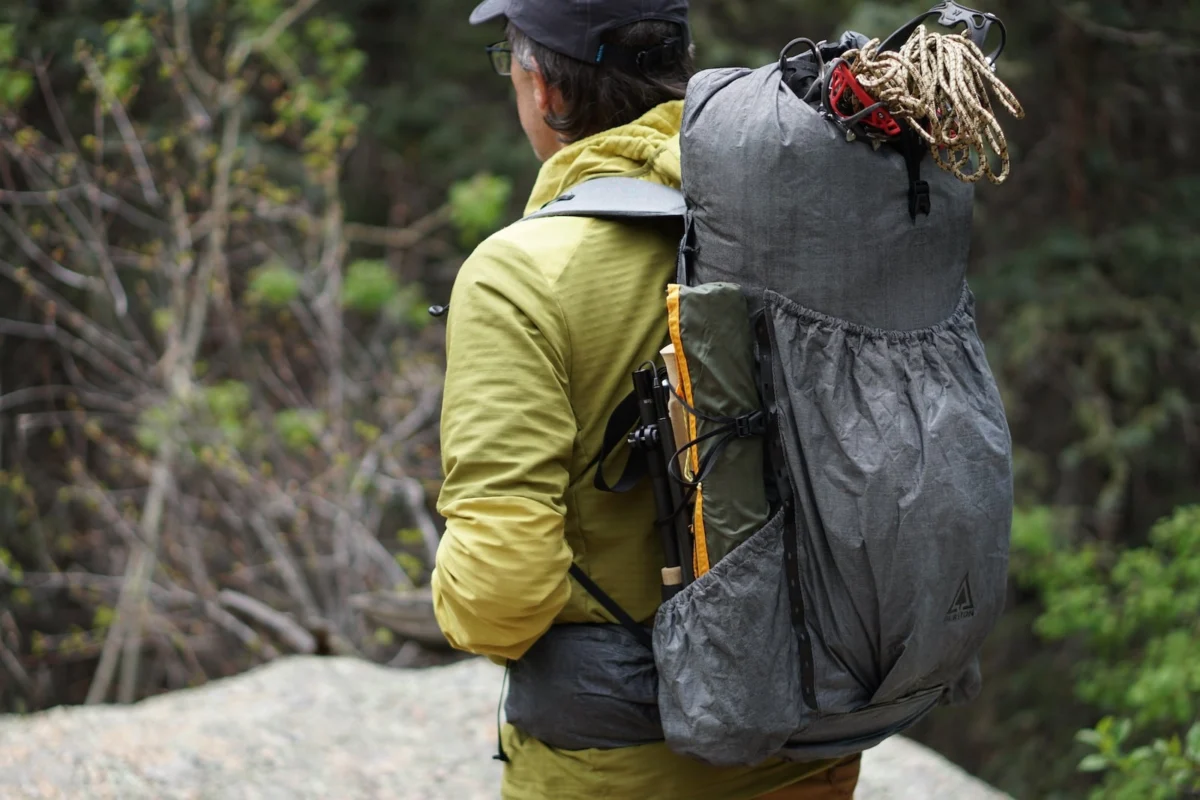
If you are wearing a tightly fitting base layer under a heavy pack, you are effectively creating the breakthrough pressure needed for hydrophobic fabrics to work. In this specific scenario, a hydrophobic layer may outperform a hydrophilic one by physically pushing moisture into the outer layer.
2. The Saturation Ceiling
If your outer shell is non-breathable or already saturated, the hydrophilic base layer’s "wicking" advantage disappears. Once the base layer is full and the outer layer cannot accept more moisture, you are effectively trapped in a wet, heavy garment.
3. Strategic Layering
The most effective moisture management systems are those where the base layer’s breakthrough pressure is matched to the potential for transfer in the outer layer. Understanding that hydrophobic fabrics need pressure to move water suggests that base-layer fit is as important as material composition.
Conclusion: Raising the Bar
This study does not suggest that one fabric is universally superior. Instead, it provides a diagnostic tool for understanding why certain combinations of gear fail in the field.
For the athlete, the takeaway is clear:
- Hydrophobic fabrics are excellent at moving water but require pressure to initiate flow. They are prone to "clogging" with liquid if that pressure is insufficient.
- Hydrophilic fabrics offer superior initial wicking but are prone to saturation and have a limited capacity to release moisture once the secondary layer is dampened.
By shifting our focus from simple marketing claims to the measurable physics of liquid transport, we can make more informed decisions about the gear we rely on in the most demanding conditions. The next time you find yourself soaked on a trail, remember: it isn’t just about the fabric’s ability to "wick," but about the structural ability of your clothing to manage the pressure and movement of water across the entirety of your system.