In the pursuit of a muscular, aesthetic physique, the gym is often viewed as a battlefield. We are conditioned by social media, fitness influencers, and the “no pain, no gain” ethos to believe that the path to growth is paved with ever-increasing plates on the bar. However, the obsession with raw poundage often leads to a critical physiological breakdown: the sacrifice of range of motion (ROM) in favor of ego-lifting.
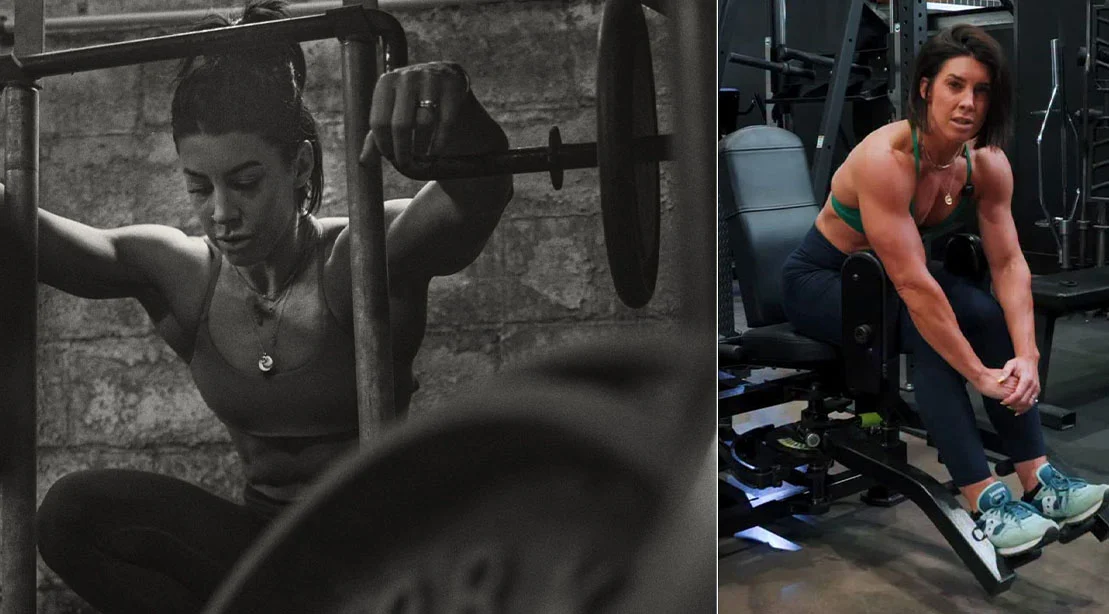
Former Olympia Women’s Physique Champion Dana Linn Bailey recently took to social media to address this pervasive issue, warning her two million followers that lifting too heavy, too fast, is not only counterproductive to hypertrophy—it is a recipe for long-term injury. By examining the mechanics of movement, we can determine the exact threshold where "heavy" stops being a stimulus for growth and starts becoming a liability for your health.
The Physiology of Resistance: Why Muscles Outpace Tendons
To understand why heavy lifting can be detrimental, one must first look at the biological hierarchy of tissue adaptation. When you subject a muscle to resistance, you create micro-tears in the muscle fibers. Given adequate recovery and nutrition, the body repairs these fibers to be thicker and stronger—a process known as hypertrophy.
However, muscles do not work in isolation. Every lift involves tendons, ligaments, and connective tissues that anchor muscle to bone. Herein lies the danger: tendons and ligaments have a significantly lower blood supply than muscle tissue, meaning they adapt and strengthen at a much slower rate. When an athlete prioritizes weight over form, the muscle may be strong enough to move the load, but the connective tissue is often not equipped to handle the stress. This discrepancy is the primary cause of the sprains, tears, and chronic tendonitis that effectively terminate an athlete’s training cycle.
Chronology of the "Ego-Lifting" Phenomenon
The rise of "ego-lifting" has accelerated in the digital age. In the early days of bodybuilding, the focus was largely on time under tension and muscle contraction. The "Golden Era" bodybuilders emphasized feeling the muscle work rather than the number on the bar.
As the fitness industry transitioned into the social media era, the landscape shifted. Algorithms favor high-intensity, "heavy" content that showcases maximum effort. Videos of athletes straining to perform partial reps—or "quarter-reps"—often garner more engagement than disciplined, controlled, full-ROM training. This has created a psychological feedback loop where lifters feel pressured to chase personal records (PRs) before their bodies have truly adapted to the load.
The Telltale Signs: How to Audit Your Own Training
Dana Linn Bailey argues that the most effective way to gauge if you are training too heavy is to observe your range of motion. If your form breaks down, you are no longer training the target muscle; you are training your ego. Here is how to audit your performance across the most common compound movements.
The Squat: Depth is Non-Negotiable
If you can perform a perfect, deep squat with no weight but find your depth decreasing as you load the bar, you have hit your limit. Many lifters mistakenly believe they have lost mobility, but in reality, the load has simply exceeded their current strength capacity for that specific range. The mechanics of your squat should remain identical regardless of the weight on your back. If the weight forces you to cut the rep short, it is time to strip the plates.
The Bench Press: The Contact Rule
The bench press is perhaps the most common site of ego-lifting. Bouncing the bar off the chest—or worse, failing to touch the chest entirely—is a hallmark of a load that is too heavy. The pectoral muscles are engaged most significantly at the bottom of the movement (the stretch). By shortening the ROM, you are bypassing the most growth-inducing part of the exercise.
The Hip Thrust: Avoiding Compensation
When performing hip thrusts, the goal is to target the glutes through a full hip extension. When the weight becomes too heavy, the body instinctively recruits the lower back to compensate. If you notice your back arching or hyperextending at the top of the movement, you are no longer isolating the glutes; you are inviting a lumbar injury.
The Leg Press: The "Half-Rep" Trap
The leg press is frequently abused by those looking to move "the whole stack." However, the hallmark of an effective leg press is the depth of the knee bend. If your knees are barely bending and you aren’t lowering the weight fully, you are effectively doing nothing but putting unnecessary pressure on your knee joints.
The Shoulder Press: Managing the Load
Involuntary half-reps during a shoulder press are a clear indicator that the load is excessive. If you are forced to use momentum or "cheat" the weight up, you are not only missing the primary stimulus for the deltoids but are also putting your rotator cuffs at extreme risk.
Supporting Data: Why Full Range of Motion Wins
Scientific literature consistently supports Bailey’s assertions. Studies in the Journal of Strength and Conditioning Research have shown that full range of motion training leads to superior hypertrophy compared to partial range of motion, even when partial-rep athletes use significantly heavier loads.
The mechanism is simple: muscle hypertrophy is driven by mechanical tension and metabolic stress. A full range of motion subjects the muscle to tension through a longer path, increasing the time the muscle spends under load and maximizing the recruitment of muscle fibers. By cutting your reps short to accommodate more weight, you are essentially "short-changing" your muscle growth.
Official Perspectives: The Philosophy of Longevity
Elite bodybuilding is a marathon, not a sprint. The consensus among top-tier professional coaches is that longevity is the greatest predictor of success. If an athlete spends six months sidelined due to a shoulder tear caused by ego-lifting, they have lost more growth than they could have gained in years of disciplined training.
Bailey’s philosophy is echoed by the broader professional community: "Check your ego." The goal of resistance training is to provide a stimulus that the body must adapt to, not to defeat the weight itself. When you build strength through proper, full-range form, you create a foundation that allows for long-term, sustainable progress.
Implications for Your Routine
Implementing these changes requires a shift in mindset. It means moving away from the "number on the bar" as the primary metric of success and moving toward "quality of movement" as the standard.
- The Ego Audit: In your next session, record yourself. Compare your warm-up sets with your working sets. If your range of motion changes, you have gone too heavy.
- The "Deload" Strategy: Don’t be afraid to drop your working weight by 10-20%. Focus on controlled eccentrics (the lowering phase) and a full, deliberate contraction at the top.
- Patience is Progressive Overload: Understand that by perfecting your form, you are actually increasing the intensity of the exercise. You will find that you get a better "pump" and more soreness (in the right places) with lighter weight than you ever did with heavy, sloppy reps.
Conclusion: Less Load, More Gains
The irony of modern bodybuilding is that the most impressive physiques are rarely built by those lifting the most weight in the gym. They are built by those who understand how to manipulate the weight to force the muscle to grow.
Dana Linn Bailey’s advice serves as a vital reminder: your body doesn’t know how much weight is on the bar; it only knows the tension you are applying to the muscle. By prioritizing your range of motion and checking your ego at the door, you protect your joints, improve your training efficiency, and ultimately build a larger, more symmetrical, and more functional physique.
Remember, in the world of bodybuilding, true strength is defined not by how much you can lift, but by how much you can control. Before you add that next plate, ask yourself: are you training to grow, or are you just training to show off? The answer to that question will determine the trajectory of your fitness journey.