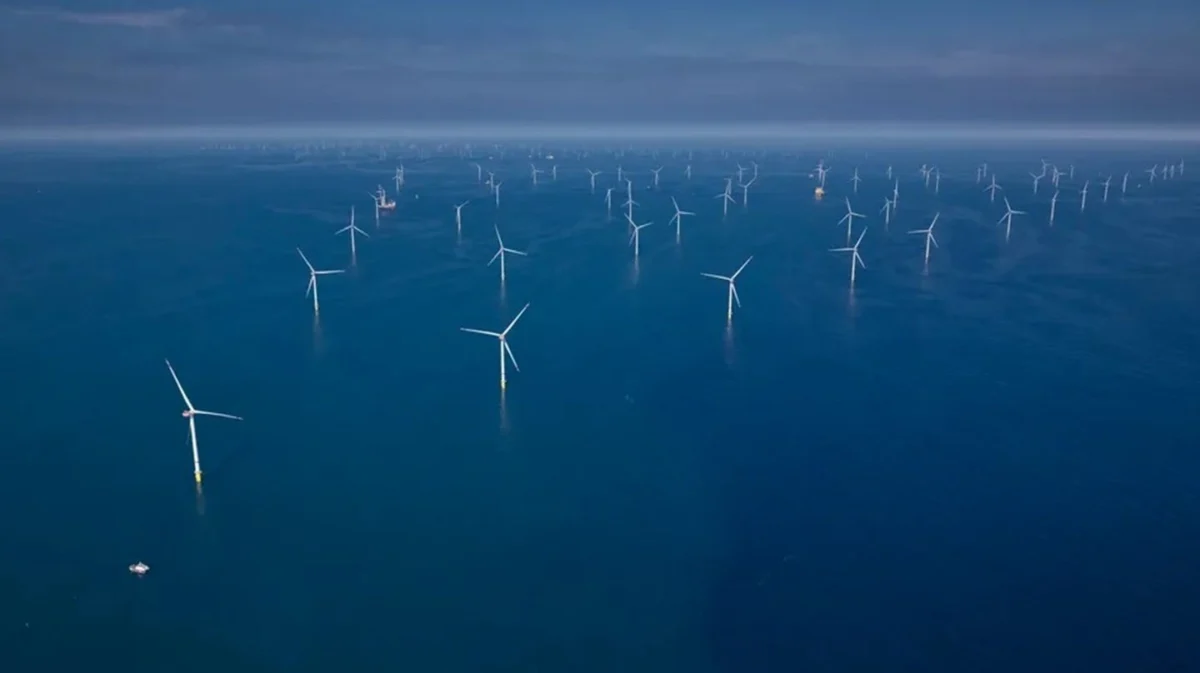
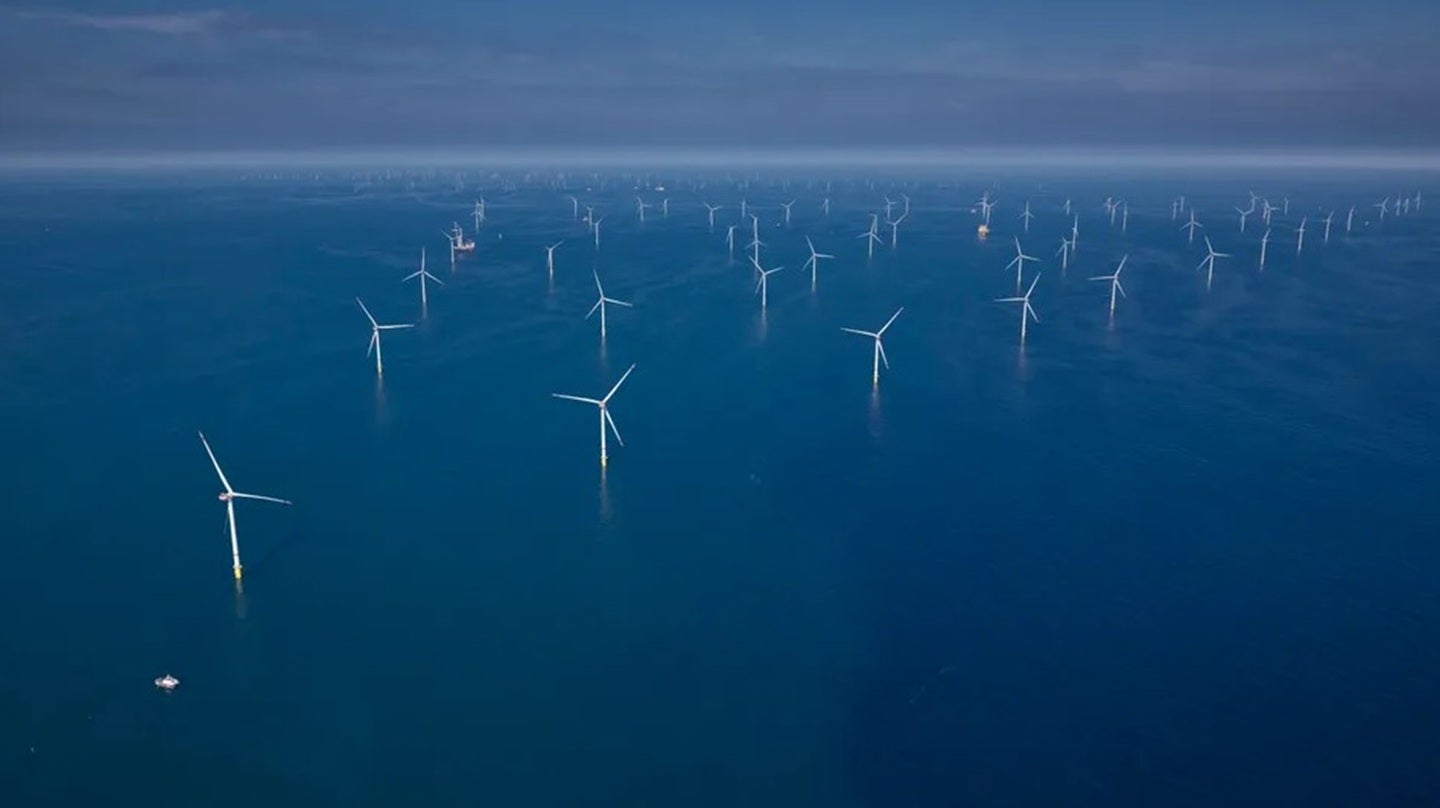
The landscape of European energy production shifted significantly this week as EnBW Energie Baden-Württemberg (EnBW) officially inaugurated the He Dreiht offshore wind farm. Located in the heart of the German North Sea—approximately 85km north-west of Borkum and 110km west of Heligoland—this colossal project represents a watershed moment for the transition to carbon neutrality. With a capacity of 960MW, the wind farm is not merely a technical achievement; it is a testament to the viability of subsidy-free renewable energy projects in a competitive, market-driven environment.
Main Facts: Powering a Nation Without State Support
He Dreiht stands as one of the most ambitious offshore wind developments in recent history, characterized by its sheer scale and its innovative financing model. The project consists of 64 state-of-the-art Vestas V236-15MW turbines, each a technological marvel in its own right. Boasting a rotor diameter of 236 meters and a hub height of 142 meters, these turbines are among the most efficient currently deployed in offshore operations.
Perhaps the most significant aspect of He Dreiht is its financial structure. Unlike many early-stage offshore wind projects that relied heavily on government feed-in tariffs or direct state subsidies, He Dreiht was built entirely without state funding. Its economic foundation rests on long-term power purchase agreements (PPAs) with a diverse range of corporate partners. This market-based approach serves as a blueprint for future energy projects, proving that renewable energy can thrive independently when the regulatory and economic conditions are properly aligned.
The project is backed by a robust consortium. EnBW holds a 50.1% majority stake through a specialized project company, while the remaining 49.9% is held by a consortium of financial heavyweights: Allianz Global Investors (representing Allianz entities), AIP Management, and Norges Bank Investment Management. Together, they have funneled an investment of approximately $2.75bn (€2.4bn) into the North Sea, underscoring the massive confidence institutional investors now place in large-scale offshore wind.
Chronology: From Concept to Commissioning
The journey to bring He Dreiht to fruition was a logistical masterpiece, demanding meticulous planning and seamless execution across international borders.
- Project Initiation and Development: Following years of site assessment and regulatory approval, the project reached its final investment decision, setting the stage for one of Germany’s most significant green energy investments.
- May 2024: Construction officially commenced. The mobilization of resources was immediate, requiring a highly coordinated effort to manage the complex marine environment.
- Logistical Peak: At the height of construction, the project employed more than 500 personnel. The operation was a massive maritime undertaking, involving over 60 specialized vessels coordinated from EnBW’s offshore command center in Hamburg.
- Supply Chain Integration: The 64 foundations were manufactured domestically in Germany, while other critical components were sourced from Belgium, the United Kingdom, the Netherlands, and Poland. The ports of Esbjerg in Denmark and Eemshaven in the Netherlands served as the critical logistics hubs for the staging and installation phases.
- August 2026: The installation of the final turbines was completed, marking the transition from construction to the commissioning phase.
- September 2026: Official inauguration. The wind farm began the phased process of grid integration, with the first turbines already successfully delivering electricity to the German grid.
Supporting Data: Infrastructure and Technical Capacity
The technical specifications of He Dreiht are designed to maximize output in the challenging conditions of the North Sea. Each of the 64 turbines is rated at 15MW, providing a total installed capacity of 960MW. To put this into perspective, the wind farm is expected to generate enough electricity to satisfy the annual consumption needs of roughly 1.1 million households.
The infrastructure required to transport this power to the mainland is equally impressive. The grid operator, TenneT, has established a connection that utilizes an offshore platform and two high-voltage submarine cables to transmit the energy to shore. This connection is essential for balancing the intermittent nature of wind power with the steady demand of the German industrial heartland.
The project’s corporate off-takers are as diverse as they are influential. By signing long-term PPAs, major industrial players have secured a green energy supply, effectively insulating themselves from volatile fossil fuel markets. The list of partners includes:
- Industrial Giants: Evonik, Bosch, Salzgitter, and SHS Stahl-Holding Saar.
- Technology and Service Leaders: Google, the Telekom subsidiary PASM, Fraport, DHL Group, and Deutsche Bahn.
This broad participation confirms that the demand for green electricity is no longer limited to niche sectors but is a requirement for the backbone of the European economy.
Official Responses: A Strategic Milestone for EnBW
The inauguration of He Dreiht has been met with significant praise from both the energy sector and government officials. During the opening ceremony, Georg Stamatelopoulos, Chairman of the EnBW Board of Management, articulated the broader importance of the project.
"In recent years, we have invested billions in the expansion of renewable energies. He Dreiht is the largest single investment made by EnBW in renewables," Stamatelopoulos stated. "It is also a perfect example of how renewable energy can prevail on the market when the underlying conditions are right."
His sentiment reflects a broader strategic pivot within EnBW. The company has made it clear that renewable energy is not just a peripheral activity but the core of its business model. Today, renewable energy sources account for more than 70% of EnBW’s total installed generation capacity, a massive transformation for a company that was historically reliant on conventional power sources.
Implications: The Future of European Offshore Wind
The successful delivery of He Dreiht serves as a powerful signal to the international energy community. Its implications are threefold:
1. Scaling the Subsidy-Free Model
He Dreiht demonstrates that the "subsidy-free" model for offshore wind is not just a theoretical ambition but a practical reality. By de-risking the project through long-term PPAs, EnBW has shown that renewable infrastructure can attract private institutional capital at scale, reducing the burden on the taxpayer and promoting a more efficient energy market.
2. Strengthening Energy Security
In the wake of the global energy crisis, the strategic importance of domestic, renewable generation has never been higher. By adding 960MW of clean, home-grown power to the grid, He Dreiht reduces Germany’s reliance on imported energy and stabilizes the regional power supply.
3. Future Pipeline and Expansion
EnBW is not resting on the success of He Dreiht. The project is seen as a stepping stone for future ventures. The company has already announced its intent to develop further offshore projects, including the 1GW Dreekant project in the German North Sea and the 2.9GW Morven project in Scotland. These upcoming ventures suggest that the lessons learned at He Dreiht—particularly regarding international supply chain management and cross-sector partnership—will be applied to accelerate the pace of Europe’s energy transition.
Conclusion
As the turbines of He Dreiht begin to rotate in the North Sea, they signify more than just an increase in capacity. They represent the maturing of the wind energy industry. With the backing of a diverse consortium, a commitment to corporate sustainability through PPAs, and a focus on logistical excellence, EnBW has set a new standard. As the global energy transition accelerates, the He Dreiht offshore wind farm will undoubtedly be remembered as a pivotal chapter in the move toward a cleaner, more resilient, and market-driven energy future.