The Dawn of a Global League
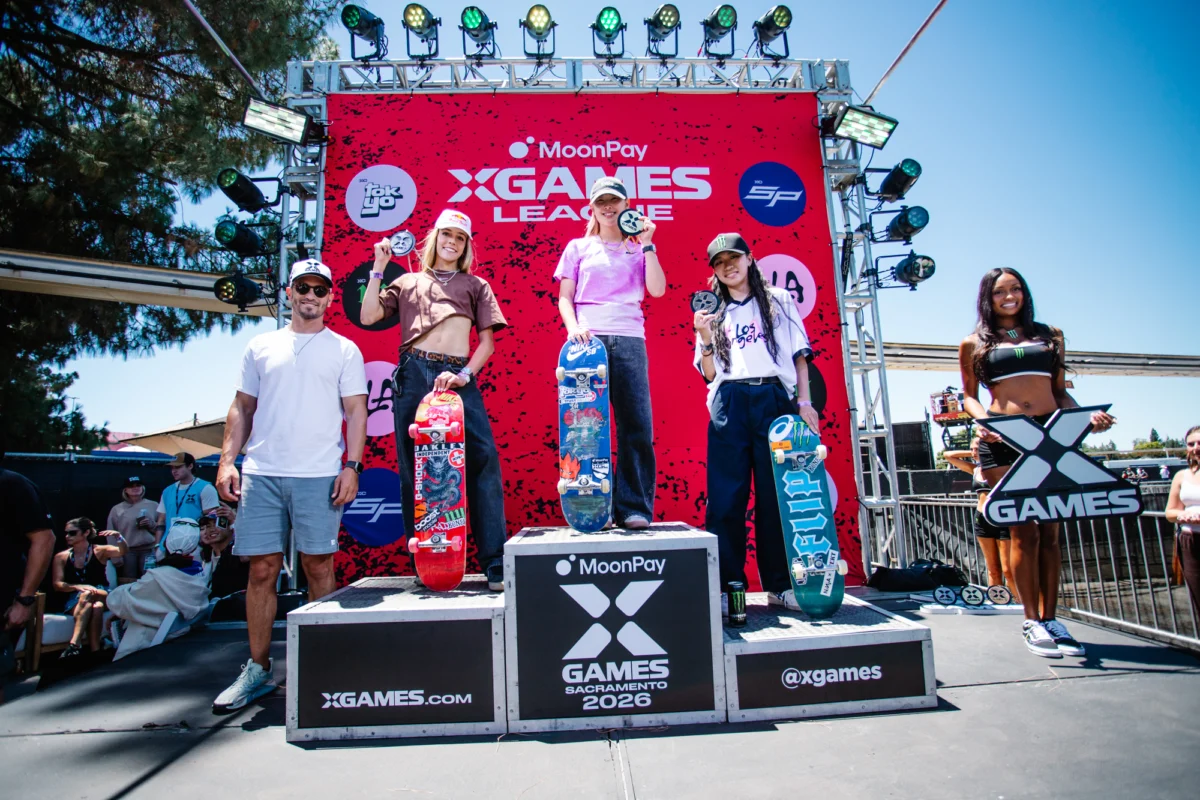
The action sports landscape is undergoing a seismic shift. On June 26–28, the inaugural MoonPay X Games League (XGL) will officially launch at Cal Expo in Sacramento, marking the beginning of a transformative era for the world’s most prestigious action sports competition. For decades, the X Games have stood as the pinnacle of individual achievement in extreme sports; however, the transition to the XGL introduces a structured, city-based, team-oriented format that promises to redefine how fans engage with skateboarding, BMX, and Moto X.
This three-day festival of adrenaline will feature nearly 100 of the world’s elite athletes competing across 18 high-stakes medal events. Beyond the competition, the event serves as a cultural convergence, blending world-class athleticism with live music and immersive fan experiences. With the backing of major broadcast partners and a global streaming footprint, the MoonPay X Games League is positioning itself not just as a seasonal event, but as a year-round professional sports circuit.
Chronology of the Transformation
The evolution of the X Games from a standalone event into a league structure is the result of years of strategic planning.
- Pre-2025: The Foundation: For years, the X Games operated as a decentralized series of marquee events, relying on individual performance metrics and transient popularity.
- Late 2025: The Strategic Pivot: Stakeholders recognized that to sustain long-term growth and corporate sponsorship interest, a more stable, team-based narrative was required. The decision to incorporate city-based franchises—Los Angeles, New York, São Paulo, and Tokyo—was finalized to capture global markets.
- June 26–28, 2026: The Kickoff: Sacramento’s Cal Expo serves as the ground zero for this new experiment. The event will feature a multi-day progression, starting with qualifying heats, moving through intense team head-to-heads, and culminating in the inaugural XGL medal ceremonies.
- The Future: Following the Sacramento debut, the league intends to expand its circuit, with plans to host recurring events in each of the franchise cities, effectively creating a "home and away" dynamic that has never existed in the action sports space.
Supporting Data and The Athlete Roster
The credibility of any league is built upon its talent, and the XGL has secured the top tier of international competitors. The roster for the Sacramento debut reads like a "who’s who" of action sports royalty.
The Heavy Hitters
The lineup includes titans of the industry such as Nyjah Huston, whose dominance in street skateboarding remains unparalleled, and Ryan Williams, the BMX virtuoso known for pushing the physical limits of the sport. They are joined by rising sensations Chloe Covell and Arisa Trew, who represent the hyper-accelerated skill levels of the new generation. Kevin Peraza rounds out the headliners, bringing his signature technical prowess to the BMX dirt and park courses.
The Venue and Broadcast Reach
The competition will be held at Cal Expo, a venue chosen for its ability to accommodate the massive, custom-built modular courses required for professional Moto X and BMX Big Air.
The broadcast strategy is equally robust, designed to capture both the traditional linear television audience and the modern, cord-cutting digital viewer:
- National Television: Live coverage across ABC, ESPN, and ESPN2.
- Digital Integration: The ESPN App will host live streams for Unlimited plan subscribers.
- Global Access: A massive push into the FAST (Free Ad-Supported Streaming TV) market includes the Roku Sports Channel, the official X Games YouTube channel, Kick, and the X Games TV channel on Amazon.
Official Responses and Strategic Vision
The launch of the XGL is a calculated move to stabilize the action sports economy. Founding partners Monster Energy and Stake have played a pivotal role in providing the capital necessary to professionalize the franchise model.
"The XGL is not just about changing the way we score tricks; it’s about changing the way we value the athlete," says a league spokesperson. "By moving to a city-based model, we are creating a sense of local pride. A fan in Tokyo can now cheer for their local team with the same fervor that a fan in New York cheers for a professional basketball franchise. We are creating a narrative arc that lasts all year, not just one weekend in June."
Critics and industry analysts have noted that this move mirrors the success of leagues like Formula 1 or the NBA, where the drama of team management and regional rivalry adds a layer of depth that individual-focused competition often lacks.
Cultural Synergy: The Festival Experience
The X Games have always been about more than just the scoreboard; they are a manifestation of youth culture. The Sacramento event will lean heavily into this heritage with the return of "X Fest," an expansive fan-activation zone.
The musical lineup for the Sacramento launch is curated to bridge the gap between high-energy sports and festival culture. Headlining performances from Kaskade, Mustard, and Subtronics ensure that the energy at Cal Expo remains at a fever pitch even after the final riders leave the course. This blend of electronic dance music, hip-hop, and extreme sports is designed to maximize demographic engagement, ensuring that attendees are kept in a state of constant stimulation throughout the three-day weekend.
Implications for the Industry
The shift to the MoonPay X Games League carries several long-term implications for the action sports industry:
1. Professionalization of the Athlete
By instituting a league format, athletes are no longer just independent contractors chasing prize money; they are now part of a franchise system. This likely entails improved benefits, more consistent training regimens, and a higher level of scrutiny regarding performance and professional conduct.
2. Sponsorship Scalability
The franchise model is far more attractive to non-endemic sponsors. Companies that have traditionally hesitated to invest in action sports due to its chaotic, event-by-event nature now have a "team" platform to associate with, which allows for consistent brand placement over a multi-month season.
3. Global Talent Pipeline
With teams representing cities like São Paulo and Tokyo, the XGL is essentially institutionalizing a global talent pipeline. This incentivizes international athletes to stay in their home markets while still competing at the highest level, potentially diversifying the medal count and reducing the historical dominance of North American-based competitors.
4. Media Fragmentation and Re-aggregation
By utilizing every available digital outlet—from YouTube to Amazon FAST channels—the XGL is aggressively fighting against the fragmentation of the modern media landscape. By providing "no-subscription-required" access on several platforms, they are prioritizing reach and brand awareness over immediate subscription revenue, a move that suggests a long-term play for cultural dominance.
Final Logistics for Attendees and Media
As the date approaches, the organizers have streamlined the process for both fans and journalists. Tickets are currently available through the official X Games website.
For those looking to document this historic debut, media credentials are being processed through the official media portal. The application process is rigorous, requiring proof of assignment, reflecting the high level of media interest expected for this launch.
The inaugural MoonPay X Games League represents a bold gamble on the future of action sports. By marrying the raw, unpredictable thrill of skateboarding and BMX with the structural stability of a professional league, the X Games are attempting to secure their relevance for the next generation. As the sun sets over Cal Expo this June, the world will be watching to see if the experiment delivers on its promise to usher in a new era of global action sports.