In the world of ultralight backpacking, every ounce is a metric of success. The prevailing philosophy—often driven by the "base weight" obsession—prioritizes minimal fabric and stripped-back designs. However, as the boundaries of alpine exploration are pushed, a critical question emerges: at what point does the pursuit of lightness compromise the fundamental necessity of survival?
This analysis explores the strategic trade-offs between ultralight minimalism and the rugged functionality required for sustained, inclement weather. By examining the mechanics of thermoregulation, moisture management, and the "wind-cold-rain" trifecta, we argue that investing a few extra ounces in high-performance raingear is not merely a preference—it is a calculated decision for safety and comfort in demanding environments.
The Core Philosophy: Why "Ultralight" Isn’t Always "Right"
The ultralight movement has revolutionized hiking. By replacing heavy, multi-layered systems with 7-denier smocks and minimalist shells, hikers can cover more ground with less fatigue. Yet, these fabrics often sacrifice durability and, more importantly, ventilation.
When exertion levels are high, the body generates heat and moisture. In a minimalist, non-ventilated jacket, this moisture is trapped against the skin. While modern membrane technology has made strides in breathability, no fabric can match the mechanical ventilation of a pit zip or an adjustable aperture in a high-output scenario. When your clothing reaches its saturation point, your internal climate control fails, leading to evaporative cooling—a silent contributor to hypothermia in cold, damp conditions.
The Trade-off Matrix
- Weight: The primary constraint. Ultralight gear focuses on minimizing grams.
- Durability: Lighter fabrics (lower denier) are prone to tearing, particularly during bushwhacking or under the abrasion of a heavy pack.
- Ventilation: Often the first feature sacrificed in ultralight designs to save weight and complexity.
- Protection: The ability to withstand sustained, high-volume precipitation over multiple hours.
The Evolution of Layering Systems
The traditional "three-layer system" has been the bedrock of mountaineering for decades. It relies on the synergy between a wicking base layer, an insulating mid-layer, and a protective shell.
A Chronology of Gear Philosophy
- The Traditional Era: Prior to the 2000s, gear was heavy, durable, and designed for worst-case scenarios. The emphasis was on complete environmental isolation.
- The Ultralight Revolution (2005–2015): The focus shifted to "fast and light." Gear became significantly more specialized, focusing on sub-10-ounce rain shells that prioritized packability over long-term durability.
- The Performance Synthesis (2016–Present): A modern understanding of physiology has led to a hybrid approach. Hikers are now opting for "heavy-duty" ultralight gear—pieces that utilize advanced materials like Gore-Tex ePE (expanded polyethylene) to provide the durability of heavy-duty gear at a fraction of the historical weight.
The "Wind-Cold-Rain" Trifecta: A Scientific Perspective
The greatest challenge for any hiker is managing the "trifecta": the simultaneous presence of cold temperatures (below 50°F), heavy precipitation, and wind speeds exceeding 10 mph.
Thermoregulation and Moisture Management
Clothing should ideally be hydrophobic. When polyester or merino fibers absorb moisture, they lose their insulating properties and increase in weight. Evaporative cooling—the process where body heat is used to evaporate sweat or moisture trapped in your layers—is the most dangerous mechanism in cold-weather hiking.
When a shell is non-breathable or lacks ventilation, the moisture generated by your body cannot escape. It condenses on the interior of the jacket, soaking the mid-layer. Once the mid-layer is wet, the "warmth" function of your system is effectively neutralized. This is why mechanical ventilation (pit zips, adjustable hoods, and cuff cinches) is essential. It allows the user to vent moisture before it condenses, preserving the integrity of the insulating layer.
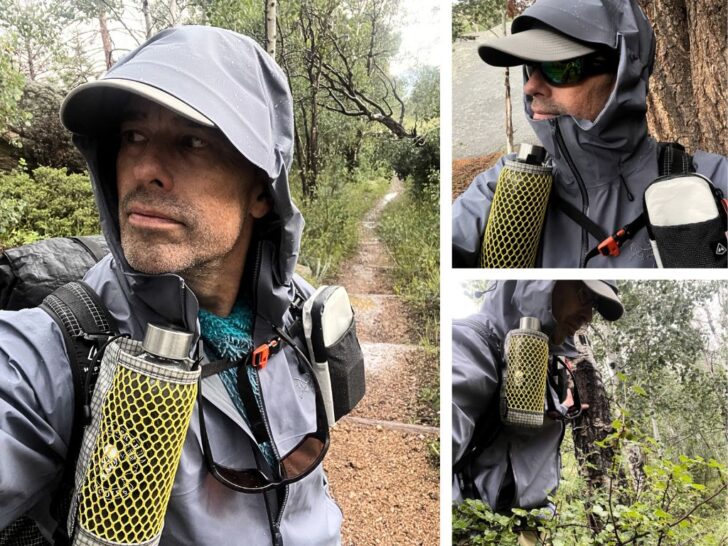
Supporting Data: When to Spend the Extra Ounces
Why would a hiker carry 12 ounces (like the Arc’teryx Beta SL) when a 3-ounce smock is available? The answer lies in the use case.
| Condition | Recommended Gear Class | Rationale |
|---|---|---|
| Summer/Dry Alpine | Ultralight (3–5 oz) | Minimal moisture, low risk of sustained soaking. |
| Shoulder Season | Technical (10–14 oz) | High variability, potential for hypothermia, high wind. |
| Bushwhacking/Off-Trail | Durable (12+ oz) | Resistance to snagging and abrasion is paramount. |
Data collected from mountain guides indicates that in environments like the Absaroka-Beartooth Wilderness or the North Cascades, the frequency of "unforecasted" severe weather is high. In these regions, a jacket with a 40-denier face fabric and full ventilation options provides a safety margin that 7-denier fabrics simply cannot match.
Official Industry Trends and Innovations
The outdoor industry is currently responding to the demand for "durable, breathable, and light." Recent advancements in DWR (Durable Water Repellent) technology, which are now largely PFC-free, have improved the longevity of shells. Furthermore, the shift toward ePE membranes—which are lighter and thinner than traditional PTFE membranes—has allowed manufacturers to create garments that offer professional-grade protection without the weight penalty of early-2000s hardware.
Leading manufacturers are now re-incorporating "legacy" features that were discarded in the initial ultralight craze:

- Brimmed Hoods: Essential for keeping rain out of the eyes and off the face.
- Volume Adjustments: Allowing the hood to move with the head, preventing the "blind spot" effect.
- Mechanical Vents: The return of the pit zip as a high-performance necessity.
Implications for the Modern Backpacker
The implication of this data is clear: Weight should be the final consideration, not the first.
For the average weekend hiker in the Appalachian corridor during the summer, a minimalist three-layer system is perfectly adequate. However, for those planning multi-day treks in the Rockies, the Sierras, or the Pacific Northwest, the "lightest possible" gear is often the most dangerous.
Strategic Recommendations:
- Audit your environment: If you are hiking in the Northern Rockies or the PNW, prepare for shoulder-season conditions regardless of the calendar date.
- Prioritize Mechanical Ventilation: If you hike with a high heart rate, a jacket without pit zips will likely lead to a soaked mid-layer, regardless of the membrane’s breathability rating.
- Invest in Fabric Denier: A 40D fabric offers exponentially more protection against the elements and the wear-and-tear of a multi-day pack than a 7D or 10D fabric.
- The Hood Factor: Ensure your rain shell has a structured brim. In a sustained storm, the ability to see clearly while protecting your face from wind-driven rain is a critical safety feature.
Conclusion
The pursuit of an ultralight kit is an admirable endeavor, but it must be tempered by the reality of mountain conditions. As we move further into an era of unpredictable climate patterns, the "smart" backpacker is one who views their gear as a dynamic system rather than a static list of weights.
By strategically opting for a slightly heavier, more feature-rich jacket, you are not just carrying "more weight"—you are carrying insurance against the cold, wet, and wind. When the clouds break and the temperature drops, the few extra ounces in your pack will be the most valuable investment you’ve ever made. The goal of the trail is to return safely, and in the high mountains, comfort is the foundation of survival.