In the pursuit of the "ultralight" ideal, the modern backcountry enthusiast is no longer choosing between mere weight and durability. We have entered an era of advanced material science, where high-modulus fibers, sophisticated laminates, and fusion-bonding technologies have fundamentally rewritten the rules of gear construction. However, as the industry pivots toward materials like Dyneema Composite Fabric (DCF), UltraWeave, and ALUULA, the lexicon of outdoor gear has become increasingly complex.
Classifying fabrics simply by their family—such as silnylon, X-Pac, or ECOPAK—is no longer sufficient. To make informed decisions for high-stakes environments, one must look beneath the surface at the specific construction, mechanical demands, and environmental tolerances of the material.
Main Facts: The Multi-Variable Engineering Challenge
The primary challenge in modern gear design is that material properties are rarely synergistic. A fabric that offers industry-leading tear strength often introduces unwanted stiffness or prohibitive costs. A lightweight laminate may achieve record-breaking mass-to-strength ratios but might falter under the concentrated stress of a needle-and-thread seam.
Technical fabrics are defined by several competing variables:
- Mass vs. Durability: The fundamental trade-off.
- Dimensional Stability: How a fabric behaves under tension, particularly when wet or under extreme heat.
- Stitch Support: The ability of a laminate to withstand the "cheese-grater" effect of sewing needles.
- Waterproofness: Measured via hydrostatic head (HH) or pressure ratings, often influenced by the film backing or coating.
It is a critical mistake to assume that two fabrics within the same family are equivalent. For instance, the performance of an X-Pac X3 (polyester film backing) is vastly different from an X-Pac X4 (taffeta backing) when subjected to abrasion or repeated folding.
Chronology of Material Evolution
The history of technical outdoor fabrics is a trajectory from organic-synthetic blends toward pure, high-modulus engineering.
- The Silnylon Era: For decades, silicone-impregnated nylon was the gold standard for shelters. It offered a balance of weight and elasticity. However, nylon’s propensity to absorb water and stretch when wet created a "sagging" phenomenon, forcing hikers to constantly re-tension their shelters.
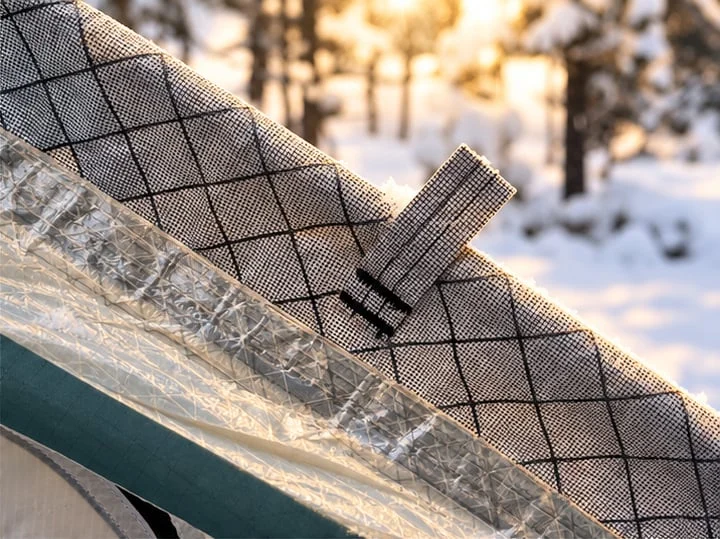
- The Rise of Laminates (X-Pac and DCF): Sailcloth technology introduced the concept of the "laminate"—layering a face fabric, a structural X-Ply reinforcement, and a waterproof film. This provided the dimensional stability that nylon lacked. DCF, utilizing non-woven Dyneema fibers, pushed this further, offering near-zero stretch and extreme waterproofness.
- The High-Modulus Revolution (Ultra and ALUULA): The last five years have seen the integration of Ultra-PE (UHMWPE) into woven faces. Unlike previous laminates that relied on a separate "X-Ply" layer, these materials incorporate high-strength fibers directly into the weave. Most recently, ALUULA has introduced fusion-bonding, which allows fabrics to be welded rather than sewn, potentially eliminating the structural weakness of needle holes.
Supporting Data: Application-Specific Analysis
To understand these materials, we must segment them by their primary environment: packs, shelters, and storage.
1. The Pack Fabric Landscape
Pack fabrics endure the highest mechanical stress. They must resist puncture from internal gear, abrasion from external rock faces, and the "fatigue" caused by repeated flexing of the material during a long-distance hike.
- UltraWeave (100X/200X/400X): Currently the benchmark for high-performance pack bodies. The woven Ultra-PE face carries the load, while the film provides the waterproof barrier. The 400X variant offers exceptional abrasion resistance, though it is often considered "overbuilt" for standard backpacking.
- ECOPAK (EPX/EPLX): These represent a more traditional, user-friendly construction. By using recycled polyester and established lamination techniques, they offer predictable sewing performance and are an excellent choice for custom or semi-custom pack manufacturing.
- X-Pac (UX/VX): The industry workhorse. While newer high-modulus fabrics are lighter, X-Pac remains the standard for reliability. The VX21 variant, with its nylon face and taffeta backing, is arguably the most versatile "all-rounder" for structured packs.
2. Shelter Fabrics: Stability Under Tension
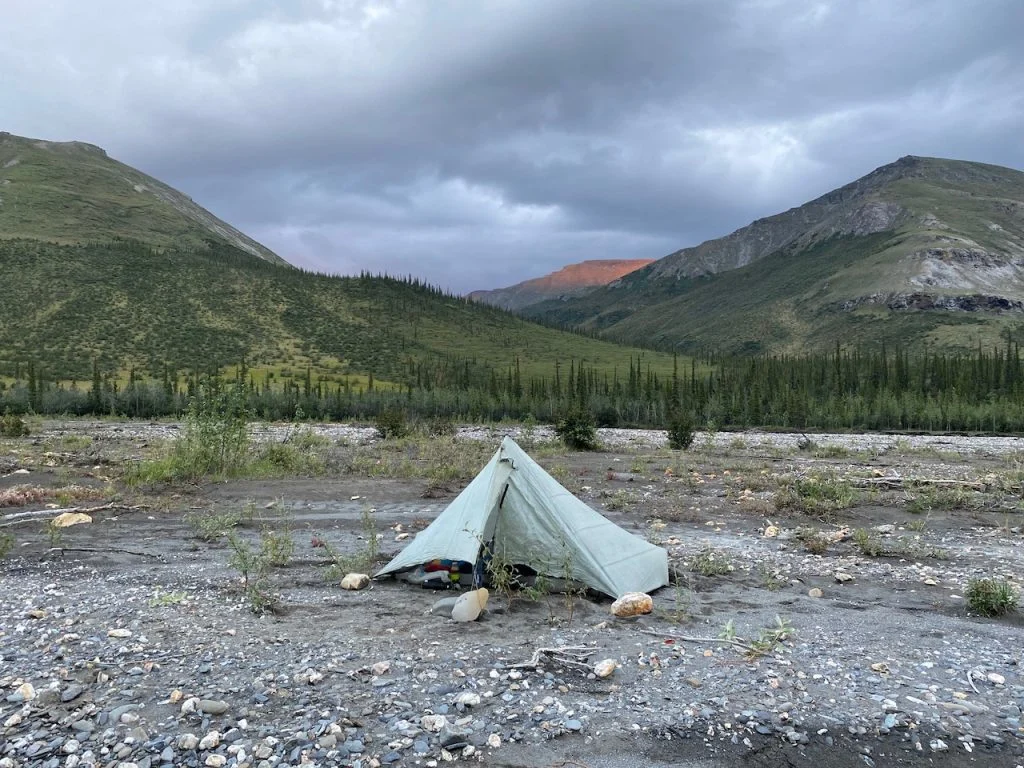
Shelters require a different set of priorities. The material must maintain its geometry; a shelter that stretches during a midnight rainstorm will lose its wind resistance and internal volume.
- Silpoly: The modern successor to silnylon. Because polyester absorbs significantly less water than nylon, it maintains its pitch tension much better in wet conditions.
- DCF (0.55/0.75): The ultimate in low-mass shelter technology. While the 0.55 oz/yd² version is incredibly light, its puncture resistance is low. It requires careful handling and is best suited for users who prioritize weight savings above all else.
- UltraTNT: An ultralight film laminate that uses UHMWPE yarns rather than a woven face. It is dimensionally stable and waterproof but requires specialized manufacturing techniques (taping) to maintain structural integrity.
3. Storage Systems: Flexibility and Fatigue
Stuff sacks and organizers rarely see structural loads, but they are subject to "crease fatigue." A material that is perfectly waterproof in a flat sheet may develop micro-fractures after being rolled and compressed into a pack 500 times.
- DCH (Dyneema Composite Hybrid): By adding a woven face to the standard DCF core, DCH significantly improves the handling and durability of stuff sacks, making them less prone to the "crinkle" damage of pure film laminates.
- TX Ultra: A hybrid material designed specifically for this mid-tier space. It provides the water resistance of a laminate with the suppleness of a ripstop, making it ideal for liners and accessory pockets.
Official Manufacturer Perspectives and Testing Protocols
A critical caveat in reading material specifications is the lack of standardized testing across the industry.
When a manufacturer lists "Tear Strength," they may be using different methodologies (e.g., ASTM D2261 vs. Mil-C-21189). Comparing these numbers directly is akin to comparing miles to kilometers without a conversion factor. Furthermore, many "Not Published" values in technical datasheets are not necessarily a sign of inferior performance; rather, they reflect the manufacturer’s focus on the specific metrics they deem relevant for their core market.
The "Construction Discipline" Requirement:
Engineers at companies like Challenge Outdoor and Dyneema emphasize that the material is only half the battle. A high-performance fabric like UltraWeave, when sewn with a standard lock-stitch at high tension, can fail at the seam before it fails in the field. Consequently, the industry is moving toward PSA (Pressure Sensitive Adhesive) tapes and heat-welding to augment or replace traditional stitching.
Implications for the Future of Gear
What does this mean for the consumer and the designer?
- Specialization is Key: We are moving away from the "universal" fabric. A pack built for an Alpine climber (requiring high abrasion resistance) will look fundamentally different from one built for a thru-hiker (prioritizing weight and water resistance).
- The Death of "Denier" as a Metric: Historically, "210D Nylon" gave the consumer a rough idea of how tough a pack was. In the era of laminates, denier is less relevant. A 100D Ultra-PE fabric may significantly outperform a 400D standard nylon in both strength and abrasion resistance. Consumers must learn to look at the construction architecture rather than the fiber thickness.
- The Rise of Repairability: As we shift toward complex laminates and welded seams, field repair becomes more difficult. While these materials are stronger, they are harder to patch in the middle of a wilderness area than a simple silnylon shelter. This implies a future where gear is either "built to last" or "built for the task," with little room for mid-point compromises.
Conclusion: Making the Selection
When selecting your next piece of technical gear, do not simply ask: "What is this made of?" Ask: "How is this built for my specific needs?"
If you are trekking through high-abrasion environments, prioritize a woven-faced laminate like UltraWeave or a heavy-duty ECOPAK. If you are chasing a Fastest Known Time (FKT) and need to save every gram, the trade-off of a lighter DCF or UltraTNT construction may be worth the sacrifice in durability. Ultimately, the best fabric is the one that achieves the necessary mechanical performance for the duration of your trip without carrying the dead weight of features you do not need. The era of generic "tough" gear is over; we are in the era of precise, application-specific engineering.