Introduction: The Anomaly in Ultralight Packs
The outdoor industry is no stranger to the pursuit of the "perfect" ultralight backpack. It is a category defined by trade-offs: weight versus durability, stability versus comfort, and capacity versus accessibility. Into this crowded, high-stakes market steps the Durston Wapta 30, a pack that occupies a peculiar position. Weighing in at approximately 14 ounces and constructed from the high-tech Aluula Graflyte fabric, the Wapta 30 promises the "refinement" of a technical pack without the weight penalty of a frame.
However, in the world of ultralight (UL) gear, marketing often blurs the line between stability—the feeling that a pack is secure against the back—and load transfer—the mechanical act of moving weight from the shoulders to the hips. As we peel back the layers of the Wapta 30, we must ask: is this pack a genuine evolution in load-bearing design, or is it simply a masterclass in ergonomics and material selection?
Chronology: The Development of the Wapta Philosophy
The trajectory of Dan Durston’s design language has always leaned toward technical efficiency. The Wapta 30 represents a shift away from his more traditional, large-capacity designs toward a specialized "fast-and-light" niche.
- Conceptual Phase: Durston aimed to create a pack that bridged the gap between a minimalist frameless sack and a supportive hiking pack. The focus was on "carry comfort," a nebulous term often associated with high-end materials like Aluula.
- Material Selection: The choice of Aluula Graflyte—a material celebrated for its extreme strength-to-weight ratio and lack of stretch—was pivotal. Unlike traditional nylon or polyester, which can sag under load, Graflyte maintains its structural integrity, allowing the pack’s shape to dictate its performance.
- Prototyping: Early iterations focused on the harness geometry. The goal was to refine the S-shaped straps and the hipbelt-to-lumbar interface to ensure that even without a frame, the pack remained "glued" to the user’s torso.
- Market Launch: Released to significant fanfare, the Wapta 30 was positioned as an outlier in the 1lb range, promising the comfort of a heavier pack in a chassis that feels like a vest.
Supporting Data: Comparative Mechanics
To understand the Wapta 30, one must look at the competitive landscape. Below is a breakdown of how the Wapta 30 stacks up against industry benchmarks.
| Pack | Weight | Structure Type | Load-Transfer Mechanism |
|---|---|---|---|
| Durston Wapta 30 | ~14 oz | Frameless | Stability-focused; relies on geometry |
| Gossamer Gear Mirage 40 | ~19 oz | Framed | X-frame; dedicated load transfer |
| Arc’teryx Alpha SL 30 | ~16 oz | Semi-Structural | Bonded framesheet |
| Nashville Cutaway | ~19 oz | Frameless | Torso-coupled stabilization |
The Load Transfer Myth
Most reviews of the Wapta 30 praise its "suspension." However, it is critical to distinguish between perceived comfort and actual mechanical unloading. In a true load-transferring pack (like the Gossamer Gear Mirage), the frame acts as a lever, pushing against the lumbar area and pulling weight off the trapezius muscles.
In the Wapta 30, the hipbelt is comfortable and well-padded, but because it lacks a rigid vertical connection to a frame, it cannot effectively "carry" the weight. Instead, it provides stability. When the pack is loaded to its 25 lb capacity, the weight is primarily supported by the shoulder straps. The "refinement" touted by the manufacturer is not a magical unloading of the shoulders; it is a superior stabilization system that prevents the pack from shifting or bouncing, which mimics the feeling of a lighter load.
Official Responses and Manufacturer Intent
Durston Gear has been transparent about the pack’s limitations, framing it as a "refined frameless" design rather than a "frame-lite" system. In correspondence, the design philosophy is described as "integrated geometry." The company argues that by optimizing the S-shaped straps and the vertical orientation of the back panel’s dual-foam pads, they can achieve a "higher-riding" carry that utilizes the core muscles more effectively than a standard, saggy frameless bag.
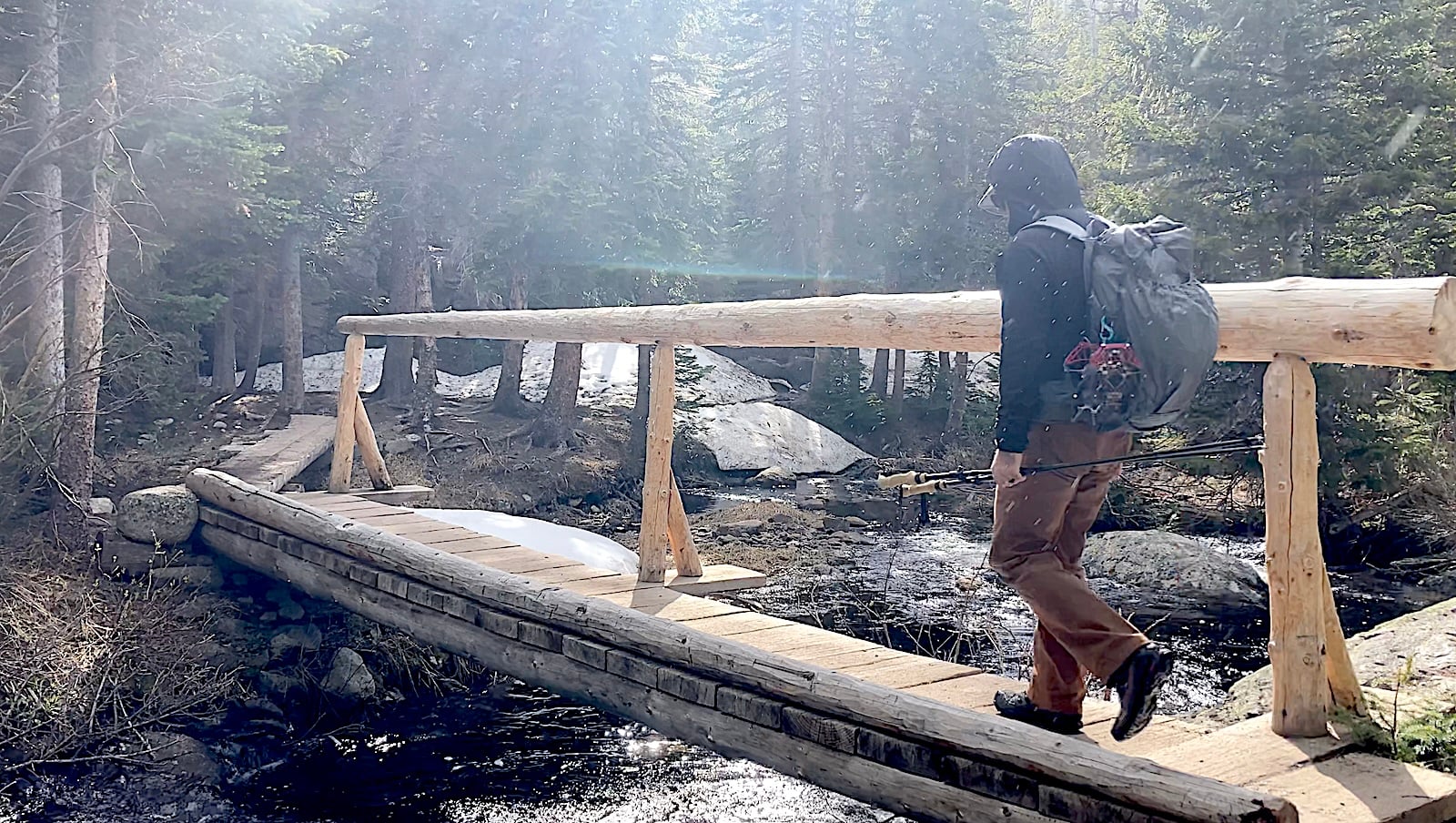
This is a subtle but vital distinction. By forcing the pack to sit higher on the torso, the Wapta 30 shifts the center of gravity. While this doesn’t technically transfer weight to the hips in the traditional sense, it reduces the strain on the upper back by minimizing the "pull" of the pack away from the user’s center of mass.
Deep Dive: Material and Construction Observations
The use of Aluula Graflyte is perhaps the most defining characteristic of the Wapta 30. During field testing—carrying a kit ranging from 22 to 29 pounds—the fabric exhibited zero deformation.
The "Aluula" Factor
In traditional sil-nylon packs, as the load increases, the fabric stretches, causing the pack to "pancake" against the back. This often forces the user to over-tighten straps, leading to shoulder fatigue. The Wapta’s use of Aluula ensures the pack holds its 30-liter shape regardless of the weight inside. This structural stiffness is, in many ways, a proxy for a frame. It provides a consistent "backboard" against the user, allowing the foam pads to sit in exactly the right place every time.
Harness Geometry
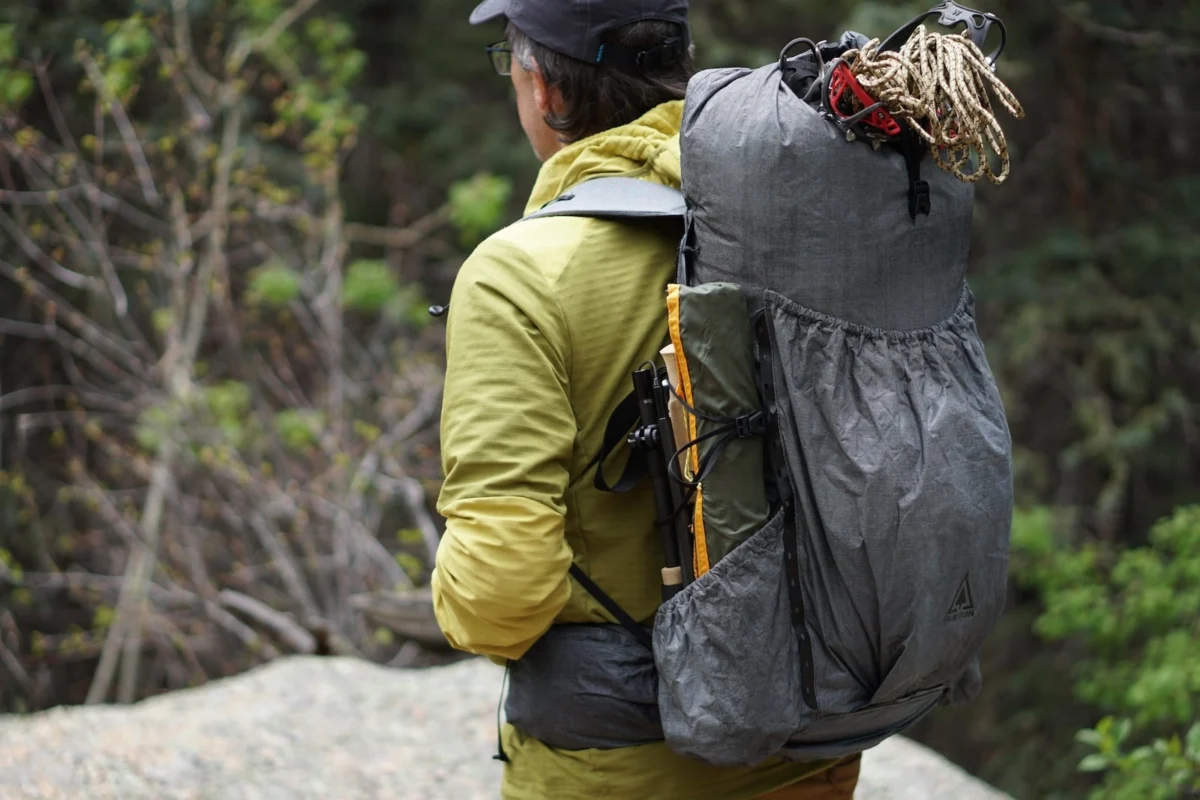
The S-shaped straps on the Wapta are wider than those found on competitors like the MLD Burn or the Pa’lante V2. This increased surface area distributes pressure more evenly across the clavicle. Combined with the integrated shoulder pockets, the harness creates a "vest-like" stability that is genuinely impressive. It effectively eliminates the side-to-side sway common in frameless designs.
Implications: Who is this Pack For?
The Wapta 30 is not a universal solution for every backpacker. Its implications for the market are significant, but users must understand its limitations:
- For the Fastpacker: If you are moving quickly and need a pack that won’t bounce, the Wapta is arguably best-in-class. The vest-like stability, coupled with the durability of the Aluula fabric, makes it a top-tier choice for high-mileage days.
- For the Traditionalist: If you are looking for a pack to carry 30+ pounds for long, slow miles, the Wapta 30 will disappoint. It lacks the internal stay structure required to truly offload weight from the shoulders.
- The "Refinement" Trade-off: The Wapta proves that we don’t necessarily need a frame to achieve comfort—provided we are willing to accept that the shoulder straps will always do the heavy lifting. The "refinement" Durston promises is found in the management of the load, not the reduction of it.
Conclusion: A Masterclass in Refinement
The Durston Wapta 30 is a triumph of engineering, not because it reinvents the physics of load transfer, but because it optimizes the comfort of the frameless category. By leveraging the non-stretch properties of Aluula and a highly refined harness geometry, it provides a stable, comfortable carry that feels far more sophisticated than a standard frameless sack.
However, consumers should be wary of the marketing surrounding "load transfer." While the Wapta 30 is a joy to carry for those who have mastered the art of ultralight packing, it remains, fundamentally, a frameless pack. It is an evolutionary step forward, but one that respects the laws of physics. If your kit is light and your movement is dynamic, the Wapta 30 offers a level of stability and refinement that is currently unrivaled in the ultralight space. For the heavy-pack hiker, however, the search for a true frame-mediated transfer in a sub-one-pound package continues.