In the vast, frozen expanse of Greenland’s west coast, Ilulissat stands as a beacon of Arctic tourism. Known as the gateway to the UNESCO World Heritage-listed Ilulissat Icefjord—the sea mouth of the massive Sermeq Kujalleq glacier—the town is a hub of activity. Yet, for the intrepid traveler seeking to trade the bustle of cruise ship docks for the profound silence of the tundra, there exists a path less traveled. A 21-kilometer (13-mile) trek north leads to Oqaatsut, a remote settlement where time seems to hold its breath, offering a rare, authentic glimpse into the maritime heritage of the North.

Main Facts: The Arctic Trail Experience
The route from Ilulissat to Oqaatsut is not merely a hike; it is an immersion into the stark, elemental beauty of the Arctic. Spanning approximately 41 kilometers (25.5 miles) as an out-and-back journey, the trail offers a manageable challenge for hikers, classified as "easy" but requiring preparation for the unpredictable Arctic climate.

- Distance: 41 km (25.5 miles) round-trip.
- Average Duration: 10 hours to two days, depending on pace and camping preferences.
- Difficulty: Easy, with well-marked paths using rock cairns and orange blazes.
- Seasonality: Late June through September, when the tundra is accessible and the midnight sun illuminates the landscape.
- Elevation: A total gain of 946 meters (3,104 feet), providing gentle, rolling terrain rather than steep, technical ascents.
- Logistics: The trailhead begins at the Hotel Arctic in Ilulissat, the world’s northernmost four-star establishment.
The trail serves a dual purpose. In the summer months, it is a footpath for visitors and locals; in the winter, it becomes a vital artery for dog-sledding and snowmobiles, connecting the small community of Oqaatsut to the services of the larger town.

Chronology: A Step-by-Step Exploration
The Departure and the Gateway
The journey begins at the edge of Ilulissat, near the Hotel Arctic. For the first two kilometers, the landscape is defined by the industrial hum of the local airport, currently undergoing an expansion slated for completion in 2026. While the start of the trail may feel utilitarian, the transition from urban infrastructure to raw wilderness is rapid. Within 40 minutes, the sounds of machinery fade, replaced by the rhythmic crunch of boots on moss and the distant, haunting calls of Arctic birds.

The Coastal Transition
Following the coastline, the trail winds past an array of traditional, vibrantly colored fishing cottages. These structures—bright reds, yellows, and blues—create a surreal contrast against the somber, slate-gray rocky shoreline and the deep, leaden hues of the Disko Bay waters.

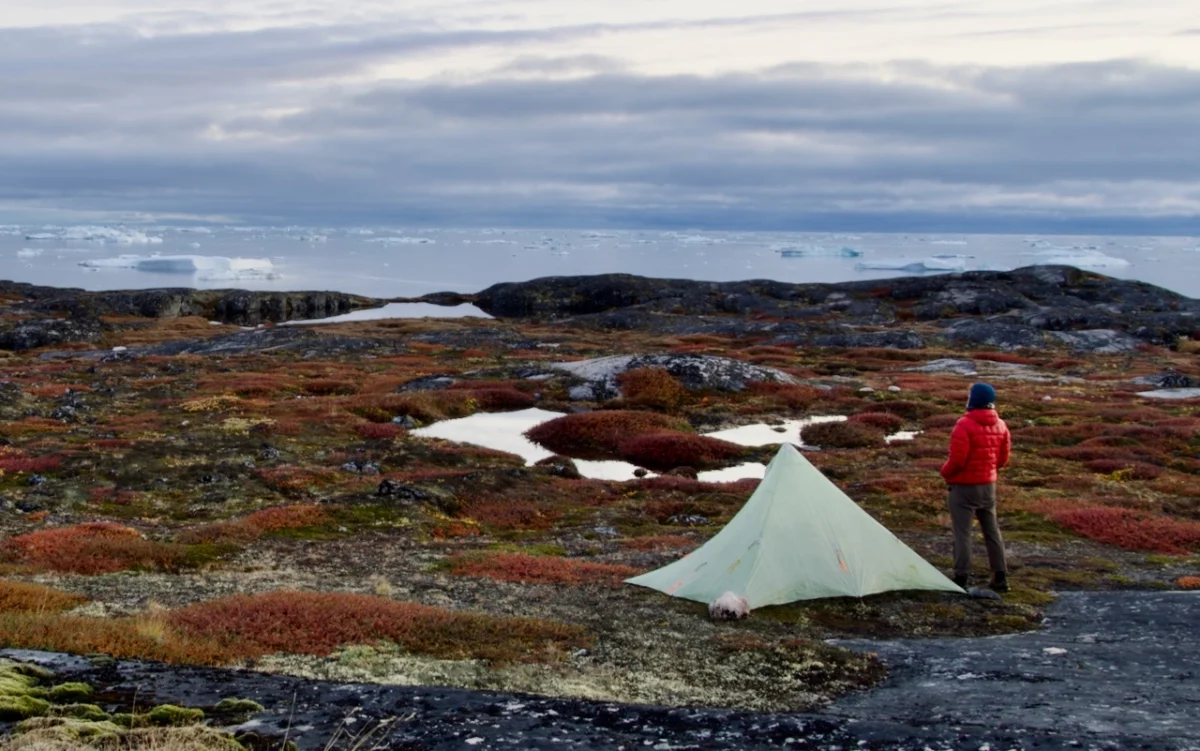
Approximately 7.5 kilometers (4.7 miles) into the trek, the terrain tightens into a narrow gorge. Emerging from this passage, hikers are greeted by a picturesque lake, an ideal waypoint for a mid-day meal. Another hour of trekking brings the traveler to a sturdy footbridge crossing the outlet stream of the Kangerluarsup Tasia Qalleq Lakes. This area is widely considered the premier location for overnight camping, offering grassy, wind-sheltered patches that provide a soft landing after a long day of movement.

The Final Stretch to Oqaatsut
The path ascends gradually, contouring northwest and offering panoramic views over the iceberg-dotted Kangerluarsuk Bay. At the 16-kilometer (9.9-mile) mark, the trail crests a narrow, rocky saddle. As the hiker descends past a small, cascading waterfall, the settlement of Oqaatsut finally reveals itself—a cluster of buildings clinging to the coastline, anchored by the stillness of the bay.

Supporting Data: Why Oqaatsut Matters
Oqaatsut (formerly known as Rodebay) is a village of immense historical significance. While Ilulissat boasts a population of roughly 4,600, Oqaatsut is a fraction of that size, maintaining a way of life that has persisted for centuries.

The hike to reach it is statistically unique. Unlike the well-trodden paths around the Ilulissat Icefjord—which attract thousands of tourists annually—the trail to Oqaatsut sees remarkably little foot traffic. Most visitors to the settlement arrive via pre-organized boat trips from Ilulissat. Choosing to hike the distance allows for a deeper connection to the land, enabling the traveler to observe the subtle changes in the tundra’s flora, the shifting light on the glacial ice, and the sheer scale of the Arctic geography that a quick boat ride would render invisible.

Official Perspectives and Local Context
Local authorities and tourism boards have long emphasized the importance of sustainable, low-impact tourism in this sensitive region. The marking of the trail with rock cairns and orange blazes is a collaborative effort to ensure safety for both tourists and locals, preventing off-trail erosion of the fragile Arctic lichen and mosses.

The expansion of the Ilulissat airport, while controversial to some due to construction noise, is viewed by the Greenlandic government as a necessary step to improve connectivity for local residents. The dual-use nature of the hiking trail—serving as a winter lifeline for dog sleds—remains a point of pride. It reflects a culture that respects the land’s utility in all seasons, a sentiment echoed by the local community in Oqaatsut, who maintain their independence while being inextricably linked to the services found in the regional hub of Ilulissat.

Implications: The Future of Arctic Trekking
As global interest in the Arctic increases, the implications for trails like the one to Oqaatsut are twofold. On one hand, there is the potential for increased foot traffic, which necessitates stricter adherence to "Leave No Trace" principles. On the other hand, the trail provides a template for "slow travel"—an approach that prioritizes the journey over the destination, encouraging longer stays and a more profound understanding of the indigenous cultures and the harsh, beautiful reality of life at 69 degrees North.

For those planning to undertake this journey, preparation is paramount. Weather in the Arctic is notoriously fickle; even in the height of summer, temperatures can plummet, and fog can roll in with little warning. Carrying adequate supplies, including a reliable stove, waterproof gear, and a detailed map, is essential.

Final Reflections
The hike from Ilulissat to Oqaatsut is more than a physical endeavor; it is a meditation on time and scale. In a world increasingly dominated by instant access and digital noise, the path to Oqaatsut offers something rare: the chance to hear one’s own thoughts against the backdrop of an ancient, ice-carved landscape. Whether one completes it in a single long push or takes two days to savor the solitude, the journey stands as a testament to the enduring appeal of the wild.

As highlighted in the recent publication Wanderlust Nordics, which features this route as one of 26 premier trails across the Arctic, the beauty of the North is not found in grand monuments, but in the quiet, persistent resilience of its landscapes and the people who call them home. For the hiker, Oqaatsut is not just a settlement; it is a destination of the soul, a place where the modern world falls away, leaving only the sky, the sea, and the eternal, shifting ice.