Introduction
In the high-stakes world of long-distance backpacking, the "ultralight" ethos has long dominated the conversation. By meticulously trimming every gram, hikers have pushed the boundaries of efficiency and endurance. However, a growing body of evidence—and hard-won experience—suggests that in the most punishing environments, the quest for the lightest possible kit may be a liability.
This article examines the critical trade-offs between weight, durability, and moisture management. While ultralight rainwear excels in mild, predictable conditions, it often falters when faced with the "trifecta" of wind, cold, and sustained precipitation. For those trekking through the shoulder seasons of the Northern Rockies or the wet, unpredictable landscapes of the Pacific Northwest, investing a few extra ounces in a more robust, feature-rich shell isn’t just a matter of convenience—it is an essential strategy for thermoregulation and safety.
The Evolution of the Layering System
To understand why heavier raingear is regaining favor among seasoned professionals, we must first revisit the foundational principles of layering. The goal of any backcountry clothing system is to facilitate moisture management—wicking sweat away from the body during high-exertion climbs and retaining heat during rest or in freezing temperatures.
The Traditional Three-Layer Model
Historically, the outdoor industry has championed a three-layer system:
- The Base (Wicking) Layer: Typically a polyester knit or merino wool designed to move moisture away from the skin.
- The Mid (Warmth) Layer: A high-loft fleece or synthetic pile designed to trap body heat.
- The Shell (Protection) Layer: A waterproof, wind-resistant barrier that serves as the final line of defense against the elements.
While this system is a proven standard, modern ultralight practitioners have aggressively pared it down, often swapping traditional shells for 7D "trail running" smocks that weigh a fraction of a standard Gore-Tex jacket. While these ultralight options are revolutionary for speed, they sacrifice the mechanical ventilation—such as pit zips, adjustable hoods, and cuff cinches—necessary to dump heat during sustained movement.
Chronology: The Shift from Ultralight to "Capable-Light"
The pendulum of gear design is currently swinging. In the early 2010s, the market was flooded with "minimalist" gear. However, as more hikers ventured into extreme shoulder-season environments, the limitations of these stripped-down designs became apparent.
- 2015–2018: The rise of ultralight popularity led to a surge in sub-100g rain jackets. While impressive on the scale, reports of premature failure and "wet-out" in sustained rain became common in user forums.
- 2019–2022: A period of refinement. Manufacturers began experimenting with new membranes and DWR (Durable Water Repellent) coatings. The focus shifted toward balancing the "ultralight" requirement with the necessity of durability.
- 2023–Present: The current "Capable-Light" era. Industry leaders, including Arc’teryx and similar technical apparel companies, have begun prioritizing high-denier fabrics (40D+) combined with advanced membranes like ePE (expanded Polyethylene), which offer a superior strength-to-weight ratio.
The Science of the "Trifecta"
The primary reason to carry heavier raingear is not to resist abrasion, but to manage the internal microclimate. When a hiker faces the "trifecta"—cold temperatures (below 50°F/10°C), heavy precipitation, and winds exceeding 10 mph—the margin for error vanishes.
The Thermoregulation Paradox
The most dangerous error a hiker can make in cold, wet weather is to overheat while wearing a shell. When you exert yourself, your body generates heat and moisture. If your jacket is not sufficiently breathable or lacks mechanical vents (pit zips), that moisture condenses on the inside of the fabric. This creates a "swamp" effect, where the moisture then draws heat away from your body—a process known as evaporative cooling. In sub-freezing temperatures, this can rapidly lead to hypothermia.
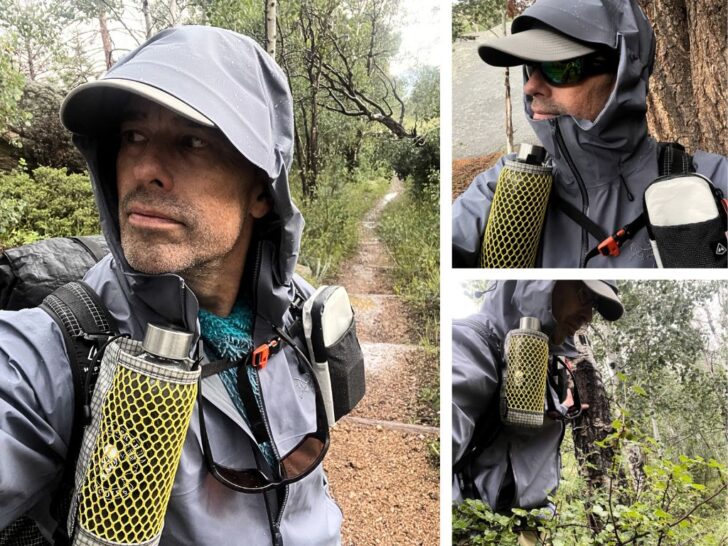
Heavier, more durable jackets—like the 12-ounce models utilizing modern laminates—include the hardware necessary to manage this:
- Pit Zips: Essential for dumping heat without removing the shell.
- Volume-Adjustable Hoods: Ensure that the wind does not whip rain into the face or restrict peripheral vision.
- Adjustable Cuffs and Hems: Create a seal that prevents heat loss and moisture ingress.
Supporting Data: Comparing the Systems
To illustrate the weight-to-performance trade-off, consider two distinct approaches to a three-day alpine excursion:
| Feature | Ultralight System | "Capable-Light" System |
|---|---|---|
| Base Layer | 115 gsm Merino (116g) | 115 gsm Merino (116g) |
| Mid Layer | 60 gsm Alpha Direct (99g) | 60 gsm Alpha Direct (99g) |
| Rain Shell | 7D Trail Smock (88g) | 40D Gore-Tex ePE (340g) |
| Total Weight | 303g (10.7 oz) | 555g (19.6 oz) |
While the weight penalty of the "Capable-Light" system is approximately 250 grams (8.9 ounces), the gain in functionality is disproportionate. The 40D fabric is exponentially more resistant to the tearing that occurs during off-trail bushwhacking, and the inclusion of full ventilation allows the hiker to maintain a steady, dry internal temperature, effectively reducing the need to stop and swap layers—a major advantage when the weather is deteriorating.
Official Perspectives: The Expert Consensus
Leading backcountry guides and instructors have largely moved away from the "lightest possible" gear toward a "most reliable for the context" approach.

"We often see hikers who are physically capable but gear-limited," notes one prominent wilderness instructor. "They arrive in the Absaroka-Beartooth Wilderness with a 3-ounce jacket that works perfectly in the desert, but they find themselves shivering in a 34°F sleet storm because they cannot ventilate effectively or because their jacket has suffered a puncture from a branch. The extra 8 ounces is the price of a more comfortable, and often safer, trip."
The industry’s shift toward ePE membranes reflects this concern. These newer membranes are not only more environmentally friendly but are designed to withstand the rigors of heavy use better than the traditional thin-film PTFE membranes of the past.
Implications for the Modern Backpacker
What does this mean for the average hiker? It suggests a move away from "gear-shaming" based on weight alone. The implication is clear: Context dictates the kit.
Recommendations for the Field:
- Assess Your Environment: If you are hiking in the Appalachian or Rocky Mountains during shoulder seasons, prioritize durability and ventilation over raw weight reduction.
- Prioritize Mechanical Ventilation: Regardless of the "breathability" rating on a jacket’s label, there is no substitute for a physical opening (pit zips or core vents) to regulate body temperature during high-output activity.
- Fabric Denier Matters: A 7D or 10D fabric may save weight, but a 30D or 40D fabric will last years longer. If you plan on hiking through dense vegetation or scrambling on rock, the durability gain is a mandatory investment.
- Fit and Adjustment: Never compromise on hood adjustment. If you cannot secure the hood to your head, you will lose significant heat through your neck and head in a storm.
Conclusion
The pursuit of ultralight backpacking is an admirable endeavor that has led to incredible innovations in material science. However, it is vital to recognize that the primary goal of any outdoor system is not the number on the scale, but the ability to safely and comfortably navigate the environment.
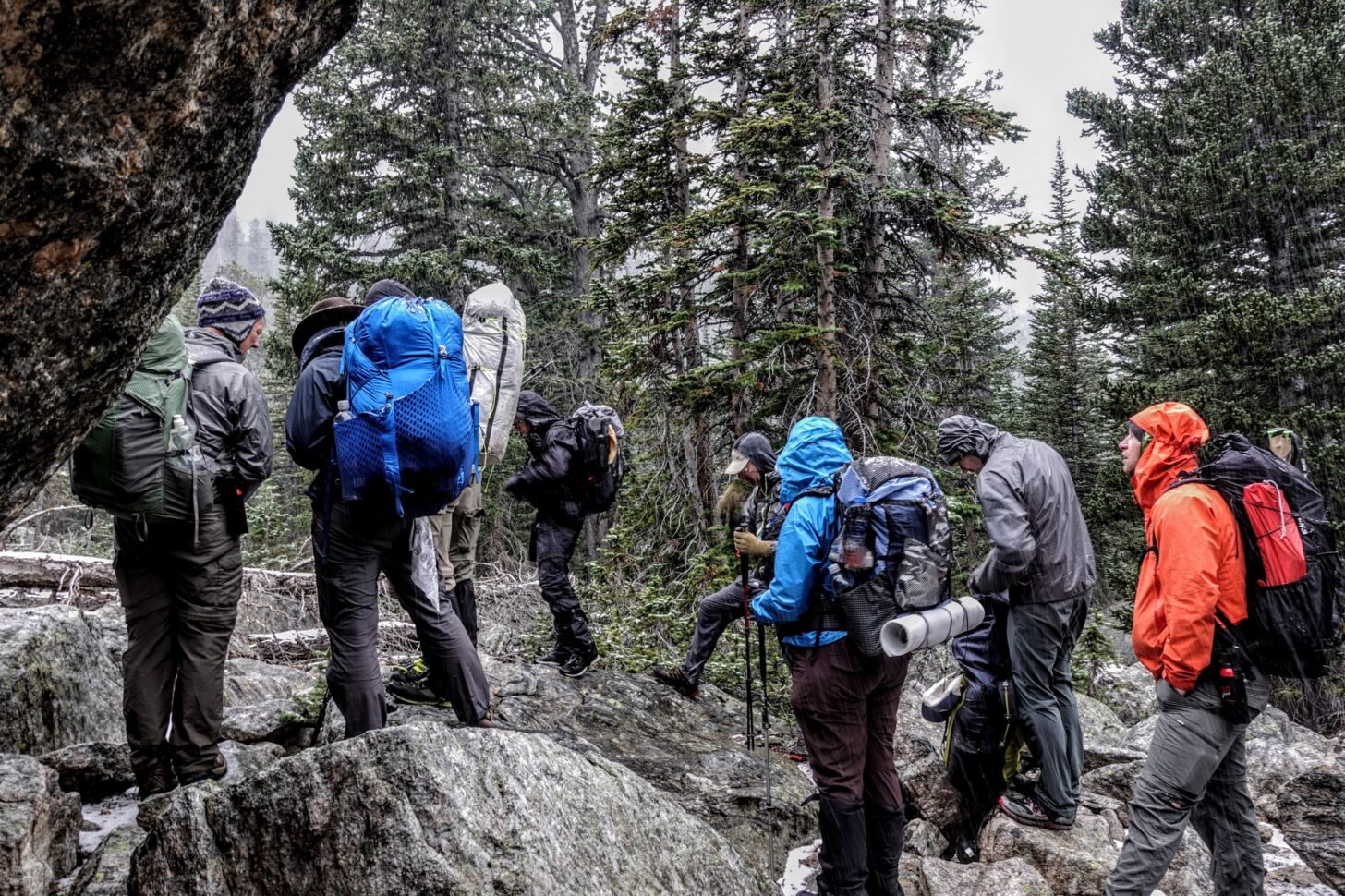
By strategically choosing slightly heavier, more ventilated, and more durable raingear, hikers can expand their range of operation, maintain better thermal control, and ultimately enjoy a more resilient experience in the wild. The next time you pack for a shoulder-season trip, remember: those extra few ounces might just be the most important items in your bag.