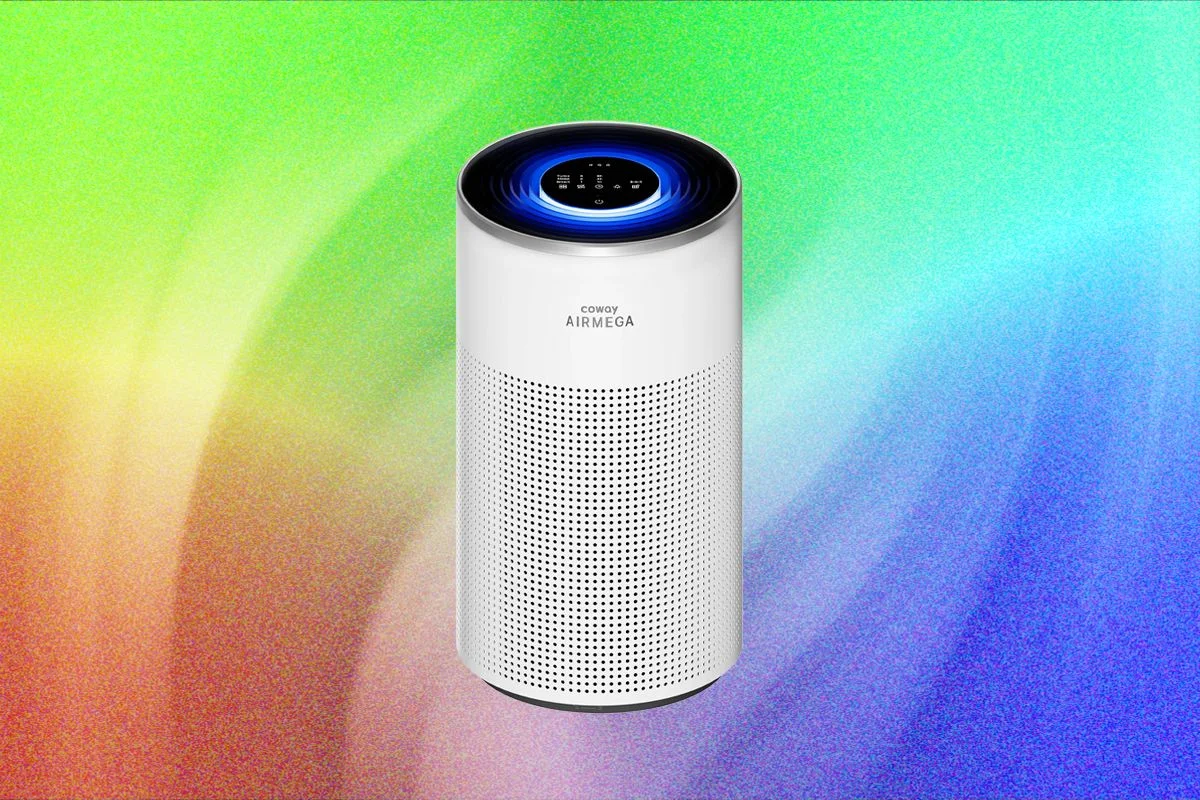
In an era where indoor air quality has moved from a niche concern to a central pillar of home wellness, the Coway Airmega Halo enters the market as a high-tech guardian of the domestic environment. Balancing sophisticated filtration mechanics with intuitive automation, the Halo promises not just to clean the air, but to manage it with minimal human intervention.
Following a month of rigorous, real-world testing—ranging from kitchen grease to pet-related particulate matter—it is clear that the Airmega Halo is a formidable piece of hardware. However, it also highlights the growing disconnect between manufacturer-specific air quality metrics and standardized public health benchmarks.
The Engineering Beneath the Hood: IEST-Certified HEPA Filtration
At the heart of the Airmega Halo lies a cylindrical, IEST-certified three-stage HEPA filtration system. For the uninitiated, the Institute of Environmental Sciences and Technology (IEST) certification provides a necessary layer of verification in an industry often crowded with vague "HEPA-type" marketing claims.
The device is engineered to capture 99.97 percent of nano-sized particles down to 0.3 microns. To put this in perspective, 0.3 microns is the standard benchmark for filtration efficiency because it represents the "most penetrating particle size." By neutralizing these, the Halo effectively strips the air of the vast majority of dust, pollen, mold spores, and dander.
The MegaScan Particle Sensor: Precision Monitoring
While the filter does the heavy lifting, the "coolest" feature—and perhaps the most vital—is the MegaScan Particle Sensor. This component continuously monitors the environment in real time, specifically tracking pollutants down to PM2.5.
PM2.5 (particulate matter 2.5 micrometers or less in diameter) represents a significant public health challenge. Because these particles are microscopic, they bypass the body’s primary defenses, penetrating deep into the pulmonary system and entering the bloodstream. Chronic exposure to PM2.5 is scientifically linked to asthma exacerbation, cardiovascular disease, and lung cancer. By providing a continuous data stream on these specific pollutants, the Halo moves beyond passive filtration into active air management.
Chronology of the Testing Phase: One Month in the Field
To determine if the Airmega Halo could live up to its marketing collateral, we subjected the unit to a thirty-day "stress test" across diverse environments within a standard residential setting.
Week 1: Baseline and Quiet Operation
Testing began in a bedroom environment. We focused on the unit’s "Sleep Mode." Coway claims a noise floor of 17 decibels in this state—a figure that is virtually indistinguishable from absolute silence. Our testing corroborated this: using a high-sensitivity decibel monitor app, the fan was imperceptible even when all ambient household noise was eliminated.
Week 2: The Culinary Challenge
The second week involved placing the unit near an unventilated gas stove during heavy cooking sessions. This is a notorious source of indoor air pollution, including nitrogen dioxide and particulate grease. The MegaScan sensor reacted almost immediately to the smoke and fine dust generated by searing proteins, ramping the fan speed to its turbo setting to mitigate the spike in pollutants.
Week 3: The Urban Filter Test
The unit was relocated to a living room adjacent to a street-facing window, a location plagued by building dust and vehicle exhaust fumes. This phase tested the unit’s ability to handle steady-state, long-term filtration rather than just acute spikes.
Week 4: The Pet Proximity Test
Finally, the Halo was stationed near a cat litter box. This test was designed to measure how effectively the sensor responded to odor and dust-related particulate matter, and whether the automated smart modes would trigger consistently in response to these organic triggers.
Supporting Data: Decibels and Air Quality Standards
The Airmega Halo’s performance is defined by its range of output. On the highest "Turbo" setting, the decibel reader registered approximately 75 decibels. To provide context, this is equivalent to the sound of a vacuum cleaner or a running dishwasher. While loud, it is a necessary trade-off for rapid air exchange during high-pollution events.
The Disconnect in Color-Coding
A significant point of friction discovered during our testing is the Halo’s proprietary air quality display. The device uses a four-light halo system:
- Blue: Good
- Green: Moderate
- Yellow: Unhealthy
- Red: Very Unhealthy
This presents a "Mixed Signal" for the average consumer. The US Air Quality Index (AQI), maintained by the EPA and AirNow, utilizes a different standard: Green (Good), Yellow (Moderate), Orange (Unhealthy for sensitive groups), Red (Unhealthy), Purple (Very Unhealthy), and Maroon (Hazardous).
When a user sees a "Green" light on the Halo, they might assume "Good" air, yet the device’s "Green" is actually "Moderate." This discrepancy can lead to confusion, especially for individuals with respiratory conditions who rely on standardized AQI colors to manage their health. Manufacturers would do well to align their UX with established federal health standards to ensure the information provided is actionable and accurate.
Smart Features and Energy Management
The Halo’s "Smart Mode" is designed for the "set it and forget it" consumer. The device utilizes an integrated light sensor; if the room is dark for more than three minutes, the unit automatically enters sleep mode, dimming the panel lights and reducing the fan speed to the whisper-quiet 17-decibel level.
Furthermore, the unit features an intelligent power-save cycle. If the MegaScan sensor confirms that pollutant levels have remained in the "Good" range for more than three minutes, the fan automatically cycles off. This is a critical efficiency feature, as it prevents unnecessary wear on the HEPA filter and reduces electrical consumption, though the machine remains in a "ready state" to restart the fan the moment a new pollutant is detected.
Implications for Indoor Health
The implication of incorporating a device like the Airmega Halo into one’s home is clear: you are shifting from reactive to proactive health management. The ability to visualize invisible pollutants through the Halo’s LED ring provides a psychological benefit—the assurance that the air is being scrubbed—but more importantly, it provides a physical benefit by reducing the particulate load on the lungs.
However, the efficacy of such a device is entirely dependent on placement and maintenance. An air purifier cannot pull in air that it cannot access. Our testing showed that moving the unit at least two feet away from walls and avoiding furniture obstructions significantly improved the sensor’s response time and the clean air delivery rate (CADR).
Final Assessment
The Coway Airmega Halo succeeds because it marries a high-grade mechanical filtration system with a responsive digital sensor array. While the proprietary color-coding of its air quality indicator creates a slight learning curve—and requires users to ignore their preconceived notions of AQI standards—the functional performance is beyond reproach.
For those living in urban environments, pet owners, or individuals with asthma, the Halo acts as a silent, invisible shield. By automating the transition between "Turbo" cleaning and "Sleep" energy-saving, it removes the burden of maintenance from the user, making high-quality indoor air a default state rather than a luxury that must be constantly managed.
As indoor air quality continues to gain prominence in the global conversation on public health, devices like the Airmega Halo offer a sophisticated, evidence-based solution for the modern home. The machine doesn’t just clean the air; it provides the data necessary to understand the invisible threats lurking in our living spaces, turning the unknown into the manageable.