In a significant move to secure the future of Finnish sports, government ministers convened a high-level roundtable on September 29, 2026, to address the evolving landscape of the "dual career" model. The initiative, championed by the current administration, seeks to ensure that elite athletes are not forced to choose between athletic excellence and long-term professional stability. By harmonizing rigorous training schedules with academic and vocational requirements, the government aims to create a sustainable pipeline that supports athletes both during their competitive years and throughout their subsequent transitions into the workforce.
The Mandate: A Foundation for Holistic Development
At the heart of the government’s policy is a firm commitment to the dual career framework. The fundamental objective is to provide a systemic structure that allows athletes to pursue their sporting dreams without compromising their educational progression.
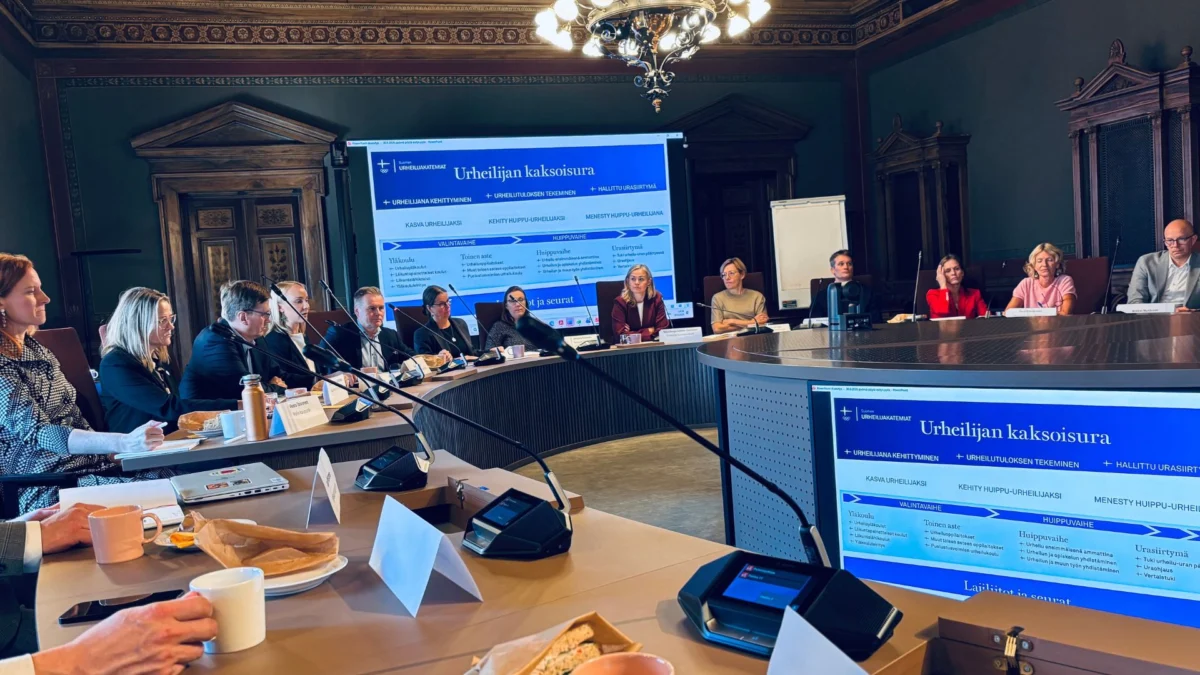
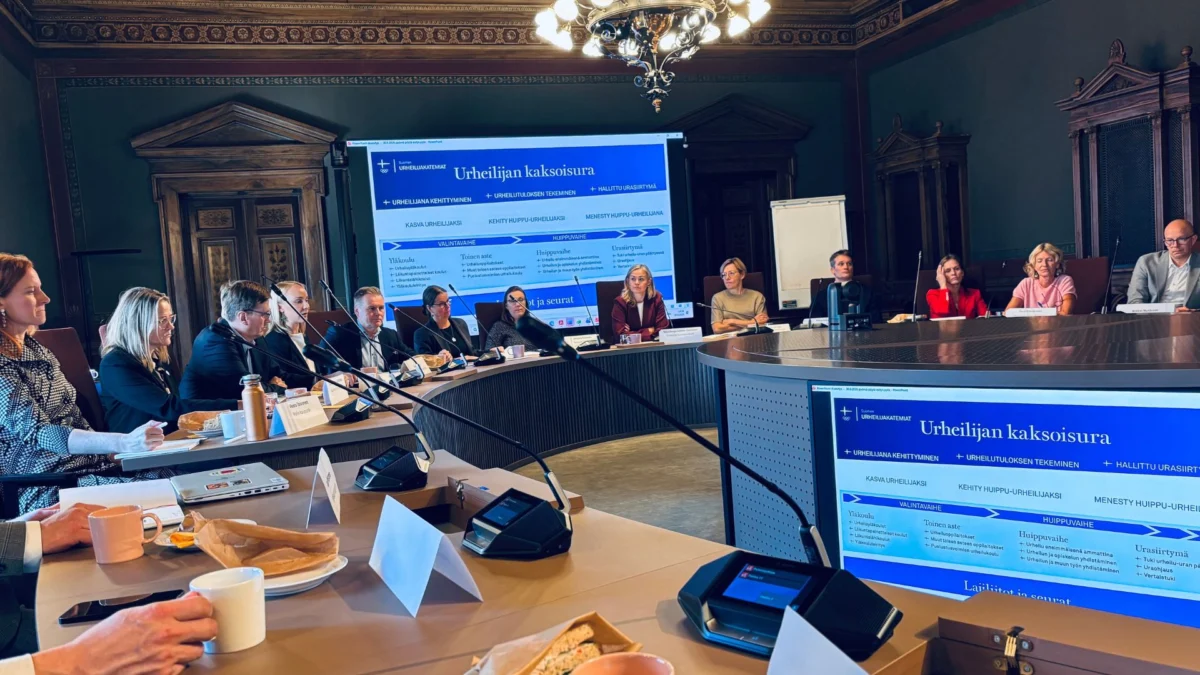
The roundtable, hosted by Minister of Education Anders Adlercreutz and Minister of Sport and Youth Mika Poutala, brought together a diverse group of stakeholders, including elite athletes, representatives from sports academies, vocational institutions, and municipal leaders. The event served as a collaborative forum to evaluate current successes and identify systemic bottlenecks that hinder the effective integration of these two demanding life paths.
For the Finnish government, this is not merely a sports policy—it is a socio-economic strategy. By investing in the dual career path, the state ensures that athletes remain active contributors to society, armed with both high-level performance skills and formal qualifications that facilitate a seamless entry into the labor market once their athletic careers conclude.
Chronology of the Initiative: A Commitment to Structural Reform
The September 29 summit was the latest in a series of strategic steps taken by the government to prioritize the well-being and future prospects of Finland’s sporting elite. The timeline of recent developments reflects a shift from abstract policy goals to tangible, funded interventions:
- Early 2026: The government outlined its commitment to dual career pathways in its overarching legislative program, emphasizing that national sports success should not come at the expense of an athlete’s education.
- Mid-2026: The Research Institute for Olympic Sports (KIHU) conducted an extensive review of the current support networks, highlighting the necessity of long-term funding for the regional sports academy network.
- September 29, 2026: The ministerial roundtable was held in Helsinki, focusing on "The Future of Dual Careers." This event synthesized the findings of the KIHU report with the lived experiences of active athletes.
- Q4 2026 and Beyond: The government announced a series of financial and legislative measures, including the doubling of funding for the vocational training of athletes and the integration of competitive sports into the criteria for extending student aid eligibility.
Supporting Data: Why the Current System Requires Evolution
The discussion held at the roundtable was anchored in data provided by institutions like KIHU. The findings painted a clear picture: while Finland’s dual career model is recognized as world-class, it is currently suffering from fragmented responsibility and inconsistent funding models.
The Regional Academy Network
A primary pillar of the Finnish system is the network of sports academies (Urheiluakatemiat). These institutions act as the localized hubs for elite training. However, the KIHU report identified that the sustainability of these academies is heavily dependent on the stability of their funding. Without long-term, predictable financial commitments, the quality of expert services—such as physiotherapy, sports psychology, and coaching—varies significantly across regions, creating an inequality of opportunity for young athletes.
Flexibility and Customization
The data suggests that a "one-size-fits-all" approach is no longer viable. Different sports have vastly different demands; for instance, the training and competition cycles of an endurance athlete differ significantly from those of a team-sport athlete. The current system often struggles to accommodate these varying rhythms within a standard academic calendar, leading to potential burnout or the premature abandonment of studies.
Voices from the Field: Athlete Perspectives
The presence of elite athletes—Nathalie Blomqvist, Elmo Lakka, and Nette Kiviranta—provided a necessary reality check for the policymakers in attendance. Their input was instrumental in moving the conversation from theoretical policy to practical application.
The consensus among the athletes was clear: the system must move toward a model of "intelligent flexibility." Blomqvist and her peers argued that educational institutions often lack an understanding of the specific requirements of professional sport. A lack of understanding regarding the intensity of training cycles, the necessity of travel, and the physical toll of recovery periods often puts athletes at a disadvantage in a standard classroom environment.
"It is not about asking for less work," noted one participant, "it is about having the flexibility to complete that work when the training schedule allows, rather than being penalized for being in a training camp when a mandatory lecture is scheduled."
Official Responses and Strategic Policy Shifts
Following the deliberations, Ministers Adlercreutz and Poutala expressed their determination to reform the sector.
The Education Perspective
Minister of Education Anders Adlercreutz emphasized the importance of maintaining high academic standards while acknowledging the unique lifestyle of an athlete. "Many aspects of our system work well, and we are ahead of many countries globally," Adlercreutz stated. "However, we must move away from rigid, administrative structures. The athlete is at the center of this model, and our goal is to provide the support mechanisms—both academic and social—that empower them to succeed in both arenas simultaneously."
The Sport and Youth Perspective
Minister Mika Poutala, who brings his own extensive experience as a former elite athlete to the portfolio, highlighted the need for better synergy between the sports and education sectors. "We are seeing that the divide between the gymnasium and the training field is closing, but we need to accelerate this process," Poutala said. "Our goal is to ensure that every athlete who aspires to greatness can do so without the fear of falling behind in their life after sport."
Implications: Building a Resilient Future
The implications of these discussions are far-reaching. The government’s move to double the funding for the vocational training of athletes is a direct investment in human capital. By ensuring that these training programs are adequately funded, the government is essentially de-risking the pursuit of elite sports.
Legislative and Financial Changes
The announcement that elite sports participation will now be recognized as a valid reason for the discretionary extension of student aid is a landmark decision. This policy change removes one of the most significant barriers for athletes who find that their sport forces them to extend their studies beyond the standard time frame.
Future Outlook
The "dual career" discourse is shifting from a conversation about "accommodation" to a conversation about "integration." The government’s future work will focus on:
- Clarifying Roles: Establishing clear lines of responsibility between sports academies, municipalities, and national education boards.
- Harmonizing Schedules: Implementing digital learning tools and flexible exam windows that allow for remote participation.
- Career Counseling: Developing specialized career guidance programs that help athletes translate their discipline, time management, and performance-under-pressure skills into the corporate and public sectors.
In conclusion, the September 29, 2026, meeting has set the stage for a more robust and responsive framework for Finland’s elite athletes. By listening to the voices of the athletes themselves and coupling that input with targeted financial support, the Finnish government is signaling that it views the dual career not as a secondary concern, but as a central component of a modern, successful society. As these reforms take root, the expectation is that Finland will not only continue to produce world-class athletes but will also ensure those athletes thrive long after their final race or game.