For nine-year-old Sofia Hämäläinen, the world was measured in square meters of sail cloth and the unpredictable temperament of the wind. Standing on a miniature board at a summer camp, she was a novice among the elements—sun, sea, and an overwhelming sense of freedom. Today, that young girl has evolved into one of Finland’s most promising athletes, a dedicated competitor in the high-speed, high-tech world of Olympic iQFoil windsurfing.
As she navigates the transition from youth prospect to elite competitor, Hämäläinen’s journey is a testament to the intersection of raw athleticism, complex engineering, and the mental fortitude required to master the sea.
The Genesis of an Athlete: From Ice to Ocean
Sofia Hämäläinen’s path to the water was not a straight line. Born in Helsinki but raised largely abroad, particularly in Tallinn, Estonia, her early childhood was a whirlwind of diverse sporting disciplines. Before the allure of the sail took hold, she explored figure skating, competitive acrobatics, and football.
"It wasn’t a family tradition," Hämäläinen reflects on her start in windsurfing. "There was no sailing background in my family. I just happened to be at a camp, standing on this tiny board with a three-square-meter sail. The first attempts were clumsy, but the feeling of being on the water—moving gracefully across the surface while the wind filled the sail—was transformative. When I looked out and saw the adults moving at such high speeds, I knew I wanted to be part of that world."
Windsurfing eventually won out over her other pursuits because of its unique combination of complexity and joy. "It’s the most challenging sport I’ve found," she says. "At top speeds, you’re hitting over 50 kilometers per hour. It’s not just sailing; it feels like low-altitude flight above the water. It’s an incredible sensation."
The iQFoil Revolution: Engineering Meets Sport
In 2022, Hämäläinen made a pivotal decision: she transitioned to the iQFoil class. As the new official Olympic windsurfing discipline, iQFoil has fundamentally changed the sport’s landscape, shifting the focus toward extreme speed and spectacular, foil-assisted performance.
The shift, however, brought with it the harsh realities of modern professional sailing: the barrier to entry is not just skill, but capital.
"High-end equipment is a massive investment," Hämäläinen explains. "A quality board costs several thousand euros. A single sail costs between 1,000 and 1,500 euros, and in a competitive season, you need two or three of them because you must have fresh equipment for major regattas. Then there is the foil mast and the foil itself—the most critical component—which is also worth thousands."
The foil—a hydrofoil wing that lifts the board and the athlete out of the water—is the heartbeat of the sport. Because it carries the entire weight of the system, its structural integrity and stiffness are paramount.
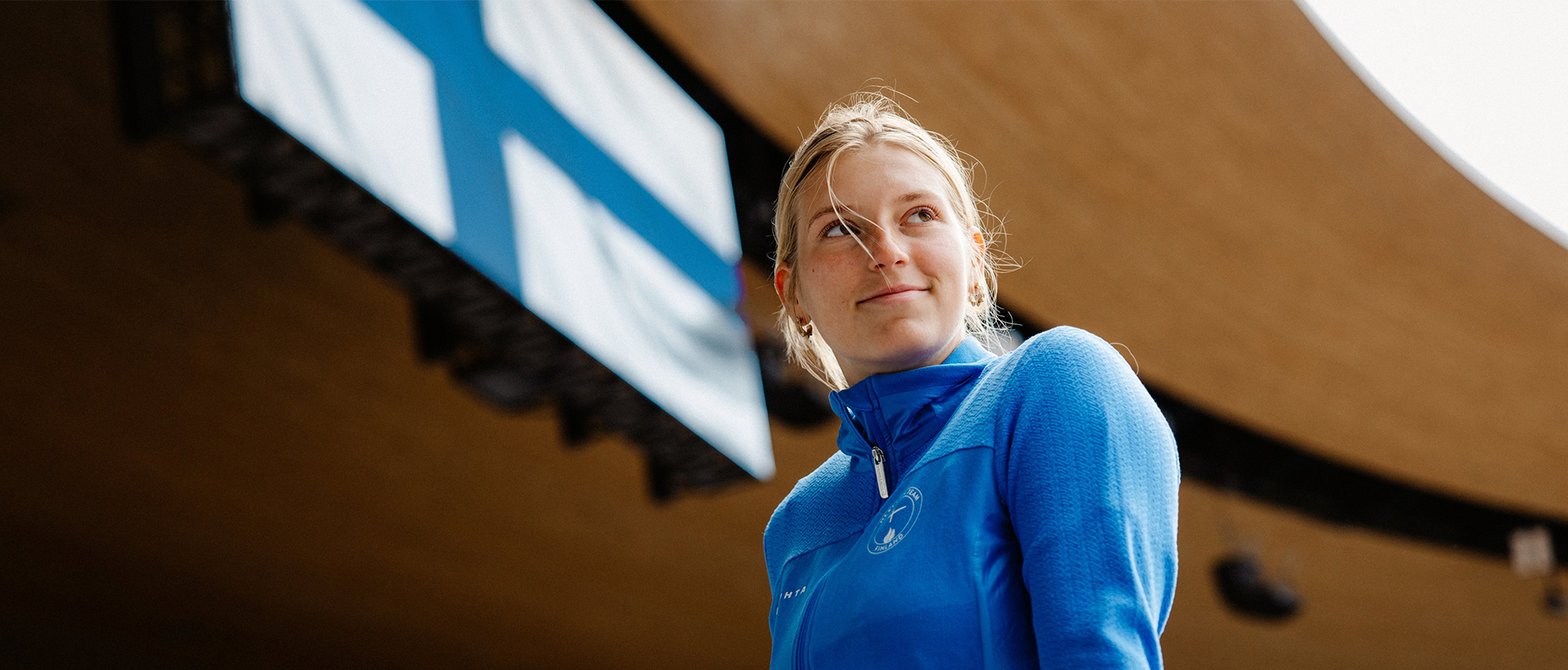
"Every piece of equipment is technically unique, even if they are mass-produced," she notes. "A seasoned sailor can feel the difference between an average piece of kit and a premium one. To get the absolute best, you’d ideally be at the factory testing gear, but that’s a luxury only the world’s top few can afford. The rest of us order from the factory and hope we get a ‘prime’ piece. If you give away even a fraction of performance in your equipment, you have no chance of breaking into the world’s top 20."
Chronology of a Rising Talent
Hämäläinen’s career trajectory has been defined by a rapid ascent through the ranks, despite the lack of a deep domestic infrastructure for professional windsurfing in Finland.
- Early Development: Diverse sports background (skating, acrobatics) providing foundational agility.
- 2022: Official transition to the Olympic iQFoil class, committing to a professional pathway.
- 2024: A breakthrough year, securing a Bronze Medal at the Youth World Championships.
- Ongoing: Competing in adult European Championships, with a career-best finish of 25th, as she gains critical international experience.
- Long-term Horizon: Targeting the 2028 and 2032 Olympic Games as the ultimate realization of her potential.
The Analytical Athlete: Strategy and Physicality
At the elite level, windsurfing is as much a mental game as it is physical. The race is often won in the opening seconds—the start line.
"The start is where everything happens," Hämäläinen says. "You have 60 boards searching for the best line. You’re traveling at 50 km/h, and you have to make split-second decisions. You have to be aggressive, yet respectful of the right-of-way rules. If you miss the start, the race is effectively over."
This requires a "mathematician’s brain" coupled with an "athlete’s engine." The physical demands are brutal; an athlete must possess high aerobic capacity to endure 20 to 30-second bursts of intense "pumping"—a rhythmic, full-body motion used to generate speed—repeated throughout 20-minute races across five-day regattas.
"I prefer high winds," she admits. "That’s where my strengths shine. But to be a world-class sailor, you have to master every condition, every wave pattern, and every breeze."
The Next Generation: Institutional Support
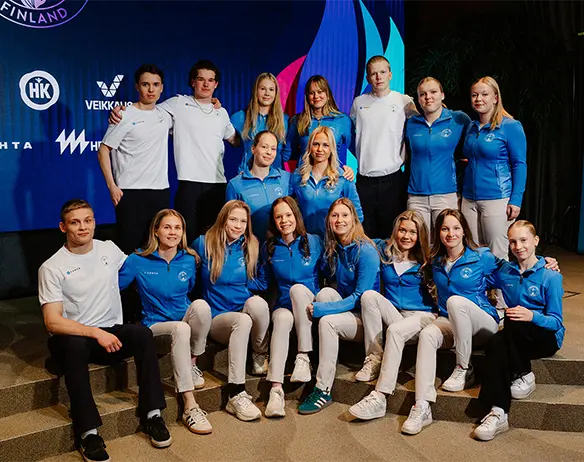
Recognizing that individual talent needs a systemic backbone, the Finnish Olympic Committee launched the Next Generation program. Targeted at athletes aged 15–22, the initiative aims to bridge the gap between national promise and global excellence.
Hämäläinen is one of the 21 inaugural members of this cohort. The program provides a tailored support package worth over 10,000 euros, including expert guidance, financial resources, and specialized services. For Hämäläinen, who operates on an annual budget of approximately 60,000 euros to cover equipment, coaching, and the constant travel required for international training, this support is vital.
"The cooperation with the federation, the Next Generation program, and my private partners is the only reason I can compete at this level," she says. "I am incredibly grateful for the support."
The Reality of the Sea: Challenges and Resilience
Despite the glamour of the speed, the sport is not without its hazards. Hämäläinen highlights an increasingly pervasive problem: marine pollution.
"The ocean is my office and my sanctuary, but it’s full of trash," she says. "I’ve had plastic bags get caught in the foil, and once, a dead fish hit my front wing. It killed my speed instantly and ruined my chances in that year’s European Championships. It’s frustrating, but you have to compartmentalize. You can’t let one bad heat dictate your next. You focus on what you can control."
To maintain this focus, Hämäläinen emphasizes the importance of a life outside the sport. "I need my friends and family to see me as a person, not just an athlete. My mother has been my rock. Whether it’s advice on sport or life, she is always there."
Implications for Finnish Sailing
Hämäläinen is acutely aware that she is carrying the torch for a sport that has seen a long lull in Finland since the era of Tuuli Petäjä-Sirén.
"After Tuuli, there was a long void at the top level," Hämäläinen notes. "I’m trying to forge my own path, but I also want to build something. It would be my greatest achievement if, through my journey, someone else—maybe a nine-year-old on a summer camp—decides they want to try windsurfing too."
As she prepares for the next cycle of international competition, Hämäläinen remains grounded in the pursuit of the "flow state"—the moment when the equipment, the wind, and her own body become one. It is a pursuit of freedom that began on a small, unsteady board a decade ago, and now, it is a mission to bring Finland back to the forefront of global windsurfing.
"Huippu-urheilu (Elite sports) isn’t always easy or fun," she concludes. "But it is my choice, and it is so special that I want to experience every bit of it—the good and the bad."