The morning air in the Alberta foothills is notoriously unforgiving. At 6:00 AM, the temperature hovered near the freezing mark, a reality that became painfully apparent as I rolled off my sleeping pad onto the unforgiving stones of a gravel bar. We were camped along the banks of the Blackstone River, a remote artery of water situated just off the Forestry Trunk Road, north of Highway 11. What began as a cold, groggy awakening soon transformed into an adrenaline-fueled quest to test the legendary reputation of one of Alberta’s most elusive fisheries.
Main Facts: The Blackstone River Ecosystem
The Blackstone River is a quintessential Alberta foothill stream. Originating in the front ranges of the Canadian Rockies, it winds its way through the rugged terrain northwest of Nordegg before eventually merging with the Brazeau River.
By conventional metrics, the Blackstone is modest; it averages roughly 20 meters in width and flows with a steady, manageable pace. However, its aesthetic beauty is matched only by its reputation among local anglers. Most notably, the river is cited in historical guidebooks—most famously by the late Barry Mitchell—as one of the few locations in the province where Bull Trout are known to strike at dry flies. While many anglers rely on heavy streamers to entice these predatory fish, the Blackstone offers a unique opportunity to witness the aggressive, surface-level strikes that define a true top-water experience.
Chronology: A Morning on the Water
Our arrival at the Blackstone had been rushed, arriving under the cover of darkness around 10:00 PM. We had pitched our tent with little regard for precision, eager only for a few hours of sleep before the dawn light.
By sunrise, the objective was clear. Knowing my brother’s penchant for late mornings, I took it upon myself to accelerate our departure. My morning routine—intentionally loud and bustling—served its purpose, and within the hour, we were wading into the river’s frigid flow.
The Initial Hunt
For the first hour, we worked our way downstream with minimal success. The water was crystalline, reflecting the towering pines that lined the banks, yet the trout remained tucked away in the deep, oxygenated pockets of the riverbed. It wasn’t until we rounded a bend that we encountered a stretch of water that felt profoundly “fishy.”
The pool was a structural masterpiece—deep, eddying, and sheltered. Almost immediately, I spotted the rhythmic rings of rising fish.
“Listen,” I told my brother, “they’re feeding at the surface. We don’t need to overthink the hatch; we just need to keep changing patterns until we find what they want.”
The Breakthrough
We began with prospecting patterns—a Red Humpy and a Stimulator. When the surface remained quiet, I transitioned my brother to a Pale Morning Dun. I barely had time to reach for my own fly box when a shout of “Got one!” echoed through the canyon.
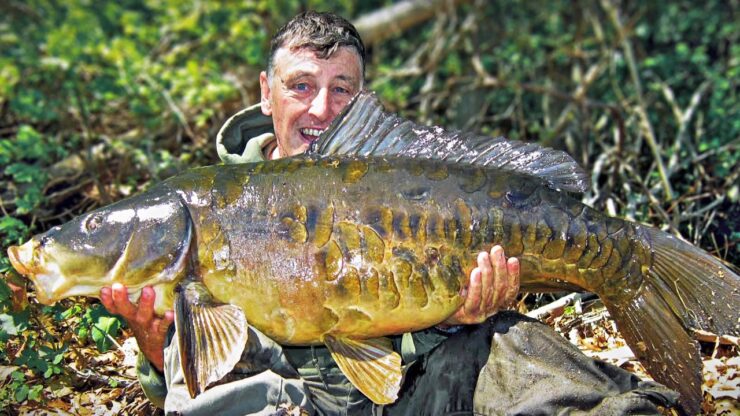
My brother had hooked into a robust cutthroat. In our haste, we realized we had left the landing net back at the campsite. The fight was intense, a testament to the health of the Blackstone’s trout population. The fish was a magnificent specimen, easily approaching 20 inches in length. After a quick, careful release, we shifted our focus to the Bull Trout—the primary target of our expedition.
The Bull Trout Challenge
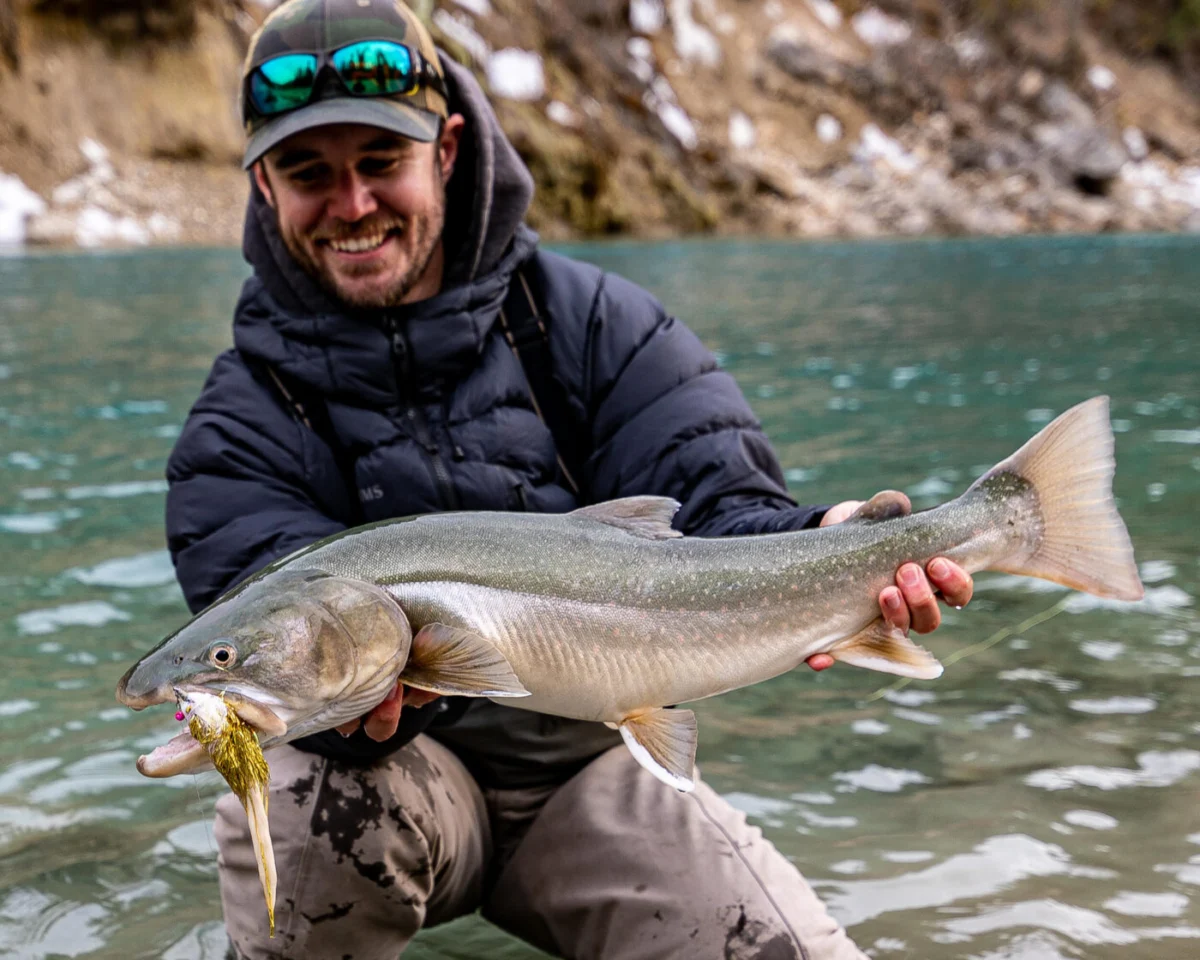
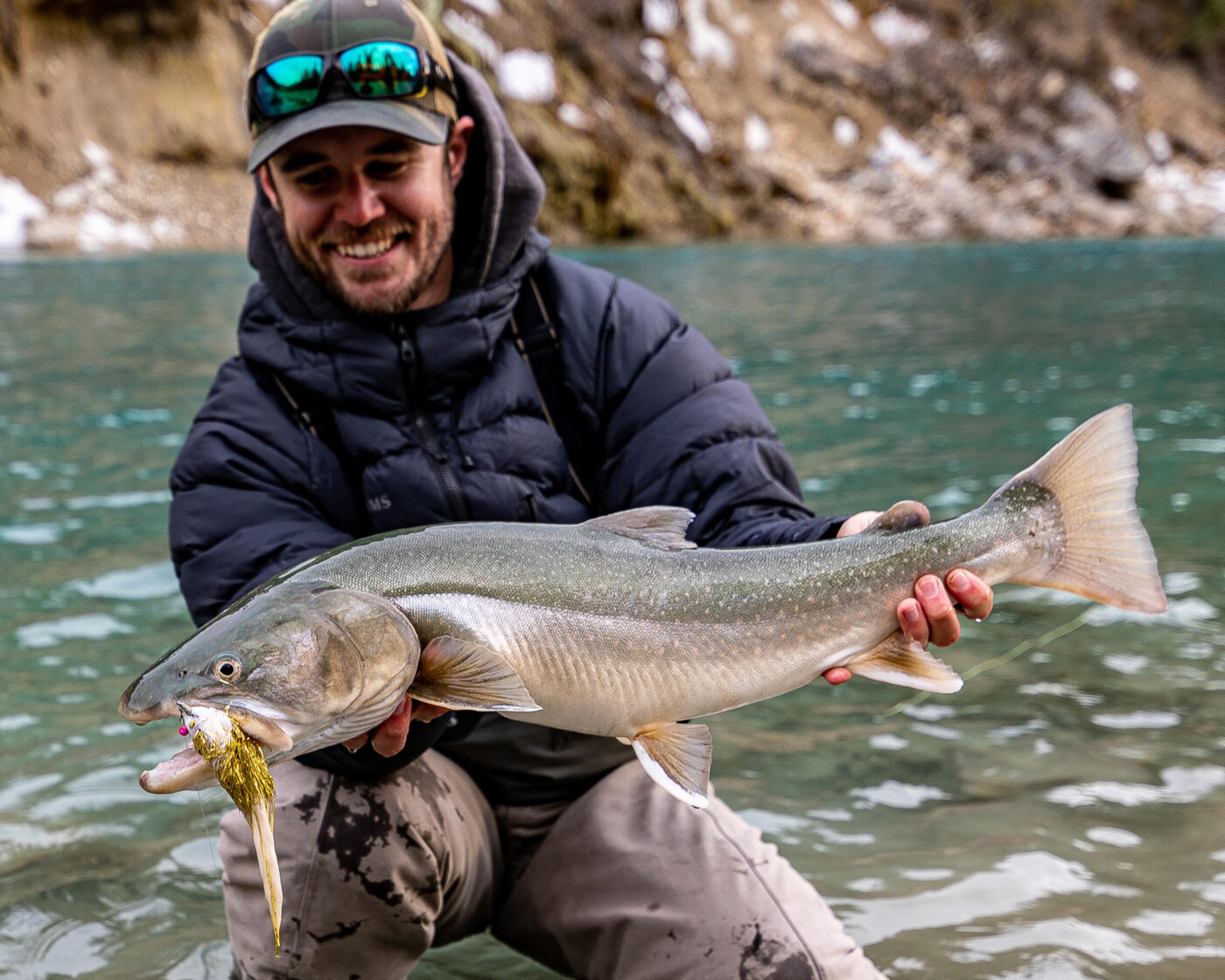
I moved to the tail of the pool, opting for a large “Fat Albert” terrestrial pattern. I wanted to simulate the presence of a substantial meal, playing on the aggressive nature of the Bull Trout. I let the fly drift, twitching it slightly, and as I went to recast, the surface exploded.
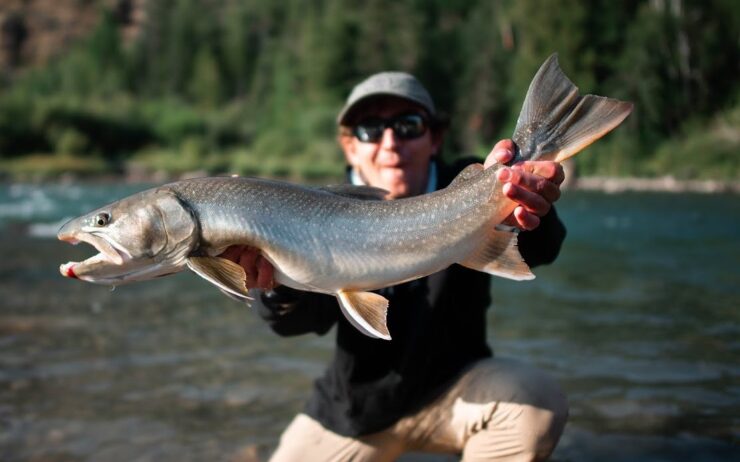
The strike was violent and decisive. The bull trout fought with a heavy, surging energy, diving deep into the rocks. Thanks to my brother’s quick thinking with a waterproof camera, we were able to document the catch—a moment that solidified the Blackstone’s reputation for aggressive, surface-oriented bull trout fishing.
Supporting Data: Gear and Strategy
To be successful on a river like the Blackstone, one must strike a balance between minimalism and preparedness. My setup for this trip included:
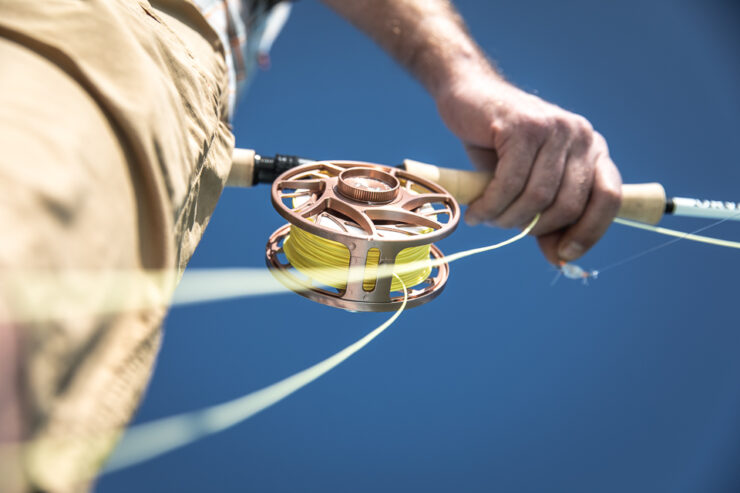
- The Rods: A 9-foot, five-weight Echo Carbon XL paired with a Redington Crosswater reel. While not the most expensive gear on the market, the combination provides the reliability required for the erratic conditions of the foothills. My brother utilized a backup Cabela’s five-weight, which proved more than capable of handling the larger trout.
- Fly Selection: We relied on a curated selection of standard Alberta dry flies, including Humpies and Stimulators, alongside a series of bead-head nymphs and large terrestrials.
- The Methodology: The key to this trip was avoiding the common pitfall of "gear-heaviness." By carrying only what we needed, we were able to move faster and fish more water.
Official Perspectives and Ecological Implications
The Bull Trout (Salvelinus confluentus) is a species of concern in Alberta. As a top-tier predator, their presence in the Blackstone is an indicator of a healthy, intact watershed. Historically, management agencies have advocated for strict catch-and-release protocols to protect these populations.
The fact that these fish are willing to rise to a dry fly is an anomaly that draws enthusiasts from across the globe. However, this popularity comes with an ecological price. Increased fishing pressure requires anglers to be stewards of the river. This includes:
- Barbless Hooks: Minimizing tissue damage during the catch-and-release process.
- Temperature Awareness: Avoiding fishing during the heat of the day when water temperatures spike, causing undue stress on the trout.
- Net Hygiene: Ensuring that landing nets are cleaned to prevent the spread of invasive species like whirling disease or invasive algae.
Implications for Future Anglers
Our trip to the Blackstone serves as a microcosm of the modern angling experience: a blend of rugged exploration, technical challenge, and a growing responsibility toward conservation. The "Blackstone experience" is not merely about the size of the fish, but the rarity of the behavior. Finding a Bull Trout that is willing to break the surface for a terrestrial fly is a reminder that even in well-documented regions, there is still mystery to be found.
For those planning to visit, the lessons are clear: bring a net, keep your gear reliable but portable, and maintain a deep respect for the water. The Blackstone is a river that rewards patience and persistence, but it also demands that the angler leave nothing behind but ripples.
Author Profile: Adelaide Gentry is a seasoned kayaking and angling expert and the lead contributor at KayakPaddling.net. With over a decade of experience navigating the world’s most challenging waterways, Adelaide provides practical, research-backed guidance for outdoor enthusiasts. Her work focuses on the intersection of adventure sports, environmental stewardship, and technical skill development.