Mount Kilimanjaro, the majestic "Roof of Africa," stands as a beacon for adventurers, mountaineers, and nature enthusiasts from across the globe. Rising 5,895 meters above the Tanzanian plains, this dormant stratovolcano offers a unique challenge: a trek through five distinct ecological zones in a single journey. While there are several paths to the summit, the Lemosho Route has increasingly emerged as the premier choice for those seeking a blend of high success rates, pristine wilderness, and profound ecotourism experiences.
Main Facts: The Lemosho Advantage
The Lemosho route is widely celebrated by professional mountaineers and local guides as the most aesthetically pleasing and ecologically diverse path up the mountain. Unlike busier trails, Lemosho starts from the western side of the mountain, entering through the Londorosi Gate. This remote approach provides trekkers with an unparalleled sense of solitude and immersion in nature, far from the congestion often found on the more commercialized routes like Marangu or Machame.
The primary allure of Lemosho lies in its superior acclimatization profile. By gradually ascending through the lush rainforests and crossing the sprawling Shira Plateau, climbers give their bodies the necessary time to adapt to the thin air. Experts generally recommend the 8-day itinerary over the standard 7-day version. While both are viable, the extra day—often spent at the Karanga Camp—significantly mitigates the risks of altitude sickness, thereby pushing success rates to their peak.
Chronology: A Day-by-Day Journey Through the Clouds
To understand the rigor and beauty of the Lemosho trek, one must examine the progression of the climb. Whether embarking on the 7-day or the 8-day itinerary, the journey is a transformative physical and mental test.
The Initial Ascent: Entering the Wilderness
Day 01: The expedition begins with a scenic drive from Moshi or Arusha to the Londorosi Park Gate. After registration, a 4WD vehicle navigates the forest track to Lemosho Glades. The trek commences in earnest here, winding through dense montane forests until reaching the Mti Mkubwa (Big Tree) camp at 2,750 meters.
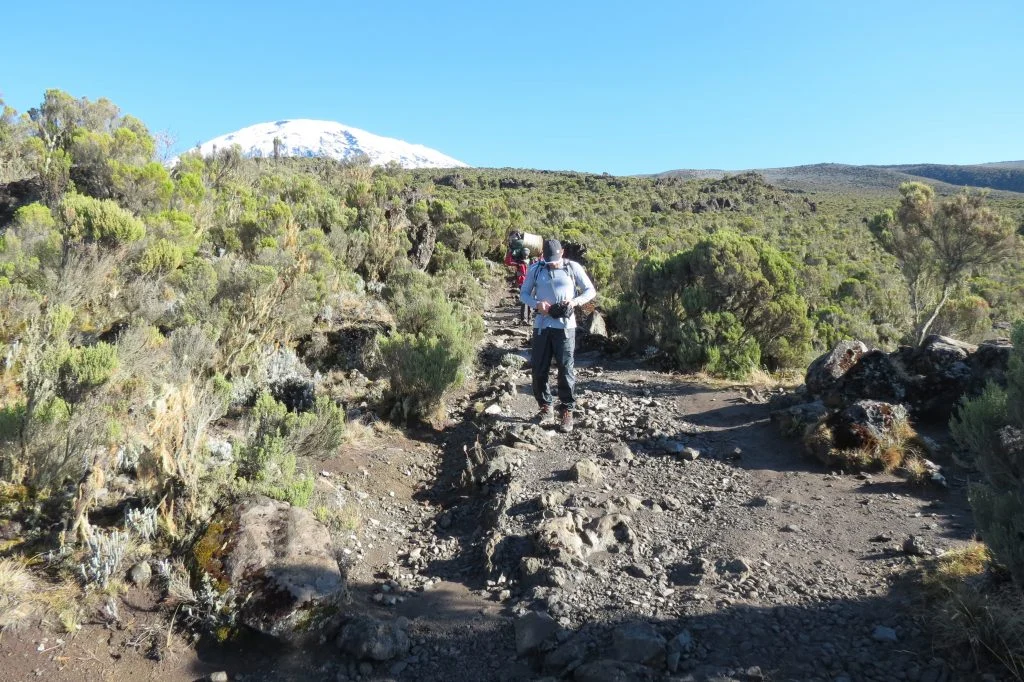
Day 02: As the trail steepens, the environment shifts from dense forest to the giant heather moorland zone. Trekkers cross crystalline streams before traversing the Shira Ridge at 3,600 meters, eventually descending to Shira 1 camp.
Day 03: A gentle walk across the expansive Shira Plateau leads to Shira 2 camp. This day is critical for acclimatization, as the relatively flat terrain allows hikers to explore the plateau, preparing the body for the steeper challenges ahead.
The Technical Challenges and Acclimatization
Day 04: The route continues eastward toward the iconic Lava Tower, a massive volcanic plug. From here, the trail drops down to the Barranco Hut, situated at 3,940 meters. For those on the 8-day itinerary, this is where the journey becomes more strategic, with a planned detour to the Karanga Camp to maximize physiological adjustment to the altitude.
Day 05: This day features a exhilarating scramble up the Great Barranco Wall, followed by a traverse over scree and ridges leading to the Karanga Valley. Beneath the towering icefalls of the Heim, Kersten, and Decken Glaciers, trekkers find themselves in one of the most photogenic spots on the mountain. The day concludes with the final push to Barafu Hut, the base camp at 4,600 meters.
The Summit Push and Descent
Day 06: The "Big Day" begins long before dawn. Climbers ascend toward the Kibo Crater rim, moving between the Rebmann and Ratzel Glaciers. The final push leads to Uhuru Peak, the highest point in Africa. Standing at the summit, the view of Mount Meru to the west and the jagged Mawenzi peak to the east is a reward for the arduous journey. The descent follows, moving past Barafu and ending at the Mweka Hut in the forest zone.
Day 07: The final descent through the forest takes approximately 3 to 4 hours, culminating at the park gate, where transport awaits to return the climbers to the comfort of civilization.
Supporting Data: Why Ecotourism Matters
In an era where sustainable travel is paramount, the Lemosho route serves as a flagship for responsible mountaineering. Kilimanjaro Tanzanite Safaris, a leading local destination management company (DMC), emphasizes that Lemosho is not merely a climb, but an educational and photographic safari.
The route passes through delicate ecosystems that require careful stewardship. By utilizing operators who adhere to the "Leave No Trace" philosophy, trekkers ensure that the fragile flora and fauna of the Kilimanjaro National Park remain undisturbed. Furthermore, the inclusion of modern safety equipment—such as emergency oxygen bottles and pulse oximeters—on these guided trips ensures that ecotourism does not come at the expense of climber safety.
Financial and Logistical Considerations
Pricing for these expeditions varies based on group size, the inclusion of educational components, and specific agency discounts for students or specialized research groups. Generally, the 8-day package is priced slightly higher than the 7-day version, a premium that covers the additional night of accommodation, meals, and the logistics of extended support staff.
A comprehensive package typically covers:
- Airport transfers from Kilimanjaro International Airport.
- All park fees and government taxes.
- Wages for the professional team of guides, porters, and cooks.
- Nutritious, high-altitude-appropriate meals and clean drinking water.
- Emergency support, including AMREF Flying Doctor air rescue insurance.
Notably, most professional packages exclude international flights, visas, and personal climbing gear. However, reputable local operators provide rental services for gear, ensuring that international travelers can embark on their journey without the burden of transporting heavy technical equipment.
Official Responses and Expert Recommendations
Industry leaders and seasoned climbers consistently highlight the Northern Circuit and the Rongai route as excellent alternatives for those seeking solitude, but they maintain that Lemosho remains the "gold standard" for the first-time Kilimanjaro adventurer.
"The key to a successful Kilimanjaro summit is not speed; it is the quality of the acclimatization," says a lead coordinator from Kilimanjaro Tanzanite Safaris. "By choosing an 8-day Lemosho itinerary, we are not just selling a trip; we are facilitating a transformation. We provide the time for the body to adapt and the space for the mind to appreciate the ecological majesty of the mountain."
Implications for Future Travelers
As the global interest in high-altitude trekking grows, the pressure on Kilimanjaro’s infrastructure increases. The shift toward longer, more sustainable routes like Lemosho is an essential development for the preservation of the mountain. By choosing these routes, trekkers contribute to the local economy while incentivizing the protection of Tanzania’s natural heritage.
For those planning their ascent, the advice is clear: prioritize routes that offer the best acclimatization, work with local DMC operators who have documented records of excellence, and engage with the mountain through a lens of respect and environmental consciousness. Whether you are an amateur photographer looking to capture the sunrise over the Eastern Icefields or a seasoned hiker seeking the ultimate physical challenge, the Lemosho route offers an experience that is as enduring as the mountain itself.
For those interested in booking their own expedition or learning more about specialized photographic and ecotourism packages, inquiries can be directed to local experts at Kilimanjaro Tanzanite Safaris, a company widely recognized for its commitment to safety, sustainability, and authentic Tanzanian hospitality.