Introduction: A New Benchmark for Northern Europe
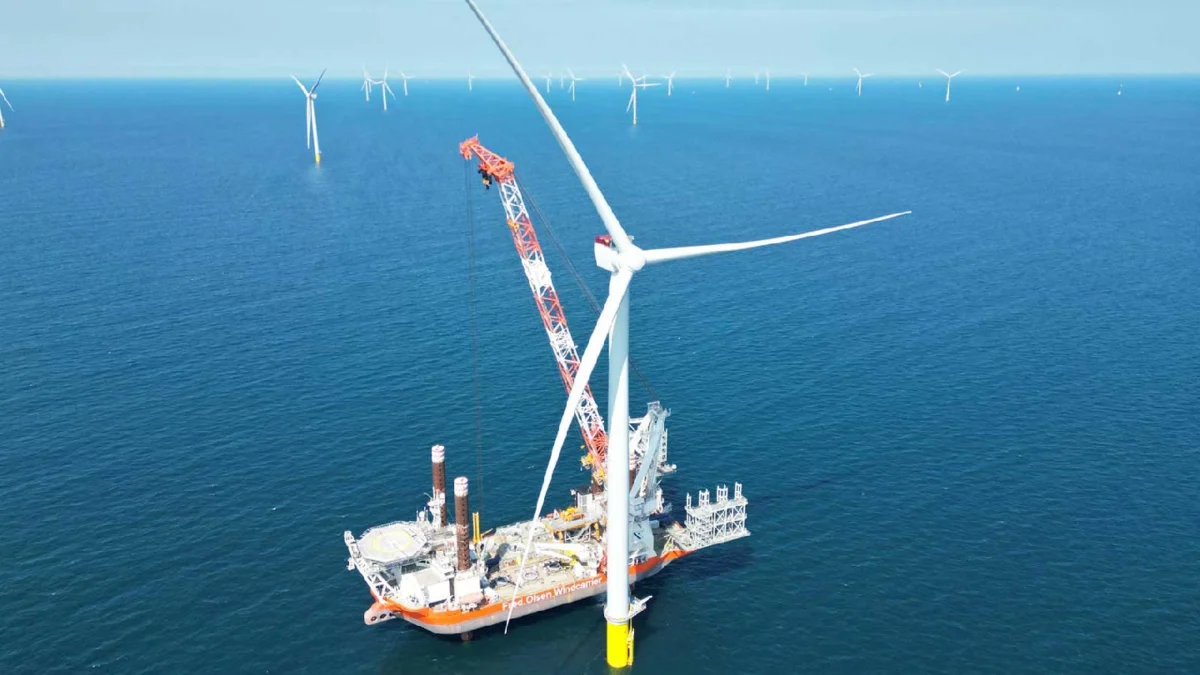
The landscape of the North Sea is shifting. Off the west coast of Jutland, Denmark, a massive industrial feat is currently unfolding as RWE, one of the world’s leading renewable energy developers, reaches a pivotal milestone in the construction of the Thor offshore wind farm. With 36 of its 72 planned turbines now successfully installed, the 1.1-gigawatt (GW) project has officially entered its second half of construction, marking a critical step forward for Denmark’s ambitious transition toward a fossil-free power grid.
The Thor project represents more than just a power generation site; it is a showcase for the next generation of offshore wind technology and sustainable infrastructure. Upon its anticipated full commercial operation in 2027, the wind farm will stand as the largest in Denmark, cementing the nation’s role as a global leader in the offshore wind sector.
Main Facts: The Anatomy of a Giant
The Thor offshore wind farm is an engineering marvel designed to harness the high-velocity winds of the North Sea. The scale of the project is immense, comprising 72 individual Siemens Gamesa turbines, each boasting a capacity of up to 15 megawatts (MW).
Technical Specifications:
- Total Capacity: 1.1 GW.
- Turbine Height: Approximately 148 meters above sea level.
- Rotor Specifications: Each turbine is equipped with 115-meter-long rotor blades, designed to maximize aerodynamic efficiency in the challenging marine environment.
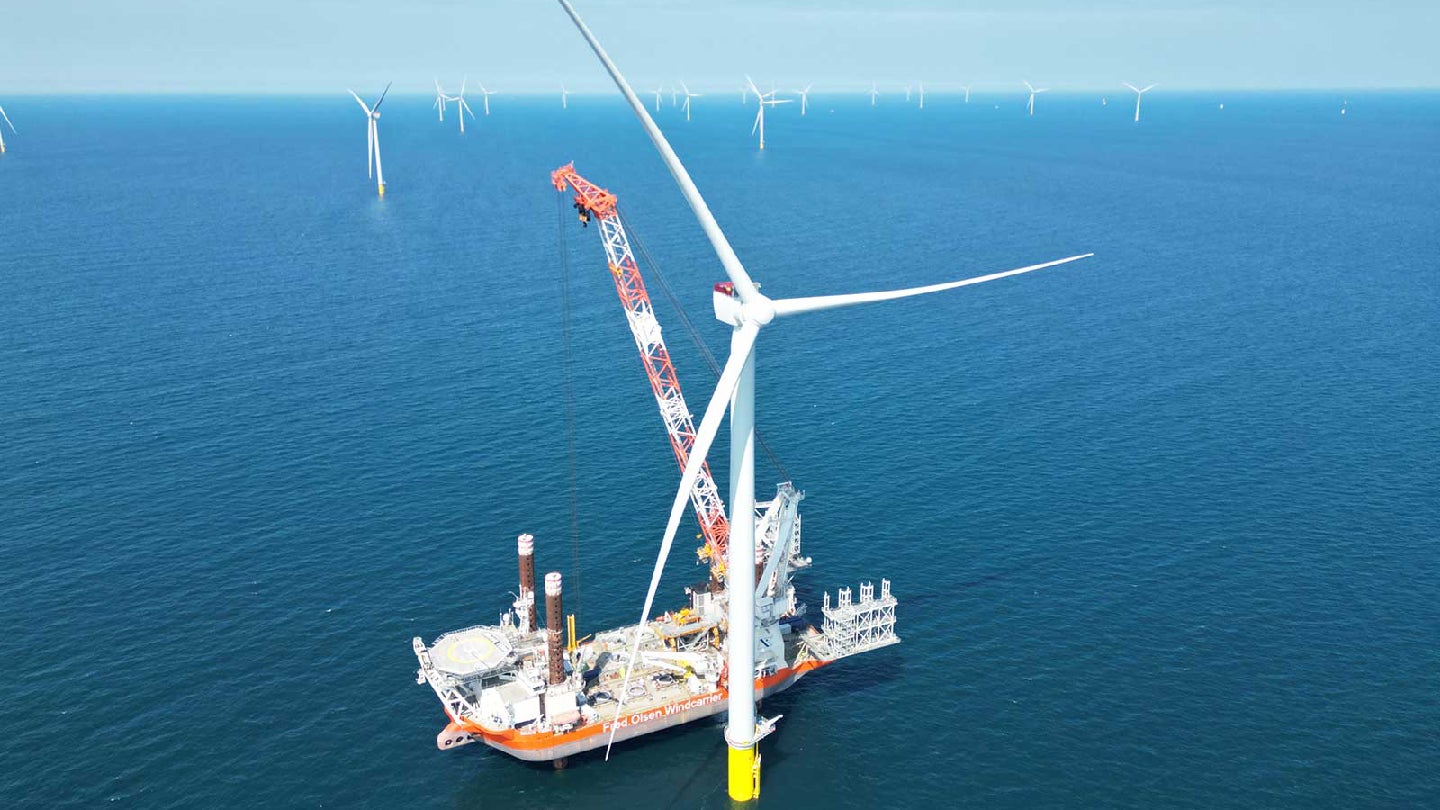
- Installation Logistics: The construction is being spearheaded from the Port of Esbjerg, utilizing the Brave Tern installation vessel, operated by Fred. Olsen Windcarrier. This specialized vessel is essential for navigating the complex logistical demands of lifting and securing the massive turbine components in deep-sea conditions.
The project is structured as a strategic joint venture. RWE maintains a 51% controlling stake and serves as the lead entity responsible for the construction and long-term operation of the site. The remaining 49% stake is held by Norges Bank Investment Management, highlighting the growing interest of institutional investors in large-scale, sustainable infrastructure projects.
Chronology of Development
The path to this halfway milestone has been marked by rigorous planning and precise execution. The timeline of the Thor project underscores the rapid pace of modern offshore infrastructure development.
- Initial Grid Connection (March 2026): Despite the ongoing construction of the remaining turbine arrays, the wind farm achieved a significant operational milestone by beginning to deliver electricity to the Danish grid in early 2026. This allowed the facility to begin contributing to the national energy supply even before full completion.
- Halfway Point (July 2026): RWE officially confirmed that 36 of the 72 turbines have been fully installed and integrated.
- Completion of Installation (End of 2026): RWE anticipates the installation of the final 36 turbines will be finalized by the end of this year.
- Testing and Commissioning (Spring 2027): The final phase involves rigorous testing of all electrical systems and communication arrays. RWE expects all commissioning activities to be finalized by the spring of 2027, at which point the site will move to full commercial operation.
Sustainability at the Core: Beyond Power Generation
While the sheer volume of electricity generated by Thor is impressive—capable of powering more than one million Danish households—the project is equally notable for its commitment to sustainability beyond the electricity it produces.
Carbon-Reduced Steel
In a global first for the offshore wind industry, 36 of the turbine towers at the Thor site are constructed using carbon-reduced steel. Provided by Siemens Gamesa, this initiative reflects a growing trend in the industry to lower the "embedded carbon" of renewable infrastructure. By prioritizing greener manufacturing processes for the steel foundations and towers, RWE is effectively shrinking the carbon footprint of the wind farm’s life cycle.
Recyclable Rotor Blades
Furthermore, the project addresses the long-standing challenge of turbine decommissioning. A total of 40 turbines at the site will feature 120 recyclable rotor blades. As the wind industry faces mounting pressure to manage waste effectively, the deployment of recyclable materials represents a significant technological shift, ensuring that the components of today’s wind farms do not become the environmental liabilities of tomorrow.
Official Responses: Leadership Perspectives
The successful achievement of the 50% milestone has been met with optimism by project leadership. Tobias Keitel, Chief Technology Officer at RWE Offshore Wind, emphasized the collective effort required to maintain the project’s momentum.
"With every turbine we install, we move closer to delivering Denmark’s largest offshore wind farm," Keitel stated. He praised the project team and supply chain partners, noting that their dedication has kept the project firmly on track, even when faced with the volatile weather conditions and logistical hurdles typical of North Sea operations.
"This halfway milestone is the perfect opportunity for me to express my thanks to our project team and supply chain partners. Their commitment and dedication have kept Thor firmly on track, even in challenging situations," Keitel added. He reiterated that the current focus remains on maintaining the construction schedule to ensure the site reaches its full commercial potential by 2027.
Implications: A Catalyst for the Danish Energy Transition
The Thor project is a cornerstone of Denmark’s climate policy. By significantly increasing the country’s offshore wind capacity, Thor helps stabilize energy prices and reduces reliance on imported fossil fuels.
Economic Impact
The proximity to the Port of Esbjerg has acted as a catalyst for local economic development. The mobilization of the Brave Tern and the associated supply chain logistics have sustained hundreds of skilled jobs in the region. The collaboration between RWE and Norges Bank Investment Management also sets a template for how large-scale renewable projects can attract private capital while aligning with national climate goals.
Setting Global Standards
The integration of low-carbon steel and recyclable blades at Thor sends a strong signal to the global market. As countries worldwide ramp up their offshore wind targets, the demand for sustainable procurement will only increase. By implementing these technologies at such a large scale, RWE is effectively "de-risking" these innovations for future projects, proving that sustainable manufacturing is not only possible but commercially viable.
The Grid of the Future
The fact that Thor began delivering power to the grid in March 2026, well ahead of the final completion date, demonstrates a modern "phased" approach to energy delivery. This method allows project developers to recoup investments and provide immediate value to the energy market, rather than waiting for the entire project to be finalized.
Conclusion: The Path to 2027
As 2026 draws to a close, the focus for RWE will shift from the initial installation phase to the complex integration of the remaining infrastructure. The success of the Thor offshore wind farm will ultimately be measured not just by its 1.1 GW output, but by its contribution to a cleaner, more sustainable energy future.
With the installation of the remaining 36 turbines on the horizon, the project remains a beacon of progress in the renewable sector. By the spring of 2027, the North Sea will host one of the most efficient, sustainable, and productive wind energy hubs in the world. As the industry looks toward the next generation of offshore projects, the lessons learned at Thor—from supply chain resilience to material innovation—will undoubtedly serve as a blueprint for the global energy transition.
For Denmark, and for RWE, the completion of the Thor wind farm will mark the dawn of a new era, where the power of the wind is harvested with unprecedented precision, sustainability, and scale.