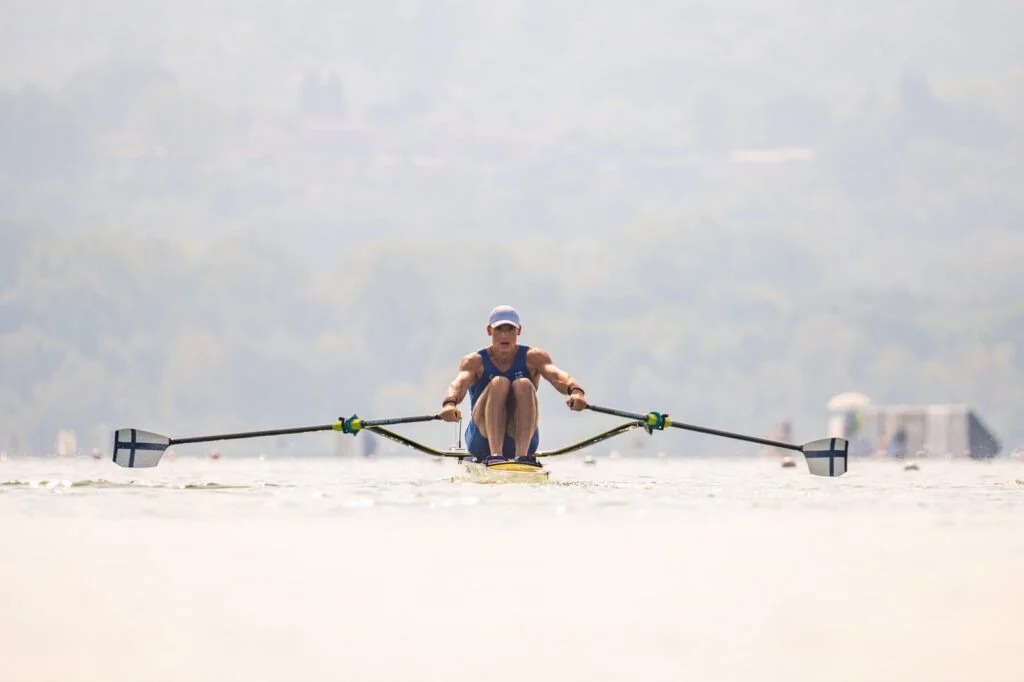
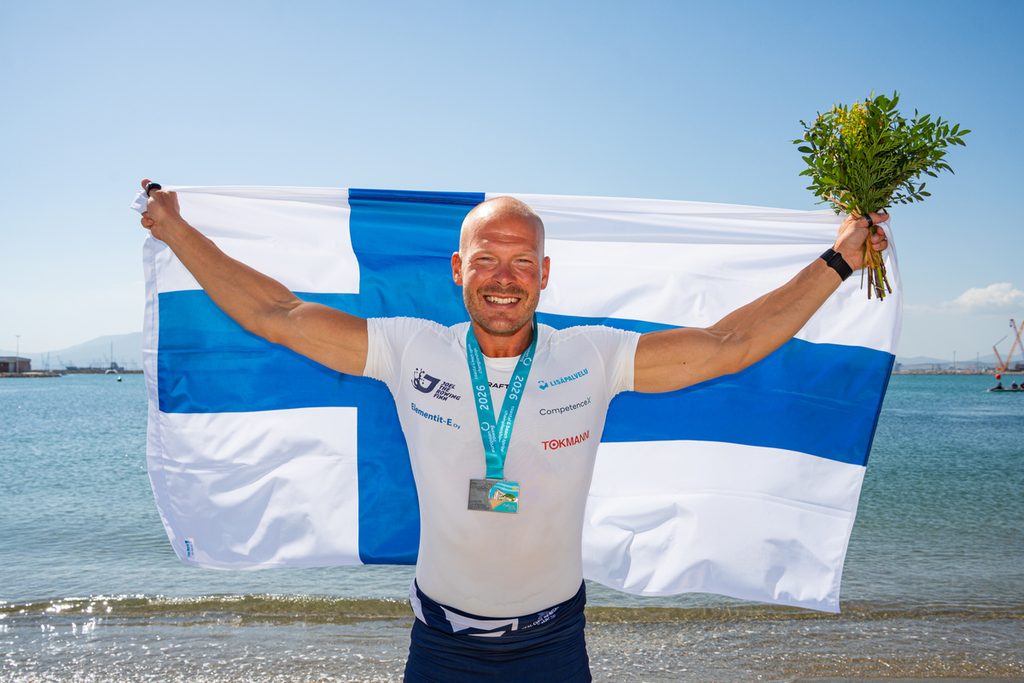
La Línea, Spain – Finnish rowing has achieved an unprecedented milestone at the European Beach Sprint Coastal Rowing Championships in La Línea, Spain. On Thursday, Joel Naukkarinen delivered a historic performance, securing a silver medal in the men’s solo event. This remarkable achievement marks Finland’s first-ever European Championship medal in the burgeoning discipline of beach sprint coastal rowing, propelling the nation onto the continental stage in a sport set to make its Olympic debut.
Naukkarinen’s stellar showing was the highlight of a strong overall performance by the Finnish contingent. Tiia-Maria Rauttola demonstrated impressive prowess by reaching the top eight in the women’s solo category, while the dynamic mixed double crew of Eeva Karppinen and Naukkarinen also fought their way into the quarter-finals, solidifying Finland’s presence among Europe’s elite. The championship, a thrilling showcase of speed, skill, and adaptability in challenging marine conditions, continues to highlight the exciting future of coastal rowing.
A Historic Triumph: Joel Naukkarinen’s Silver
Joel Naukkarinen’s silver medal is more than just a personal triumph; it represents a significant leap forward for Finnish rowing. His performance in La Línea has not only etched his name into the annals of Finnish sporting history but also dramatically elevated the profile of beach sprint coastal rowing within the nation. Coming from a 12th place finish at last year’s European Championships, Naukkarinen’s meteoric rise to the podium underscores a year of intense dedication, strategic training, and exceptional improvement.
The significance of this medal is further amplified by the fact that beach sprint is slated to be included in the Olympic program for the first time at the Los Angeles Games in 2028. This silver medal positions Naukkarinen, and by extension, Finland, as a formidable contender on the road to Olympic glory, offering a tantalizing glimpse of what might be possible in the coming years. His ability to adapt to the unpredictable coastal environment, combine raw power with strategic navigation, and perform under immense pressure has clearly paid dividends.
The Ascent of a Champion: Naukkarinen’s Road to the Final
Naukkarinen’s journey to the European silver medal was a testament to his consistent performance and tactical brilliance throughout the championship. The competition, which began with time trials on Wednesday, saw athletes battle not only their rivals but also the elements.
Chronology of Naukkarinen’s Performance:
- Time Trials (Wednesday): Naukkarinen commenced his campaign by posting the seventh-fastest time in the initial qualification round, clocking in at 2 minutes 31.43 seconds. This solid start positioned him well for the subsequent knockout phases.
- Elimination Round: Moving into the head-to-head knockout races, Naukkarinen shifted into a higher gear. He faced Mihael Girotto of Croatia and delivered a dominant performance, winning with a time of 2:47.44 against Girotto’s 2:49.49. Notably, Naukkarinen’s time in this round was the fastest across all competitors in the elimination phase, signaling his strong form and readiness for the challenges ahead.
- Quarter-Finals (Thursday): The intensity escalated on Thursday as Naukkarinen took on Zygimantas Galisanskis of Lithuania in the quarter-finals. Displaying impressive control and speed, Naukkarinen decisively defeated his opponent with a time of 2:24.34, while Galisanskis finished in 2:33.21. This victory secured his spot in the semi-finals.
- Semi-Finals: In the semi-final clash, Naukkarinen met Fabian Baranski of Poland. Continuing his powerful progression, Naukkarinen left no doubt about his intent, winning comfortably with a time of 2:47.04 compared to Baranski’s 3:05.81. This commanding performance guaranteed his place in the coveted European Championship final.
- The Final: The ultimate showdown saw Naukkarinen pitted against Spain’s Ander Martin, competing on home waters. In a fiercely contested race, Martin claimed the European title with a time of 2:33.34. Naukkarinen, fighting valiantly to the finish, secured the silver medal with a time of 2:43.97, an extraordinary achievement that will resonate throughout Finnish sports.
Supporting Data and Conditions:
It is crucial to note that in beach sprint coastal rowing, the variable nature of the marine environment – including waves, wind, and currents – profoundly impacts race times. Consequently, direct comparisons of times across different heats or rounds can be misleading, as conditions can fluctuate dramatically. Naukkarinen’s consistent ability to win his head-to-head races, often by significant margins and posting competitive times relative to the conditions, truly highlights his mastery of the discipline. His ascent from a seventh-place time trial to a silver medal in the final demonstrates not just speed, but also exceptional strategic acumen and adaptability.
The Dynamic Discipline of Beach Sprint Coastal Rowing
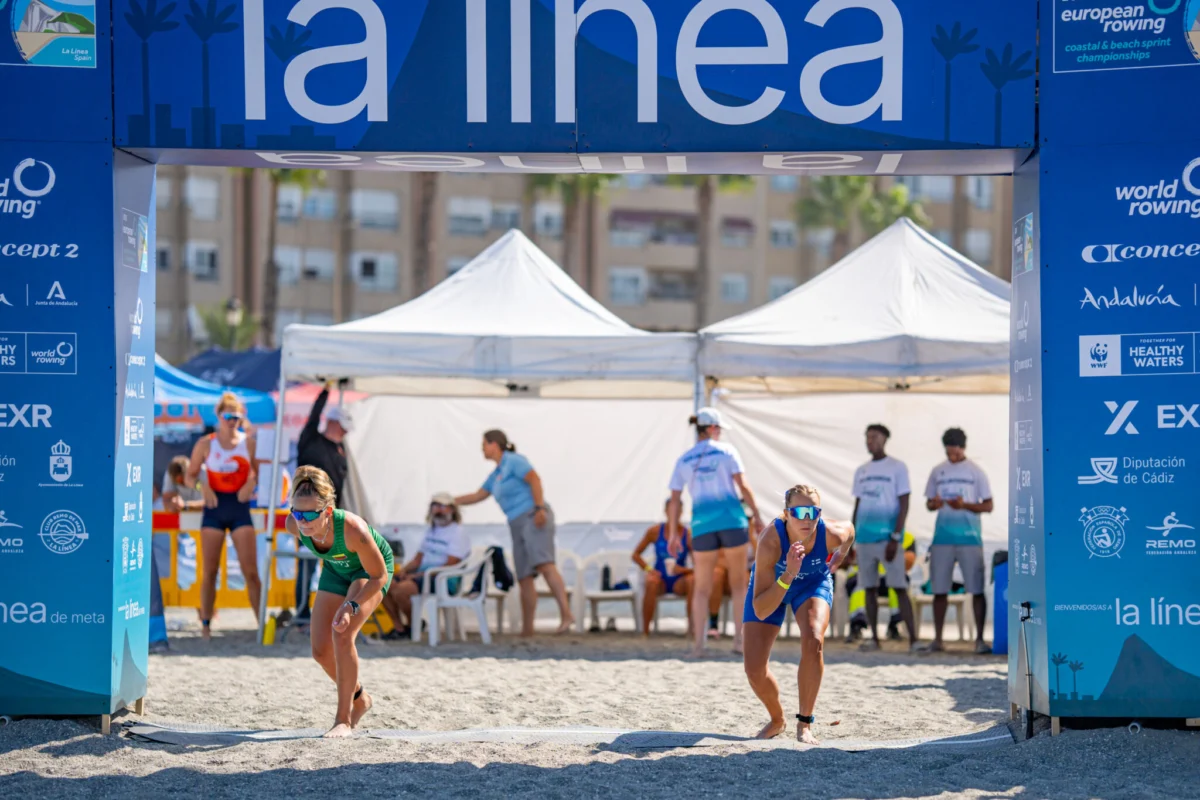
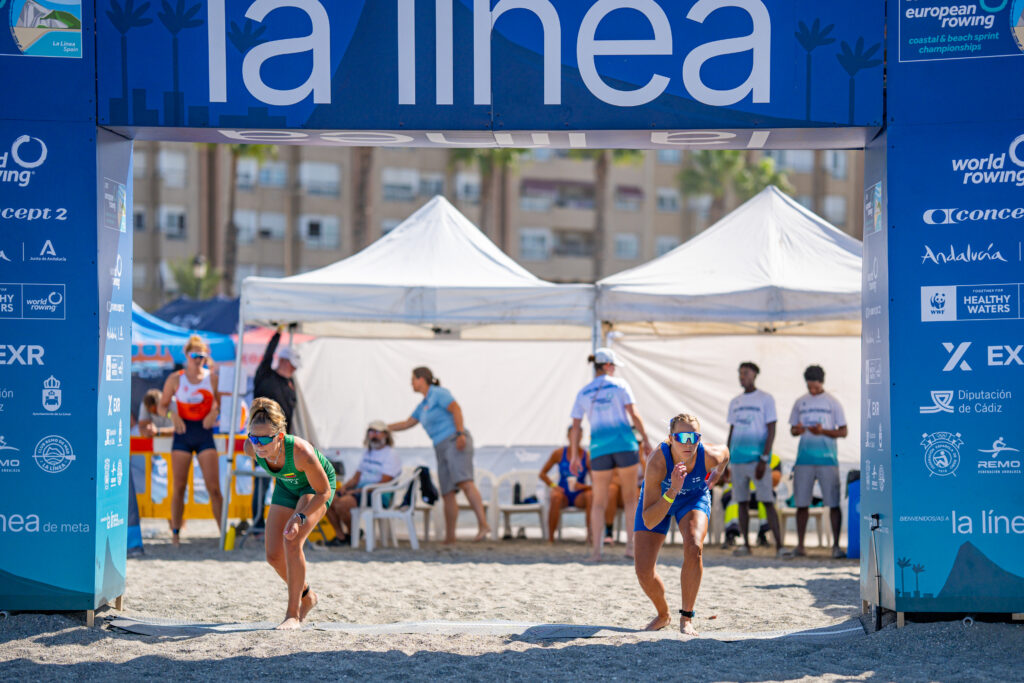
Beach sprint coastal rowing is a relatively new and incredibly exciting format of rowing that is rapidly gaining global traction, culminating in its upcoming Olympic debut in Los Angeles 2028. Unlike traditional flat-water rowing, beach sprint events combine a short sprint on the beach, a row around buoys in the open sea, and a final sprint back up the beach to the finish line. This multi-faceted format demands a unique blend of skills from athletes: the explosive power of a sprinter for the beach run, the technical prowess of a rower for navigating waves and currents, and tactical intelligence for executing turns around buoys.
The races are typically held over a course of approximately 250 meters, beginning with a beach start where athletes run to their boats, launch them into the water, and then row out to sea. After navigating a series of turns around buoys, they return to the shore, exit their boats, and sprint across the sand to the finish line. This dynamic sequence makes for thrilling, spectator-friendly competitions, with results often decided in the final meters of the beach run.
The unpredictable nature of coastal waters – including swell, chop, and crosswinds – adds an element of raw athleticism and adaptability that is less prevalent in calmer, controlled environments. This challenge is precisely what makes the sport so appealing and tests the true versatility of rowers. Naukkarinen’s success in La Línea is a testament to his ability to thrive in these demanding conditions, showcasing the physical and mental fortitude required to excel in this emerging discipline.
Strong Finnish Presence: Rauttola and the Mixed Double Reach Quarter-Finals
Beyond Naukkarinen’s historic silver, the Finnish team demonstrated a broad base of talent, with other crews also making significant inroads into the latter stages of the competition. These performances underscore a growing strength in Finnish coastal rowing and suggest a promising future for the sport in the country.
Tiia-Maria Rauttola in Women’s Solo:
Tiia-Maria Rauttola showcased her competitive spirit and skill in the women’s solo event, successfully navigating her way into the top eight. Her progression through the early rounds highlighted her ability to perform under pressure and adapt to the demanding coastal conditions. In the quarter-finals, Rauttola faced a strong opponent in Raminta Morkunaite of Lithuania. Despite a determined effort, Morkunaite emerged victorious, winning the head-to-head race with a time of 2:44.70 against Rauttola’s 2:54.48. While her championship journey concluded at this stage, reaching the quarter-finals in a highly competitive European field is a commendable achievement and a strong indicator of her potential.
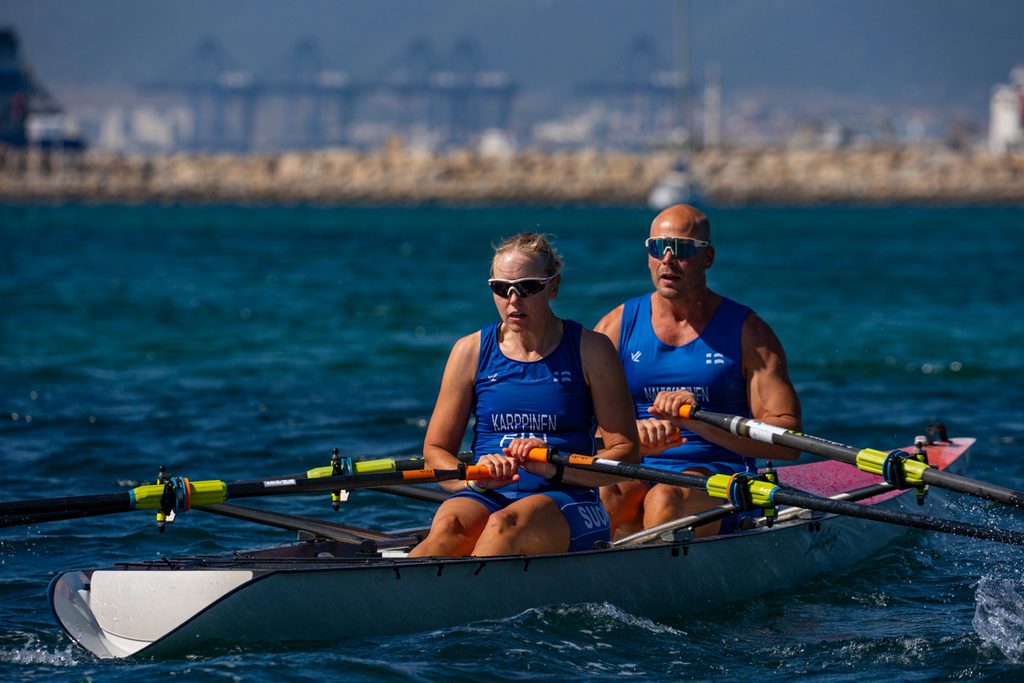
Karppinen and Naukkarinen in Mixed Double:
The mixed double crew featuring Eeva Karppinen and the silver medalist Joel Naukkarinen also made a significant impact, advancing into the top eight. Their synergy and combined experience proved effective in the challenging format. Their path to the quarter-finals involved a thrilling showdown in the elimination round on Thursday morning. The Finnish pair faced Federica Cesari and Federico Ceccarino of Italy in a tight contest. Karppinen and Naukkarinen displayed excellent teamwork and resilience, securing a narrow but decisive victory with a time of 2:17.79 against the Italians’ 2:18.27. This hard-fought win propelled them into the quarter-finals.
In the quarter-final race, the Finnish duo encountered Martyna Kazlauskaite and Dominykas Jancionis of Lithuania. The Lithuanian pair proved to be too strong on the day, winning with a time of 2:18.61 against Karppinen and Naukkarinen’s 2:20.61. Although their competition ended in the quarter-finals, reaching the top eight in the mixed double event further highlights the depth of Finnish talent and the versatility of Joel Naukkarinen, who competed across multiple categories with outstanding results.
Junior Development: Laying the Foundation for Future Success
The European Championships in La Línea also served as an important platform for Finland’s emerging talent, with junior athletes participating across three boat classes. This focus on junior development is crucial for building a sustainable future for Finnish rowing, particularly as beach sprint coastal rowing gains Olympic status.
- Kasper Salmi (Boys’ Solo): In the boys’ solo event, Kasper Salmi gained valuable international experience. He finished 19th in the first time trial and improved his standing to 10th in the second time trial.
- Saaga Hakala (Girls’ Solo): Saaga Hakala represented Finland in the girls’ solo category, demonstrating her potential in the demanding conditions. She placed 17th in her first time trial and climbed to 11th in her second time trial.
- Salmi and Hakala (Junior Mixed Double): Salmi and Hakala also teamed up for the junior mixed double event. They finished 18th in their first time trial and showed improvement in the second, securing an 11th place.
While the junior crews did not advance beyond the time trial phase, their participation at this level of competition is invaluable. It provides them with crucial exposure to international racing standards, challenging coastal conditions, and the unique format of beach sprint. These experiences are fundamental for their long-term development and for fostering the next generation of Finnish coastal rowers who may one day follow in Joel Naukkarinen’s footsteps. Their performances, even in the early stages, represent a vital investment in the future of Finnish aquatic sports.
Official Responses and National Pride
While direct official statements from the Finnish Rowing Federation were not immediately available, the significance of Joel Naukkarinen’s silver medal cannot be overstated. This achievement is undoubtedly a source of immense pride for the federation and the entire Finnish sports community. It serves as a powerful validation of the efforts invested in developing coastal rowing, a discipline that has been steadily growing in interest.
The medal is expected to generate significant positive attention and potentially new opportunities for the sport in Finland. Such success often translates into increased visibility, enhanced funding prospects, and a surge in participation at grassroots levels. For a sport like beach sprint coastal rowing, which is relatively new and requires specialized equipment and training environments, this kind of international recognition is invaluable. It positions Finland as a serious contender on the world stage and can inspire a new generation of athletes to take up the oars. The performance of Rauttola and the Karppinen/Naukkarinen mixed double further reinforces the depth of talent and the effectiveness of the national team’s development programs.
Implications for Finnish Rowing and Beyond
Joel Naukkarinen’s European silver medal carries profound implications for Finnish rowing, both domestically and internationally.
- Boost for National Morale and Profile: This historic medal will undoubtedly boost the morale within the Finnish rowing community and significantly raise the sport’s profile across the country. It provides a tangible example of success that can inspire young athletes and attract new enthusiasts to rowing.
- Path to LA 2028 Olympics: With beach sprint coastal rowing making its Olympic debut in Los Angeles 2028, Naukkarinen’s performance firmly establishes him as a leading contender and Finland as a nation to watch. This early success provides a strong foundation for Olympic qualification campaigns and will likely focus resources and strategic planning towards maximizing Finland’s chances in four years. The experience gained at these European Championships, especially in dealing with variable coastal conditions, will be invaluable in preparing for future major events.
- Increased Investment and Development: The success could lead to increased investment in coastal rowing infrastructure, coaching, and athlete support programs. The Finnish Rowing Federation now has a compelling case to attract sponsors and public funding, fostering further development from junior levels right through to elite performance.
- International Recognition: Finland, a nation more traditionally known for winter sports or endurance disciplines, is now making its mark in a dynamic summer water sport. This medal enhances Finland’s reputation in international sporting circles and demonstrates the country’s versatility in athletic pursuits.
- Athlete Development: For Naukkarinen himself, this silver medal is a career-defining moment. It validates his dedication and talent, and will undoubtedly fuel his ambition for future international success, including a potential Olympic medal. For Rauttola and Karppinen, their top-eight finishes are critical steps in their own development, showing they can compete at the highest European level.
Looking Ahead: From Sprints to Endurance
The excitement in La Línea is far from over. Following the conclusion of the high-octane beach sprint events, the European Coastal Rowing Championships will transition to the endurance races. These longer-distance events, which also take place on the open sea, test athletes’ stamina, strategic navigation, and ability to maintain power over extended periods in challenging conditions.
The championship is set to conclude on Sunday, September 20th, with more opportunities for Finnish rowers to demonstrate their capabilities in the endurance format. The success in the beach sprints has undoubtedly set a high bar and provided a wave of momentum for the remainder of the competition. The entire Finnish team will be looking to build on this historic performance and continue to make their presence felt on the waters of La Línea.
Images: Balint Czucz