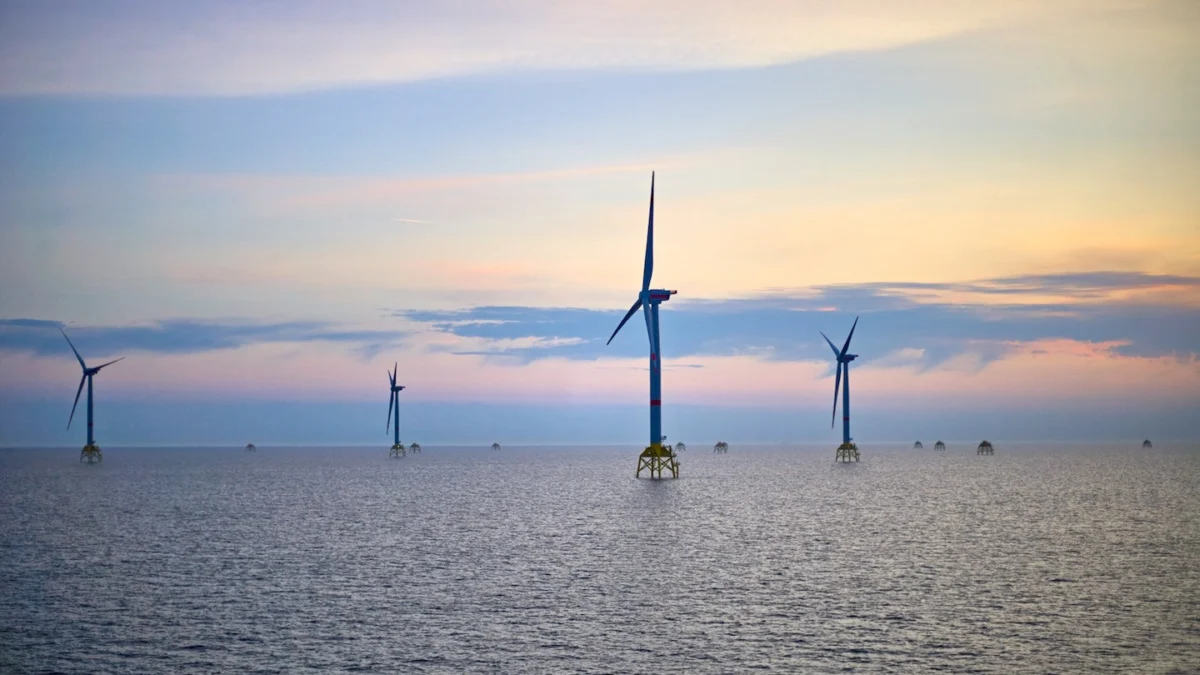
The European energy landscape is currently undergoing its most significant transformation since the Industrial Revolution. At the heart of this shift lies the rapid expansion of offshore wind, a cornerstone technology designed to decarbonize the continent’s electricity supply while securing long-term energy sovereignty. As European nations move away from volatile fossil fuel markets, offshore wind has emerged not merely as a climate-mitigation tool, but as a strategic pillar of industrial policy.
However, the path to achieving the ambitious targets set by the European Union and individual member states is fraught with complex regulatory, logistical, and technical hurdles. This article explores the current state of Europe’s offshore wind sector, the policy frameworks guiding its growth, and the structural challenges that lie ahead.
I. Main Facts: The Blueprint for a Net-Zero Continent
The European Union has set a formidable target: to reach climate neutrality by 2050, with a mid-term goal of reducing greenhouse gas emissions by at least 55% by 2030. To reach these objectives, offshore wind capacity must scale exponentially.
Current projections suggest that Europe needs to install roughly 30 GW of new wind capacity annually throughout the 2020s to stay on track. This represents a massive acceleration compared to previous years. The primary drivers of this growth include:
- Decarbonization Mandates: The "Fit for 55" legislative package requires a massive expansion of renewable energy sources, with offshore wind providing the base-load reliability needed to complement solar and onshore wind.
- Energy Security: The geopolitical instability following the invasion of Ukraine underscored the dangers of relying on imported natural gas. Offshore wind provides a domestic, price-stable energy source that is immune to foreign supply shocks.
- Technological Maturity: The transition from fixed-bottom turbines to floating offshore wind technology is unlocking deeper waters in the Atlantic and the Mediterranean, effectively expanding the total addressable surface area for energy generation.
II. Chronology: The Evolution of Offshore Policy
The history of offshore wind in Europe is a story of moving from experimental prototypes to utility-scale power plants that form the backbone of the grid.
- 1991: Denmark installs the world’s first offshore wind farm, Vindeby. Though small by modern standards, it proved the technical feasibility of wind generation in marine environments.
- 2010s: The era of "industrialization." Costs began to plummet as the sector benefited from economies of scale. The UK, Germany, and Denmark emerged as global leaders in turbine size and project capacity.
- 2020: The European Commission publishes its "Offshore Renewable Energy Strategy," proposing to increase Europe’s offshore wind capacity from its 2020 level of 12 GW to at least 60 GW by 2030 and 300 GW by 2050.
- 2022: The Ostend Declaration. Nine North Sea countries commit to transforming the North Sea into a "green power plant," aiming for 120 GW of offshore wind by 2030 and 300 GW by 2050.
- 2023-2024: Focus shifts to grid integration and supply chain resilience. Policymakers recognize that building turbines is only half the battle; building the transmission infrastructure to bring that power to shore is the primary bottleneck.
III. Supporting Data: The Scale of the Challenge
To understand the magnitude of this transition, one must look at the data. As of early 2024, the European offshore wind fleet totals approximately 33 GW. To reach the 2050 targets, the sector must grow by nearly tenfold.

- Investment Flows: Annual investments in offshore wind have seen record highs, reaching over €30 billion in 2023 alone. However, inflation and rising interest rates have threatened the profitability of several high-profile projects, leading to project cancellations and contract renegotiations.
- Turbine Capacity: Modern turbines have grown significantly. A decade ago, a 3 MW turbine was standard. Today, 15 MW turbines are being deployed, with 18 MW models on the horizon. This size increase reduces the number of foundations required, lowering costs per megawatt.
- Transmission Requirements: The European Network of Transmission System Operators for Electricity (ENTSO-E) estimates that grid infrastructure investments must exceed €500 billion by 2030 to accommodate the surge in renewable inputs.
IV. Official Responses and Regulatory Frameworks
The European Commission has responded to the slow permitting processes—long considered the "silent killer" of wind projects—by introducing the Net-Zero Industry Act (NZIA). This legislation aims to streamline the permitting process, mandating that competent authorities process permit applications for renewable energy projects within strict, shortened timelines.
Furthermore, national governments are shifting away from purely price-based auctions. In the past, the "lowest price" bidder won the rights to build wind farms. This led to a "race to the bottom" that squeezed the profit margins of supply chain companies. New auction designs now incorporate "non-price criteria," such as sustainability, biodiversity protection, and supply chain security, rewarding companies that offer long-term value rather than just the cheapest initial bid.
V. Implications: Navigating the Future
The implications of this transition are profound, touching upon economic, environmental, and social spheres.
The Industrial Conundrum
Europe currently holds a global lead in offshore wind technology, but it faces stiff competition from China and the United States. To maintain its competitive edge, the EU must nurture a domestic supply chain that is resilient to raw material shortages, particularly for rare earth elements required in turbine magnets.
The Grid Integration Challenge
The greatest technical threat to the offshore wind rollout is grid congestion. Offshore wind farms are often located far from the industrial centers that need the power. The construction of "Energy Islands" and high-voltage direct current (HVDC) subsea cables is essential. Without these, the continent risks "curtailment"—the forced turning off of turbines because the grid cannot handle the surge in electricity, wasting valuable clean energy.
Biodiversity and Marine Spatial Planning
The rapid expansion of offshore wind is not without ecological concerns. Marine spatial planning must balance energy production with the protection of marine ecosystems, fishing grounds, and shipping lanes. The development of nature-inclusive designs, such as artificial reefs integrated into turbine foundations, is becoming a standard requirement for developers.

Conclusion: A Turning Point
Europe’s offshore wind sector is at a pivotal junction. The political will is stronger than ever, supported by clear targets and legislative mandates like the Green Deal. However, the industry must now transition from the phase of ambition to the phase of execution.
Success will depend on three key factors:
- Supply Chain Stability: Ensuring manufacturers can operate profitably despite global inflationary pressures.
- Infrastructure Investment: Accelerating the deployment of cross-border grid connections.
- Collaborative Governance: Strengthening cooperation between North Sea, Baltic, and Mediterranean nations to standardize technology and regulatory frameworks.
As the continent continues to navigate the complexities of the energy transition, offshore wind stands as the most viable path toward a reliable, decarbonized, and sovereign power system. The challenges are immense, but the consequences of inaction—both for the climate and for the European economy—are far greater. The coming decade will determine whether Europe successfully secures its status as the global hub for offshore wind innovation or if it falls behind in the race to define the energy technologies of the 21st century.
For more in-depth analysis on the European energy sector, including detailed quarterly forecasts and expert commentary on policy shifts, register for a free Power Technology profile today. Gain exclusive access to analyst insights that track the pulse of the global renewable energy market.