As the global energy transition accelerates, the intermittency of wind and solar power has transformed from a technical curiosity into a critical hurdle. While electrochemical batteries—primarily lithium-ion—have dominated the short-duration storage market, they face inherent limitations: rapid degradation, thermal runaway risks, supply chain bottlenecks, and a limited ability to discharge energy over long periods.
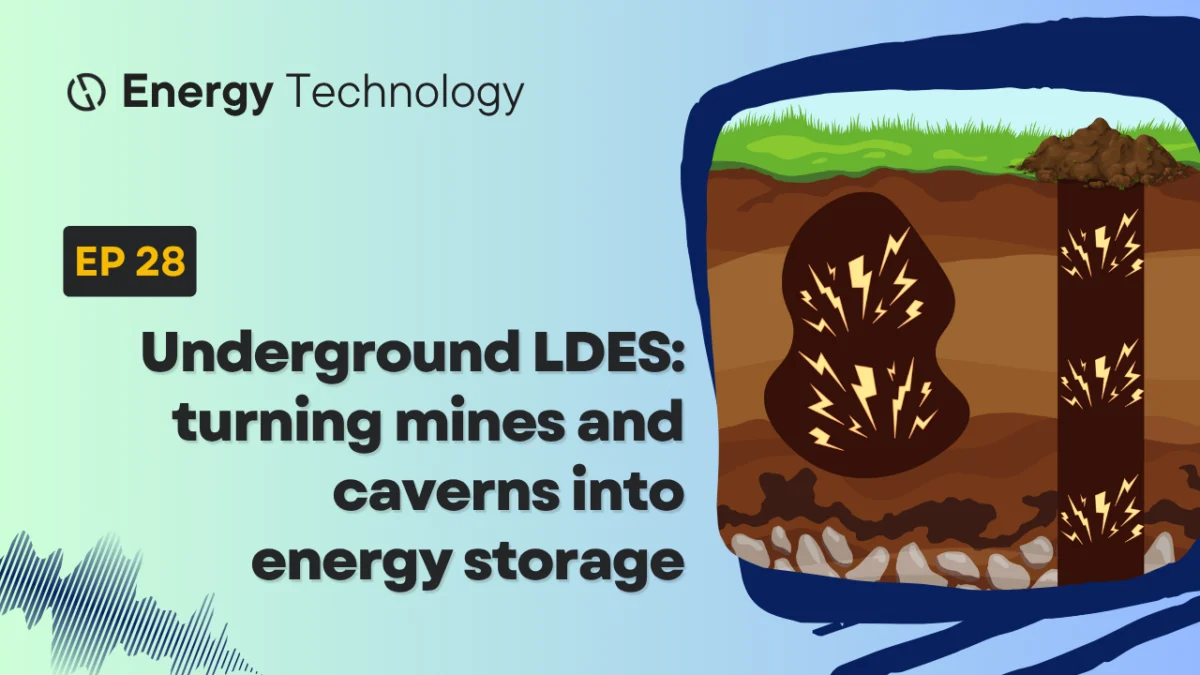
To bridge the gap between variable generation and reliable baseload supply, the industry is increasingly looking toward Long-Duration Energy Storage (LDES). However, one size does not fit all. Developers are now pivoting to the subterranean, leveraging natural geological formations and repurposed industrial infrastructure to store massive quantities of energy. Among the most promising solutions currently under scrutiny are Compressed Air Energy Storage (CAES) and Underground Gravity Energy Storage (UGES).
The Core Mechanisms: How CAES and UGES Function
At their simplest, CAES and UGES operate on fundamental principles of physics, utilizing the earth’s crust as a vast, natural battery.
Compressed Air Energy Storage (CAES)
CAES is a sophisticated thermal-mechanical process. As Edward Barbour, associate professor of energy systems and storage at the University of Birmingham, explains, the technology functions by combining air and heat. "You essentially combine these two things when energy is required to generate hot, pressurized air, which is then expanded through a turbine to generate electricity," he notes.
While the concept is theoretically sound, efficiency remains a challenge. Storelectric CEO Tallat Azad acknowledges that while the company targets a round-trip efficiency of approximately 62%, its current operational plants hover around 42%. "The actual energy that is usable on the other end in the grid would be less than that [in the cavern] by virtue of what the efficiency of the plant is," Azad clarifies.
Underground Gravity Energy Storage (UGES)
UGES takes a radically different, mechanical approach. Instead of gas, it relies on gravitational potential energy. "UGES moves weights up and down," says Barbour. "You are storing gravitational potential energy when the weight is at the top, and then you are releasing that via a motor as the weight is lowered."
The efficacy of this method is governed by the basic equation of potential energy: Energy = Mass × Gravity × Height. Mark Swinnerton, founder and CEO of Green Gravity, emphasizes that mine shafts are the ideal theater for this technology. "Our technology is serviced by having a lot of mass and a lot of height," he says, noting that the depth and existing vertical infrastructure of decommissioned mines make them perfect candidates for this application.
Chronology of Development: From Concept to Reality
The journey toward underground storage has been one of slow, methodical engineering.
- Pre-2020: The concept of using salt caverns for energy storage existed in niche industrial circles, primarily for gas storage, but the economic necessity for LDES was not yet acute.
- 2023: A milestone year for the sector, marked by Green Gravity commissioning its first pilot plant. This move signaled a shift from theoretical modeling to real-world deployment, proving that gravity-based systems could indeed be integrated into existing mining infrastructure.
- 2024–2025: Industry attention shifted to the United Kingdom, where industrial hubs with legacy infrastructure—such as Teesside—became targets for major investment.
- 2026 (Present): Storelectric concludes a grueling three-year due diligence process for a 550-acre site in Teesside. This period represents the transition of LDES from a "boutique" solution to a serious contender for national grid stability.
Assessing the Economics: Salt Caverns vs. Disused Mines
Economic viability is the final arbiter of any energy technology. According to Barbour, the "best" technology is entirely dependent on the local geography.
The Case for Salt Caverns (CAES)
Salt caverns are prized for their geological stability. According to Barbour, when salt deposits are located at an ideal depth of around 500 meters, CAES becomes highly economical, potentially reaching costs below £5 ($6.75) per kilowatt-hour (kWh).
Azad highlights the longevity factor: "Once you have actually produced a salt cavern, there are a certain amount of ten-year maintenance checks that you have to make, but they will last for decades, if not hundreds of years." Salt also provides a "self-sealing" mechanism, which is superior to hard-rock mines where leakage risks are a perennial concern for compressed air.
The Case for Mine Shafts (UGES)
For UGES, the economic driver is the repurposing of existing "brownfield" assets. With nearly two million closed mines globally, the infrastructure is already in place. "The first reason to repurpose mines for energy storage is to repurpose mines for their land, their assets, and their position," says Swinnerton. Like salt caverns, these shafts provide infrastructure that can last for decades, minimizing the capital expenditure required for site development.
Scaling Potential and Energy Density
The scalability of these technologies is perhaps their most compelling attribute for national grids.
UGES Capacity
The capacity of a gravity-based system is a function of the mass utilized and the depth of the shaft. Swinnerton notes that hundreds of thousands of medium-sized mine shafts can provide 20 to 50 megawatt-hours (MWh) of storage. Larger shafts, which are abundant, offer 150MWh to 350MWh. "Given that many mines can have ten shafts at a single location, we are talking about gigawatt-hour (GWh) storage potentials," Swinnerton asserts.
CAES Capacity
CAES scales with the volume of the cavern. Storelectric’s Teesside site features caverns averaging 60,000 cubic meters, which equates to roughly 250MWh of capacity—enough to power 70,000 to 80,000 homes for an hour. However, developers must subtract turbine efficiency losses from these figures to understand the actual net energy delivered to the grid.
Implications: The Broader Landscape
The rise of underground LDES is not merely an alternative to batteries; it is a fundamental shift in how nations manage energy security. As the grid integrates more intermittent renewables, the "low-hanging fruit" of energy transition is changing.
Professor Barbour points to hydrogen storage in salt caverns as a leading future technology, noting that it could play a pivotal role in the decarbonization of heavy industry. Furthermore, he identifies heat storage as a massive, under-utilized opportunity. "Storing heat is of major interest because we can generally do it for relatively long times quite cheaply, and it makes sense where the energy is required as heat later on anyway," Barbour explains.
Challenges Ahead
Despite the optimism, significant hurdles remain. These include:
- Regulatory Hurdles: Permitting for underground development is complex, involving environmental assessments, geological surveys, and liability management for repurposed sites.
- Techno-Economic Risk: As seen with CAES, achieving high round-trip efficiency is a massive engineering challenge that requires ongoing R&D.
- Market Structure: Current electricity markets are often designed for fast-acting batteries (frequency response), not the multi-hour or multi-day discharge that LDES offers. Policy reform is required to reward the long-duration stability that these underground systems provide.
Conclusion
The transition to a net-zero future requires more than just solar panels and wind turbines; it requires a robust, subterranean backbone. Whether it is the self-sealing nature of salt caverns storing pressurized air or the massive, repurposed depth of a gold or coal mine lifting weights to generate power, the "underground" is becoming the new frontier of energy innovation. As pilot projects move toward commercial scale, the industry is proving that sometimes, the most advanced solutions for our future are found deep in the history of our industrial past.