Main Facts: The Critical Necessity of Immediate Decontamination
In the high-stakes environment of inland oil spill response, the speed and efficacy of personnel and equipment decontamination (decon) are not merely procedural formalities—they are the primary defense against long-term environmental degradation and health crises. Recent industry analysis confirms that while containment and recovery strategies often receive the lion’s share of resources, the "decon" phase is frequently the most overlooked and poorly managed component of an early-phase spill response.
When a spill occurs in fast-moving water, the volatility of the situation often leads responders to prioritize rapid containment. However, failing to establish rigorous, clearly communicated work zones—Exclusion (Hot), Contamination Reduction (Warm), and Support (Cold)—leads to the "creeping contamination" of clean areas. To mitigate this, incident commanders must mandate the creation of detailed site maps that precisely define these zones in relation to site topography and fluid dynamics. Proactivity and assertiveness are the watchwords; if a responder is not acting under the assumption that they are contaminated, they are already failing the safety protocol.
Chronology: The Phases of an Effective Decon Operation
The sequence of decontamination is a rigid, non-negotiable timeline. The following chronology outlines the standard operating procedure for responders operating in potentially hazardous zones:
- Phase I: Site Assessment and Zoning (Hour 0–2): Upon arrival, the Incident Commander must identify the flow rate, the nature of the hydrocarbon, and the prevailing winds. A site map is drafted, and physical signage or perimeter tape is deployed to demarcate the Hot, Warm, and Cold zones.
- Phase II: The Decon Corridor Setup (Hour 2–4): Before any boots hit the water, the decontamination corridor must be fully operational. This includes the setup of wash basins, waste containment, and, if necessary, secondary containment berms to prevent runoff.
- Phase III: Active Response and Personnel Cycling (Ongoing): As teams rotate in and out of the Exclusion Zone, they must pass through the Contamination Reduction Zone (CRZ). Any deviation from this path constitutes a breach of safety protocol.
- Phase IV: Equipment and Vehicle Finalization (Post-Operation): Following the conclusion of the daily work cycle, all mechanical assets must undergo standardized cleaning processes, ranging from high-pressure water rinses to steam cleaning, depending on the severity of the fouling.
Supporting Data: The Logistics of Protective Measures
The efficacy of decontamination is directly linked to the level of Personal Protective Equipment (PPE) deployed. Responders utilizing Modified Level D (typically for low-level exposure) or Level C (which includes respiratory protection for toxic vapors) are subject to a three-tier decontamination sequence.
The Three-Station Standard
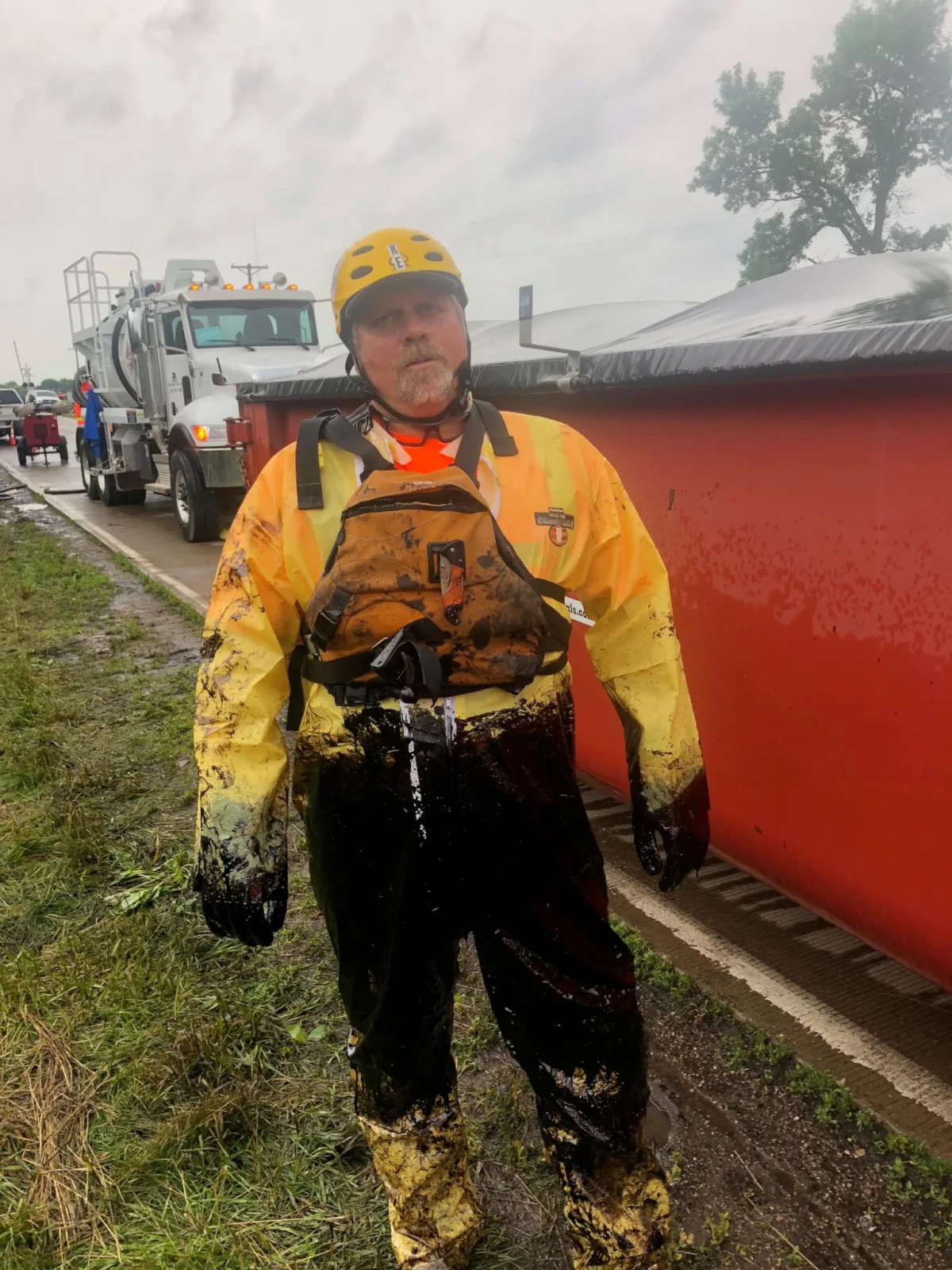
- Station 1 (Gross Removal): This is the first point of contact upon leaving the Hot Zone. Responders must remove visible, bulk contamination from their outer clothing and boots. This is often achieved through physical scraping or high-volume, low-pressure water rinsing.
- Station 2 (Outer Layer Removal): Personnel discard outer garments and gloves into specialized, labeled hazardous waste containers. Hard hats and boots are then scrubbed with an aqueous solution of industrial detergent or an equivalent specialized cleaner. These items are then transported manually to the next station to prevent the spread of residue.
- Station 3 (Final CRZ Wash): This station serves as the final gateway to the Cold Zone. Personnel must perform a thorough wash of the hands and face. If respirators were utilized, they are sanitized at this stage and immediately sealed in clean, sterile plastic bags to ensure they remain uncontaminated for future use.
Official Responses and Best Practices
Regulatory bodies and industry experts emphasize that "disposable" must be the standard for external protective clothing whenever possible. When responders use single-use materials, the potential for cross-contamination is significantly reduced.
However, in scenarios where reusable protective gear is essential, the protocol shifts to on-site management. The rinsate—the liquid runoff generated during the cleaning process—must be collected in its entirety. Discharging contaminated water back into the environment, even if filtered, is a violation of the Clean Water Act and similar international statutes. Consequently, all decon sites must be equipped with collection sumps or vacuum-truck access to ensure that the "cradle-to-grave" containment of hazardous materials is maintained.

Vehicle and Equipment Management
Vehicles that have entered the Exclusion Zone must be treated as extensions of the contaminated site. The decontamination pad is the mandatory checkpoint for any vehicle leaving the zone.
- Low Contamination: If the vehicle has only traversed the periphery, the response is often limited to a rigorous washing of the tires and wheel wells to prevent the tracking of petroleum products into the Support Zone.
- High Contamination: For vehicles that have been in direct contact with the spill source, pressure washing or steam cleaning is required. This ensures that hidden nooks, such as undercarriages and suspension components, are free of hazardous oil residue.
Implications: The Long-Term Impact of Decon Failures
The implications of a failed or "incomplete" decontamination process are severe. From a legal standpoint, companies face immense liability if they are found to have transported contaminants beyond the spill site. From an environmental perspective, the failure to contain the spill within the designated zones leads to the contamination of previously unaffected soil and groundwater, drastically increasing the cleanup footprint.
Furthermore, the health of the responder is the most critical implication. Chronic exposure to even low levels of aromatic hydrocarbons—often found in crude oil—can lead to severe dermatological and respiratory issues. By strictly adhering to the established decon protocol, incident commanders protect their most valuable asset: the workforce.
As the industry evolves, technology is beginning to offer new, more efficient ways to decontaminate, such as biodegradable, oil-encapsulating agents that break down hydrocarbons on contact. Yet, even with the most advanced chemistry, the human element—the discipline to map the zones, the diligence to maintain the stations, and the proactivity to demand decontamination—remains the backbone of a successful inland oil spill response.
The standard is clear: Treat every responder as if they are the vector for the next spill. When this mindset is adopted, the "overlooked" phase of decontamination becomes the most reliable safety net in the field.
Disclaimer: This article is for informational purposes only. All spill responses should be conducted in accordance with local, state, and federal regulations and under the guidance of qualified Safety Officers.