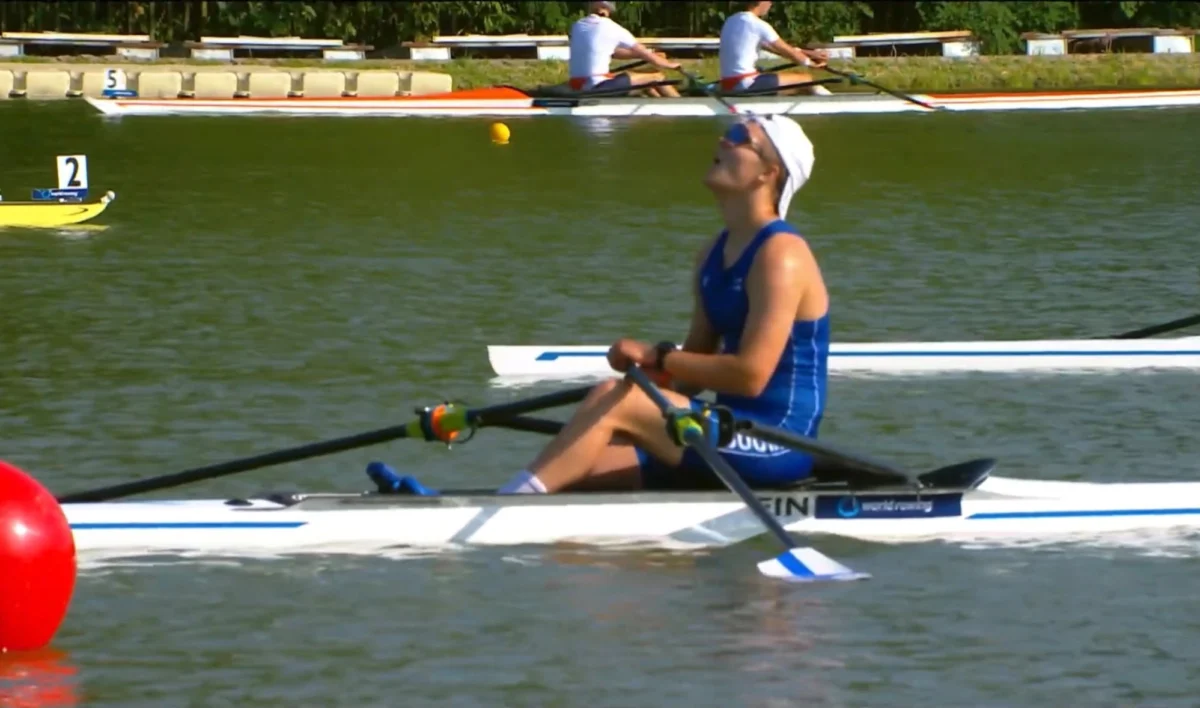
Plovdiv, Bulgaria – August 9, 2026 – Amidst the intense heat and fierce competition of the World Rowing Under 19 Championships in Plovdiv, Bulgaria, Finnish talent William Åhman showcased remarkable resilience and determination, securing an impressive 21st place overall in the highly competitive boys’ single scull event. The championship, which ran from August 6th to 9th, brought together the brightest young stars of international rowing, with Åhman’s performance marking a significant milestone in his nascent career and for Finnish junior rowing.
Åhman’s journey through the regatta was a testament to his tenacity, navigating through challenging heats and quarterfinals to ultimately compete in the D-final, where he finished a strong third. His achievement, characterized by a new personal best time under gruelling conditions, underscores the dedication required to excel at the highest level of junior sport. The event, widely recognized as the pinnacle of youth rowing, serves as a crucial proving ground for future Olympic hopefuls and a vibrant celebration of global athletic prowess.
The Grueling Path in Plovdiv: A Chronology of Åhman’s Campaign
The World Rowing Under 19 Championships are an annual spectacle, drawing the best young rowing talent from across the globe. For four days, the tranquil waters of the Maritsa River in Plovdiv transform into a crucible of ambition and athleticism, as rowers aged 18 and under vie for international honours. This year’s edition, held from August 6th to 9th, saw Plovdiv once again affirm its reputation as a world-class rowing venue, offering superb facilities for the hundreds of athletes, coaches, and spectators who descended upon the Bulgarian city.
Setting the Stage: The World’s Elite Junior Regatta
The boys’ single scull (JM1x) is often considered one of the most demanding events in rowing, requiring an unparalleled combination of strength, endurance, technical precision, and mental fortitude. Each rower must propel their slender boat over a 2000-meter course, relying solely on their individual power and skill. The field at the U19 World Championships is consistently packed with future Olympians, making every heat and every stroke a battle for survival against the world’s finest junior scullers. William Åhman, representing Finland, arrived in Plovdiv with the weight of national expectation and his own personal aspirations for success on this elite stage.
Navigating the Heats: A Strong Start
Åhman commenced his championship campaign on Thursday, August 6th, in the initial heats. In rowing, heats serve as the first filtering stage, where athletes compete to secure direct qualification to the next round, typically the quarterfinals or semifinals, thereby avoiding the demanding repechage rounds. Åhman demonstrated his readiness from the outset, executing a well-paced and technically sound race that saw him progress directly from his heat into the quarterfinals. This early success was crucial, conserving energy and building confidence for the challenging rounds ahead. Advancing directly signified his ability to perform under pressure and positioned him favourably against a field of formidable competitors. His initial performance was a testament to the rigorous training and strategic preparation undertaken in the lead-up to the championships.
Quarterfinal Challenges and the Road to D-Final
The quarterfinals presented an even sterner test, pitting Åhman against a higher calibre of opponents, each equally determined to advance. In these high-stakes races, every fraction of a second counts, and the margins between victory and elimination are incredibly fine. While Åhman fought valiantly, pushing his physical and mental limits, the intensity of the competition meant that his path ultimately led to the D-final. In the complex progression system of world rowing championships, athletes who do not qualify for the A, B, or C finals are placed into lower-tier finals (D, E, F, etc.) to determine their final overall ranking. Reaching the D-final in such a competitive field still places an athlete firmly within the top echelled group globally, a significant achievement for any junior rower. It meant Åhman was ranked between 19th and 24th heading into his final race, a testament to his sustained performance throughout the demanding qualification rounds.
D-Final Showdown: A Battle for Position
The D-final, held on Sunday, August 9th, was Åhman’s final opportunity to leave his mark on the championships. Despite not competing for a medal, the race was anything but a consolation. Athletes in these finals are still intensely competitive, battling for every position and aiming to finish their regatta on a high note. Åhman approached the race with a clear objective: to secure a strong finish and demonstrate his full potential. In a tightly contested race, he delivered a powerful performance, crossing the finish line in third place within the D-final. This result placed him 21st overall in the boys’ single scull, a commendable ranking among the world’s top junior scullers. More significantly, his final race also saw him achieve a new personal best time, a clear indicator of his growth and peak performance under the immense pressure of a world championship event. This personal record was a profound affirmation of his effort and progress, proving that he could deliver his fastest performance when it mattered most.
Unpacking the Numbers and Conditions: Supporting Data from a Global Stage
The World Rowing Under 19 Championships are not merely a collection of races; they are a grand spectacle of international youth sport, bringing together diverse cultures and athletic aspirations. The statistics surrounding the event underscore its global reach and the unparalleled level of competition it offers.
A Global Gathering of Young Talent
This year’s championships were particularly expansive, featuring a total of 660 athletes representing an impressive 55 nations. This vast participation highlights the widespread appeal and growing popularity of rowing as a global sport, particularly at the junior level. From established rowing powerhouses to emerging nations, the championships provide a platform for young athletes to test their mettle against peers from every corner of the world. Such a large and diverse field ensures that every race is a truly international contest, reflecting the best of what junior rowing has to offer. The sheer number of participants also speaks to the logistical complexity and organizational excellence required to host an event of this magnitude, all of which Plovdiv managed commendably.
The Toughest Test for Junior Rowers
The World Rowing Under 19 Championships hold a unique position in the international rowing calendar. They are universally acknowledged as the highest-level competition for junior rowers. Unlike other age-group events or regional championships, the U19 Worlds attract the absolute elite of the youth rowing circuit, making it the ultimate proving ground for aspiring senior international athletes. The intensity of training, the depth of talent, and the pressure of representing one’s nation converge at this event, creating an atmosphere of unparalleled competition. Success here is a strong indicator of future potential and a significant stepping stone towards senior national teams and potentially, Olympic glory. For many, it is their first true taste of world-class competition, providing invaluable experience that shapes their athletic trajectory for years to come.
Battling the Elements: Plovdiv’s Searing Heat
Beyond the human element of competition, the athletes in Plovdiv also had to contend with formidable environmental challenges. The championships were held under a relentless sun, with temperatures soaring to a scorching 35 degrees Celsius (95 degrees Fahrenheit). Such extreme heat places immense physiological stress on rowers, who are already pushing their bodies to the absolute limit. Dehydration becomes a constant threat, impacting performance, recovery, and overall well-being. Race strategies must be adapted to conserve energy, and meticulous attention to hydration and cooling protocols becomes paramount. The mental fortitude required to maintain focus and execute a race plan under these conditions is as crucial as physical strength. Åhman’s ability to not only compete but also achieve a personal best in this sweltering environment speaks volumes about his physical conditioning, mental toughness, and the effectiveness of his support team in managing the heat’s impact.
The Maritsa River: A Venue Steeped in Rowing History
Plovdiv, Bulgaria, is no stranger to hosting major international rowing events. Its dedicated rowing course on the Maritsa River has a rich history as a premier venue, having previously welcomed multiple World Championships and World Cups. The facilities are modern and well-maintained, providing ideal conditions for fair racing and athlete support. The city’s experience in managing such large-scale events ensures smooth operations, from athlete accommodation and transportation to spectator services. The familiarity of the venue to the international rowing community adds an extra layer of prestige and professionalism to the championships, reinforcing their status as a top-tier event.
Athlete’s Voice and National Perspectives: Official Responses
A crucial aspect of any major sporting event is the immediate feedback from the athletes themselves, offering a direct window into their experiences and emotions. William Åhman’s reflections after his performance provided valuable insights into his journey at the U19 World Championships.
Åhman’s Reflection: Satisfaction Amidst Fierce Competition
Speaking in a statement, Åhman expressed his overall satisfaction with the event and his own performance, despite not achieving his ultimate goal of a D-final victory. "The facilities here are great, and the arrangements are excellent," Åhman commented, highlighting the high standards of the host city. This acknowledgment speaks to the professionalism of the organizers and the positive environment provided for the young athletes, allowing them to focus solely on their competition.
Regarding his racing, Åhman was particularly pleased with his initial progression. "I was satisfied with my heat placement and advancing to the next stage," he stated, underscoring the importance of a strong start in a multi-stage competition. His initial success in securing a direct spot in the quarterfinals undoubtedly boosted his confidence and set a positive tone for his subsequent races.
When it came to the D-final, Åhman admitted to having higher aspirations for that specific race. "Of course, I aimed for a win in my own final," he confessed, revealing his competitive spirit and desire for victory even in a lower-tier final. This mindset is characteristic of elite athletes who strive for excellence in every outing. However, despite the D-final win eluding him, Åhman expressed a profound sense of accomplishment: "It didn’t materialize, but I’m still satisfied that I gave everything I had on the course and set a new personal best." This statement is perhaps the most significant. Achieving a personal best at a World Championship, under immense pressure and challenging conditions, is a clear victory in itself. It signifies that he peaked at the right moment, extracting the absolute maximum from his training and talent. This ability to deliver a top performance when it counts most is a hallmark of truly exceptional athletes and provides a strong foundation for future development.
The Broader View: What This Means for Finnish Rowing
While direct comments from the Finnish Rowing Federation beyond the athlete’s own statement were not immediately available, the implications of such a performance are clear for national sports development. For a country like Finland, which has a proud but often underdog status in international rowing compared to larger nations, every strong performance at a global level is a significant boost.
Åhman’s 21st-place finish, coupled with his personal best, sends a positive message through the Finnish rowing community. It validates the efforts of coaches, clubs, and the national federation in identifying and nurturing young talent. It demonstrates that Finnish junior rowers can compete effectively on the world stage, even if a medal remains a formidable challenge. Such results are crucial for inspiring younger athletes, showing them that international success is an achievable goal with dedication and hard work. They also provide valuable data for the national team’s development programs, indicating areas of strength and potential growth. The experience gained by Åhman in Plovdiv, competing against the best in the world, is an invaluable asset that will inform his future training and competitive strategies, ultimately benefiting the entire Finnish rowing ecosystem as he progresses through the ranks. The Finnish Rowing Federation would undoubtedly view this performance as a promising indicator for the future, reaffirming their investment in youth development and their strategic pathways for athletes aspiring to reach the senior international level.
Implications for the Future: William Åhman and Finnish Rowing on the Rise
William Åhman’s performance at the World Rowing Under 19 Championships is more than just a statistic; it carries significant implications for his individual career trajectory and the broader landscape of Finnish rowing. Such experiences at the junior level are foundational, shaping athletes not just physically but also mentally and strategically.
A Stepping Stone to Senior Success
For William Åhman, this 21st-place finish and personal best represent a crucial stepping stone. Competing at the U19 World Championships provides invaluable experience in managing the pressures of international travel, high-stakes competition, and adapting to different environments. The exposure to world-class competitors, training methodologies, and race strategies is unparalleled. This experience will serve him well as he transitions into the Under 23 and then senior categories. Many of today’s Olympic champions honed their skills and gained their first taste of international success at these very championships. Åhman’s ability to deliver a personal best under championship pressure suggests a strong competitive temperament, a quality essential for sustained success in elite sport. His journey from here will likely involve continued technical refinement, increased physiological development, and strategic planning aimed at bridging the gap to the very top echelon of senior international rowing. The confidence gained from knowing he can perform at his peak on a global stage is an intangible but powerful asset for his future.
Bolstering Finland’s Rowing Profile
Åhman’s achievement also has positive implications for Finnish rowing as a whole. In sports where a nation may not consistently feature on the podium, strong individual performances, even outside of medal contention, are vital for maintaining momentum and profile. They demonstrate that Finland continues to produce talented athletes capable of competing at the highest levels. This can attract more young people to the sport, increasing participation numbers at the grassroots level, which is essential for long-term development. Furthermore, international results like Åhman’s help to secure funding and support for national rowing programs, as they provide tangible evidence of success and potential. His story can inspire future generations of Finnish rowers, showing them that dedication and perseverance can lead to competing against the best in the world. It contributes to a narrative of progress and potential for Finnish rowing on the international stage.
The Enduring Value of International Youth Competitions
Beyond individual and national implications, the World Rowing Under 19 Championships underscore the enduring value of international youth competitions. These events are critical for talent identification, allowing national federations to scout and nurture athletes with future Olympic potential. They also foster sportsmanship, cultural exchange, and global camaraderie among young people, building bridges across nations through the universal language of sport. The shared experience of intense competition, the joy of personal achievement, and the lessons learned from setbacks contribute significantly to the holistic development of young athletes, preparing them not just for sporting careers but for life itself. The friendships forged and the lessons learned on the Maritsa River in Plovdiv will resonate with these young rowers long after the last medal is awarded.
Conclusion: A Promising Horizon
William Åhman’s 21st-place finish at the World Rowing Under 19 Championships in Plovdiv stands as a testament to his dedication, skill, and unwavering spirit. His ability to advance through the rounds, deliver a strong performance in the D-final, and achieve a personal best under challenging conditions marks a significant achievement. This performance not only highlights Åhman’s individual potential as a rising star in international rowing but also provides a valuable boost for Finnish junior rowing, inspiring future generations and reinforcing the nation’s presence on the global stage. As the sun sets on the Plovdiv regatta, the horizon for William Åhman and Finnish rowing appears brighter than ever, promising continued growth and exciting prospects in the years to come.
Further details, race videos, and complete results are available on the World Rowing website via this link: https://worldrowing.com/event/2026-world-rowing-under-19-championships?tab=information
(Images: Anton Westerlund)