In the relentless pursuit of excellence, the worlds of elite athletics and corporate leadership often find themselves speaking different languages. Yet, at their core, both sectors are obsessed with the same fundamental question: how can we improve, evolve, and deliver superior results?
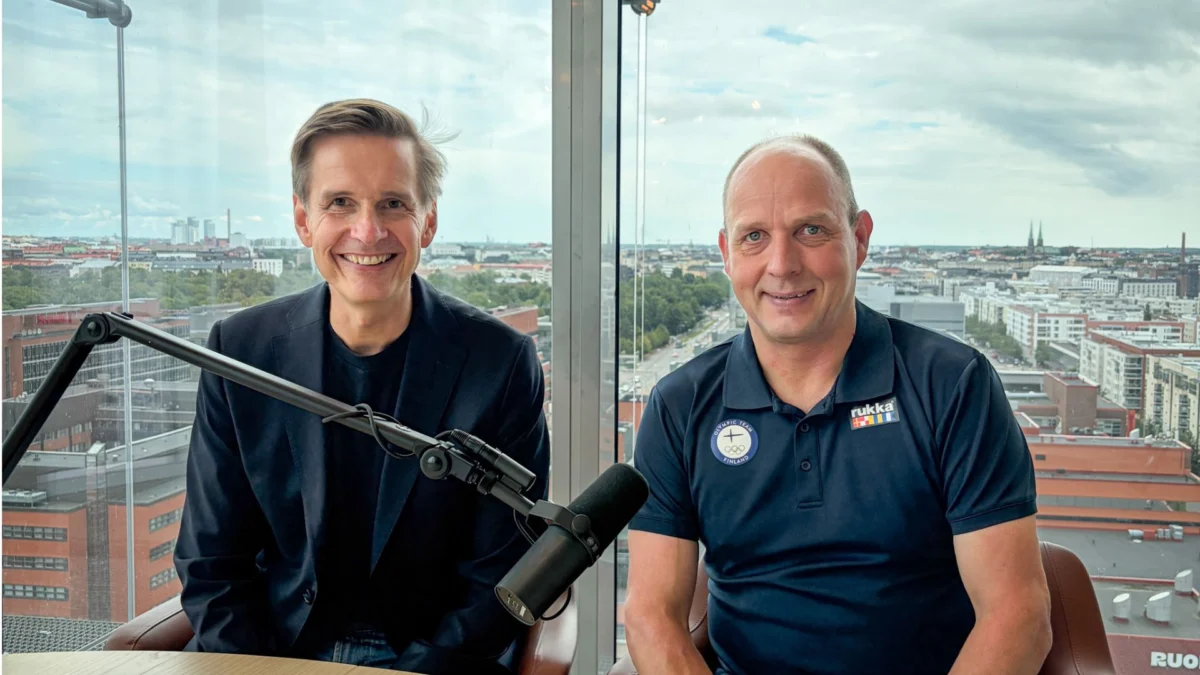
In the latest episode of the Better is Possible podcast, host Sami Laine sits down with Janne Hänninen, the High-Performance Director at the Finnish Olympic Committee. Their conversation transcends the boundaries of the stadium, offering a masterclass in leadership, motivation, and the cultural shifts necessary to foster growth in an increasingly competitive global landscape.
The Gap Between Dreams and Strategic Goals
A critical takeaway from the discussion is the frequent misidentification of "dreams" as "goals." Hänninen, whose own career as a world-class athlete provides the foundation for his leadership philosophy, argues that this distinction is vital for any organization.
"A dream is a vision of the future, but a goal is a commitment to the work required to get there," Hänninen explains. "When an athlete is twenty years old, an Olympic gold medal is a dream, not a concrete, actionable goal. The actual goal is the daily, grinding, and deliberate work that happens in the training facility."
This perspective aligns with findings from a significant 2026 report published by Deloitte and Demos Helsinki. The study, which surveyed 20 international executives managing Finnish companies, highlighted a recurring set of "growth brakes" that often stifle progress in the corporate world:
- Insufficient Ambition: Setting targets that are too conservative.
- Risk Aversion: A cultural preference for safety over potential breakthrough results.
- The Consensus Trap: Valuing harmony and comfort over the healthy friction of constructive challenge.
- Efficiency Over Innovation: Prioritizing the optimization of existing processes at the expense of necessary, disruptive change.
Hänninen suggests that, just as in sports, the "growth brake" is often a lack of clarity regarding the difference between a high-level aspiration and the granular, daily metrics that lead to success.
Chronology of Excellence: Building a Culture of Performance
The evolution of Finnish sports management, as led by Hänninen, has been a journey toward more collaborative and data-driven methodologies.
- Early Career: Hänninen’s transition from athlete to administrator was defined by the realization that individual talent is insufficient without a structural support system.
- Systemic Integration: Under his leadership, the Olympic Committee has moved away from top-down directives. Instead, they have adopted a model where the best idea—regardless of its source—is the one that takes precedence.
- The 2026 Pivot: With the recent publication of the Deloitte/Demos Helsinki report, Hänninen has been instrumental in bridging the gap between sports strategy and business consultancy, aiming to apply the rigorous "post-performance analysis" of sports to corporate boardroom strategy.
Supporting Data: The 70-20-10 Model of Competence
One of the most compelling insights Hänninen shares relates to the Norwegian model of elite sports development. Unlike the often-siloed nature of Finnish sports federations, Norway has centralized its expertise in high-performance centers, utilizing the "70-20-10" development framework:
- 70% Work-Based Learning: Real-time problem solving in the field.
- 20% Mentoring: Knowledge transfer through direct, interpersonal relationships.
- 10% Formal Education: Classroom or seminar-based instruction.
Hänninen notes that Finnish organizations often over-index on the 10% (seminars and theoretical training) while under-investing in the 20% (mentoring) and 70% (on-the-job innovation). "Innovation doesn’t happen in a conference room," Hänninen asserts. "It happens when you force experts to collide in the day-to-day grind."
Official Responses and Strategic Shifts
Hänninen is acutely aware of the criticism regarding the "siloed" nature of Finnish professional organizations. He emphasizes that the era of the "all-knowing director" is dead.
"I actively resist the idea that I, as the High-Performance Director, must dictate every strategic line," Hänninen states. "Our strategies are born through a network of collaborators. When you dictate from the top, you kill ownership. When you build from the bottom up, you create a culture of accountability."
This shift in leadership style is increasingly being adopted by forward-thinking companies that realize their middle managers and frontline workers often possess the most valuable insights into where the "growth brakes" truly lie.
Implications for Corporate Leadership
The dialogue between Laine and Hänninen serves as a roadmap for businesses looking to transition from a culture of maintenance to one of high performance. The implications are clear:
1. The Necessity of Radical Honesty
In sports, if a training method isn’t working, the data shows it immediately. There is no room for ego. Hänninen argues that corporate cultures must adopt this same level of "brutal honesty." If a project is failing, or if a strategy is outdated, it must be addressed without destroying the professional relationship. This requires a culture where dissent is not only permitted but encouraged.
2. Risk as a Strategic Asset
"He who trains the most doesn’t always win; he who trains the smartest wins," says Hänninen. This is the definition of risk-taking. It involves experimenting with new methodologies, failing, analyzing the data, and adjusting. For a corporation, this means creating a "psychological safety net" where employees feel empowered to take calculated risks without fear of retribution if the outcome is sub-optimal.
3. Measuring the "Invisible" Factors
Hänninen emphasizes that results (such as winning a medal) are simply the outcome of thousands of smaller, measurable inputs. Organizations often obsess over the end result (quarterly revenue) while ignoring the inputs (employee morale, cross-departmental collaboration, or the speed of decision-making). By measuring the factors behind the success, leaders can predict and influence the outcome more reliably.
Conclusion: The Path Forward
The synthesis of elite sports management and corporate strategy is not merely a theoretical exercise; it is a necessity for a nation looking to punch above its weight class. By breaking down silos, embracing the 70-20-10 model of learning, and fostering an environment where constructive disagreement is the engine of innovation, organizations can move past the growth brakes identified by the 2026 Deloitte report.
As Janne Hänninen reminds us, the goal is not to be perfect; the goal is to be better tomorrow than we were today. By focusing on the daily, disciplined execution of strategy, both athletes and business leaders can turn their dreams into reality. The question is no longer whether high-performance sports can inform the business world, but whether businesses are brave enough to adopt the rigorous, honest, and collaborative mindset required to compete at the highest level.