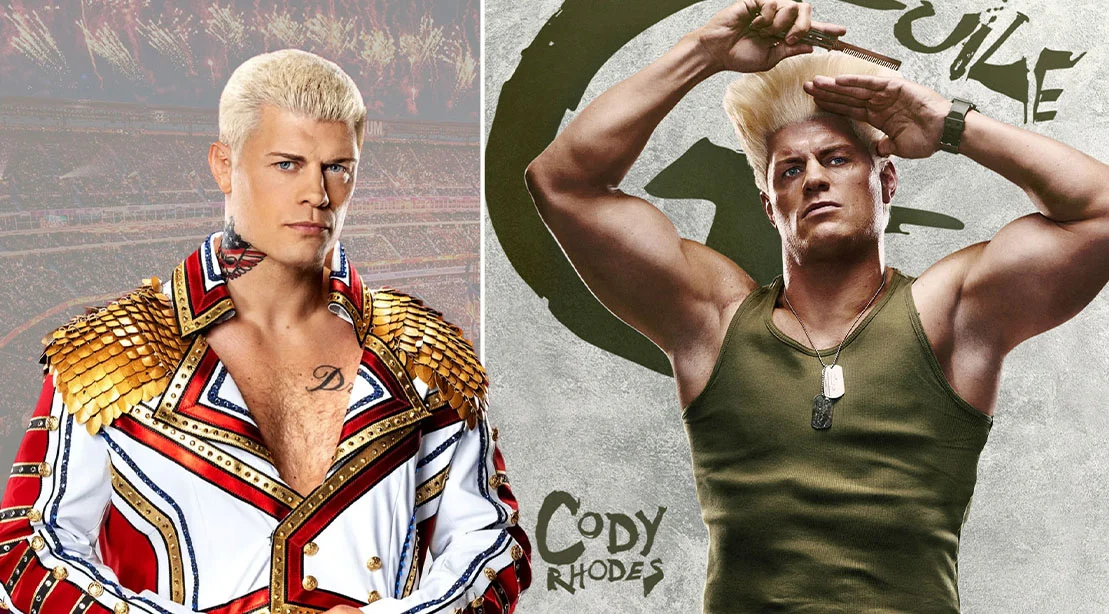
The convergence of professional wrestling and high-stakes cinema has reached a new zenith. Cody Rhodes, the reigning face of modern WWE and a generational talent in the ring, is set to transition from the wrestling mat to the silver screen in the highly anticipated 2026 reboot of Street Fighter. Stepping into the combat boots of Guile—the iconic, flat-topped U.S. Air Force pilot—Rhodes is not merely acting; he is applying the specialized discipline of professional wrestling to breathe new, authentic life into one of gaming’s most recognizable figures.
Main Facts: A Fighter’s New Frontier
As production ramps up for the Street Fighter feature film, slated for a global theatrical release on October 16, 2026, the inclusion of Cody Rhodes has become a central talking point. For fans of the Capcom classic, Guile is more than just a character; he is a symbol of disciplined strength and stoic resolve.
Rhodes, known to millions as "The American Nightmare," has publicly disclosed that his preparation for the role goes far beyond mere physical training. He has consulted with active-duty Air Force personnel to ensure that the subtle nuances of military bearing—posture, tactical awareness, and even the symbolic significance of dog tags—are represented with dignity. By bridging the gap between the theatricality of wrestling and the grounded realism required for a blockbuster action film, Rhodes aims to satisfy both the casual moviegoer and the hardcore gaming purist.
A Lifetime in the Making: The Chronology of a Gamer
For Rhodes, this role is the culmination of a lifelong affinity for the Street Fighter franchise. During a recent promotional Q&A, the wrestler reflected on his formative years, citing Street Fighter II on the Nintendo console as a staple of his childhood.
"I loved me some Street Fighter II," Rhodes remarked with a nostalgic grin. "And I was shockingly better at it as a child than I am as a full-grown adult male."
This evolution—from a wide-eyed kid button-mashing on a controller to a world-renowned athlete embodying the very avatar he once navigated—forms the backbone of his performance. His journey reflects a larger cultural shift where video game adaptations are no longer relegated to niche audiences but are treated with the prestige and budget of major studio tentpoles. Rhodes noted that he didn’t view the transition as a pivot, but rather as an extension of his career. "I jumped right from my day job as a pro wrestler into my new day job being Guile," he stated, emphasizing that he felt a duty to honor the legacy of the source material.
The Physicality of Performance: Supporting Data
While acting and wrestling are distinct crafts, the intersection of the two has provided Rhodes with a unique competitive advantage on set. Modern action films rely heavily on "wire work" and complex stunt choreography, areas where professional wrestlers possess a natural aptitude.
"Being a wrestler and coming to do Street Fighter informs the character, but probably in different ways than people think," Rhodes explained. "I can get on the wire, and I can actually pull this Flash Kick off, and I can land. You can throw a punch… there were those components that being a wrestler helped with: the fights and this wonderful stunt team coming together."
However, the physical prowess is only half the battle. Rhodes highlights that the true challenge—and the area where wrestling training proved most vital—is the concept of "presence." In the WWE, a performer must command a room the moment they step through the curtain. This non-verbal communication, the "heads turning" factor, is exactly what Guile requires. By translating his wrestling charisma into cinematic gravitas, Rhodes is crafting a version of Guile that feels as dangerous as he does authoritative.
Official Responses and Collaborative Synergy
The production of the Street Fighter reboot has been noted for its eclectic and high-wattage cast, which includes hip-hop mogul Curtis "50 Cent" Jackson and comedian Andrew Schulz. This blend of backgrounds could have led to a disjointed production, but Rhodes reports that the opposite occurred.
"I don’t think I’ve ever felt such an instant synergy with a group of people who I barely know," Rhodes said. He attributes this to the fact that his co-stars are "leaders in their own industry." When you assemble individuals who have mastered the art of holding an audience—whether through a microphone, a comedy stage, or a wrestling ring—the result is a unique creative alchemy. Rhodes believes the production team has successfully "captured lightning in a bottle," suggesting that the chemistry between these disparate performers will be a highlight of the final cut.
Implications: The Future of Video Game Adaptations
The casting of a wrestling superstar in a leading role of a major franchise film carries significant implications for the industry. Historically, video game movies suffered from a "curse" of poor writing and questionable casting choices. Recent successes, however, have shown that audiences demand fidelity to the source material combined with high-level production values.
The Professionalization of Stunt Work
Rhodes’ involvement suggests a trend toward hiring athletes who can perform their own stunts safely and effectively. This reduces the reliance on heavy CGI and gives the action scenes a visceral, tangible quality that audiences can feel. If the Street Fighter reboot succeeds, it may set a new industry standard: the "Action-Athlete" hybrid.
The Crossover Appeal
From a marketing perspective, the synergy between WWE’s global audience and the massive Street Fighter fanbase is a strategic masterstroke. WWE fans are inherently accustomed to following complex, serialized narratives, and bringing that audience into theaters for a franchise like Street Fighter provides a built-in box office floor.
The Evolution of Character Portrayal
Finally, Rhodes’ approach proves that "playing a character" is not merely about reciting lines; it is about character study. By interviewing military personnel and focusing on the small details—like the weight of the dog tags or the rigid posture of a pilot—Rhodes is elevating the role of Guile beyond the "tough guy" archetype. He is providing a layer of human vulnerability that could make this iteration of the character the definitive one for a new generation.
Final Thoughts: A Legacy in Motion
As October 16, 2026, approaches, the anticipation surrounding Street Fighter continues to build. For Cody Rhodes, this project is more than a paycheck or a vanity project; it is a testament to the versatility of the modern performer. By honoring the pixels and buttons of his youth while applying the hard-won lessons of the wrestling ring, Rhodes is poised to deliver a performance that respects the history of the franchise while pushing it into a bold, cinematic future.
Whether he is executing a devastating Flash Kick on screen or cutting a promo in a WWE arena, one thing remains clear: Cody Rhodes understands that the key to a legendary performance is the same in both worlds—it’s about making the audience believe that what they are seeing is absolutely, undeniably real.
For fans eager to keep up with Cody Rhodes’ transition to the big screen and his ongoing work in the WWE, follow him on Instagram for behind-the-scenes updates and training footage.