The International Convention of Allied Sportfishing Trades (ICAST), the world’s largest recreational fishing trade show, concluded its 2026 edition in Orlando with a resounding narrative shift. While the exhibition floor at the Orange County Convention Center was, as always, a high-octane showcase of bleeding-edge sonar, electric propulsion, and material science, the ultimate accolades reflected a surprising pivot toward accessibility.
Across 39 categories, the New Product Showcase recognized the most significant advancements in the sport. However, the industry’s biggest award—Best of Show—was not bestowed upon a complex piece of networked marine hardware or a revolutionary carbon-fiber hybrid. Instead, it was awarded to a humble, rugged, and highly affordable spinning combo: the Rhino 30 6’6” 2-piece Medium Spinning Combo. This choice by industry voters highlights a profound "man versus machine" tension currently defining the fishing market, proving that while technology is driving the industry’s growth, the soul of the sport remains rooted in fundamental gear.

The Rise of the Rhino: A Victory for the Everyday Angler
The crowning of the Rhino 30 6’6” 2-piece Medium Spinning Combo as the 2026 Best of Show winner was the undeniable surprise of the week. In an environment where companies spend millions on research and development to shave ounces off reels or add megapixels to sonar, the Rhino combo stood out for its stark, unpretentious utility.
Technical Durability Over Complexity
The winning setup features a 6-foot, 6-inch medium-power rod utilizing Rhino’s signature "TriAx Core" solid-tip construction. Unlike the high-modulus, brittle graphite rods favored by competitive bass anglers, the TriAx core is engineered specifically for durability and longevity. It is a tool designed to survive the rigors of the bank, the trunk of a car, and the hands of a novice.

The decision to elevate this product to the top honor serves as a powerful industry signal. It suggests that in an era of $10,000 electronics packages and specialized tournament gear, the "gateway" experience for new anglers—and the enduring satisfaction of veteran weekend warriors—remains a top priority for the trade.
Technological Dominance: Garmin’s Dual-Front Assault
While the Rhino took the top honor, the "tech arms race" showed no signs of slowing down. Garmin once again solidified its position as the industry leader in marine electronics, securing two significant category wins that underscore the ongoing digital transformation of the sport.

The Evolution of Forward-Facing Sonar
The LiveScope 2 HD took home the Electronics category award, representing a new benchmark in fish-finding resolution. Garmin’s latest iteration delivers 50% more detail at closer ranges and is optimized for target acquisition out to 125 feet.
Perhaps more significant than the visual clarity is the structural engineering of the unit. The 2026 model has successfully eliminated the separate GLS sonar module, allowing the transducer to connect directly to the chartplotter. By removing this "black box," Garmin has directly addressed a primary pain point for professional and amateur boaters alike: the logistical nightmare of wiring and mounting multiple disparate units on an already crowded boat console.

Expansion into Motorized Accessories
Garmin’s secondary win in the Motorized Boating Accessories category for its Spy Pole Mount further proves that the company is looking beyond just the screen. By offering a mounting system that decouples the sonar transducer from the trolling motor, Garmin is giving anglers independent control of their view, allowing them to sweep the water without the erratic movements inherent in steering a trolling motor.
The "Urchin" Phenomenon: A Micro-Trend with Macro Impact
If there was one aesthetic and functional theme that dominated the 2026 floor, it was the "urchin bait." These multi-legged, spiny, soft-plastic finesse baits dominated the conversation, proving that sometimes the smallest lures generate the biggest industry movements.

The Ecosystem of a Lure
The trend was not merely a singular product release but a total ecosystem shift. Rapala’s CrushCity "THE CEO" 21 took home the Freshwater Soft Lure category. Its design—a 21mm urchin-style profile—utilizes a weighted glass-powder core and high-density "Super TPE" material. This allows the lure to sink with a subtle, life-like shimmy that mimics the natural movement of benthic invertebrates.
The impact of this design philosophy trickled down to other categories:

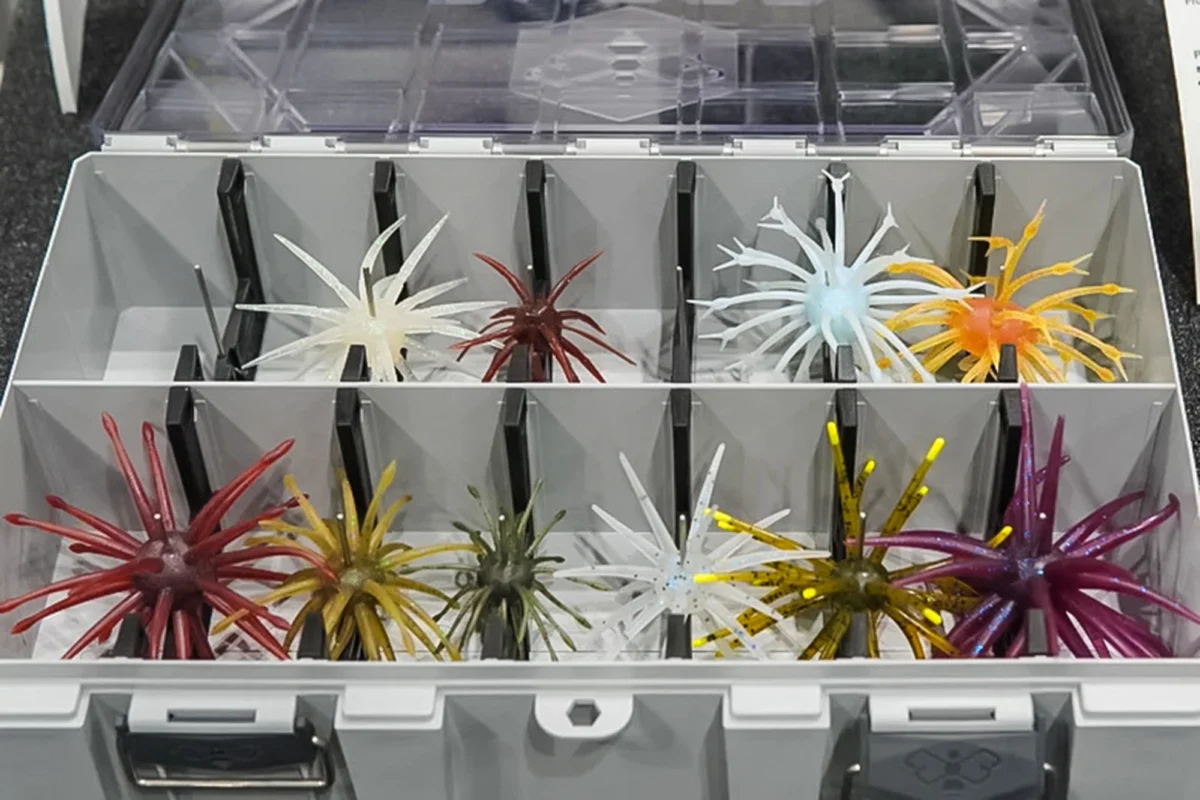
- Terminal Tackle: G-Ratt Baits secured a win with its dedicated Urchin Rig, which provides the necessary hook and weight configuration to maximize the bait’s erratic fall.
- Tackle Management: Recognizing that "leggy" baits are a nightmare to store without them tangling or deforming, BUZBE won the Tackle Management category with the Basic Deep – Urchin Bait Box, featuring customized dividers specifically engineered for these high-surface-area baits.
Innovation in Motion: The VoyaX MOSSA and Electric Integration
The Boats and Watercraft category win for the VoyaX MOSSA Series marks a critical milestone in the transition of the kayak segment from "human-powered" to "integrated electric platform."
Historically, electric motors were bolted onto kayaks as after-market modifications. The MOSSA series changes the paradigm by building the propulsion and battery management systems directly into the hull. This represents a broader industry trend where the "fishing kayak" is no longer just a plastic shell for casual paddling but a highly capable, intelligent vessel designed for precision fishing in reservoirs and protected coastal zones.

Official Industry Responses and Market Implications
The breadth of the winners—from the $130 St. Croix Triumph rod to the highly sophisticated Garmin sonar arrays—paints a picture of a bifurcated market.
"The 2026 winners reflect an industry that is simultaneously sprinting toward the future and doubling down on the classics," noted an ICAST spokesperson during the closing ceremony. "We are seeing manufacturers push the boundaries of physics and software to help anglers catch more fish, but we are also seeing a renewed appreciation for the tactile, durable gear that keeps people in the sport for decades."

Key Takeaways from the 2026 Showcase:
- Electronics Integration: The industry is moving toward a "plug-and-play" future where hardware components are minimized to save space and simplify rigging.
- Finesse Dominance: The popularity of the urchin-style bait points to a growing angler preference for "minimal input, maximum action" lures.
- The Accessibility Gap: The success of St. Croix and Rhino confirms that despite the high price of tournament-grade equipment, the most commercially significant segment of the market remains the enthusiast who prioritizes reliability and value.
- Specialization: Niche tools, such as specialized bait boxes and dedicated transducer mounts, have become a staple of the modern angler’s inventory, replacing the "one-size-fits-all" mentality of previous years.
Conclusion: The Path Forward for 2027
As the dust settles on ICAST 2026, the industry is left with a clear mandate. While the technological leaps made by companies like Garmin and VoyaX provide the tools for the next generation of professional fishing, the spirit of the event remains grounded in the basics.
The success of the Rhino spinning combo is a reminder to all manufacturers: in a world of hyper-advanced electronics and complex, niche-specific lures, the most successful product is often the one that removes barriers to entry. Whether the future of fishing lies in the pixelated precision of a forward-facing sonar screen or the simple, reliable cast of a well-made rod and reel, the 2026 ICAST showcase demonstrated that the sport is in a period of unprecedented innovation. The only thing missing, as always, is the water itself.