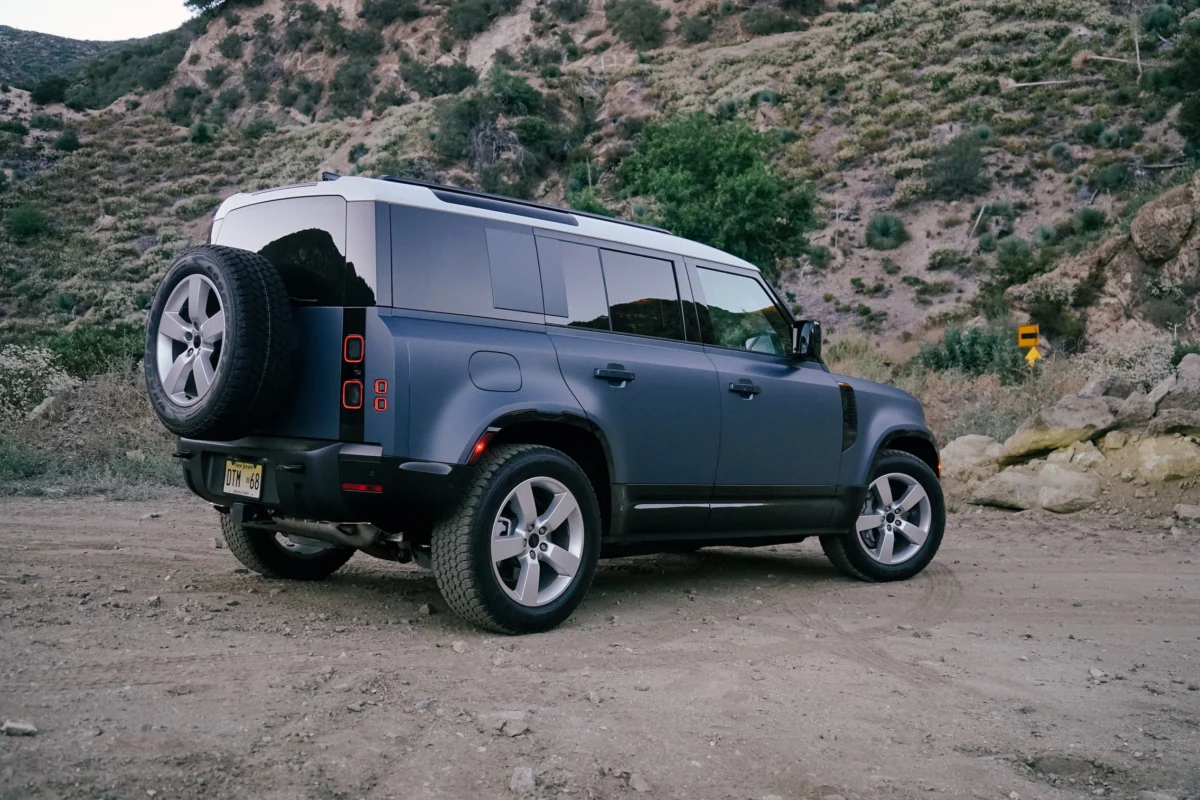
In the automotive world, few nameplates carry the weight of history quite like the Land Rover Defender. Once a utilitarian workhorse synonymous with global exploration, the name has been reimagined in the modern era as the L663—a sophisticated, high-tech, and undeniably luxurious SUV that manages to balance off-road prowess with the creature comforts of a premium daily driver. The 2026 Land Rover Defender 110 stands as the quintessential middle ground in the current lineup, offering a blend of versatility and capability that makes it a unique proposition in today’s crowded SUV market.
Main Facts: The Evolution of the L663
The 2026 Defender 110 remains a masterclass in modern design, successfully navigating the "classic Land Rover trick": it is as comfortable navigating a rain-slicked urban commute as it is conquering technical terrain. While purists may still mourn the discontinuation of the original, boxy, ladder-frame Defender—a sentiment so potent it helped birth competitors like the Ineos Grenadier—the L663 proves that nostalgia is often less practical than modern engineering.
The Defender platform is now a diverse family. The Defender 90 caters to those prioritizing maneuverability with its short-wheelbase, two-door configuration. The Defender 110, tested here, serves as the volume-selling four-door variant, providing a balanced footprint for families and gear. The Defender 130 extends the same wheelbase as the 110 but adds a third row to accommodate up to eight passengers. Finally, the Octa—a high-performance, specialized variant—stands apart as a distinct mechanical beast, prioritizing high-speed desert running and aggressive chassis tuning.
At a Glance: 2026 Defender 110 X-Dynamic SE
- Vehicle Class: 5-door midsize SUV
- Engine: 3.0L turbocharged mild-hybrid inline-6
- Power/Torque: 395 hp / 406 lb-ft
- Transmission: ZF 8-speed automatic
- Fuel Economy: 18/22/20 mpg (city/highway/combined)
- Cargo Capacity: 34 cu. ft. (rear seats up) to 78.8 cu. ft. (seats down)
- Starting MSRP: $63,350
A Chronology of the Modern Defender
The journey of the L663 began in 2020, signaling a radical shift from the agricultural nature of its predecessor to an unibody architecture. This shift was controversial but necessary to meet global safety, emissions, and consumer comfort standards.

- 2020 Launch: The L663 platform is introduced, emphasizing modularity and cutting-edge electronic terrain management.
- 2022-2024 Expansion: The lineup matures with the introduction of the V8 supercharged models and the stretched 130 variant, cementing the Defender as a lifestyle brand within a brand.
- 2026 Facelift: The current model year refines the interior interfaces and streamlines engine options, signaling the sunset of the venerable 5.0L supercharged V8 in favor of more efficient, electrified powertrains for the 2027 model year.
The Drivetrain: Power and Performance
Under the hood of the standard 2026 Defender 110 resides the 3.0L turbocharged mild-hybrid inline-six from the Ingenium family. While it churns out a respectable 395 horsepower and 406 lb-ft of torque, the experience is best described as "adequate."
The ZF eight-speed automatic is typically a benchmark for the industry, yet when paired with this specific mild-hybrid setup, the throttle response can feel "fuzzy"—as if the engine’s output is being mediated through a thick layer of insulation. While the hybrid assist is intended to provide a torque fill at low RPMs, the stop/start system remains a point of contention. Its operation is frequently jerky, often prompting drivers to disable the feature entirely to avoid the shudder during city traffic.
For those who prioritize raw character, the 518-horsepower supercharged 5.0L V8 remains available for the final time. It is a loud, unapologetic engine that defines the "luxury" experience through mechanical theater. Its departure in 2027 will mark the end of an era for Jaguar Land Rover, leaving the turbo-six and future electrified setups to carry the torch.
Suspension and Handling: The "Secret Sauce"
If the drivetrain is merely adequate, the suspension is where the Defender truly shines. The vehicle utilizes four-wheel independent suspension, with the 110 offering an optional height-adjustable air system. This is the "secret sauce" of the Defender experience. On pavement, the air suspension provides a composed, premium ride that masks the vehicle’s substantial weight. Off-road, it provides the necessary articulation and ground clearance to navigate obstacles that would leave lesser SUVs stranded.

While it lacks the sharp, communicative steering of a performance-oriented German SUV, the Defender’s rack-and-pinion setup is direct and well-weighted for an off-roader. It doesn’t pretend to be a sports car, and in doing so, it excels at its actual mission: long-distance comfort and extreme terrain capability.
The Interior: Rugged Luxury
The cabin of the 2026 Defender is a triumph of design, striking a difficult balance between "industrial chic" and "luxury lounge." Exposed bolt heads and durable floor mats exist alongside high-quality leathers and a sophisticated infotainment interface. It is not the softest or most opulent cabin in the segment, but it feels purpose-built.
The quietness of the cabin is a testament to the extensive research Land Rover put into on-road refinement. Given that the vast majority of Defenders will never see anything more treacherous than a gravel driveway, this focus on NVH (noise, vibration, and harshness) reduction is a smart, calculated move. Cargo space is equally impressive, with a maximum capacity of 78.8 cubic feet, ensuring that the vehicle remains a functional tool for overlanding or cross-country road trips.
Technology: The Off-Road Great Equalizer
Where the Defender pulls ahead of rivals like the Jeep Wrangler or the Ford Bronco is in its electronic terrain management. Land Rover’s traction control systems are, quite simply, the best in the business.

The technology acts as a force multiplier for the driver. It allows someone with minimal off-road experience to navigate deep sand, slick rock, or steep mud with the confidence of a professional. By managing individual wheel speed and throttle application far faster than a human foot ever could, the Defender turns "unclimbable" trails into manageable paths. However, this raises a question of philosophy: does the car make the driver better, or does it simply hide the driver’s lack of skill? For those who value the "pure" experience of a mechanical, analog 4×4, the Defender’s digital hand-holding may feel like a barrier to true engagement.
The Aftermarket and Overlanding
For the enthusiast, the Defender is an intriguing, if challenging, project base. Unlike the Toyota Land Cruiser or the Ineos Grenadier, the aftermarket for the L663 is still in its relative infancy.
However, niche specialists are stepping up. Companies like Goose Gear provide tailored storage solutions, including fridge-slide drawer systems, while Lucky8 Off-Road offers functional upgrades such as winch mounts, auxiliary lighting brackets, and even a rear brake caliper conversion that allows owners to downsize to 18-inch wheels. This change is crucial, as it opens the door to a wider variety of aggressive, trail-ready tires that are simply not available for the larger stock wheel sizes.
Implications and Market Positioning
The price of entry has shifted dramatically since the L663’s debut in 2020. What was once an accessible entry-level luxury vehicle has drifted firmly into six-figure territory when well-optioned. The X-Dynamic SE tested, while starting at a more reasonable price, reached nearly $95,000 with add-ons.

Official Stance: Land Rover positions the Defender as a "halo" product that defines the brand’s rugged identity. They argue that the premium price is justified by the dual-purpose nature of the vehicle—it is both a status symbol and a genuine tool.
Market Competition:
- Lexus GX550: Offers a more traditional, truck-based reliability and a potent twin-turbo V6.
- Toyota Land Cruiser: A more affordable, lifestyle-oriented option, though lacking the sheer luxury of the Land Rover.
- Ineos Grenadier: The "spiritual successor" to the old Defender, which prioritizes mechanical simplicity over the Land Rover’s high-tech, screen-heavy approach.
The Verdict: A "Character-Building" Investment
Is the 2026 Land Rover Defender 110 worth the price of admission? If you demand a vehicle that looks as good in a hotel valet line as it does on a remote trail, the answer is a resounding yes. It is a fantastic machine that rewards its owner with an experience that few other vehicles can replicate.
However, prospective buyers must accept the "Land Rover reality." These are complex, technology-heavy vehicles, and with that complexity comes the potential for what some owners refer to as "character-building" reliability quirks. If you are looking for a Japanese-style "turn the key and forget it" experience, the Defender may test your patience. But if you want a vehicle that feels like an event every time you drive it, and you are willing to pay the premium to maintain that feeling, the Defender remains one of the coolest, most capable SUVs on the planet.