By Samuli Haapasalo | September 8, 2026
The Finnish wilderness is a realm of unpredictable variables. On the night of August 17–18, 2026, deep in the sprawling marshlands near Kuhmo, the elements provided a masterclass in nature’s raw power. From the confines of a small photography hide, I spent hours observing how the forest’s most elusive inhabitants—bears, wolves, and the wolverine—interact with an environment shaped by torrential rain and the shifting tides of the boreal summer.
The Deluge: Nature’s Hydraulic Force
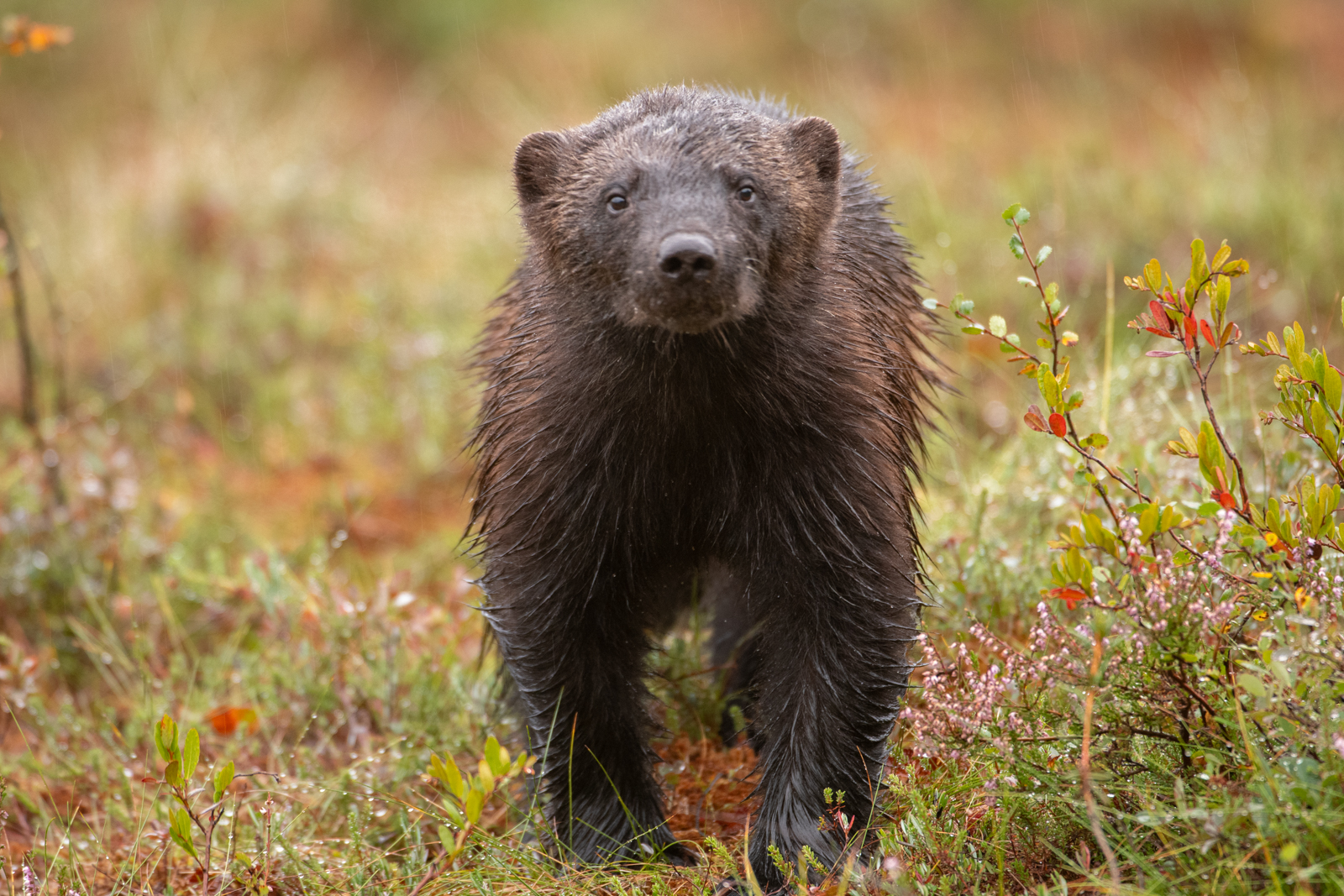
The evening began not with the quiet rustle of leaves, but with a meteorological event of startling intensity. As I settled into the hide, the skies opened. It was a rainfall of such magnitude that, had it struck an urban environment, it would have overwhelmed storm drains and flooded city squares within minutes.
Watching from the edge of the marsh, I witnessed the landscape transform. The surface of the mire briefly shimmered with shallow pools of water, a temporary transformation before the peat and moss acted as a massive biological sponge, swallowing the deluge into its endless depths. This is the resilience of the Finnish landscape; it is a system designed to absorb, filter, and contain. While the rain tested the limits of my equipment and my patience, it served as a stark reminder of the wild’s indifference to human discomfort.
Chronology of a Wilderness Vigil
August 17: 20:00 – The Rain-Proof Predators
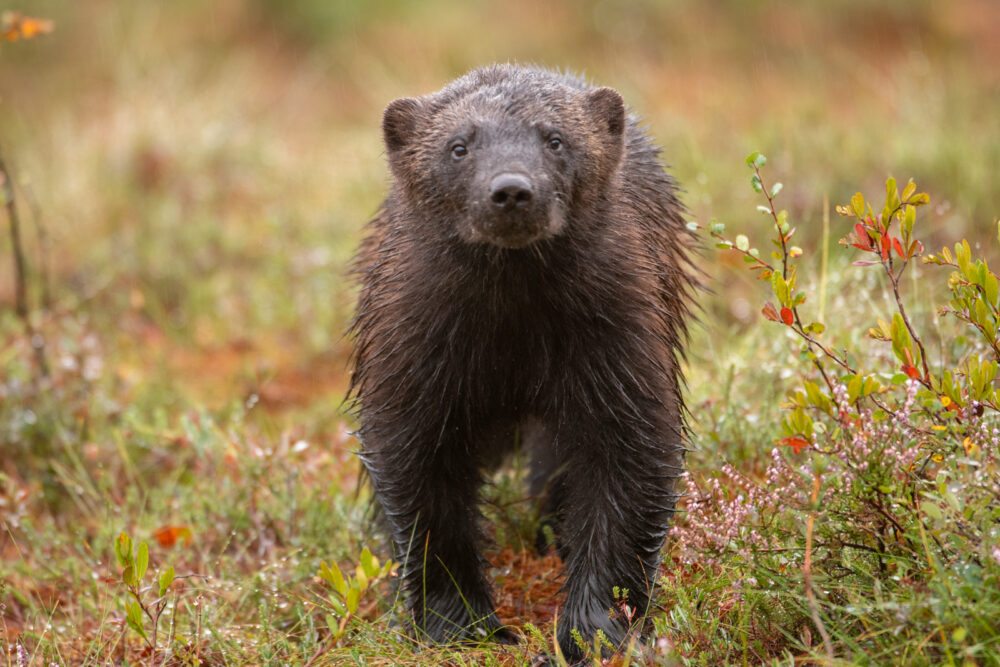
It is a common misconception that forest animals retreat during heavy precipitation. In fact, the downpour offered a unique advantage. For the brown bear, the rain is of little consequence; its thick, oily coat is a natural raincoat, repelling water with ease. Moreover, the heavy rain acted as a deterrent for the biting insects that usually plague the forest, creating an environment where the bear could forage in peace.
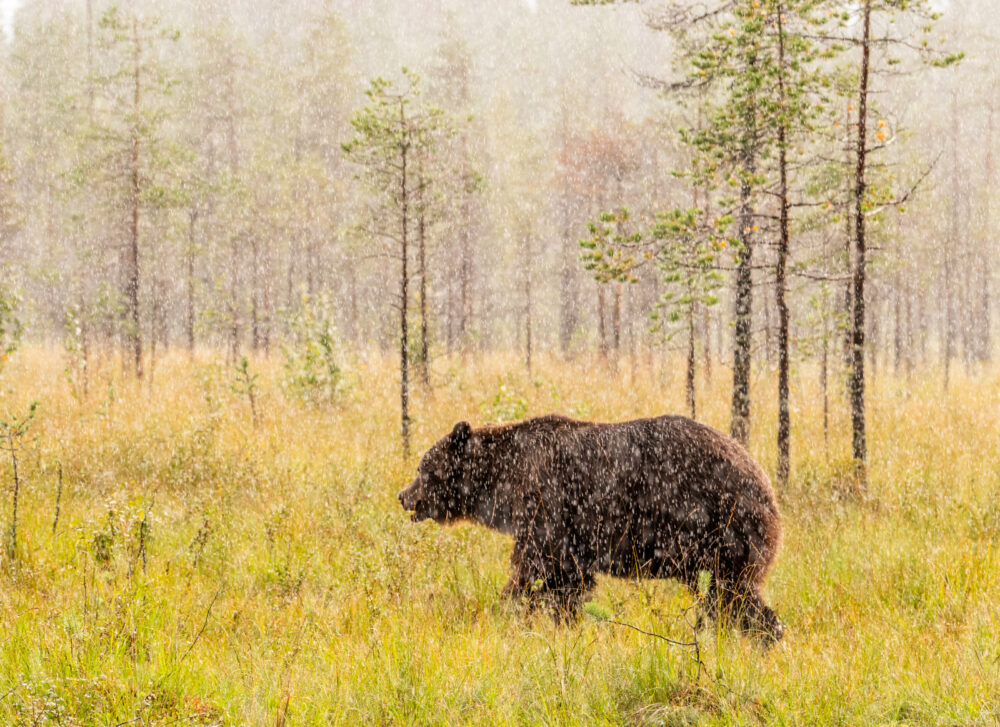
As the rain briefly tapered, the silence of the marsh was broken not by birds, but by the cautious arrival of wolves. Two individuals emerged from the treeline, traversing the sodden moss and tall grasses. They moved with purpose, scanning the landscape for scavenged remains. Their presence was a fleeting, ghostly encounter, underscoring the necessity of extreme vigilance when documenting these apex predators.
August 18: 02:00 – The Necessity of Rest
Even in the height of the summer season, when the nights are short, there is a physical limit to the endurance of a wildlife photographer. Throughout the night, violent bursts of rain continued to drum against the roof of the hide. While many photographers argue that one should remain awake for every second of a summer night, I chose to utilize the cramped bunk within the hide.
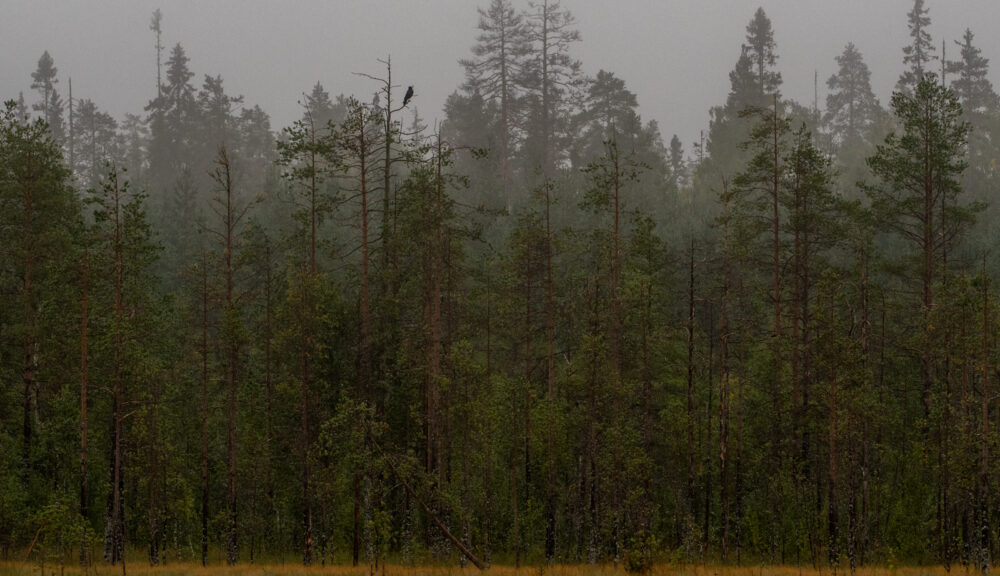
However, the "golden hour" of the marsh is not just at sunrise; it is the transition period. I made it a rule to be upright and ready at least thirty minutes before dawn. Even during a deluge, the atmosphere changes in the pre-dawn light. If the weather breaks and the night is cool, a ghostly mist often rises from the mire, providing a dramatic, ethereal backdrop for photography.
August 18: 06:36 – The Arrival of the Wolverine
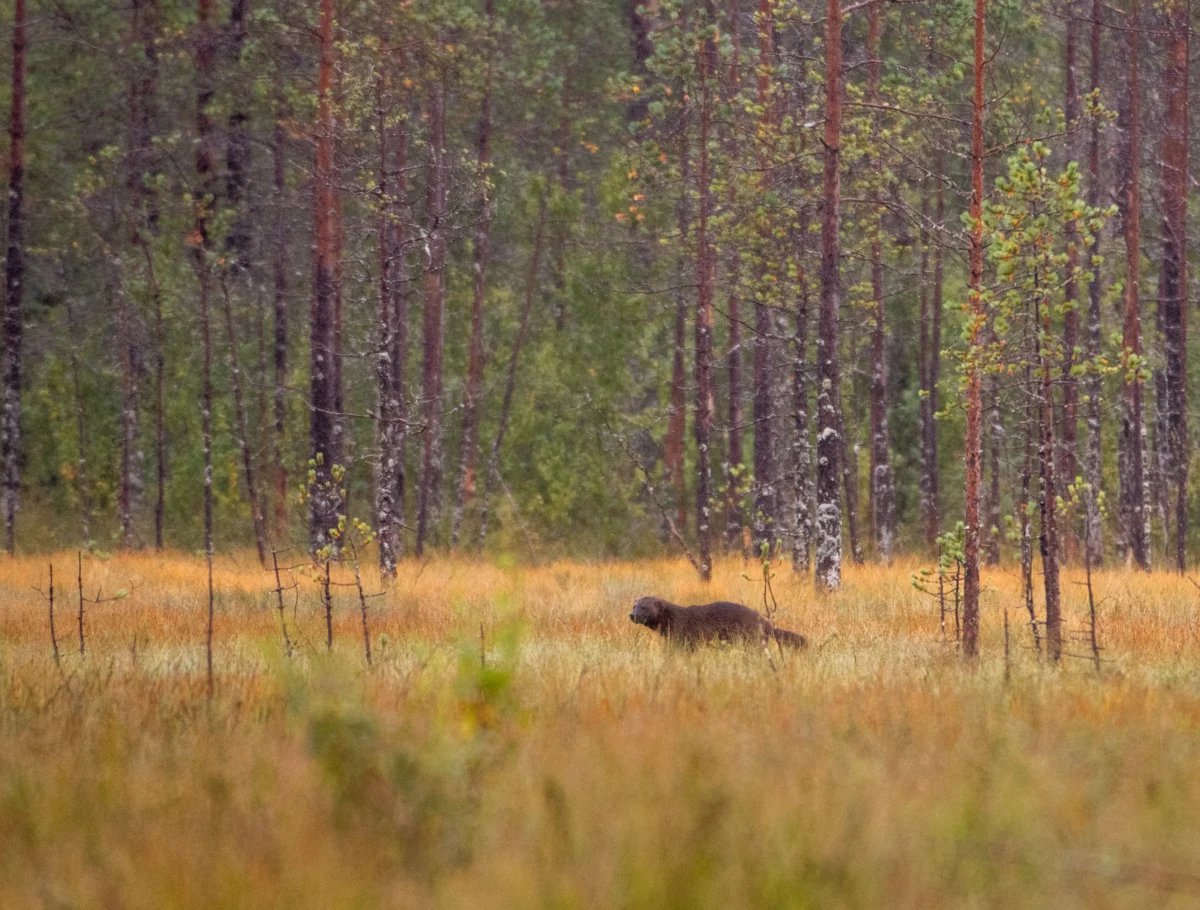
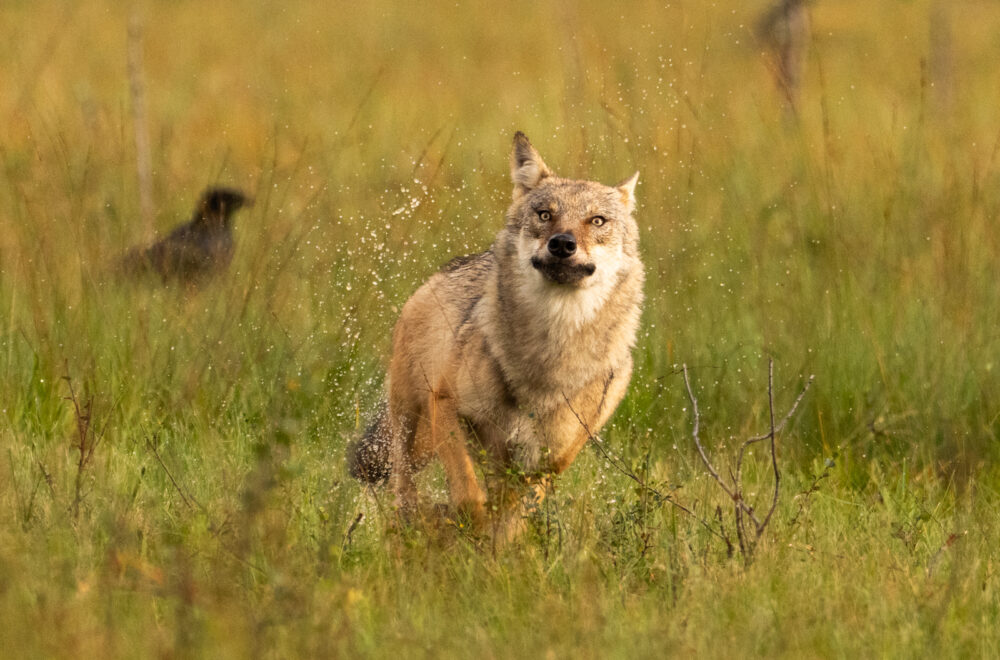
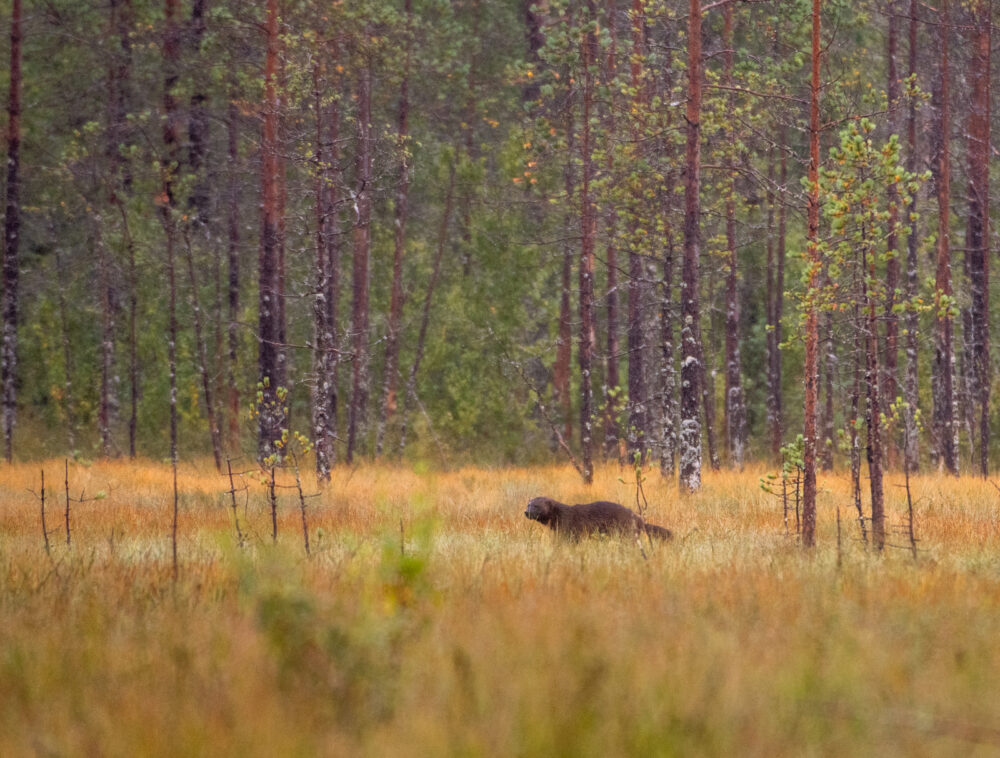
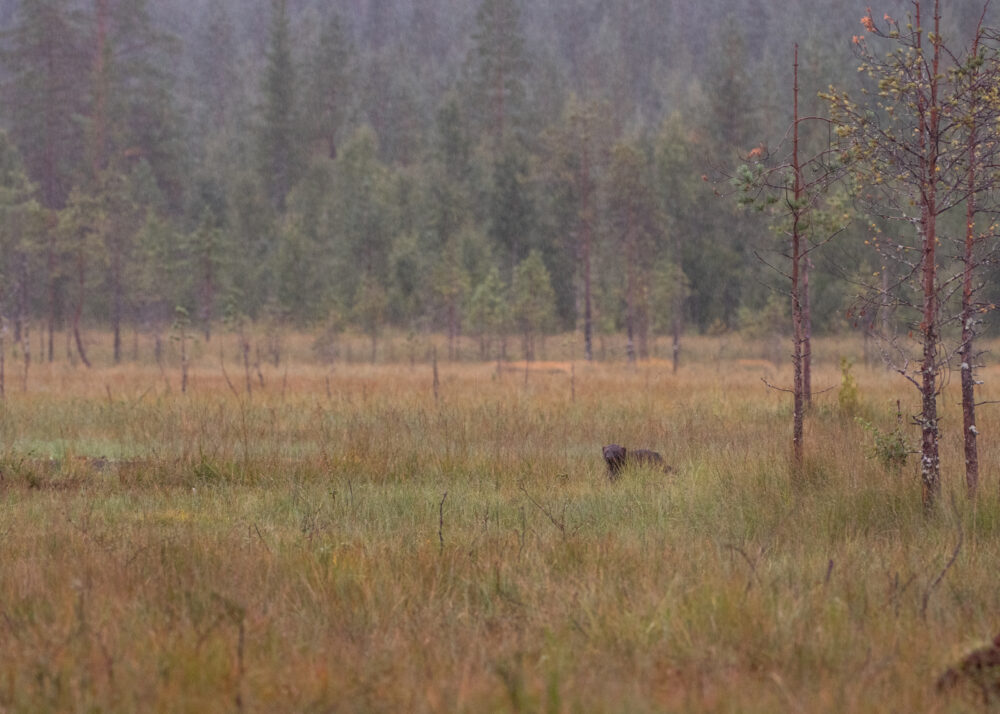
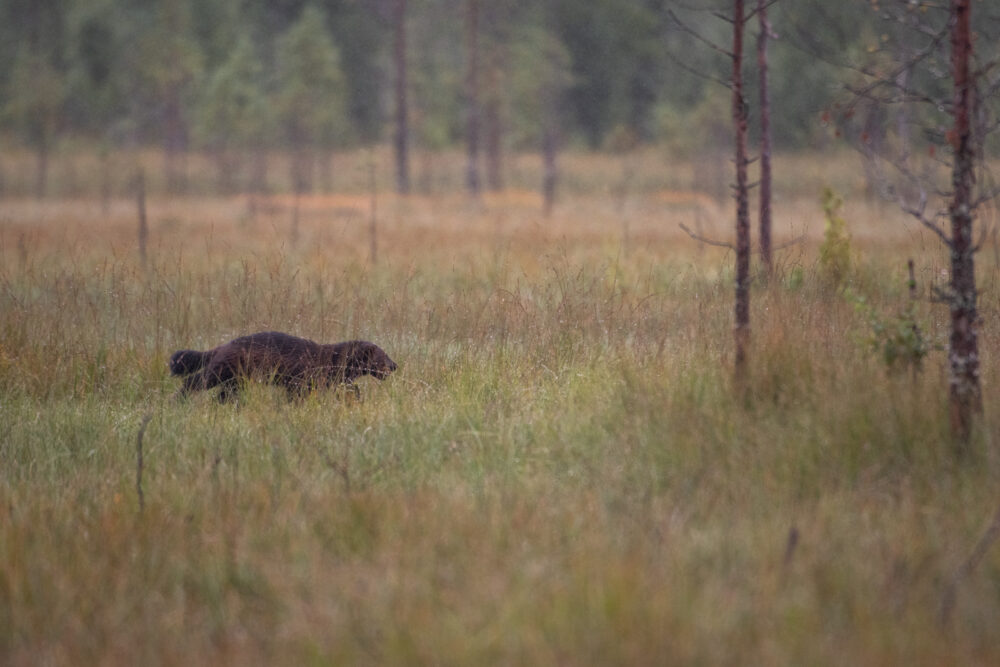
The climax of the experience occurred in the early morning. At 6:36 AM, the wolverine—a creature as elusive as it is legendary—made its appearance. The wolverine is a wanderer of the north, capable of covering 30 to 40 kilometers in a single day. Its survival strategy involves maintaining a vast network of food caches, often hidden from the prying eyes of bears and wolves.
Watching the wolverine move across the marsh was a masterclass in efficiency. It did not approach the scavenged food scraps left by the bears and wolves immediately. Instead, it scouted the terrain, disappearing into the tall grasses and reappearing with its characteristic, loping gait. When it finally engaged with the food, it did so with a sense of urgency, grabbing what it could carry before retreating back toward the forest edge.
Supporting Data: Wildlife Behavior in the Boreal Zone
The interactions observed in the Kuhmo marshes are consistent with broader ecological studies on large carnivores in Finland.
- Wolverine (Gulo gulo) Ecology: Wolverines are known for their massive home ranges. Research indicates that males, in particular, maintain territories that can span hundreds of square kilometers. Their reliance on cached food is a critical survival mechanism during the transition between late summer and the lean months of autumn.
- Predator Overlap: The presence of wolves and bears in the same area is a common occurrence in the Kuhmo region. While these species occupy similar ecological niches, their temporal activity patterns often differ. Wolves are primarily crepuscular and nocturnal, relying on the cover of darkness to minimize human contact, whereas bears show higher levels of flexibility in their activity cycles.
- The Role of Precipitation: Studies on ungulate and carnivore movement suggest that heavy rain generally leads to a decrease in activity for smaller prey species, which in turn influences the hunting behavior of predators. However, for scavengers like the wolverine, rainfall is rarely a limiting factor.
Official Perspectives on Wildlife Conservation
The preservation of these habitats is paramount. The Kuhmo region has long been a focal point for conservationists who argue that the maintenance of large, contiguous wilderness areas is the only way to support stable populations of apex predators.
According to Finnish environmental experts, the "hide-based" tourism model—when managed ethically—provides significant economic incentives for local communities to protect these animals rather than viewing them as threats to livestock or forestry. By providing a non-intrusive way to observe animals in their natural state, the hide serves as a bridge between the wild and the public.
Implications for Future Research and Observation
The night in the marsh highlights a fundamental truth about nature photography and wildlife observation: it is not a passive pursuit. It requires a 100% commitment to being "always-on."
The Ethics of the Hide
The use of a hide is perhaps the least intrusive way to document large mammals. It allows the animals to behave as they would if no human were present. When a predator like a wolf or wolverine moves through the landscape, they are following ancient, ingrained instincts. The photographer’s role is to minimize their impact on that instinct.
The Challenge of the Lens
Technically, photographing in low light and rain presents a formidable challenge. The photographer must balance shutter speeds to capture the "graphic" quality of the landscape—the interplay of mist, deadwood, and grey light—while remaining ready for the split-second movement of a passing animal.
Final Reflections
The experience in Kuhmo serves as a microcosm of the wider Finnish wilderness. It is a landscape that is simultaneously harsh and welcoming. For the observer, the "luck" of seeing a wolverine at dawn is often a function of the hours spent waiting in the rain. As we look toward the changing seasons, the importance of these undisturbed marshlands becomes ever more apparent. They are not merely scenic backdrops; they are the living, breathing corridors of our most magnificent species.
Whether one encounters a single raven, a pack of wolves, or the solitary, determined gait of a wolverine, the message remains the same: the wild is there, waiting for those with the patience to listen and the resilience to endure the rain.